What is Third-Party Certification for Fresh Produce Quality, and Who Are the Certifiers?

Dr. Vijayalaxmi Kinhal

August 19, 2026 at 8:32 pm | Updated August 19, 2026 at 8:32 pm | 8 min read
- Third-party certification (TCP) is necessary to regulate compliance with fresh produce standards by suppliers, growers, packers, and retailers.
- Most TCP is conducted by private organizations that are fast, flexible, and use many standard frameworks- private and public.
- Objective and quantifiable data on quality parameters can make the certification process transparent, reliable, and actionable.
Earlier, food supply chains for fresh produce were short and mostly national, as is still the case in many developing countries. However, food is increasingly supplied through a few very large supermarket chains that purchase food from around the world, particularly in developed countries. Verbal quality assurances are no longer sufficient. International quality standards govern international trade, and third-party certification is necessary to regulate and control these standards. This article explains what drives third-party certification and lists some major certifiers.
What is Third-Party Certification for Fresh Produce?
Third-party certification (TPC) is a regulatory mechanism that assures customers, retailers, and regulatory authorities that fresh produce meets specific quality and safety standards. Suppliers and businesses, whether supermarkets or eateries, nowadays use third-party certificates to support claims about the quality, origin, production methods, and social practices of the products they sell or use.
These third-party certifiers are independent organizations not connected with either producers or customers that provide technical information about products based on accepted standards. The certificate is given after objective verification, which includes a set of procedures, steps, and inspections, is completed and the fresh produce meets stated standards. The third-party certificates provide independent, objective, and transparent verification of fresh produce quality, which is more trustworthy than first-party claims by producers or second-party claims by buyers.
Subscribe to receive our monthly round-up of articles.
Need for Third-Party Certifiers
As agrifood chains grow in size, certification is necessary to provide assurance and legitimacy of claims about food quality. Earlier, certifiers were government agencies; however, they are now increasingly private-sector and international as food chains have become global. The reasons that make third-party certifiers, especially those in the private sector, indispensable in global agrifood systems are outlined below.
Multi-national supply chains
Food supply chains nowadays involve many nations, as much of the food, including fresh produce in supermarkets, is produced in other countries and bought by suppliers. The production conditions, quality regulations, and standards in producer countries can differ significantly from those in importing nations. The speed of new product development and production practices places considerable strain on governments; hence, private international TPC that can respond faster are more suitable to mediate between the various countries involved in the fresh produce supply chain.
Technical quality parameters
Many of the food standards for fresh produce go beyond assessing external appearance and color and rely on an increasing number of internal physicochemical properties, such as firmness, soluble sugars, titratable acidity, dry matter, starch, and nutraceuticals, for quality and nutrition control, maturity estimation, and grading. These are objective, quantifiable parameters that can increase the transparency, reliability, and legitimacy of the certification process and are preferred by all involved stakeholders. It provides crucial information to stakeholders. In addition to internal parameters, private TPCs can also verify production practices involving worker welfare and environmental sustainability that public standards and certifiers don’t.
Specific requirements
Most governments’ quality and safety standards for food, including fresh produce, are based on the voluntary adoption of standards proposed and periodically revised by international organizations to facilitate efficient, trouble-free international trade. These include agencies such as:
- World Trade Organization (WTO)
- Organization for Economic Co-Operation and Development (OECD)
- United Nations Economic Commission for Europe (UNECE)
However, retailers like supermarkets and restaurants may also set additional standards that are more stringent than those of the above international non-profit organizations. These can focus on production methods, for example, chemical-free organic food, or socially responsible sources to cater to their consumers’ demand. Food businesses use their private standards for branding, accessing niche markets and consumers, providing quality and safety assurance, and coordinating operations.
Retailers use these specific requirements backed by TPC as a regulatory mechanism to
- Differentiate and choose fresh produce to minimize costs and financial liability
- Reduce price competition by focusing on consistent quality and safety
- Facilitate in-house branding
The EUREPGAP is an example of such a private standard and was established by a consortium of supermarket chains, including Tesco, Safeway, Sainsbury’s, Marks and Spencer, and Royal Ahold. Suppliers from around the globe have to have EUREPGAP certification to sell their fresh produce to these European stores.
Flexibility
Private TPCs can address both government standards and stringent commercial considerations through a hybrid accreditation mechanism.
Third-party certifiers are independent not only of producers and customers, but also of governments, even though they need to be accredited by nations and could certify national standards. TPCs are flexible and responsive and can certify fresh produce following various international standards such as
- Codex Alimentarius for food safety
- Hazard Analysis Critical Control Point (HACCP) system
- Good agricultural practices such as A.P., or FAO GAP guidelines
- Good management practices such as ISO 9000 Quality Standards
- Environmental standards such as Rainforest Alliance ECO-OK standards
- Non-genetically modified materials
- Private standards set by supermarkets, for example the EUREPGAP
TPCs can also certify other regional and national standards for fresh produce quality and safety, such as
- British Retail Consortium Technical Standard
- USDA GAP audits
- European Food Safety Inspection Service Standard
- Australia’s SQF 2000CM (Safe Quality Food) Quality Code
Certification Process
The certification process is initiated by the supplier who wishes to demonstrate the quality and safety of the fresh produce they intend to sell. The supplier applies for a certificate, after which the certifiers conduct a pre-assessment and document review of the supplier’s facilities and operations. Certifiers then follow this up with field audits. If the claims are verified, the supplier receives a certificate for their fresh produce and may label their food as certified.
The supplier has to bear the cost of the certification process, which can be high and challenging for small and medium producers, especially in developing countries.
However, there are many advantages to having a certification that can justify the high costs for a business.
Certification Benefits for Suppliers, Growers, and Packers
Suppliers have various incentives and benefits in applying for third-party certification, and these are listed below:
- Market access: It is possible to sell fresh produce at premium prices by accessing overseas markets through TPC. In developed countries, third-party certification is also required to sell to large supermarkets, rather than just local markets. Certification helps producers access niche markets such as organic trade. Also, objective, quantifiable information helps prepare tenders for new markets.
- Transparency and reputation: TCP can prove the safety and quality of fresh produce offered by growers, packers, and suppliers. It can help suppliers choose upstream partners based on consistent quality and prove product quality to downstream retailers. Many certificates focus on traceability, which can help suppliers as much as retailers.
- Regulatory compliance: Many countries require TPC as evidence of safety, quality, and agricultural practices before accepting fresh produce to protect their citizens’ health.
- Supply chain management: Certification requirements can serve as guidelines and help growers and packers meet international standards for growing practices and the quality of fresh produce.
- Helps with pricing: Certification helps suppliers, growers, and packers price based on objective data on fresh produce quality and safety.
- Reduces risks: Certified fresh produce faces a lower risk of rejection and product recalls, preventing economic and reputational losses for suppliers, growers, and packers.
- Consumer confidence: Third-party certification, demonstrated through relevant labels, increases consumer confidence in the quality and origin of produce and helps inform their purchase decisions. A significant number of consumers in developed countries are prepared to pay premium prices for certified, safe, high-quality food.
Given the benefits for all stakeholders, it is not surprising that the number of third-party certifiers is increasing.
Certifiers for Safe and Quality Fresh Produce
TCP is possible based on several criteria, as discussed above: safety, quality, agricultural and management practices. This article will focus on third-party certifiers that focus solely on fresh produce quality and safety. The frameworks and standards they could be based on are
- HACCP
- GSFI
- ISO 22000
- British Retail Consortium Technical Standard
- European Food Safety Inspection Service Standard
- Australia’s SQF 2000CM (Safe Quality Food) Quality Code
Many certifications can use more than one framework. The Certifiers are as follows:
- British Retail Consortium Global Standards (BRCGS) Certification: The BRCGS certification ensures product quality, safety, and legality for businesses involved in food retailing. It covers production, packaging, storage, and distribution, and is used globally by retailers and food service providers.
- SQF (Safe Quality Food) Certification: The SQF certification program is rigorous and trusted globally for ensuring food safety and quality. It claims to be the most trusted food safety and quality certification source operating in 40 countries across six continents. It covers the entire supply chain from farms to retailers, including production, packaging, storage, distribution, and retail. The certificate is recognized by retailers, food service providers, and brand owners.
- Food Safety System Certification 22000 (FSSC 22000): FSSC 22000 is a complete certification scheme for food safety management systems, based on ISO 22000, and suitable for producers and retailers. It manages food safety hazards from farm to fork to reduce foodborne diseases, so it can be used by stakeholders of any size in any position in the supply chain.
- International Featured Standards (IFS) Certification: IFS is divided into schemes for food, logistics, brokers, and PACsecure. The IFS Wholesale and Cash & Carry (C&C) standard assesses safety and quality of wholesalers, packaging companies, and cash & carry businesses. It covers fruits and vegetables and links growers with retailers, manufacturers, and the catering industry.
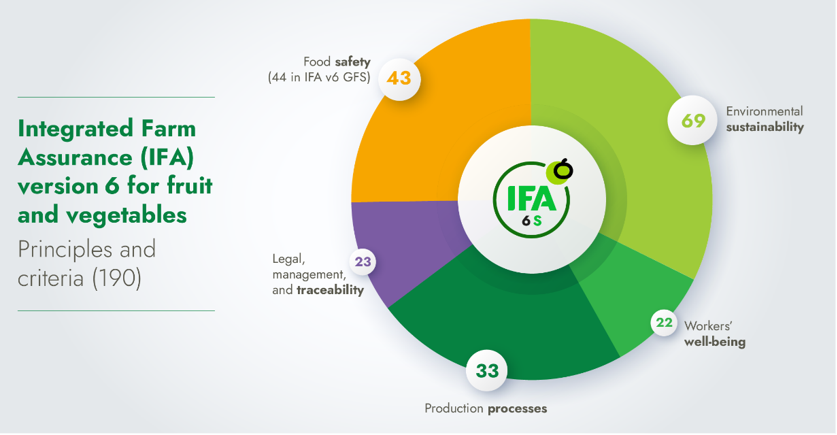
Figure 1: Themes covered by IFA version 6 for fresh produce, GlobalG.A.P. (Image credits: https://globalgap.org/what-we-offer/solutions/ifa-fruit-and-vegetables/)
- 5. GlobalGAP: GlobalGAP, or ‘Good Agricultural Practices’, is based on the EUREPGAP, and guarantees safety and quality of agricultural, floricultural, and aquacultural production. They operate in 133 countries. Its Integrated Farm Assurance (IFA) standards for fruits and vegetables are recognized by the Global Food Safety Initiative (GFSI) and cover 600 species and major production systems including hydroponics. It is suitable for farms of all sizes and focuses on safety, traceability, workers’ health, environmental protection, and sustainability; see Figure 1. The organization provides a consumer-facing GGN label based on the IFA standards for certified fresh produce from 35 countries, including Europe, the USA, China, South Africa, and Peru.
- PrimusGFS: PrimusGFS (Good Manufacturing Practices for Food Safety) is based on the GFSI and HACCP and is necessary for FDA compliance in the USA. It is recognized in 22 countries by over 7000 organizations and provides total supply chain coverage. It has various modules that cover food safety at farms, indoor agriculture, packaging, harvest crews, cold storage, processing, and distribution.
Several other regional and national-level fresh food certifiers exist in Europe and the USA for food safety. Moreover, the list of organizations for TCP for organic fresh produce at international, regional, and national levels is long and beyond the scope of this article.
Instruments for Quality Control
Since certification can require objective and quantitative data on fresh produce quality and safety, tools that are accurate, precise, and provide results in real time and are simple enough for use onsite in the total supply chain are necessary for the certification agencies, regulatory organizations, and the stakeholders to ensure that the food meets required standards. Some helpful devices that can be used for certification include quality meters.
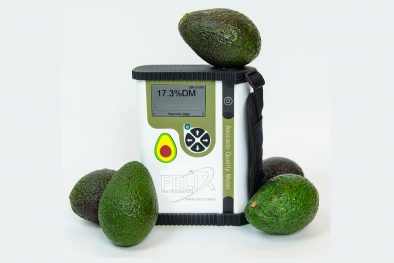
Felix Instruments Applied Food Science offers the general F-750 Produce Quality Meter and the F-751 series of quality meters customized for avocados, mangos, grapes, kiwifruit, and melon. The company also offers gas analyzers that can read trace levels of ethylene, oxygen, and carbon dioxide to check storage, distribution, and retailing environmental conditions. The results are easy to read and use, and provide quantitative data that can improve accountability and traceability of fresh produce at various stages of the supply chain.
Contact us to find out more about our quality meters and gas analyzers for your certification needs.
Sources
Hatanaka, M., Bain, C., & Busch, L. (2005). Third-party certification in the global agrifood system. Food policy, 30(3), 354-369.
Lang, B., & Conroy, D. M. (2022). When food governance matters to consumer food choice: Consumer perception of and preference for food quality certifications. Appetite, 168, 105688.
Netterville, R., & Adendorff, K. (2002). Quality systems in the fresh fruit export industry. South African Journal of Industrial Engineering, 13(2), 1-14.
Related Products
- F-751 Grape Quality Meter
- Custom Model Building
- F-910 AccuStore
- F-751 Melon Quality Meter
- F-751 Kiwifruit Quality Meter
- F-750 Produce Quality Meter
- F-751 Avocado Quality Meter
- F-751 Mango Quality Meter
- F-9XXDK Dynamic Sampling Kit
- F-900 Portable Ethylene Analyzer
- F-950 Three Gas Analyzer
- F-920 Check It! Gas Analyzer
- F-960 Ripen It! Gas Analyzer
- F-940 Store It! Gas Analyzer
Most Popular Articles
- Spectrophotometry in 2023
- NIR Applications in Agriculture – Everything…
- The Importance of Food Quality Testing
- The 5 Most Important Parameters in Produce Quality Control
- Melon Fruit: Quality, Production & Physiology
- Fruit Respiration Impact on Fruit Quality
- Guide to Fresh Fruit Quality Control
- Liquid Spectrophotometry & Food Industry Applications
- Ethylene (C2H4) – Ripening, Crops & Agriculture
- Understanding Chemometrics for NIR Spectroscopy
Related Reading