How Do Postharvest Microbial Treatments Extend Fresh Produce Shelf Life?

Dr. Vijayalaxmi Kinhal

May 19, 2026 at 9:13 pm | Updated May 19, 2026 at 9:13 pm | 8 min read
- Fruits and vegetables harbor a microbiome on their surfaces that interacts with them to influence fruit quality.
- Fruit/plant-microbial interactions can be used in postharvest management to control spoilage microbes, thereby improving fresh produce quality and shelf-life.
- These microbial-plant/fruit interactions include competition, mycoparasitism, volatile secretions, microbial biofilms, quorum sensing, and systemic resistance induction.
Postharvest spoilage, quality degradation, and reduced shelf life result in the loss of 30% of the global fresh produce, threatening food security and increasing economic and environmental costs. One emerging novel postharvest technology is leveraging microbial interactions with plants and fruits to control spoilage microbes. Find out more about the status quo of microbial applications for post-harvest quality control in this article.
Need for New Postharvest Quality Preservation Methods
Microbial spoilage is a major cause of rapid postharvest deterioration of fruits and vegetables during storage. Microbial infection affects quality by spoiling appearance, color, firmness, texture, flavor, and safety. It can lead to decay and senescence, thereby shortening shelf life. The extent of microbial impact depends on their growth rate, accumulation of metabolic products, and the presence of enzymes. Metabolic products such as acids, alcohols, and volatile organic compounds worsen deterioration, and the enzymes can break down tissues. Bacteria and fungi are both common pathogens; however, fungal spoilage is more significant.
- Bacteria: Pseudomonas and Erwinia can cause soft rot and slime, especially in high humidity. Bacterial pathogens, Escherichia coli, Listeria, and Salmonella spp. are also prevalent and can produce toxins and cause human illness. Bacterial spoilage begins in the tissue, breaking it down, causing loss of structural integrity, texture, and firmness, and producing off-odors. Bacterial spoilage can pose serious health risks to people.
- Fungi: Colletotrichum, Aspergillus spp., Fusarium spp., Botrytis, and Penicillium spp. are the most widespread spoilage fungi. Their mycelium rapidly colonizes fresh produce, especially those with wounds or broken skin, causing mold and soft rot. Fungi can also produce toxic secondary metabolites, such as mycotoxins, including aflatoxins, that have severe impacts on human and cattle health and pose a food safety concern. Like bacteria, fungi thrive in postharvest situations with high humidity.
The growth of microbes is affected by environmental conditions such as air temperature, relative humidity (R.H), and the gas atmosphere. Currently, postharvest quality preservation depends on controlling these environmental factors during controlled atmosphere (CA) storage and transport, and on packaging fresh produce in modified atmosphere packaging (MAP) and storing it in cool conditions to control microbial spoilage. However, these measures are insufficient to control microbial infections, so they are frequently combined with postharvest treatments using synthetic and natural materials to control postharvest diseases and pathogens.
Subscribe to receive our monthly round-up of articles.
The use of chemicals for fresh produce preservation is under scrutiny due to potential negative impacts on human health and the environment, demand for organic, chemical-free, safe food, and the development of microbial resistance to these chemicals. Hence, the development of new, safe, and environmentally friendly technology is necessary.
Plant and Fruit Biomes
The adoption of rhizosphere microbes to improve plant growth, health, production, and fruit quality has already begun; now, non-rhizosphere microbes can be used in postharvest stages to enhance fresh produce quality and extend shelf life.
Recent studies using advanced microscopy and sequencing-based techniques reveal that plants and fresh produce are holobionts. A holobiont consists of a host and associated microbes that interact to influence the host’s functioning. The interactions between plants or fruits and the microbial communities associated with them can be beneficial, antagonistic, and commensal.
The microbiome of fruits and vegetables can be altered by handling and storage conditions, thereby affecting shelf life and quality.
Fruit Biome
The microbial composition depends on host genotype, organs, developmental stage, seasons, and environmental conditions. For example, in strawberries, the dominant bacteria were Actinobacteria, Alphaproteobacteria, Gammaproteobacteria, and the predominant fungi were Leotiomycetes and Agaricomycetes. In apples, the predominant bacteria were Proteobacteria, Firmicutes, and Actinobacteria, and the predominant fungi were Ascomycota, followed by Basidiomycota. Also, there were differences in the bacterial and fungal communities among three apple cultivars across development stages and postharvest storage durations.
Plant Biome
Plants rely on their microbiome for protection to cope with stress. The plant’s functioning is influenced by the balance of negative and positive interactions with its microbes. The associated microbiota can aid in nutrient acquisition, disease suppression, the production of antioxidative enzymes, volatile production, the induction of systemic resistance, and phytohormone modulation. In return, plants provide the microbes shelter and nutrients. The microbes can be present on plant surfaces or within plant tissues. The beneficial effects persist even after fresh produce is harvested and separated from the parent plant, including ethylene production, ripening, microbial resistance, and preservation of nutritional content. Microbial metabolites, such as enzymes and volatile organic compounds (VOCs) can delay senescence, suppress spoilage pathogens, and induce resistance to diseases.
Postharvest Pathogen Management Through Microbial Interventions
Both plant and fresh produce microbes can be used to improve quality and shelf life. The microbes and their metabolites can be used as post-harvest inoculants to control microbial spoilage. These new inoculants can be integrated to improve existing postharvest management technologies during handling, storage, and transport.
Millions of microbes can be associated with plants and fruits, which not only interact with their hosts but also with one another. The reactions within the microbial community can be cooperation, antagonism, or neutral. Six microbial interventions that can be integrated into postharvest management can be classified into two broad types: cooperative and antagonistic microbial interactions that are anti-pathogen; see Figure 1.
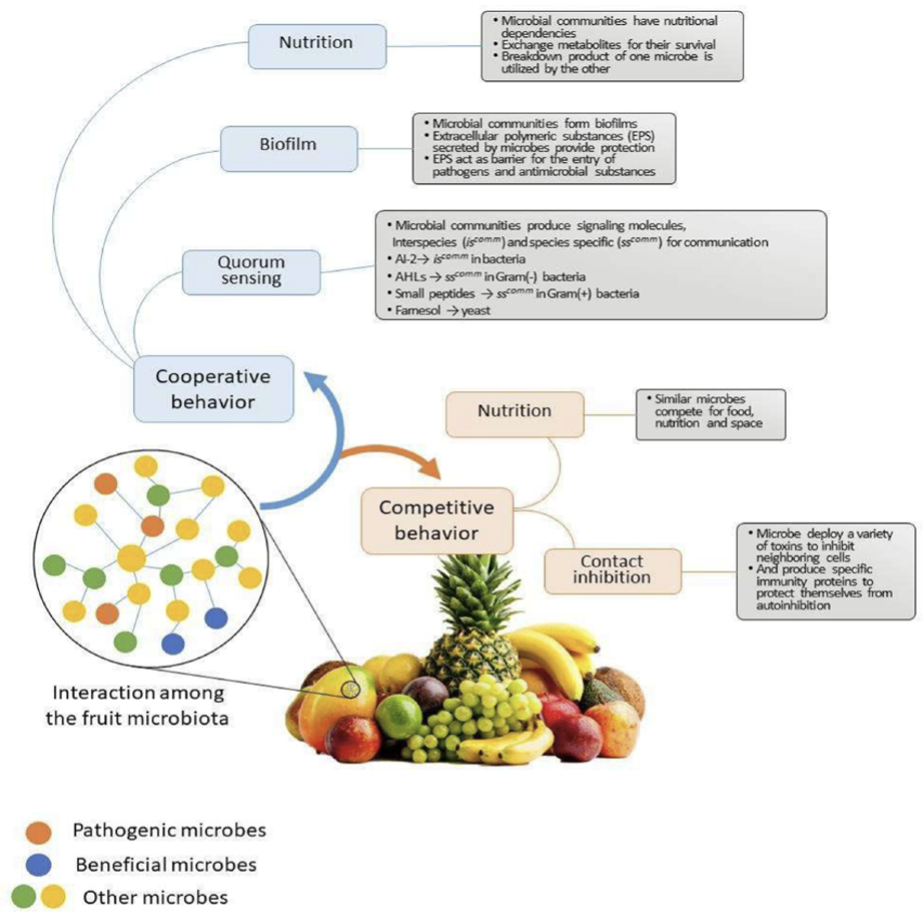
Figure 1: “The cooperative and competitive behavior of microbial communities,” Verma et al. (2022). (Image credits: https://www.mdpi.com/2223-7747/11/24/3452)
Introducing new strains to manipulate the microbiome can enhance its cooperative or antagonistic behavior to control diseases, preserve fruit firmness, appearance, color, and flavor, and inhibit decay, extending shelf life. The mechanisms of each microbial intervention are discussed next.
Antagonistic Behavior
Microbes can act directly against pathogens to control their numbers through antagonistic interactions, including competition, mycoparasitism, the production of antimicrobial volatiles, and the induction of systemic resistance.
-
Competition
Competition among microorganisms in the plant and fruit holobiont for space and nutrients can lead to the exclusion of certain microbes. It stabilizes the microbial community and benefits the host by controlling pathogens. Contact between antagonistic microbes and pathogens is necessary for the effect to occur. For example, in a competition for space, the biocontrol yeast Yarrowia lipolytica colonizes wounds on mandarin faster than the pathogens Penicillium italicum and Penicillium digitatum at low to ambient temperatures of 4 °C and 20 °C, and controls fruit decay. Similarly, yeast Aureobasidium pullulans prevents Penicillium expansum from establishing in fruit juice by successfully competing for resources.
-
Mycoparasitism
Another microbial antagonism mechanism is mycoparasitism, where biocontrol microbes parasitize fungi through direct physical contact. The biocontrol microbes secrete enzymes such as cellulase and glucanase to break down the fungal pathogen’s cell walls, killing it. For example, Trichoderma asperellum is a known hyperparasite of the pathogen Fusarium oxysporum and can control it. A hyperparasite is a parasite that attacks pathogens and involves specific recognition and interaction between the host pathogen and the antagonist.
-
Volatiles
Pathogens can also be inhibited by direct contact with antimicrobial volatile compounds produced by biocontrol agents. These volatiles are diffusible organic compounds with a low molecular weight and act as a means of communication between the pathogen and the biocontrol agent. The volatiles produced vary with the biocontrol agent strains, growth media, host genotype, and environment.
Volatiles can be used to control pathogens in the postharvest chains by using specific biocontrol microbes. For example, volatiles produced by Bacillus subtilis controlled the germination of Botrytis cinerea spores to control fruit rot in strawberries. Yeasts, Aureobasidium pullulans and Saccharomyces cerevisiae, are known to emit esters and alcohols that can be used for postharvest fungal pathogens. It is most effective when used with a high concentration of carbon dioxide in the atmosphere.
-
Induction of Systemic Resistance
Biocontrol agents can increase fresh produce resistance to pathogens by enhancing their innate immune systems and have been proven effective in apples, tomatoes, and citrus. The biocontrol agents induce resistance by boosting various host mechanisms, such as:
- Enhancing the production of enzymes involved in host defense, such as chitinases, peroxidases, and glucanases
- Accumulation of secondary metabolites such as phenolics and phytoalexins
- Strengthening cell walls to avert pathogen attack
- Producing reactive oxygen species (ROS), which aids in direct pathogen inhibition and in signaling.
The effectiveness of induced systemic resistance depends on environmental factors like temperature, RH, and light. Taking into account trade-offs between energy depletion resulting in quality loss and defense activities, this strategy is combined with the use of conventional pesticides to reduce postharvest loss.
Cooperative Behavior
In addition to direct antagonistic mechanisms, indirect means involving microbial cooperation can also be used. The microbes that inhabit plants and fruits live together as a community. Though they have unique metabolic abilities, they display community-level characteristics that can mitigate biotic, including pathogens, and abiotic stresses. These cooperative behaviors are indirect and can result in biofilm formation and enable quorum sensing, which can act against pathogens.
-
Microfilms
One community-level consequence of microbial cooperation is the formation of biofilms on fruits, composed of extracellular polymeric substances secreted by microbes. The biofilm acts as a physical or chemical barrier, preventing the entry of pathogens. Biofilms formed by antagonistic Aureobasidium pullulans act against the pathogen Geotrichum citri-aurantii, which causes sour rot in citrus. The bioagent deforms pathogen hyphae and protects wounded sites of citrus fruits.
-
Quorum Sensing
The diverse microbial species in the holobiont communicate with each other by synthesizing, releasing, and activating small signaling molecules called autoinducers, in a process called quorum sensing. The concentration of autoinducers increases with cell density. This quorum sensing, which is essential for interspecies and inter-kingdom communication, is used to detect different species and microbial strains. The specific signaling chemical used as an autoinducer can vary.
- Interspecies recognition and communication use “furanosyl borate diester autoinducer-2”
- Specific species communication occurs in Gram-negative bacteria through N-acyl-homoserine lactones and in Gram-positive bacteria by short peptides.
Quorum sensing or communication is used to trigger the formation of biofilms, optimize growth, or synchronize virulence factor secretion. Autoinducers can prevent filamentation and trigger the host’s stress response.
Developing Microbial Technologies
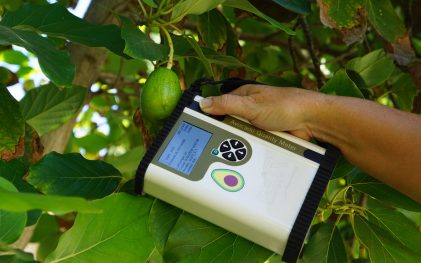
Fruit microbiome manipulation is emerging as a viable alternative to chemical treatments. However, the effectiveness of microbial interventions varies with genotype and postharvest environmental conditions. So, it is necessary to identify suitable microbial strains, optimize inoculum dosage, and their growth conditions, such as temperature, pH, and gas composition. Precision tools capable of real-time measurements of fresh produce quality, onsite, can considerably hasten research into biocontrol agents. Felix Instruments Applied Food Science provides a wide range of measurement devices to monitor quality parameters in fresh produce, including internal and external color, soluble sugar content, dry matter content, and titrable acidity. The F-750 Produce Quality Meter is a general tool that can be customized for any fresh produce, with specific ready tools in the F-751 series for avocado, grape, kiwifruit, mango, and melons. The company also produces several portable gas analyzers that can simultaneously measure concentrations of oxygen, carbon dioxide, and ethylene. A fixed instrument, F-910 AccuStore, can also measure temperature and RH to monitor all relevant environmental factors during postharvest stages and conditions.
Contact us for more information on our precision tools widely trusted and used by the research community.
Sources
BfR. (2020, April 21). Reclaimed waste water: preventing bacterial pathogens on fresh fruit and vegetables. Retrieved from https://www.bfr.bund.de/cm/349/reclaimed-waste-water-preventing-bacterial-pathogens-on-fresh-fruit-and-vegetables.pdf
De Costa, D.M., & Erabadupitiya, H. (2005). An integrated method to control postharvest diseases of banana using a member of the Burkholderia cepacia complex. Postharvest Biol. Technol., 36, 31–39.
Kusstatscher, P., Cernava, T., Abdelfattah, …………Berg, G. (2020). Microbiome approaches provide the key to biologically control postharvest pathogens and storability of fruits and vegetables. FEMS Microbiol. Ecol., 96, fiaa119.
Lyu, D., Zajonc, J., Pagé, A., Tanney, C. A. S., Shah, A., Monjezi, N., Msimbira, L. A., Antar, M., Nazari, M., Backer, R., & Smith, D. L. (2021). Plant Holobiont Theory: The Phytomicrobiome Plays a Central Role in Evolution and Success. Microorganisms, 9(4), 675. https://doi.org/10.3390/microorganisms9040675
Naik, E. K., Elangovan, M., Kumar, S., Meena, P. K., Shivam, Nautiyal, M., … Sathya, K. (2024). Induced Resistance in Fruit and Vegetable Enhancing Host Defence to Curve Post-harvest Diseases. Archives of Current Research International, 24(10), 376–392. https://doi.org/10.9734/acri/2024/v24i10939
Verma, S., Azevedo, L., Pandey, J., ……. Kumar, A. (2022). Microbial Intervention: An Approach to Combat the Postharvest Pathogens of Fruits. Plants,11, 3452.
Violante, H. G. M., & Pérez, M. V. A. (2022). Preharvest and postharvest application of microbial inoculants influencing postharvest storage technology in horticultural crops. In Sustainable Horticulture (pp. 399-436). Academic Press.
Zaman, W., Amin, A., Khalil, A. A. K., Akhtar, M. S., & Ali, S. (2025). Plant–Microbe Interactions for Improving Postharvest Shelf Life and Quality of Fresh Produce Through Protective Mechanisms. Horticulturae, 11(7), 732. https://doi.org/10.3390/horticulturae11070732
Related Products
Most Popular Articles
- Spectrophotometry in 2023
- NIR Applications in Agriculture – Everything…
- The Importance of Food Quality Testing
- The 5 Most Important Parameters in Produce Quality Control
- Melon Fruit: Quality, Production & Physiology
- Fruit Respiration Impact on Fruit Quality
- Guide to Fresh Fruit Quality Control
- Liquid Spectrophotometry & Food Industry Applications
- Ethylene (C2H4) – Ripening, Crops & Agriculture
- Understanding Chemometrics for NIR Spectroscopy
Related Reading