Controlled Atmosphere Facilities: What Are the Different Types?

Dr. Vijayalaxmi Kinhal

September 8, 2026 at 7:10 pm | Updated September 8, 2026 at 7:10 pm | 8 min read
Different Types of Controlled Atmosphere Facilities for Fresh Produce
- Controlled atmosphere (CA) facilities alter temperature, relative humidity, and the concentrations of oxygen, carbon dioxide, and ethylene.
- CA works by slowing biological activity such as respiration, transpiration, ripening, and senescence, and by limiting physiological disorders, insect damage, and disease.
- Commercial CA types available are standard, static, flushed, dynamic, rapid, delayed, ultra-low oxygen, initial oxygen stress, repeated oxygen stress, and insecticidal CAs.
Controlled atmosphere facilities are one of the most important postharvest technologies used to extend availability and shelf life and prevent quality loss in many fresh produce. Over time, several types of controlled atmosphere technologies have evolved from the standard model. This article explores the most common types of controlled atmosphere facilities used for fresh produce.
History Of Storage and Controlled Atmosphere Units
Before modern postharvest technology, growers traditionally stored fresh produce in situ or in the field, in pits, sand or coir, cellars, caves, or barrels. Although storing apples in temperate countries in cellars extended shelf life by three to four months, the fruits still lost moisture and nutrients.
Subscribe to receive our monthly round-up of articles.
Early 20th-century growers in England found that apples retained quality and lasted longer when stored in airtight conditions. These observations prompted the development of controlled-atmosphere technology as scientists began studying apple ripening processes. Franklin Kidd and Cyril West of the University of Cambridge established the effects of temperature, oxygen, and carbon dioxide on fruit respiration and ripening, and built the first controlled-atmosphere (CA) facility in England in 1929. The first commercial CA units in the USA were built in California in the early 1950s.
CA technology is one of many postharvest storage technologies used to extend shelf life. Other available options include evaporative coolers, zero-energy cool chambers, refrigeration, modified atmosphere storage, hypobaric storage, and solar storage.
Principles of Controlled Atmosphere Facilities
Like any other storage system, CA facilities aim to reduce biological activity, moisture loss, and physiological disorders to extend shelf life and limit degradation of fresh produce quality.
Controlled atmosphere facilities achieve this aim by changing ambient conditions and maintaining an artificial environment through a combination of technologies. CA facilities use lower temperatures and higher relative humidity (RH) and alter the composition of three crucial gases: oxygen (O2), carbon dioxide (CO2), and ethylene. Inert gases such as nitrogen are also sometimes used.
The CA procedures are chemical-free and are based on the following approach to reduce fresh loss:
Reduce biological activity: Fresh produce remains alive after harvesting and continues physiological processes that can degrade quality and shorten shelf life, such as respiration and senescence in all fresh produce, and ripening in climacteric fruits. CA reduces temperature and oxygen to limit respiration, ripening, and senescence. Higher carbon dioxide levels also help lower respiration rates, which limits ripening in climacteric fresh produce.
Control moisture loss: High relative humidity and cool conditions lower fresh produce’s transpiration rate, which can otherwise lead to moisture loss and cause wilting and shriveling. Controlling transpiration limits weight loss, firmness loss, and appearance degradation.
Limit physiological disorders: These are abnormalities that can appear in fruits due to storage conditions, but also due to genotype, harvest maturity, preharvest conditions, and seasonal variations. These defects can reduce quality, marketability, and profits. Defects can include chilling injury, skin discoloration, internal browning, mealiness, and woolliness, to name a few. Managing temperature, RH, and ethylene can reduce fresh-produce-specific physiological disorders.
Reduce diseases and pests: CA storage is a non-chemical process. High CO2 levels can inhibit the growth rate of pests and postharvest pathogens, reducing damage and disease, respectively. CA eliminates the need for chemical treatments, making food safer and storage more cost-effective.
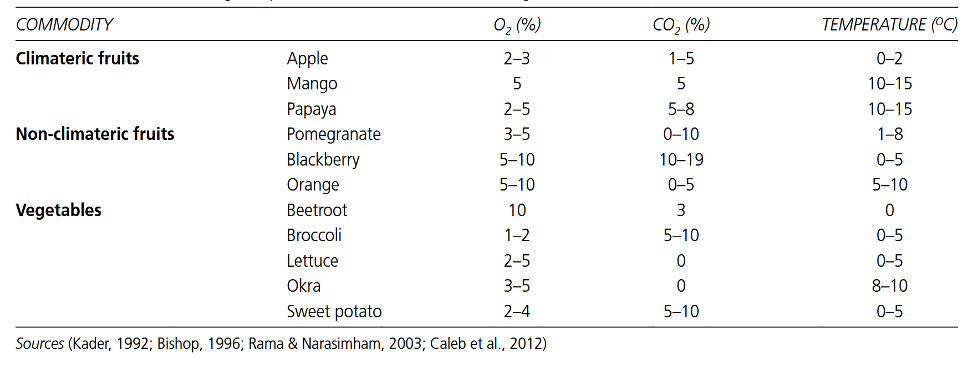
Table 1: Controlled Storage Requirements of Selected Fruits and Vegetables, Opara and Ogra (2024). (Credits: DOI:10.1201/9781003370376-2)
Specific temperature, RH, and gas composition vary by species and sometimes cultivar; see Table 1. When different varieties of a single fruit or vegetable are stored together, the CA facility must meet the requirements of the most sensitive variety. Although CA has several advantages, improper application can cause unripening, undesirable flavors, and increased susceptibility to decay. CA effectiveness depends on the specific species, whether it is climacteric or non-climacteric, harvest maturity, harvest quality, and proper maintenance of CA conditions.
CA Facilities for Storage and Transport
CA facilities are advanced but expensive, as they require high capital costs for specialized structures such as tightly sealed rooms, refrigeration systems, atmosphere generators, and monitoring and maintenance of controlled conditions.
- Storage: Therefore, CA facilities store only high-value fresh produce in significant quantities for extended periods. These include fruits such as apples, avocados, persimmons, kiwifruit, pomegranates, citrus, nuts, and dried fruits, as well as vegetables such as cabbages and sweet onions.
- Transport: CA facilities also support long-distance transport of crops such as mangoes, bananas, apples, avocados, kiwifruit, figs, cranberries, cherries, citrus, melons, pears, nectarines, peaches, plums, and strawberries, as well as vegetables such as asparagus and broccoli.
The ability to supply fresh produce in off-seasons at premium prices offsets the high costs of CA facilities. For small quantities of fruits such as berries or cherries, CA conditions are applied to individual pallets using high-density polyethylene bags, making the method more flexible and cost-effective.
CA technology is constantly evolving as demand for year-round availability of fresh produce increases and supply chains become more global. CA facilities can be classified by system type, applications, and gas composition.
- System types: CA can be classified as static, dynamic, or flushed.
- Applications: CA conditions can be customized to preserve fresh produce or for insecticidal purposes.
- Gas composition: The gas composition CA uses can vary, including low oxygen, ultra-low oxygen, low O2, and high CO2.
Currently, many types of CA facilities are available and include the following:
- Standard CA: Static and Flushed
- Rapid Controlled Atmosphere
- Delayed Controlled Atmosphere
- Dynamically Controlled Atmosphere
- Ultra Low Oxygen
- Initial Low Oxygen Stress
- Repeated Oxygen Stress
- Insecticidal Controlled Atmosphere
Standard CA Storage
Standard CA reduces O2 to 1-3% and increases CO2 to 0.5-5%, compared with ambient levels of 21% and 0.03%, respectively. Ethylene levels are maintained below 1 ppm (parts per million) to prevent ripening. RH is usually maintained at 90-95% to prevent transpiration, and temperature is kept between 0°C and 2°C. Standard CA supports food preservation and maintains dormancy to extend shelf life and limit ripening.
Depending on how the gas levels are achieved, CA can be static or flushed.
- Static: In static CA, commodities help create the atmosphere. Static systems are used in most CA for fresh produce storage, where O2 is maintained at pressures over 2 kPa.
- Flushed: Here, the gas levels in the atmosphere are changed by streaming in gas.
Delayed Controlled Atmosphere
To address physiological disorders in fruits such as apples during storage, delayed CA is used. Delaying the application of CA conditions can reduce physiological disorders in apples, such as CO2 injury, soft scald, bitter pit, and soggy breakdown.
When fruits are stored at low temperatures (1 °C) in ambient air for a specific period and then exposed to low O2 and high CO2, physiological disorders are reduced. The exact length of the period of cool storage before CA conditions are applied can differ based on cultivars and is one or two months for ‘Empire’ apples but is only 2-4 weeks for ‘Pink Lady’ apples. Longer delays may be needed for higher incidence of prevalent disorders, and 1-MCP application can help.
Rapid Controlled Atmosphere
Rapid CA, on the other hand, involves keeping fresh produce at low temperature and low O2 as soon as possible after harvest. The ambient atmosphere in the store room with fresh produce is removed and replaced with CA levels, and the room is sealed within hours of the harvest instead of gradually cooling over a week. The speed at which CA conditions are applied can be crucial to extending the shelf life of fruits. For example, Gala apples stored at 1°C within 12 hours maintain quality better and have lower incidences of rot and breakdown.
Dynamic Controlled Atmosphere
Dynamic controlled atmosphere (DCA) is the most developed type of CA and is considered to have evolved from ULO (Ultra Low Oxygen) and ILOS (Initial Low Oxygen Stress) methods popular in the twentieth century. DCA has been widely used since the 2000s.
DCA reduces O2 levels to very low levels to reach the anaerobic compensation point, but without fermentation damage. The fruit response is constantly monitored to adjust O2 levels in real time. The most commonly used technology to detect when fruits are approaching the anaerobic fermentation point is chlorophyll fluorescence sensors.
DCA provides the best firmness and color retention and reduces rots compared with standard CA or ULA. Most research on this method has been done on apples, pears, and avocados. It was developed to tackle superficial scald without using chemicals. Fresh produce with similar ethylene sensitivity can be stored together. However, fruits kept for extended periods in DCA can suffer from reduced metabolism, which induces stress and triggers self-protection processes.
Ultra-low Oxygen Controlled Atmosphere
Ultra-low oxygen (ULO) units reduce oxygen concentrations to 1.5% or below, down to 0.5% and 0.8–1.2 kPa. These low O2 concentrations significantly reduce fruit respiration and ethylene production, delaying ripening and the development of physiological disorders such as superficial scald. ULO requires nitrogen generators to replace O2, pressure-balancing systems, and highly sensitive gas analyzers to monitor O2 levels. Moreover, since the difference between the targeted O2 levels and the point where fermentation can set in is very small, gas, especially O2 and ethylene, has to be monitored continuously. The method is suitable for longer storage, where ripening must be controlled. ULOs are extensively used for apples and pears in major producing areas in the USA and Europe.
Initial Low O2 Stress Controlled Atmosphere
The initial low O2 stress (ILOS) method relies on lowering O2 pressure to 0.4 kPa in the early stages of storage, causing short-term ethanol accumulation and delaying fruit ripening. The method uses hypobaric, or low-pressure, storage techniques that are very expensive and have safety issues, so they are not commercially viable.
Repeated Low O2 Stress Controlled Atmosphere
A variation of ILOS is the application of repeated low O2 (RLO) levels of 1.5–2.0 kPa for fruits in DCA storage around 1-3°C. Apply RLO twice a week, followed by intervals when more O2 is supplied. This method is recommended only for certain apple cultivars, since they have differing tolerance to low-oxygen stress. For example, ‘Elstar’ apples maintain more firmness and greener peel and benefit from combining ILOS with DCA. However, ‘Nicoter’ apples in similar conditions have more decay and cavities.
Insecticidal Controlled Atmosphere
Very high CO2 levels lower cell pH and reduce metabolic rate in insects and pathogens. As a result, these organisms produce less energy (ATP) and postpone initiating anaerobic respiration.
- Higher CO2 levels are more effective than lower O2 in increasing insect mortality, possibly because of higher membrane permeability.
- Very high CO2 (5-10%) controls microbes such as fungi and Gram-negative bacteria but cannot control yeasts, anaerobic bacteria, and lactic acid bacteria.
Combining high CO2 with reduced O2 can have an additive effect. The exact CO2 and O2 levels needed for insecticidal and antimicrobial effects depend on temperature, species, and life stage.
Creating and Maintaining CA Conditions
The common components of creating CA conditions in airtight rooms are
- Refrigeration and airflow systems to maintain low temperatures
- Humidifiers for humidity management
- Gas generators such as nitrogen and removers like ventilation and scrubbers for O2, CO2, and ethylene
- Gas sensors for monitoring and controlling gas composition
Before fresh produce is kept in CA, it must undergo precooling, cleaning, sorting by maturity, and loading.
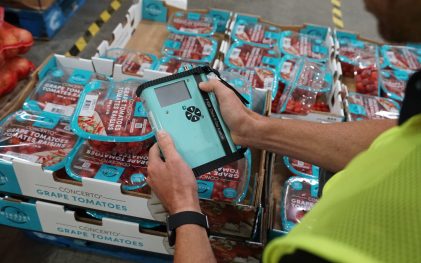
Felix Instruments Applied Food Science offers many sensitive, precise gas analyzers for continuous and spot checks of gas composition during storage, which fresh produce supply chains can integrate into demanding CA facilities.
- Devices you can use to monitor O2, CO2, and ethylene through spot checks include: F-940 Store It! Gas Analyzer and F-950 Three Gas Analyzer
- For continuous monitoring and control of the three gases, as well as simultaneously estimating temperature and humidity, use F-910 AccuStore.
- To ensure that ethylene levels are not high enough to cause ripening, use the F-960 Ripen It Gas Analyzer.
The devices measure different gas ranges to suit different storage and transport conditions.
Contact us for more information on Felix Instruments Gas Analyzers for your CA facilities.
Sources
Agriculture.Institute. (2025, June 19). Food Processing and Engineering-II
Commercial Uses and Applications of Controlled Atmosphere Storage. Retrieved from https://agriculture.institute/food-processing-and-engineering-ii/controlled-atmosphere-storage-uses-applications/
DeEll, J. R., Lum, G. B., & Ehsani-Moghaddam, B. (2016). Effects of delayed controlled atmosphere storage on disorder development in ‘Honeycrisp’apples. Canadian Journal of Plant Science, 96(4), 621-629.
Falagán, N., & Terry, L. A. (2018). Recent advances in controlled and modified atmosphere of fresh produce. Johnson Matthey Technology Review, 62(1), 107-117.
Mahajan, P. V., Caleb, O. J., Singh, Z., Watkins, C. B., & Geyer, M. (2014). Postharvest treatments of fresh produce. Philosophical transactions. Series A, Mathematical, physical, and engineering sciences, 372(2017), 20130309. https://doi.org/10.1098/rsta.2013.0309
Mishra, P. (n.d.). Methods Of Storage and Post-Harvest Disorders Of Fruit Crops. Retrieved from https://www.slideshare.net/slideshow/methods-of-storage-and-post-harvest-disorders-of-fruit-crops/266660381#6
Neuwald, D. A., Thewes, F. R., Büchele, F., Steffens, C. A., Khera, K., Both, V., … & Brackmann, A. (2023, May). Repeated low oxygen stress on dynamic controlled atmosphere storage of’Elstar’and’Nicoter’apples. In VII International Conference Postharvest Unlimited 1396 (pp. 241-248).
Neven, L., Mitcham, E. (2008). Controlled Atmosphere Technologies for Insect Control. In: Capinera, J.L. (eds) Encyclopedia of Entomology. Springer, Dordrecht. https://doi.org/10.1007/978-1-4020-6359-6_10008
NWHort.org. (2023, June 2). A Technical Information Bulletin of the Northwest Horticultural Council Controlled Atmosphere Storage. Retrieved from https://nwhort.org/technicalbulletins/controlled-atmosphere-storage/
Opara, U. L., & Ogra, I. O. (2024). An introduction to postharvest handling technology of fresh fruits and vegetables. In Sustainable postharvest technologies for fruits and vegetables (pp. 3-41). CRC Press.
Related Products
- F-751 Grape Quality Meter
- Custom Model Building
- F-910 AccuStore
- F-751 Melon Quality Meter
- F-751 Kiwifruit Quality Meter
- F-750 Produce Quality Meter
- F-751 Avocado Quality Meter
- F-751 Mango Quality Meter
- F-9XXDK Dynamic Sampling Kit
- F-900 Portable Ethylene Analyzer
- F-950 Three Gas Analyzer
- F-920 Check It! Gas Analyzer
- F-960 Ripen It! Gas Analyzer
- F-940 Store It! Gas Analyzer
Most Popular Articles
- Spectrophotometry in 2023
- NIR Applications in Agriculture – Everything…
- The Importance of Food Quality Testing
- The 5 Most Important Parameters in Produce Quality Control
- Melon Fruit: Quality, Production & Physiology
- Fruit Respiration Impact on Fruit Quality
- Guide to Fresh Fruit Quality Control
- Liquid Spectrophotometry & Food Industry Applications
- Ethylene (C2H4) – Ripening, Crops & Agriculture
- Understanding Chemometrics for NIR Spectroscopy