Why Are My Readings Drifting During Long Storage Studies?

Scott Trimble

September 16, 2026 at 6:51 pm | Updated September 16, 2026 at 6:52 pm | 6 min read
Gas analyzer drift is one of those problems that rarely shows up during a quick spot check, but it can become obvious during a long storage study. A reading that looked stable on day one may slowly move away from the expected trend after days or weeks of monitoring. In postharvest research, controlled atmosphere storage, ripening rooms, and package headspace testing, that drift can make it harder to separate real biological change from instrument or sampling effects.
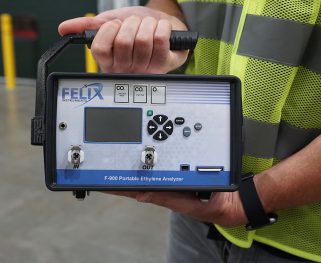
The good news is that drifting readings usually have a traceable cause. It may be calibration, sensor age, condensation, sampling technique, leaks, changing temperature, or simply a mismatch between the instrument and the gas range being measured. Felix Instruments designs its gas analyzers for real storage and ripening workflows, including instruments for CO2, O2, and ethylene measurement across different use cases. The F-920 measures CO2 and O2 in headspace and continuous sampling modes, while the F-940, F-950, and F-960 add ethylene measurement for storage and ripening applications.
What Drift Looks Like in a Storage Study
Drift does not always look like a dramatic failure. More often, it looks like a slow shift.
Subscribe to receive our monthly round-up of articles.
You may see:
- O2 readings creeping upward in sealed samples that should be consuming oxygen
- CO2 readings flattening even though respiration should still be active
- Ethylene readings rising slightly across blank or control samples
- Replicate samples spreading farther apart over time
- A stable room suddenly appearing unstable without any matching change in product behavior
That last point matters. In long storage studies, fruit, packaging, and room conditions really do change. Apples, avocados, mangoes, kiwifruit, grapes, bananas, and other produce can shift respiration and ethylene behavior as they mature or respond to storage stress. The question is not whether the gas profile changes. It should change. The question is whether the readings make biological sense.
Calibration Is the First Place to Look
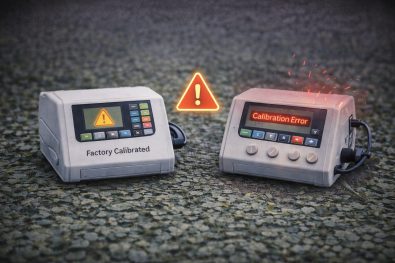
Most long-term drift investigations should start with calibration history. Sensors do not stay fixed forever. Even well-built instruments need regular offset and span checks because sensor output can change with use, exposure, and time.
Felix support specifications for the F-950 list weekly offset calibration and three-month span calibration for ethylene measurement, with user-replaceable electrochemical ethylene sensors and a listed sensor lifetime of about two years. The F-940 support specifications also list weekly offset calibration and three-month span calibration for ethylene, with separate calibration guidance for O2.
That schedule is important for storage studies because the study timeline may be longer than the calibration interval. A six-month trial, for example, should not rely on a calibration performed before day one and then ignored until the final data export.
A practical approach is to build calibration checks into the study design:
- Check zero or offset before the study starts
- Record calibration gas lot numbers when applicable
- Run a known standard at scheduled intervals
- Document any adjustment before continuing measurements
- Flag data collected before and after calibration changes
This does not weaken the study. It strengthens it because it gives you a record of instrument behavior over time.
Sensor Range Can Affect How Drift Is Perceived
Another common issue is using an instrument outside the most useful part of its range. A sensor may technically measure a gas, but the best instrument depends on whether you care about trace exposure, background storage levels, active ripening concentrations, or package headspace.
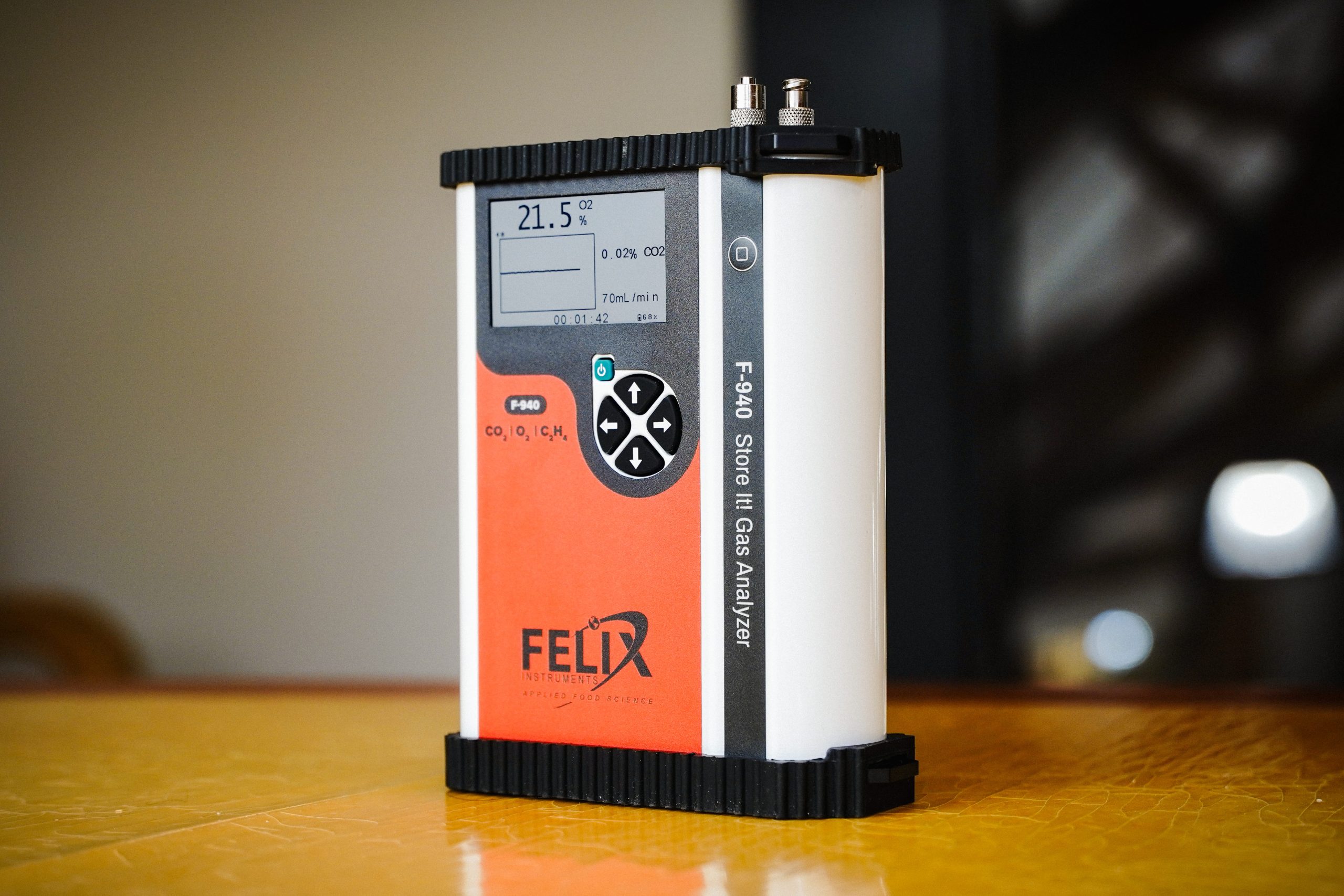
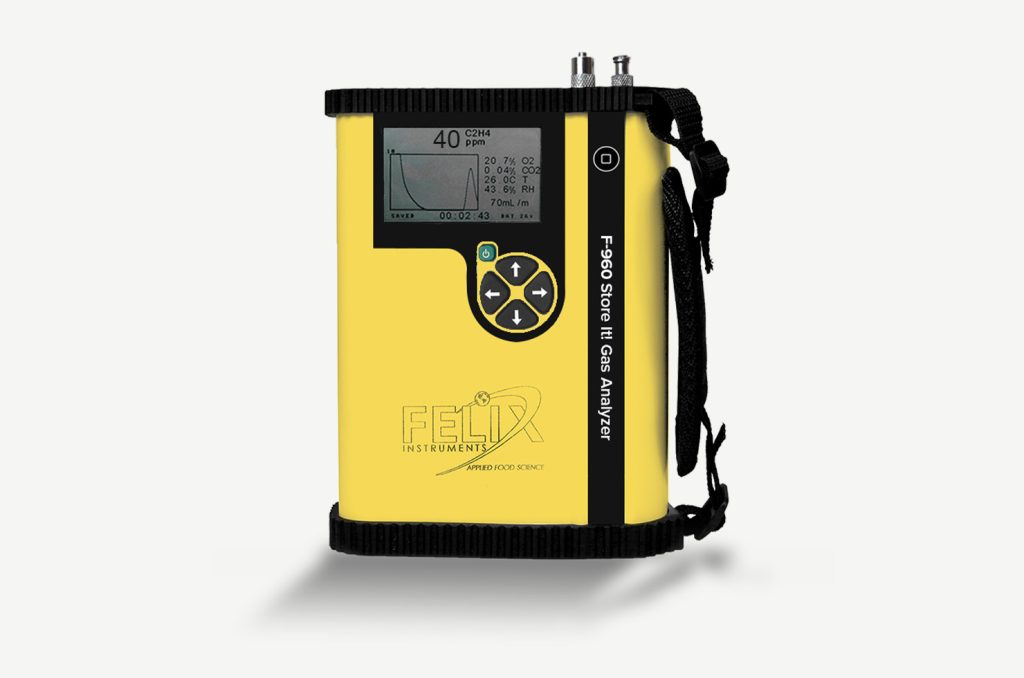
For low ethylene storage work, the F-940 Store It Gas Analyzer is positioned for high-resolution ethylene measurement from 0 to 10 ppm, along with CO2 and O2. For broader storage and ripening checks, the F-950 measures ethylene, CO2, and O2 in one portable instrument, with ethylene measurement from 0 to 200 ppm. For high-ethylene ripening environments, the F-960 is positioned for ethylene from 10 to 1000 ppm.
This matters because gas analyzer drift can appear worse when the expected signal is very close to the lower detection limit or when the measured gas is much lower than the instrument’s main operating range. A low-level storage study and a banana ripening room are not the same measurement problem.
Sampling Technique Can Create False Drift
Long storage studies often involve repeated sampling from the same chamber, package, or room. Small inconsistencies can stack up.
Common sampling problems include:
- Pulling different sample volumes at different time points
- Sampling too soon after opening a port
- Using tubing that adsorbs or releases trace gases
- Leaving dead volume in tubing between samples
- Reusing septa that no longer seal cleanly
- Sampling from different locations in a room
- Comparing headspace samples with continuous room readings
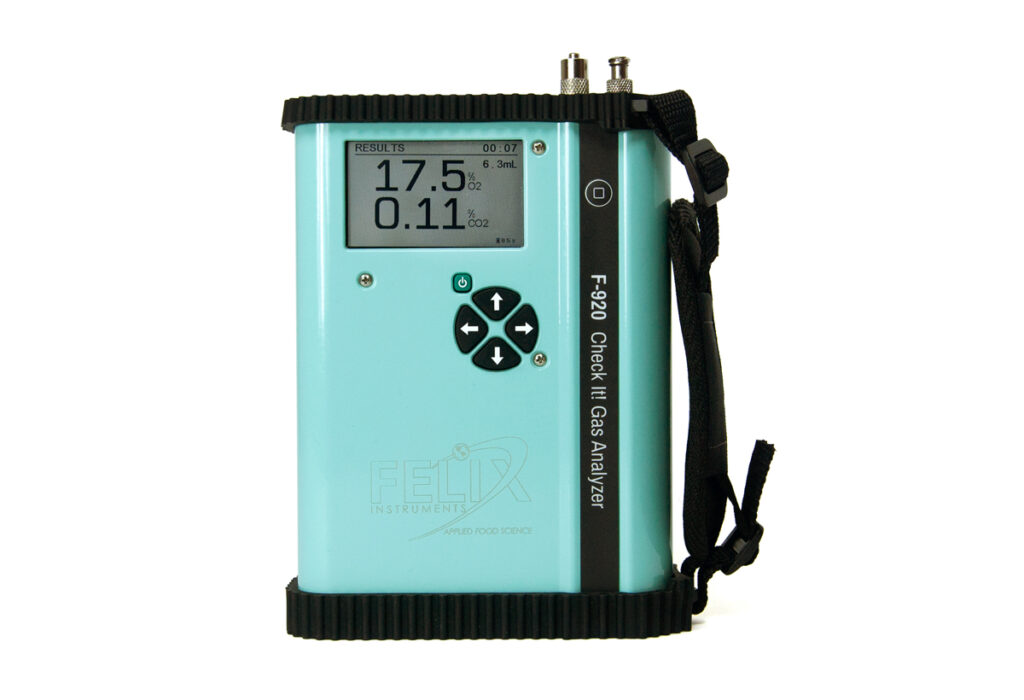
The F-920 is designed for continuous or spot measurement of CO2 and O2 in headspace gas, and Felix highlights user-selected sampling modes for headspace or continuous sampling. That flexibility is useful, but it also means the method needs to stay consistent. A headspace pull from a package and a continuous reading from a room port should not be treated as equivalent unless the protocol accounts for the difference.
For long studies, write the sampling method as if another technician will take over halfway through. Include tubing length, purge time, sample volume, port location, stabilization time, and the order of samples.
Condensation and Moisture Are Easy to Underestimate
Storage studies often run cold, humid, and slow. That is a tough combination for gas measurement. Moisture can collect in tubing, filters, ports, or fittings. Even if it does not damage the instrument, it can delay gas exchange, trap soluble gases, or cause unstable flow.
Moisture-related drift often looks like delayed response. The reading eventually moves in the expected direction, but it takes longer than usual. Or the first few readings of the day look different from readings taken after the system has been running.
To reduce moisture effects:
- Let cold samples equilibrate when the protocol allows
- Use appropriate filters or moisture management accessories
- Inspect tubing regularly
- Replace wet or contaminated tubing
- Avoid drawing liquid water toward the sensor
- Keep the analyzer within its recommended operating conditions
Leaks Can Mimic Sensor Drift
A small leak can look exactly like instrument drift. In low-O2 storage, a leak may pull readings toward ambient oxygen. In elevated CO2 work, a leak may dilute the sample. In ethylene studies, a poor seal may either lose ethylene or allow contamination from nearby rooms.
Leaks are especially frustrating because they may change over time. A septum can work for the first 20 punctures and fail later. A fitting can loosen after moving equipment. A package seal can relax during cold storage. If the drift appears only in certain chambers or packages, test the sampling path before blaming the analyzer.
Data Logging Helps Separate Instrument Behavior from Biology
One advantage of using a purpose-built portable analyzer is traceability. Felix’s F-920 records CO2 concentration, O2 concentration, date and time, relative humidity, and GPS location with each sampling event. Felix support specifications for the F-950 and F-960 also describe recorded measurement data that include gas concentrations, date, time, relative humidity, and GPS location.
That metadata helps when troubleshooting gas analyzer drift. If a shift lines up with a different operator, a new location, a high-humidity period, a calibration event, or a change in sampling time, the cause becomes easier to find.
How to Build a Better Long Storage Protocol
A strong protocol does not assume drift will never happen. It makes drift visible and manageable.
Use this basic structure:
- Choose the right analyzer for the expected gas range.
- Calibrate before the study and verify on a set schedule.
- Run blank or control samples throughout the study.
- Keep sampling volume, tubing, ports, and timing consistent.
- Record temperature and humidity with gas data.
- Check for leaks at regular intervals.
- Replace consumables before they become questionable.
- Review trends weekly instead of waiting until the end.
For many teams, this is where Felix Instruments has a practical advantage. The product line is not built around one generic gas analyzer. It gives users options based on the study environment: F-920 for CO2 and O2 package or headspace checks, F-940 for low-level ethylene storage work, F-950 for portable three-gas measurement, and F-960 for ripening rooms with higher ethylene concentrations.
Gas analyzer drift during long storage studies is usually not random. It is often the result of calibration intervals, sensor aging, sampling inconsistency, moisture, leaks, or using the wrong measurement range for the job. The best response is not to discard the instrument or overcorrect the data. The better response is to tighten the protocol, verify the instrument, and choose an analyzer that matches the gas range and storage environment.
Felix Instruments offers portable gas analyzers built for postharvest research, controlled atmosphere storage, modified atmosphere packaging, and ripening workflows. If your team is planning long storage studies and wants cleaner gas data from the start, contact Felix Instruments to discuss which analyzer best fits your commodity, gas range, and sampling protocol.
Related Products
Most Popular Articles
- Spectrophotometry in 2023
- NIR Applications in Agriculture – Everything…
- The Importance of Food Quality Testing
- The 5 Most Important Parameters in Produce Quality Control
- Melon Fruit: Quality, Production & Physiology
- Fruit Respiration Impact on Fruit Quality
- Guide to Fresh Fruit Quality Control
- Liquid Spectrophotometry & Food Industry Applications
- Ethylene (C2H4) – Ripening, Crops & Agriculture
- Understanding Chemometrics for NIR Spectroscopy