Important Near-Infrared Research Breakthroughs for Fresh Produce in 2025

Dr. Vijayalaxmi Kinhal

February 2, 2026 at 5:30 pm | Updated February 2, 2026 at 5:30 pm | 8 min read
- Several significant breakthroughs were achieved in 2025 in the near-infrared (NIR) technology, notably a prototype for non-contact use.
- Several studies focused on finding a single optimal NIR wavelength or reducing the number of wavelengths used to make data analysis easier and devices more affordable.
- Expanding detection of pesticide residues and reducing pest infestations to make food safer and reduce biosecurity risks were prominent aims.
- Studies focused on developing non-destructive methods for quality and defect determination to reduce waste and improve the sustainability of the fresh produce industry.
The market for near-infrared (NIR) spectroscopy is expected to grow at a CAGR of 14.7% (US$862 million) between 2024 and 2029. The reasons for this significant rise in technology use are concerns about food quality, freshness, and safety. The technology enables non-destructive, accurate, and real-time analysis of food onsite throughout the supply chain. On the other hand, research into the application of NIR spectroscopy has been steadily increasing, driving its use. In this article, we discuss several research breakthroughs reported in the use of NIR technology in fresh produce supply chains.
Detecting Pesticides
The application of near-infrared (NIR) spectroscopy for pesticide detection is not new. Previous studies have focused on the efficiency of benchtop NIR technology for detecting pesticide contamination in cucumbers, cabbage, cocoa beans, and tomatoes. The maximum number of chemicals these studies could detect was two pesticides.
Therefore, findings from a Brazilian research team that differentiate and identify more than two pesticides using low-cost, portable NIR spectrometers are considered a breakthrough for the fresh produce industry.
Subscribe to receive our monthly round-up of articles.
A 2025 Environmental Working Group (EWG) report found traces of 263 pesticides on conventional vegetables and fruits in the USA. Many of which are not monitored but can harm the nervous and reproductive systems and cause hormonal imbalance. These pesticides also reduce the health benefits that consumers want from fresh produce, such as protection against cardiovascular disease and longevity.
To ensure the safety of fresh produce and protect consumers, national and international agencies have strict regulations to control pesticide residues. The fresh produce is currently monitored using complex laboratory technologies such as gas chromatography, immunoassays, and mass spectrometry, which require time and money. The finding that pesticides can be detected on-site with portable NIR tools can help the supply chain easily comply with regulations and meet consumer demands.
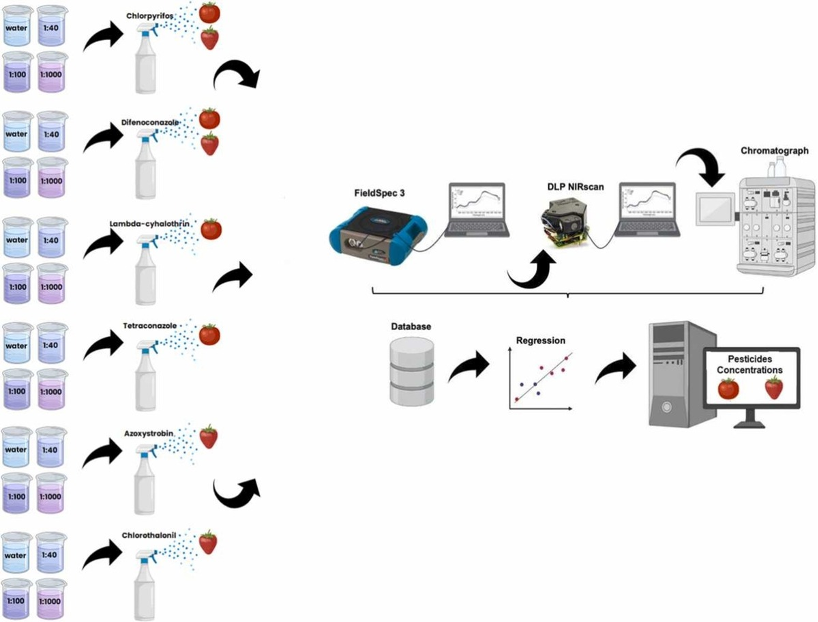
Figure 1. “Graphical representation of the experiment to detect six common pesticides through portable NIR spectroscopy,” Ferreira et al. (2025). (Image credits: https://doi.org/10.1016/j.jfca.2025.108024)
The study by Ferreira et al. (2025) collected NIR (900-1700 nm) reflectance spectra from cherry tomatoes and strawberries treated with different concentrations of common pesticides: azoxystrobin, chlorpyrifos, chlorothalonil, difenoconazole, lambda-cyhalothrin, or tetraconazole. They preprocessed the data and then analyzed the spectra with several chemometric models. They used models such as Partial Least Squares Regression (PLSR), Random Forest (RF), Orthogonal Projection for Latent Structures (OPLS), and Support Vector Machine (SVM).
The OPLS models based on wavelengths selected by Recursive Feature Elimination with Cross-Validation and Sequential Feature Selection had the best predictive power among the models tested, with accuracies ranging from 0.61 to 0.93 for quantifying the six pesticides.
The study provides an on-site method for detecting pesticide residues in real time and reducing consumer exposure to harmful chemicals. It can be used by food vendors and agricultural inspectors to monitor food and ensure food safety.
-
Detection of Infested Fruits with NIR
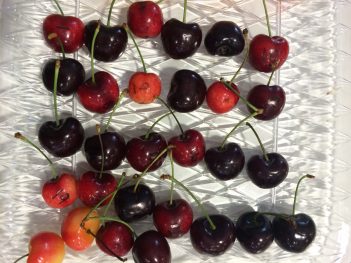
A study by Yazdani et al. (2025) identified a single NIR wavelength, 730 nm, capable of identifying Queensland fruit fly (Qfly) oviposition damage. They have created the world’s first single-wavelength NIR image library for detecting fruit fly infestation in fresh cherries, with a custom-built imaging system. Another breakthrough of the study was the introduction of a new machine learning framework for detecting fly infestation at the image and fruit levels.
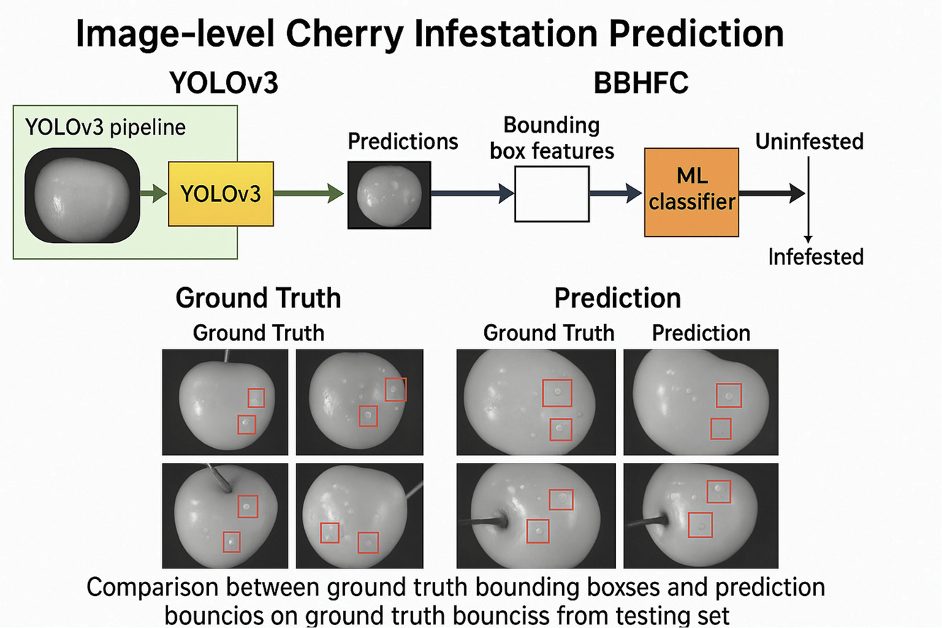
Figure 2: Summary of study that used the YOLO model to bound and detect fruit fly infestations in sweet cherries,” Yazdani et al. (2025). (Image credits: https://doi.org/10.1016/j.atech.2025.101090)
Fruit infestations by insects, such as fruit flies, pose a threat to international supply chains, as they can spread into importing countries. The insects then become invasive, causing significant economic losses. Therefore, strict control and quarantine measures are used to prevent biosecurity risks. Fresh produce imports require expensive and time-consuming visual inspections. Moreover, chemical fumigation for detection and control has negative environmental and health impacts.
The current study was inspired by the ability of NIR spectroscopy-based tools to analyze internal quality parameters in automated grading technology and to detect internal mango defects using NIR wavelengths. Previous pest infestation detection technology relied on hyperspectral data, which required hundreds of NIR wavelengths for imaging. The result was expensive, slow equipment that required significant data processing, limiting its application.
This study focused on identifying a single NIR wavelength associated with oviposition damage spots to enable more precise, targeted detection. The study also differed from previous studies that focused on detecting wavelengths in fruit tissue and infested areas. In this research, scientists combined advanced custom-built imaging techniques with machine learning to automatically detect quarantine pests, such as the fruit fly, that affect fresh produce.
The new machine learning framework they developed, the Bounding Box Histogram Fusion Classifier (BBHFC), precisely identifies fruit fly infestation at the fruit and image levels. The BBHFC has an accuracy of 89% in detecting infestations, compared to 60% for manual inspections.
The result was 1771 high-resolution images of infested cherries and 547 uninfested cherry images for control samples. The images of infestations were manually annotated by an entomologist. Infestation and uninfested spots were marked with bounding boxes, and the model was trained to label and classify images, as shown in Figure 2. The scientists used the YOLO3 (You Only Look Once) deep neural network for real-time detection by partitioning the cherry images into a grid and detecting infestation bounding boxes.
-
Improving NIR Spectroscopy Detection of Damage
Another study by Xie et al. (2025) addressed NIR-based damage detection; however, it focused on spectroscopy for analyzing internal damage.
NIR spectroscopy is widely used for precise quality assessment, but detecting damage remains challenging. Damage detection using NIR spectroscopy has been attempted before, but the model was not robust because it relied solely on surface-area analysis. Because of the position of the light source and detector, subcutaneous tissue was not probed, so the extent of internal damage could not be fully assessed. Therefore, the models lacked sensitivity.
Xie et al. (2025) attempted to solve this problem by using multi-position light-scattering detection and combining it with machine learning to achieve more accurate damage detection in jujube fruits. Single-position spectral (SPSM) models and multi-position spectral modeling (MPSM) were analyzed using five machine learning algorithms: K-Nearest Neighbors (KNN), Support Vector Machine (SVM), Radial Basis Function (RBF), Random Forest (RF), and Long Short-Term Memory (LSTM).
The best MPSM model was 100% accurate in detecting subcutaneous damage in jujube. Compared to single-position spectral modeling, MPSM methods were 13.89% better.
-
Quality Assessment of Peaches
NIR spectroscopy is an established method for non-destructive, rapid quality testing of multiple parameters, making it cost-effective and easy to use for many fresh produce samples. It is a standard practice in the fresh produce industry to test a wide range of products using NIR spectroscopy. For peaches, a method to predict decay days in advance using NIR and e-nose technologies achieves 82.26% prediction accuracy.
In the present study, Sharabiani et al. (2025) sought to develop a model to assess quality parameters in the peach cultivar Javadi. They obtained visible-NIR (350-1150 nm) spectra to evaluate soluble solids content (SSC), titratable acidity (TA), anthocyanin extract (EA), total phenolics (TP), and pH.
The spectral data were preprocessed using various techniques: Savitsky-Golay smoothing (SG), Baseline correction, first derivative (D1), standard normal variate (SNV), and incremental diffusivity correction (MSC), individually and in combinations. The data were then analyzed using multivariate partial least squares (PLS) regression models.
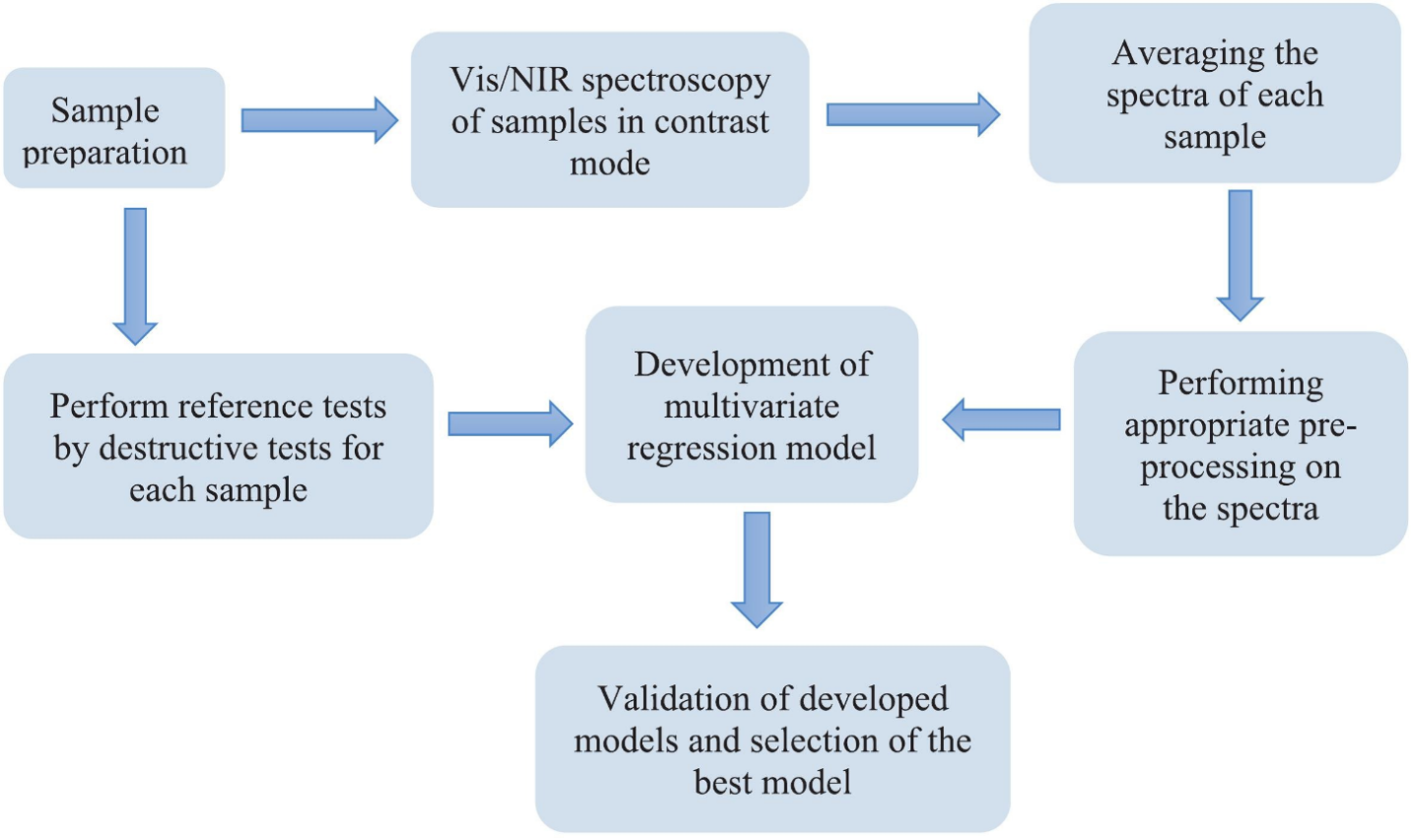
Figure 3: “Schematic representation of the experimental workflow to determine peach quality parameters,” Sharabiani et al. (2025). (Image credits: https://doi.org/10.1016/j.foodchem.2025.146401)
The scientists developed a model for peaches that predicted pH with high accuracy and TA and SSC with moderate accuracy, followed by lower accuracy for TP and EA.
The scientists suggest the method can be applied to produce portable VIS/NIR devices for orchard grading and to improve the quality of peaches slated for export.
-
Non-Contact Reflectance Spectroscopy
Another significant breakthrough reported in 2025 was the development of an innovative non-contact approach that could help expand the application of NIR spectroscopy in the postharvest sector of the fresh produce industry. Since the probe does not need to be placed on the food to collect data, it can be attached to sorting lines to measure 10 fruits per second without interrupting the flow of fresh produce. Current contact devices in sorting lines stop the flow for 0.1 second, plus the time to position the probe on each fruit.
Levoni et al. (2025) used time-resolved reflectance spectroscopy (TRS) from a pulsed light source, as it can estimate the absorption coefficient (µa) and the transport scattering coefficient (µs’). The technique can assess internal tissue quality to a depth of 2 cm, detecting defects and bruising that would normally require cutting the fruit open. Moreover, TRS is less affected by peel surface characteristics. Other NIR spectroscopy measurements reflect only the reflectance from the peel of fresh produce. TRS provides a non-destructive means of analyzing internal pulp at a single wavelength, replacing the destructive examination of fruits for internal defects, which is time-consuming and wasteful. For broader industrial-level applications compatible with automated systems, the scientists aimed to create a non-contact prototype to improve the sustainability of the fresh produce supply chain.
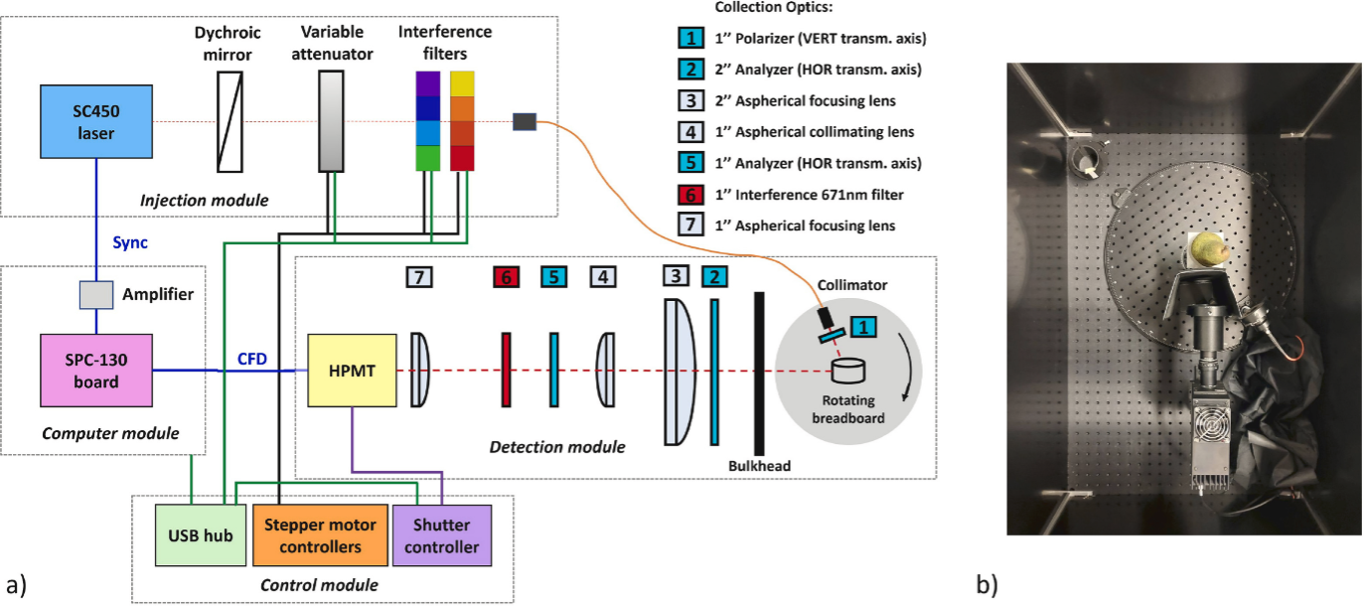
Figure 4: “(a) Simplified block diagram of the non-contact TRS system. HPMT: Hybrid Photomultiplier detector. CFD: Constant Fraction Discriminator signal. Sync: synchronization signal. (b) Measurement box, housing rotating breadboard and detection module,” Levoni et al. (2025).
The new TRS prototype follows the MEDPHOT protocol and tests the shelf-life of ‘Abate Fetel’ pears belonging to different maturity classes- less, moderate, and more mature fruits.
The performance of the TRS prototype was evaluated against established standards for diffuse optical devices and was found to be comparable to state-of-the-art TRS tools. The absorption coefficients were limited to 0.4 cm−1, and the prototype reduced-scattering coefficients to 15 cm−1. The prototype could not precisely retrieve optical property values, but it was still able to assess internal quality. It distinguished pears across the three maturity classes while monitoring shelf life for 7 days of fruit that had been cold-stored for 90 days, as evidenced by a decrease in the absorption coefficient. The scientists argue that this level of accuracy of the optical system and data analysis method is sufficient for industrial applications. The prototype was placed 10 cm away from the sample. The prototype needs further testing on other vegetables and fruits, as well as on industrial sorting lines in real-world settings, to support industrial-level application.
State-Of-The-Art NIR Spectroscopy Devices
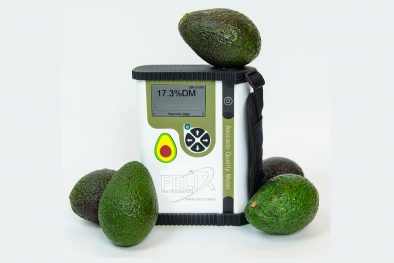
Research in 2025 seeks to expand the use of NIR spectroscopy and imaging to cover new species, cultivars, and parameters. New models are also constantly improving prediction accuracy. Some of these breakthroughs can be easily integrated into state-of-the-art NIR spectroscopy-based devices already on the market, such as those offered by Felix Instruments Applied Food Science. The company offers a general Produce Quality Meter (F-750), and five customized quality meters for avocado, mango, melon, kiwifruit, and grapes. The F-751 Grape Quality Meter was released in 2025. Custom model-building options allow companies and stakeholders in the fresh produce supply chain to use the model best suited to their needs or species.
Contact Felix Instruments Applied Food Science to learn more about our Quality Meters and custom model-building for your industry.
Sources
Eccher Zerbini, P., Grassi, M., Cubeddu, R., Pifferi, A. and Torricelli, A. (2003). Time-resolved reflectance spectroscopy can detect internal defects. Acta Hortic. 599, 359-365. DOI: 10.17660/ActaHortic.2003.599.44
Ferreira, I. J. S., dos Santos Costa, D., Rolim, L. A., de Freitas, S. T., de Souza, N. A. C., & Teruel, B. (2025). Monitoring Pesticides with Portable NIR Spectroscopy in Different Intact Fruits. J. Food Compos. Anal., 124, 108024. DOI: 10.1016/j.jfca.2025.108024
Levoni, P., Negrete, F., Maffeis, G., Vanoli, M., Cortellino, G., Lovati, F., … & Spinelli, L. (2025). Non-destructive optical characterization of fruit and vegetables by non-contact time-resolved reflectance spectroscopy. Postharvest Biology and Technology, 222, 113357.
Sharabiani, V. R., Saadati, N., Alizadeh, F., & Szymanek, M. (2025). Non-destructive assessment of quality parameters in Javadi cv. Peach fruits using Vis/NIR spectroscopy and multiple regression analysis. Food Chemistry, 146401. https://doi.org/10.1016/j.foodchem.2025.146401
Xie, Y., Xi, Q., Han, X., Li, Z., Li, G., Wang, H., … & Zhao, J. (2025). A feasibility study on improving the non-destructive detection accuracy of Huping jujube (Ziziphus jujuba Mill. cv. Huping) damage degree using near infrared spectroscopy. Vibrational Spectroscopy, 103826.https://doi.org/10.1016/j.vibspec.2025.103826
Yazdani, M., Bao, D., Zhou, J., Wang, A., & van Klinken, R. Non-Destructive Detection of Queensland Fruit Fly Oviposition Damage in Cherries Using a Simplified Near-Infrared Imaging and Machine Learning Approach. Available at SSRN 5212490. https://doi.org/10.1016/j.atech.2025.101090
Related Products
- F-751 Grape Quality Meter
- Custom Model Building
- F-910 AccuStore
- F-751 Melon Quality Meter
- F-751 Kiwifruit Quality Meter
- F-750 Produce Quality Meter
- F-751 Avocado Quality Meter
- F-751 Mango Quality Meter
- F-9XXDK Dynamic Sampling Kit
- F-900 Portable Ethylene Analyzer
- F-950 Three Gas Analyzer
- F-920 Check It! Gas Analyzer
- F-960 Ripen It! Gas Analyzer
- F-940 Store It! Gas Analyzer
Most Popular Articles
- Spectrophotometry in 2023
- NIR Applications in Agriculture – Everything…
- The Importance of Food Quality Testing
- The 5 Most Important Parameters in Produce Quality Control
- Melon Fruit: Quality, Production & Physiology
- Fruit Respiration Impact on Fruit Quality
- Guide to Fresh Fruit Quality Control
- Liquid Spectrophotometry & Food Industry Applications
- Ethylene (C2H4) – Ripening, Crops & Agriculture
- Understanding Chemometrics for NIR Spectroscopy
Related Reading