10 Fruits Commonly Tested with the F-750

Scott Trimble

March 10, 2026 at 4:20 pm | Updated March 10, 2026 at 4:20 pm | 4 min read
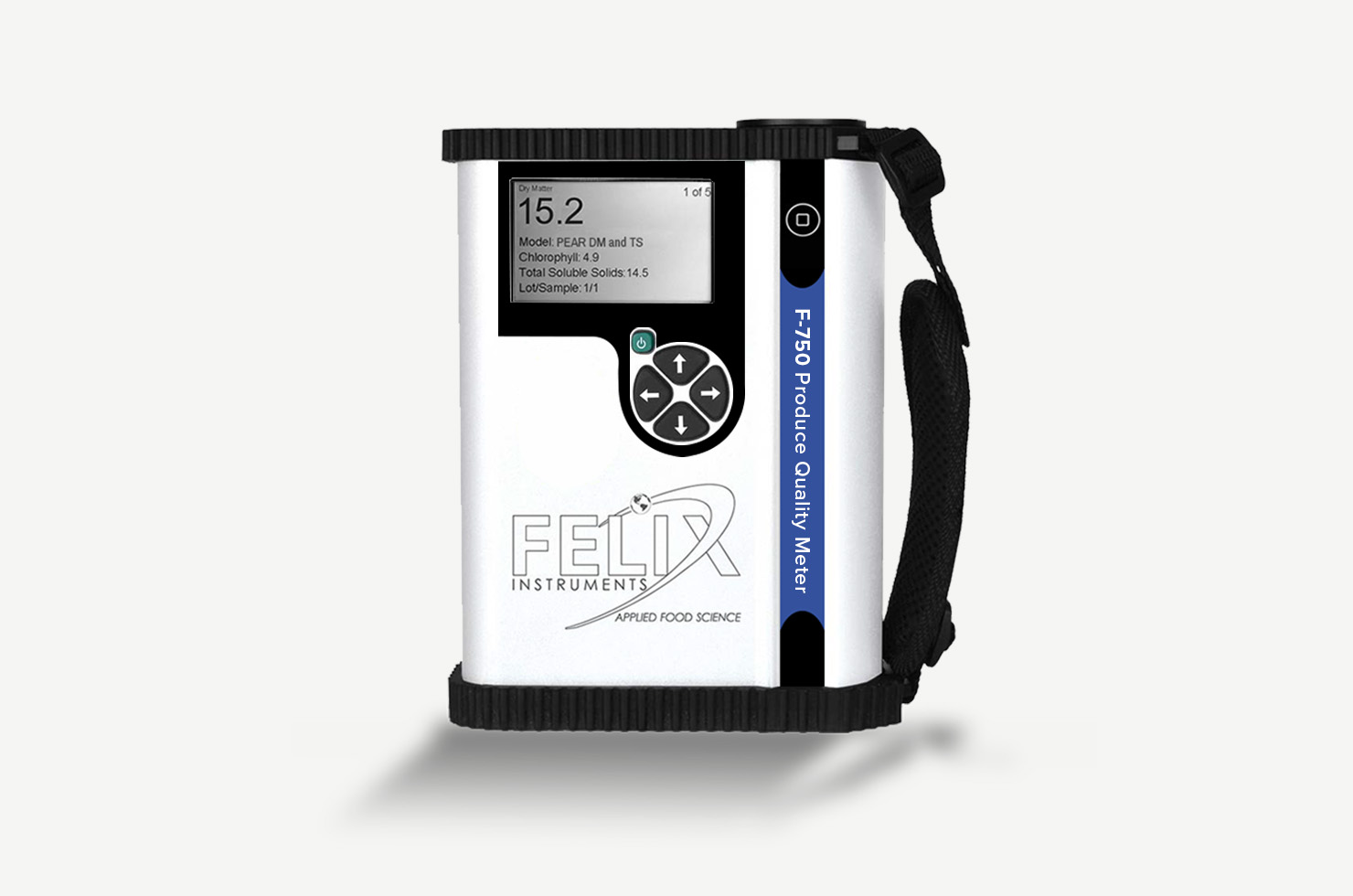
Quality testing is a constant challenge in fresh produce operations. Growers, packers, and researchers need fast and reliable ways to measure internal fruit quality without destroying the product. The F-750 produce quality meter from Felix Instruments addresses that need by using near infrared spectroscopy to evaluate fruit maturity and internal attributes in seconds. Because the F-750 meter works nondestructively, it allows teams to test fruit directly in the field, at the packing line, or during storage.
Across the industry, the F-750 meter is widely used for testing fruits that depend on accurate maturity assessment. From avocados and kiwifruit to grapes and mangoes, the device helps users measure parameters such as dry matter, Brix, and firmness indicators. Below are ten fruits commonly tested with the F-750 produce quality meter and how the instrument supports quality management for each.
Avocados
Avocados are one of the most common fruits tested with the F-750. Ripeness prediction is critical because consumers expect ready to eat fruit with consistent texture and flavor.
Subscribe to the Felix instruments Weekly article series.
By submitting this form, you are consenting to receive marketing emails from: . You can revoke your consent to receive emails at any time by using the SafeUnsubscribe® link, found at the bottom of every email. Emails are serviced by Constant Contact
Traditionally, testing avocado maturity required destructive dry matter analysis in a lab. That process takes time and removes fruit from sale. With the F-750 produce quality meter, growers can measure dry matter nondestructively in the orchard or packing facility.
This allows teams to:
-
Determine the optimal harvest window
-
Monitor maturity across different blocks
-
Maintain consistency between shipments
For avocado producers, quick field measurements help reduce variability and improve customer satisfaction.
Kiwifruit
Kiwifruit quality depends heavily on proper harvest timing and sugar development. The F-750 produce quality meter is widely used in kiwifruit production regions to measure dry matter and Brix without cutting fruit open.
Testing with the device provides several advantages:
-
Rapid maturity screening during harvest planning
-
Reduced need for lab sampling
-
Better storage management decisions
Because kiwifruit are often stored for long periods, early quality data helps predict storage performance and market readiness.
Mangoes
Mango exporters face constant pressure to ship fruit at the correct maturity stage. Harvesting too early leads to poor flavor, while harvesting too late can reduce shelf life.
The F-750 helps mango producers evaluate internal quality quickly in orchards and packing houses. By scanning fruit with near infrared spectroscopy, the device estimates dry matter levels that correlate with ripeness potential.
This allows growers to:
-
Harvest mangoes at optimal maturity
-
Improve flavor consistency
-
Reduce shipment variability
For international supply chains, these insights are especially valuable.
Grapes
Grape growers rely heavily on sugar measurements when determining harvest timing. Traditionally, this requires crushing berries and using refractometers.
The F-750 offers a faster alternative. By scanning grapes nondestructively, users can estimate Brix levels while leaving fruit intact.
Benefits include:
-
Faster vineyard sampling
-
Minimal fruit waste
-
More frequent testing during ripening
This makes it easier for growers and researchers to track sugar accumulation across different vineyard blocks.
Apples
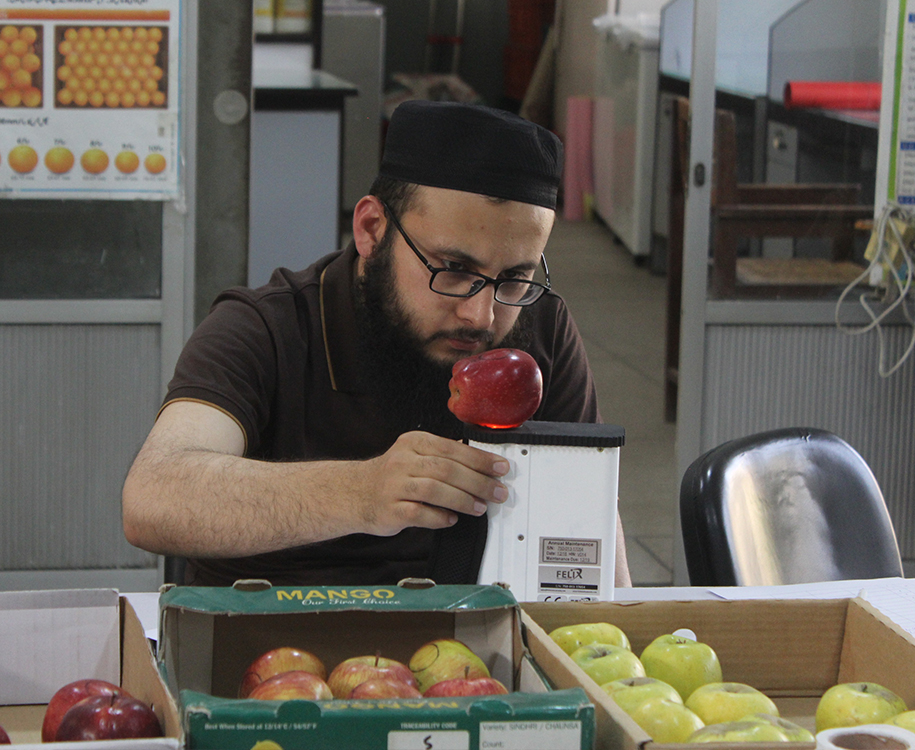
Apples are another fruit where internal quality attributes matter as much as appearance. Measuring Brix and maturity helps determine the right harvest timing and storage strategy.
Using the F-750 produce quality meter, orchard managers can scan apples directly on the tree or in bins after harvest. This helps identify maturity trends across orchards and supports more accurate picking schedules.
Better maturity data leads to:
-
Improved storage performance
-
Consistent sweetness levels
-
Better sorting decisions in packing facilities
For large operations, the speed of the device makes it possible to collect much larger datasets than traditional sampling methods.
Pears
Pear harvest timing is notoriously tricky. Fruit often needs to be picked before it fully ripens to ensure proper post harvest development.
The F-750 produce quality meter helps growers measure maturity indicators quickly without destroying fruit. By scanning pears in the orchard, teams can evaluate internal development before committing to harvest.
This supports:
-
More accurate maturity monitoring
-
Better harvest timing decisions
-
Reduced risk of poor ripening
Because pears are highly sensitive to harvest timing, these insights can make a significant difference in final fruit quality.
Peaches
Peaches require careful handling and accurate maturity evaluation. Their short shelf life means growers must balance flavor development with shipping durability.
The F-750 produce quality meter helps evaluate internal quality parameters that indicate ripeness progression. Growers can scan peaches directly in orchards or packing lines to assess development.
Advantages include:
-
Faster maturity evaluation during harvest
-
Less fruit destruction during testing
-
Better sorting and grading decisions
For stone fruit producers, the speed and portability of the device are major advantages.
Cherries
Sweet cherries are another fruit where sugar development plays a major role in quality. Harvest decisions are often based on Brix measurements, color, and firmness.
Using the F-750 allows producers to test cherries rapidly during ripening. Instead of collecting large destructive samples, they can scan fruit directly in the field.
This enables:
-
Real time maturity monitoring
-
More accurate harvest timing
-
Improved consistency between lots
As cherry production expands globally, tools that provide fast data are becoming increasingly valuable.
Tomatoes
Although often considered a vegetable in culinary contexts, tomatoes are botanically a fruit and frequently tested for internal quality.
Tomato producers and researchers use the F-750 produce quality meter to estimate Brix and maturity without cutting fruit open. This is especially useful for greenhouse operations and breeding programs.
Applications include:
-
Monitoring sugar development
-
Comparing varieties during trials
-
Evaluating harvest timing
Because the measurements are nondestructive, the same fruit can continue through the production pipeline.
Why the F-750 Produce Quality Meter Stands Out
Many fruit testing methods still rely on destructive sampling. That means cutting fruit open, extracting juice, or sending samples to a lab. While those methods can be accurate, they are slow and reduce sellable product.
The F-750 produce quality meter offers several advantages compared to traditional testing tools:
-
Nondestructive measurement using near infrared spectroscopy
-
Portable design for field and packing house use
-
Instant results that support real time decision making
-
Crop specific calibrations for fruits like avocado, mango, grape, and kiwifruit
These capabilities allow teams to gather far more data than conventional sampling methods.
Improve Fruit Quality Testing with Felix Instruments
Reliable maturity data helps every stage of the fresh produce supply chain. Growers can identify the best harvest window, packers can sort fruit more effectively, and distributors can predict storage performance.
The F-750 produce quality meter from Felix Instruments provides a practical solution for nondestructive fruit testing across many crops. With crop specific models and proven near infrared technology, it allows producers to measure internal quality quickly and consistently.
To learn more about how the F-750 produce quality meter can support your fruit quality testing program, visit Felix Instruments and explore the full range of produce analysis tools.
Related Products
- F-751 Grape Quality Meter
- Custom Model Building
- F-910 AccuStore
- F-751 Melon Quality Meter
- F-751 Kiwifruit Quality Meter
- F-750 Produce Quality Meter
- F-751 Avocado Quality Meter
- F-751 Mango Quality Meter
- F-900 Portable Ethylene Analyzer
- F-950 Three Gas Analyzer
- F-920 Check It! Gas Analyzer
- F-960 Ripen It! Gas Analyzer
- F-940 Store It! Gas Analyzer
Most Popular Articles
- Spectrophotometry in 2023
- The Importance of Food Quality Testing
- NIR Applications in Agriculture – Everything…
- The 5 Most Important Parameters in Produce Quality Control
- Melon Fruit: Quality, Production & Physiology
- Fruit Respiration Impact on Fruit Quality
- Guide to Fresh Fruit Quality Control
- Liquid Spectrophotometry & Food Industry Applications
- Ethylene (C2H4) – Ripening, Crops & Agriculture
- Active Packaging: What it is and why it’s important
Related Reading