What Is Postharvest Physiology and Why Does It Matter for Fresh Produce Quality?

The crucial postharvest physiological processes that lead to deterioration in the quality of fresh produce include respiration, transpiration, ethylene production, and enzymatic activity. Temperature, air gas composition, relative humidity, and handling are common factors that can be controlled to slow these physiological processes. Maintaining and controlling the environment is essential to preserving quality and shelf… Continue reading…

What’s the Difference Between F-900 and F-950 Gas Analyzers?

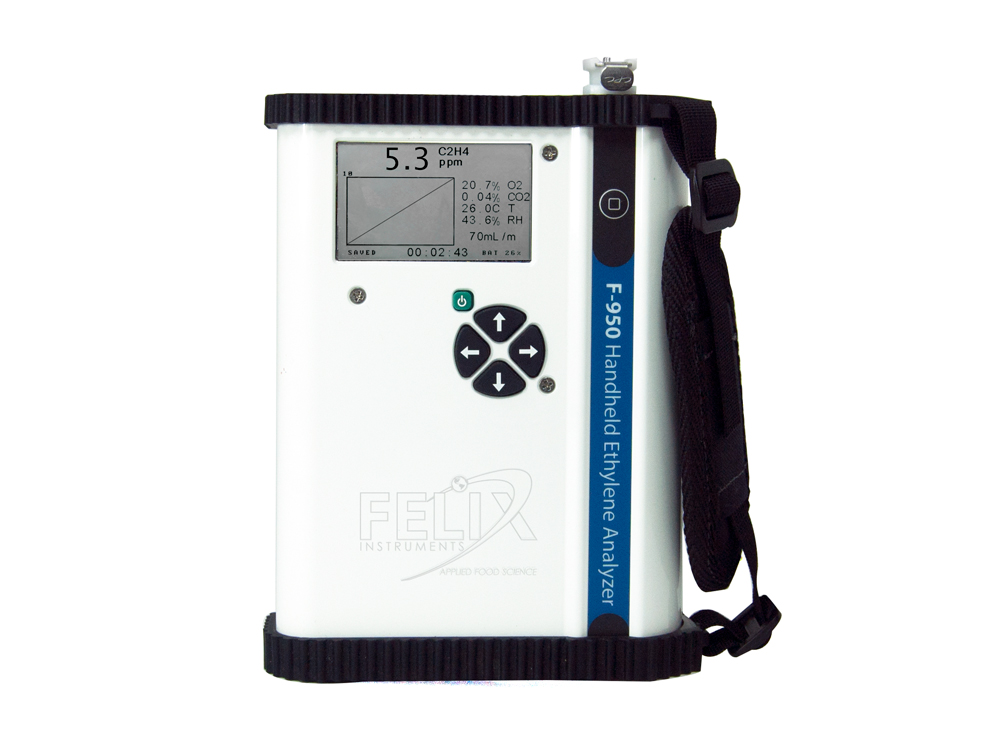
F-950 Three Gas Analyzer

When comparing the F-900 and F-950 gas analyzers, the simplest way to separate them is this: the F-900 is built first around highly sensitive ethylene measurement, while the F-950 is built for fast, portable measurement of ethylene, CO2, and O2 together. Both instruments come from Felix Instruments and both serve produce, storage, ripening, research, and… Continue reading…

Major Causes of Postharvest Decline in Fresh Produce

The main causes for postharvest decline in fresh produce are mechanical damage, respiration, transpiration, ethylene, and senescence. The importance of each cause varies across classes of fresh produce, including root vegetables, leafy vegetables, flower vegetables, immature fruit vegetables, and mature fruits. Adequate technology adoption can significantly reduce postharvest decline. Around 40-50% of fruits and vegetables… Continue reading…

WEBINAR: How to Verify Ethylene Control in Your Storage Environment

Validating ethylene control and removal systems has always been a critical, but often time-consuming, part of product development. Traditional validation methods can slow teams down with manual sampling, offline analysis, and delayed feedback. These delays make it harder to confirm system performance and hold back innovation in technologies designed to manage ethylene effectively. Felix Instruments… Continue reading…

What Causes Postharvest Senescence in Fresh Produce

Senescence is one of the top two postharvest processes that cause food loss of fresh produce by curtailing shelf life. Ethylene production, programmed cell death, and cellular energy supply are significant processes associated with senescence in postharvest fresh produce. The mechanisms by which the three processes cause senescence are not entirely understood. Premature senescence and… Continue reading…

How Do the Effects of Ethylene on Flower Quality Impact Floriculture?

Ethylene is one of the main factors affecting flower and ornamental plant quality and longevity in the entire floriculture supply chain. Ethylene inhibits growth, branching, flower bud abortion, and leaf and flower abscission, reducing the quality and longevity of floriculture products. Floriculturists can increase ROI by monitoring and reducing ethylene levels in greenhouses, storage, distribution,… Continue reading…

Postharvest Technology for Non-Climacteric Fruits: Best Practices and Benefits

Non-climacteric fruits have a short storage life as they must be harvested ripe. Several steps, like precooling and treatments, prepare the non-climacteric fruits for quality retention. Modified atmospheric packaging, controlled atmospheric storage, and different packaging systems maintain suitable environmental conditions during storing, transportation, and marketing to extend shelf life. Ripening is the last stage of… Continue reading…

Understanding Fresh Produce Spoilage: Five Causes and Prevention

Various reasons are behind the fresh produce spoilage of the vast diversity of fruits and vegetables. Respiration, transpiration, microbial growth, damage and injury, and internal degradation are common causes. Product-specific temperature thresholds, relative humidity, ethylene, oxygen, and carbon dioxide are the five ambient conditions that determine the spoilage rate. Controlling ambient conditions helps to reduce… Continue reading…

How to Extend the Shelf Life of Fresh Produce: Innovations in Gas Monitoring and Controlled Atmospheres

Extend the shelf life of fresh produce: Oxygen, carbon dioxide, and ethylene are monitored in all postharvest stages, including controlled atmosphere storage and transport facilities and modified atmosphere packaging. Ethylene is monitored to manage and maintain fresh produce quality, ripeness, and shelf life by detecting ethylene accumulation hotspots. Oxygen and carbon dioxide estimation helps to… Continue reading…

Optimizing Quality and Shelf Life with Fruit Ripening Programs

Fruit ripening programs artificially ripen climacteric fruits and degreen non-climacteric citrus fruits. The fruit ripening program has to be designed to ensure that all quality parameters are developed to give the targeted color, taste, and flavor. Each fruit’s ripening program has specific recommendations to adjust the environment and ethylene concentrations to get the desired fruit… Continue reading…