What’s the Minimum Sample Size Needed for Reliable NIR Readings?

Scott Trimble

September 16, 2026 at 6:54 pm | Updated September 16, 2026 at 6:54 pm | 6 min read
Reliable NIR readings start with a simple question: how many samples are enough? The honest answer is that there is no universal minimum that works for every crop, every lot, and every decision.
A small, uniform lot may need fewer readings than a mixed lot coming from different orchards, harvest dates, sizes, or maturity stages. Still, teams need practical numbers they can use in the field, packhouse, or ripening room.
For routine produce quality checks, a useful starting point is 30 to 40 fruit per lot. For building or updating a calibration model, the minimum is much higher, often 100 to 300 well-chosen samples, and sometimes more when the crop is variable.
Subscribe to receive our monthly round-up of articles.
The real goal is not just a bigger sample size. It is a representative sample size.
Why Sample Size Matters in NIR Testing?
NIR instruments estimate internal quality by measuring how near-infrared light interacts with the fruit. That response is then linked to traits such as dry matter, soluble solids, or other quality indicators through a calibration model.
A single fruit can tell you about that fruit. It cannot tell you much about the lot. Produce is naturally variable. Fruit from the sunny side of a tree may differ from shaded fruit. Larger fruit may not match smaller fruit. Early-season fruit can behave differently than late-season fruit. Even fruit that looks similar on the outside can vary internally.
That is why reliable NIR readings depend on three things:
- A strong calibration model
- A representative sampling plan
- Consistent scanning technique
Sample size connects all three. Too few readings can make a lot look more consistent than it really is. A better sample gives the instrument a fair picture of the crop.
A Practical Minimum for Routine Lot Checks
For day-to-day quality control, start with 20 to 30 fruit per lot when the lot is relatively uniform. This can work well when the product comes from the same variety, harvest block, grower, and harvest window.
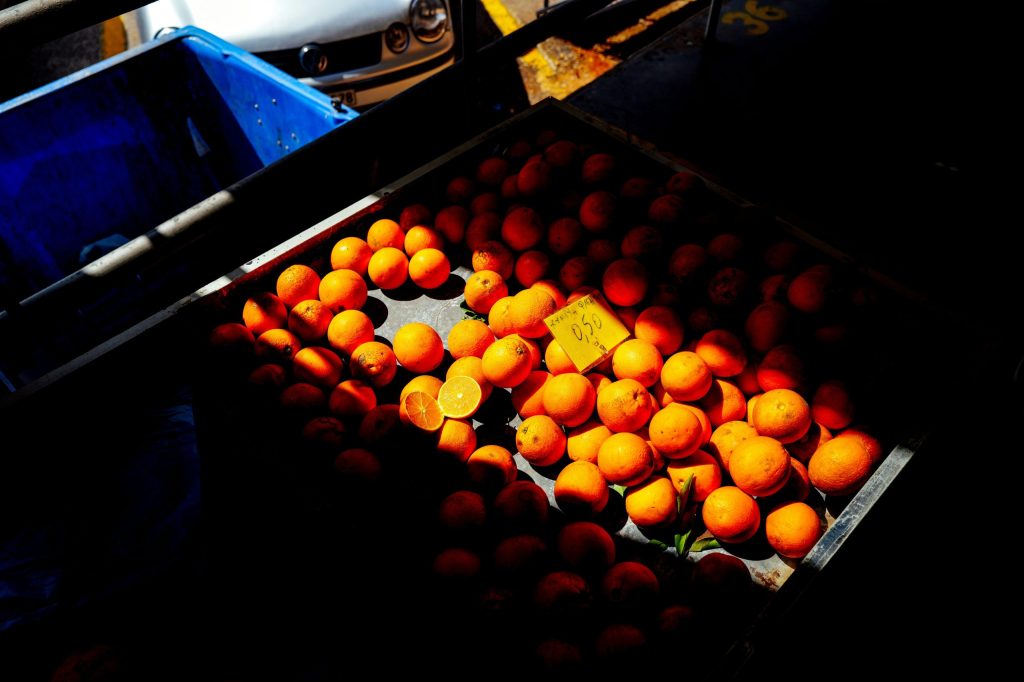
Increase the number when the lot is more variable. For example, use 40 to 60 fruit when the lot includes multiple growers, mixed sizes, different maturity stages, or fruit from several harvest dates.
A practical approach looks like this:
- Uniform lot: 20 to 30 fruit
- Moderately variable lot: 40 to 60 fruit
- Highly variable or high-value decision: 60 to 100 fruit
- Calibration development: 100 to 300 or more fruit
The key is to spread readings across the lot. Do not take all samples from the top layer of one bin. Pull fruit from different bins, pallet positions, sizes, and visible maturity groups. A smaller but well-distributed sample often performs better than a larger sample taken from one convenient spot.
Minimum Sample Size for Calibration Work
Calibration is different from routine testing. When you build a calibration, the instrument needs to learn the relationship between spectral data and reference lab values. That means your sample set must include the full range of fruit the instrument will see later.
For calibration work, 100 samples may be a starting point, but it is rarely the final answer. A stronger model often needs 200, 300, or more samples across varieties, regions, seasons, dry matter ranges, Brix ranges, and maturity stages.
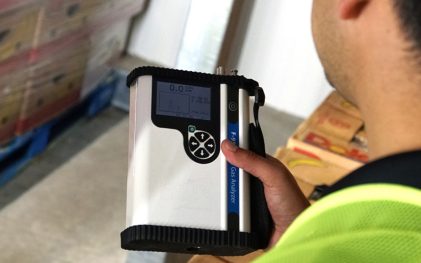
This is where Felix Instruments has a practical advantage. The F-750 Produce Quality Meter and F-751 commodity-specific meters are designed for nondestructive produce assessment, which makes it easier to collect more scans without cutting into every fruit. You can screen fruit in real operating conditions, then select a smart subset for destructive reference testing. That saves time and reduces waste while still supporting strong model development.
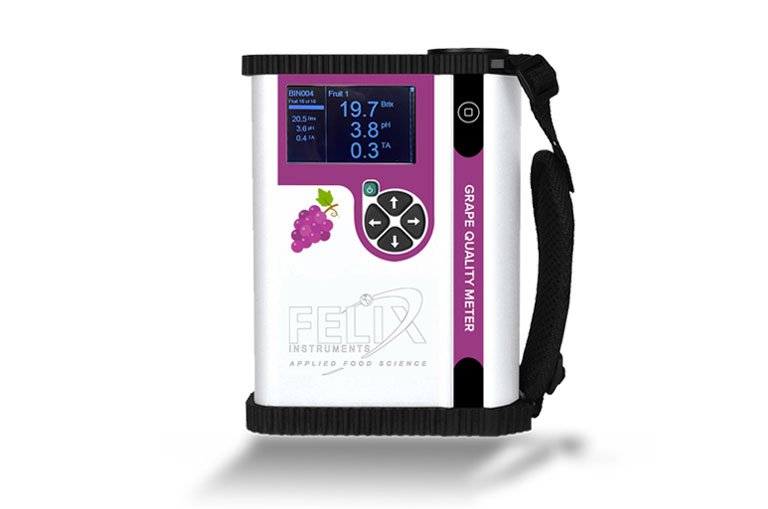
Commodity-specific tools, such as the F-751 Avocado Quality Meter, F-751 Mango Quality Meter, F-751 Kiwifruit Quality Meter, and F-751 Grape Quality Meter, also help teams start from a more focused application. Instead of forcing a general instrument into a specialized workflow, users work with a meter designed around the crop they actually handle.
Why “More Samples” Is Not Always Better
Large sample size helps only when the samples are useful. Scanning 200 nearly identical fruit from one grower may not improve reliability if the real supply chain includes multiple regions, maturity levels, and handling conditions.
A better question is: what variation do we need to capture?
For reliable NIR readings, your sample set should reflect:
- Variety or cultivar differences
- Growing region
- Harvest timing
- Fruit size
- Temperature conditions
- Maturity range
- Storage history
- Supplier or block differences
- Expected quality range
This is especially important for crops like avocados, mangoes, kiwifruit, and grapes, where internal quality can shift based on harvest maturity and postharvest handling. If the sample set ignores that variation, the readings may look precise but still miss the real commercial picture.
Sample Size for Validation
Validation is the step many teams rush, but it matters. After building or selecting a calibration, test it against samples that were not used to build the model.
For a basic validation, use at least 30 to 50 independent samples per major category. If you work across several varieties, regions, or maturity bands, validate each group separately. This helps you see whether the model is truly robust or whether it only works well under narrow conditions.
For example, a mango model that performs well on one variety may need more testing before being used across several varieties. An avocado model built on early-season fruit may need validation later in the season. NIR is powerful, but it still depends on disciplined sampling.
How Felix Instruments Supports Better Sampling
Felix Instruments meters are built for practical produce workflows. In many operations, the limiting factor is not the science. It is the time needed to collect enough useful measurements. A handheld, nondestructive tool changes that.
With Felix Instruments, quality teams can scan fruit quickly without waiting for lab results on every sample. That makes it easier to increase sample size during receiving, harvest maturity checks, ripening programs, storage trials, and packhouse quality control.
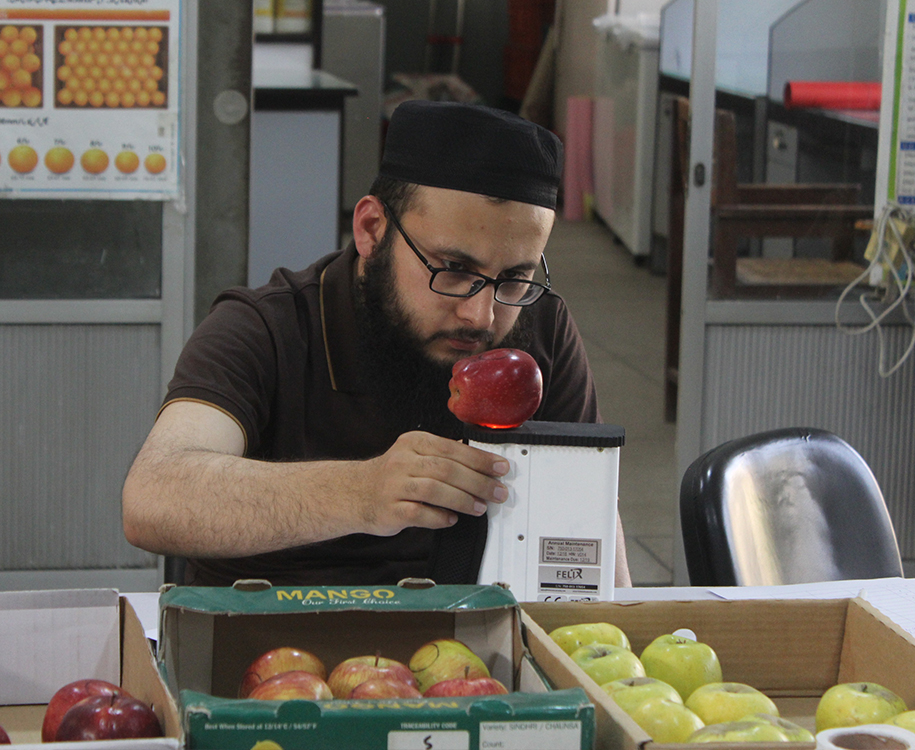
Compared with slower or more lab-bound approaches, this supports faster decisions. Teams can test more fruit, see lot variation earlier, and reduce reliance on guesswork. The benefit is not just convenience. Better sampling leads to better decisions.
The F-750 is useful for broader produce quality work, while the F-751 line gives users crop-specific options. For teams working with avocados, mangoes, kiwifruit, or grapes, that crop focus can make daily use more straightforward.
A Simple Sampling Workflow
For routine reliable NIR readings, use this process:
-
Define the decision
Are you accepting a lot, segregating fruit, checking maturity, or validating storage performance? The decision affects the sample size.
-
Identify the lot boundaries
Do not mix different growers, varieties, harvest dates, or storage conditions unless the commercial decision also treats them as one lot.
-
Pull fruit across the lot
Sample from different bins, pallets, depths, sizes, and visible maturity stages.
-
Scan consistently
Use the same scanning position, fruit handling method, and instrument procedure each time.
-
Track results
Record lot details and reading patterns. Over time, this helps refine your minimum sample size for each crop and workflow.
So, What Is the Minimum?
For routine lot assessment, 20 to 30 fruit is a reasonable minimum for a uniform lot. For variable lots, increase to 40 to 100 fruit. For calibration work, plan for at least 100 to 300 representative samples, with more needed when the crop, season, or supply base is diverse.
Reliable NIR readings are not about chasing one magic number. They come from matching sample size to risk, variability, and the decision you need to make.
Final Thoughts
The minimum sample size for reliable NIR readings depends on the crop and the job. A uniform lot may only need 20 to 30 readings, while calibration and validation work need a much broader sample set. The best strategy is to sample across real-world variation, keep technique consistent, and use an instrument that fits produce workflows.
Felix Instruments gives produce teams practical tools for faster, nondestructive quality assessment. To improve your NIR sampling program, explore the F-750 Produce Quality Meter and the F-751 crop-specific quality meters from Felix Instruments.
Related Products
Most Popular Articles
- Spectrophotometry in 2023
- NIR Applications in Agriculture – Everything…
- The Importance of Food Quality Testing
- The 5 Most Important Parameters in Produce Quality Control
- Melon Fruit: Quality, Production & Physiology
- Fruit Respiration Impact on Fruit Quality
- Guide to Fresh Fruit Quality Control
- Liquid Spectrophotometry & Food Industry Applications
- Ethylene (C2H4) – Ripening, Crops & Agriculture
- Understanding Chemometrics for NIR Spectroscopy
Related Reading