Food science articles


Truth About NIR Light Penetration: Why Fruit Size Affects Accuracy
When people talk about NIR light penetration in produce testing, the conversation usually centers on calibration models and device performance. But fruit size often gets overlooked. In reality, NIR light penetration is directly influenced by fruit diameter, density, and internal structure. If you are using handheld NIR devices in the field or at intake, understanding… Continue reading…
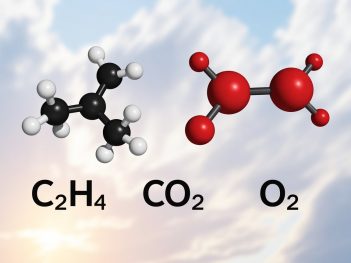
Myth: Postharvest Gas Levels Don’t Change Overnight
Postharvest gas analysis is often treated as a routine checkpoint rather than a continuous priority. A common myth in storage and ripening operations is that gas levels remain stable overnight. Many teams assume that once a room is set and verified at the end of the day, oxygen, carbon dioxide, and ethylene concentrations will hold… Continue reading…

Truth About ‘Zero Calibration’ Sensors: Why Manual Verification Still Matters
Zero calibration sensors are often marketed as a way to simplify gas detection and eliminate routine calibration steps. On paper, the promise is attractive. A sensor that automatically maintains its baseline without manual intervention sounds like a clear operational win. In practice, though, zero calibration sensors do not remove the need for manual verification. For… Continue reading…

Truth About Fruit Firmness Predictions Using NIR
Fruit firmness predictions using NIR have become a widely discussed topic in postharvest research and commercial fruit handling. Growers, packers, and quality managers want reliable ways to estimate internal firmness without cutting fruit open. Near Infrared Spectroscopy (NIR) offers a practical approach to do exactly that. Instead of destructive testing, NIR allows operators to scan… Continue reading…
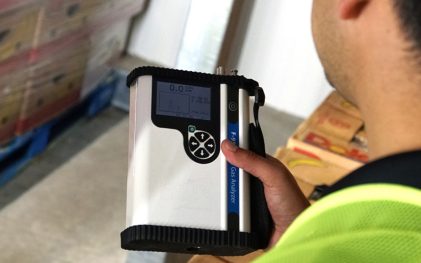
Myth: Only Big Growers Benefit from Gas Monitoring Systems
A common misconception in postharvest management is that gas monitoring systems are only useful for large commercial growers with massive storage facilities. In reality, gas monitoring systems are just as valuable for small and mid sized growers who want to protect product quality, reduce waste, and gain more control over storage and ripening conditions. Gas… Continue reading…
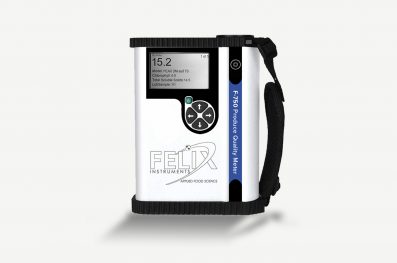
10 Fruits Commonly Tested with the F-750
Quality testing is a constant challenge in fresh produce operations. Growers, packers, and researchers need fast and reliable ways to measure internal fruit quality without destroying the product. The F-750 produce quality meter from Felix Instruments addresses that need by using near infrared spectroscopy to evaluate fruit maturity and internal attributes in seconds. Because the… Continue reading…
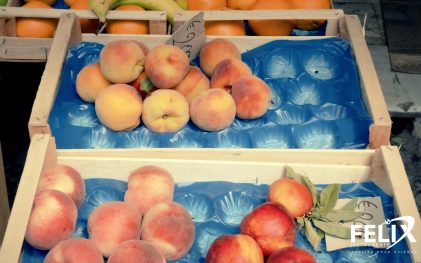
What Are the Latest Innovations in Postharvest Preservation of Fresh Produce?
Innovations and emerging treatment technologies help preserve the postharvest quality of fresh produce by reducing microbial contamination and slowing ripening and senescence. Many innovations maintain and enhance sensory, internal, and nutritional quality and increase shelf life. Several innovations and emerging technologies require further research to assess performance, safety, operating parameters, and economic feasibility. Approximately 50%… Continue reading…

Kiwifruit Postharvest Quality Problems Across the Global Supply Chain
During the postharvest stages, kiwifruit quality deteriorates due to chilling injury, loss of firmness, microbial spoilage, bruising, and off-flavor development. Low temperatures used to store and transport kiwifruit cause chilling injury, which is one of the reasons for loss of firmness and the formation of off flavors. Physiological processes such as respiration rate and ripening,… Continue reading…
The NIR Showdown: Felix Instruments F-750 vs Rubens Technologies vs Sunforest for On-Farm Maturity Analysis
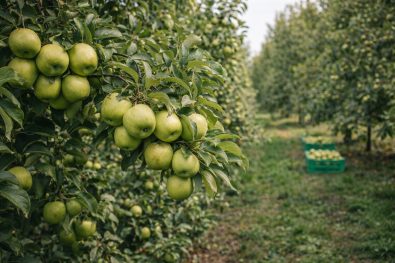
On-farm maturity analysis has moved well beyond destructive sampling and guesswork. Near-infrared spectroscopy is now a practical field tool, giving growers real data before harvest decisions are locked in. In this comparison, we look closely at three players in the handheld NIR space: the Felix Instruments F-750 Produce Quality Meter, systems from Rubens Technologies, and… Continue reading…
Felix Instruments vs Sunforest vs Rubens Technologies: Which NIR Meter Rules Postharvest Dry Matter Testing?
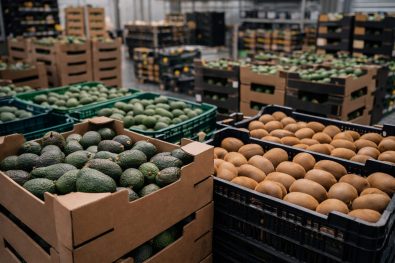
Dry matter testing is a cornerstone of postharvest quality management. Accurate dry matter measurement helps growers and packers make confident decisions on harvest timing, fruit handling, and market destination. With postharvest dry matter testing at the heart of many supply chain decisions, choosing the right near-infrared (NIR) tool can directly impact efficiency and profitability. In… Continue reading…