Can I Monitor Ethylene and CO₂ Simultaneously with One Device?


Scott Trimble

September 16, 2026 at 6:54 pm | Updated September 16, 2026 at 6:54 pm | 5 min read
Yes. Ethylene and CO₂ monitoring can be handled with one device when the analyzer is built for multi-gas measurement rather than single-gas spot checks. For postharvest teams, that matters because ethylene rarely tells the whole story by itself. A room, package, bin, container, or ripening system can look acceptable from an ethylene reading alone, while oxygen and carbon dioxide are already drifting in a direction that affects respiration, shelf life, ripening speed, or quality.
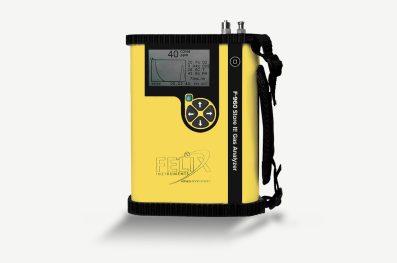
That is why Felix Instruments offers handheld gas analyzers that measure ethylene, CO₂, and O₂ in one instrument. The F-950 Three Gas Analyzer, for example, is designed to gather ethylene, CO₂, and O₂ data in seconds, with an ethylene measurement range of 0 to 200 ppm. The F-940 Store It! Gas Analyzer is positioned for rapid, precise measurement of ethylene, CO₂, and O₂, with high-resolution ethylene measurement from 0 to 10 ppm. The F-960 Ripen It! Gas Analyzer is built for higher ethylene environments, with ethylene measurement from 10 to 1000 ppm.
Why Measure Ethylene and CO₂ Together?
In storage and ripening work, ethylene is the signal most people focus on first. That makes sense. It drives ripening responses in climacteric fruit and can trigger quality changes even when the rest of the room looks stable.
Subscribe to receive our monthly round-up of articles.
But ethylene does not operate in isolation. Oxygen affects respiration. CO₂ affects atmosphere balance and can delay or alter ripening processes. Felix Instruments notes that a complete ripening control program measures ethylene for hormone-driven ripening signals, oxygen for respiration control, and carbon dioxide for atmosphere balance.
In practical terms, measuring ethylene and CO₂ together helps teams answer better questions:
- Is ethylene present because fruit is ripening, leaking from a source, or being applied intentionally?
- Is CO₂ rising because respiration is increasing?
- Is O₂ low enough to change fruit behavior?
- Is the atmosphere balanced, or are we reacting to only one piece of the picture?
- Do we need to ventilate, adjust setpoints, check scrubbers, or inspect the room?
Single-gas instruments can still be useful, especially for targeted ethylene work. But when the job is routine storage verification, ripening management, modified atmosphere packaging, or container checks, a multi-gas device gives more context with fewer steps.
The Simple Answer: Use a Three-Gas Analyzer
If your goal is to monitor ethylene and CO₂ with one handheld device, the Felix Instruments three-gas analyzers are the most direct fit. They measure ethylene, CO₂, and O₂ in the same workflow, so the user does not have to carry separate meters, merge separate records, or interpret disconnected readings.
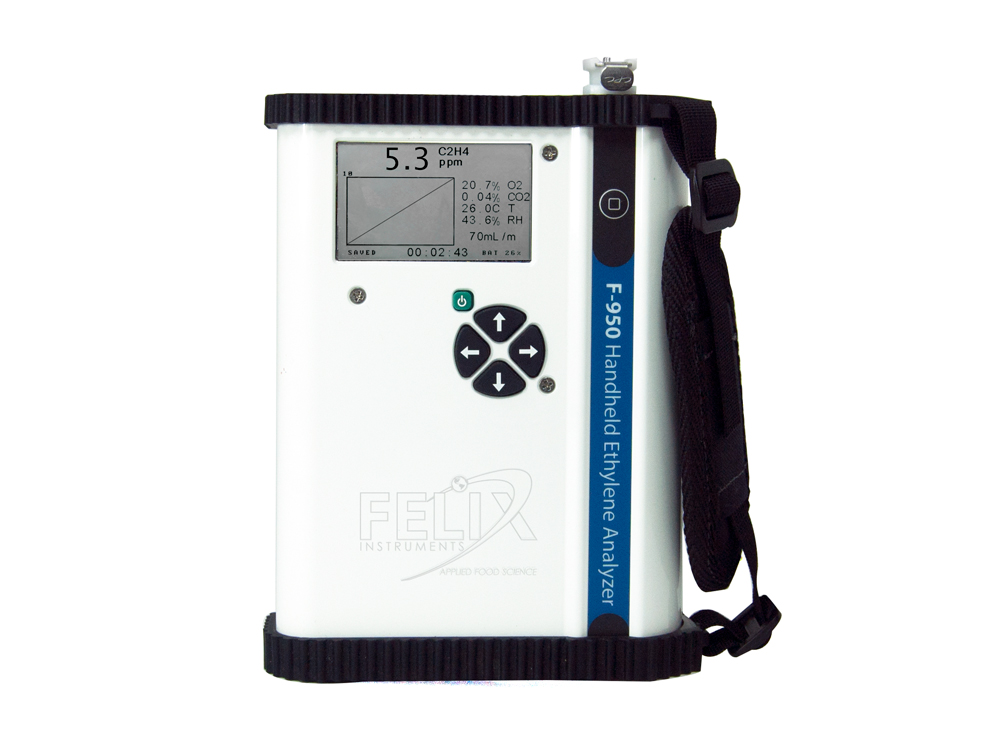
The F-950 Three Gas Analyzer is a strong general-purpose choice for storage, ripening, and modified atmosphere packaging. Felix describes it as a portable instrument for gathering ethylene, CO₂, and O₂ data in seconds, and it supports controlled atmosphere facilities, ripening rooms, and modified atmosphere packaging applications.
The F-940 Store It! Gas Analyzer is better matched to low-level ethylene work in storage environments. Its 0 to 10 ppm ethylene range and 0.01 ppm resolution are useful when small changes matter, such as controlled atmosphere rooms, ethylene mitigation checks, and long-term storage monitoring.
The F-960 Ripen It! Gas Analyzer is designed for ripening applications where ethylene concentrations are intentionally higher. It measures ethylene from 10 to 1000 ppm and also records CO₂ and O₂ concentrations with each measurement.
Where One Device Helps Most
One-device ethylene and CO₂ monitoring is useful anywhere teams need fast decisions and traceable readings.
Common use cases include:
-
Controlled atmosphere storage
In controlled atmosphere storage, small gas shifts can have large quality effects. Ethylene monitoring helps catch ripening triggers or contamination sources, while CO₂ and O₂ show whether the atmosphere is staying within the intended operating window.
-
Ripening rooms
In ripening rooms, ethylene may be applied intentionally. Monitoring CO₂ and O₂ alongside ethylene helps operators understand whether the fruit is responding normally and whether ventilation or purge cycles are needed.
-
Modified atmosphere packaging
For MAP checks, CO₂ and O₂ are already central. Adding ethylene data helps produce teams see whether the package atmosphere is supporting the intended shelf-life strategy or masking ripening pressure.
-
Import, export, and distribution inspections
Portable multi-gas measurement is useful when product moves through several facilities. A handheld analyzer lets teams check conditions in containers, rooms, bins, and packages without depending only on fixed systems or delayed lab results.
-
Research and QA programs
Researchers and QA managers often need repeatable readings, time stamps, and stored data. Felix support specifications for the F-950 list automated data saving, USB, Wi-Fi SD card and Bluetooth connectivity, and recorded data including C₂H₄, CO₂, O₂, date, time, relative humidity, and GPS location.
Why Felix Instruments Stands Out
Many gas-monitoring workflows still rely on a patchwork approach. One meter for CO₂. Another for oxygen. A separate ethylene instrument. In some cases, samples go to a lab, and the data comes back after the decision window has passed.
Felix Instruments is built around field-ready postharvest workflows. The advantage is not just that one instrument can read multiple gases. It is that the instrument is designed for produce environments where humidity, room access, sampling speed, and repeatability all matter.
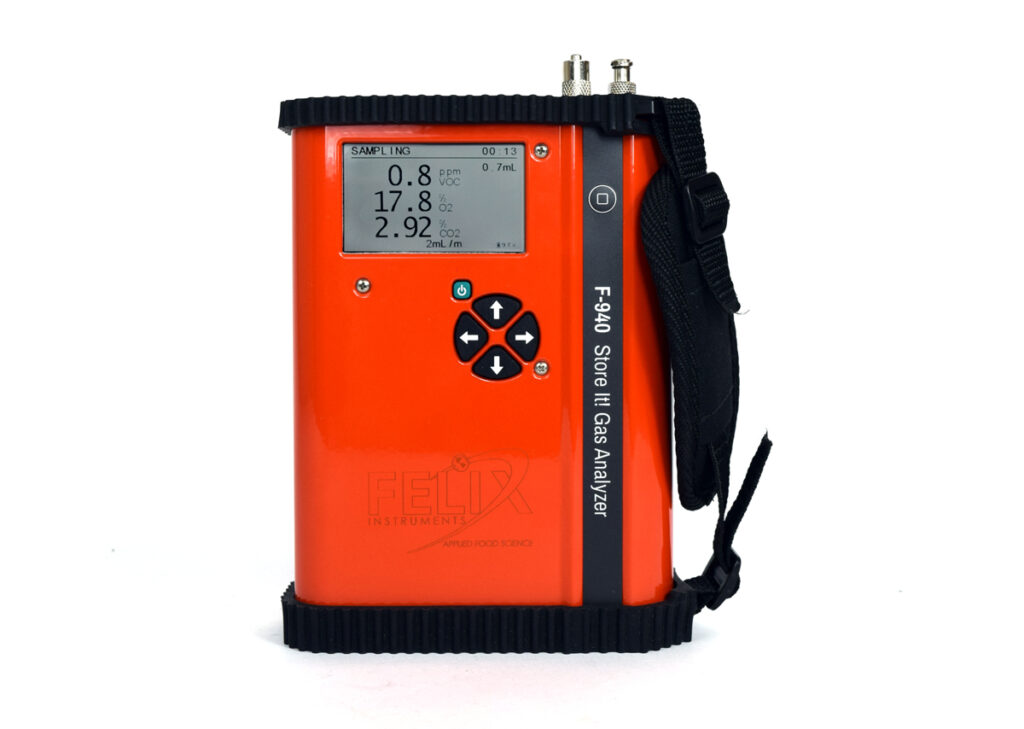
The F-950, F-940, and F-960 share practical features that make them useful outside a controlled lab setting. Felix lists a 70 mL/min sampling flow rate, 30-second total sampling time, automated data saving at one-second intervals, a backlit LCD, 8.5-hour battery life, and a powder-coated aluminum enclosure across these handheld models.
That combination is important. A good analyzer should fit the pace of a packing house, storage room, ripening operation, or QA route. It should help a trained operator collect defensible data without turning every check into a lab procedure.
Which Felix Device Should You Choose?
Choose the device based on the ethylene range and workflow.
Use the F-940 Store It! Gas Analyzer when you care about low-level ethylene in storage, controlled atmosphere facilities, ripening rooms, and modified atmosphere packages. It is a good fit when trace ethylene is the problem.
Use the F-950 Three Gas Analyzer when you need a flexible handheld instrument for ethylene, CO₂, and O₂ across storage, ripening, packaging, distribution, and QA checks. It fits teams that need broad three-gas capability in one portable analyzer.
Use the F-960 Ripen It! Gas Analyzer when you are working in higher ethylene ripening environments, such as banana ripening rooms or other applications where intentional ethylene treatment is part of the process.
Final Thoughts
You can monitor ethylene and CO₂ simultaneously with one device, and in most postharvest operations, that is the better workflow. Ethylene and CO₂ monitoring gives operators a clearer view of ripening, respiration, storage balance, and package behavior. Add O₂ to the same reading, and the atmosphere starts to make sense as a system rather than a set of isolated numbers.
Felix Instruments makes that workflow practical with handheld three-gas analyzers for storage, ripening, QA, research, and supply chain checks. To find the right fit for your ethylene range and facility workflow, contact Felix Instruments and request a quote or product demonstration.
Related Products
Most Popular Articles
- Spectrophotometry in 2023
- NIR Applications in Agriculture – Everything…
- The Importance of Food Quality Testing
- The 5 Most Important Parameters in Produce Quality Control
- Melon Fruit: Quality, Production & Physiology
- Fruit Respiration Impact on Fruit Quality
- Guide to Fresh Fruit Quality Control
- Liquid Spectrophotometry & Food Industry Applications
- Ethylene (C2H4) – Ripening, Crops & Agriculture
- Understanding Chemometrics for NIR Spectroscopy