How Accurate Are Gas Readings in Humid Environments?

Scott Trimble

September 16, 2026 at 6:55 pm | Updated September 16, 2026 at 6:55 pm | 5 min read
Gas readings in humid environments can be highly accurate, but only when the analyzer, sampling method, and operating conditions match the job. In postharvest storage, modified atmosphere packaging, ripening rooms, and cold chain inspections, humidity is not a side issue. It is part of the atmosphere being measured. Water vapor can affect sensors, tubing, filters, and sample flow, so teams need instruments designed for real produce environments rather than clean, dry laboratory air.
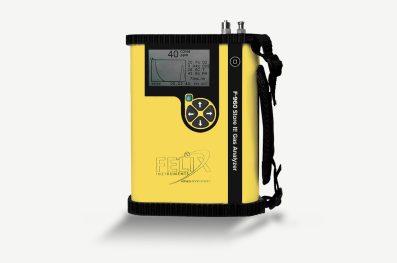
Felix Instruments builds its gas analyzers for this practical space: field checks, storage rooms, packaging lines, ripening rooms, and transport containers. The key is not pretending humidity does not exist. The key is managing it.
Why Humidity Affects Gas Readings
Humidity can influence gas readings in several ways:
Subscribe to receive our monthly round-up of articles.
- It can dilute the dry gas fraction in the sample.
- It can cause condensation when warm, moist air moves into cooler tubing or an instrument.
- It can slow response if moisture accumulates in filters or sample lines.
- It can stress sensors if the analyzer is used outside its operating range.
- It can create inconsistent readings if samples are taken before the instrument and sample path stabilize.
In produce operations, this matters because high humidity is often intentional. Storage rooms use humidity to limit water loss. Ripening rooms and cold rooms can sit near saturation. Packages may contain moist headspace because fresh produce continues to respire. So the best answer is not “avoid humidity.” The better answer is “measure correctly in humid conditions.”
The Difference Between Humidity and Condensation
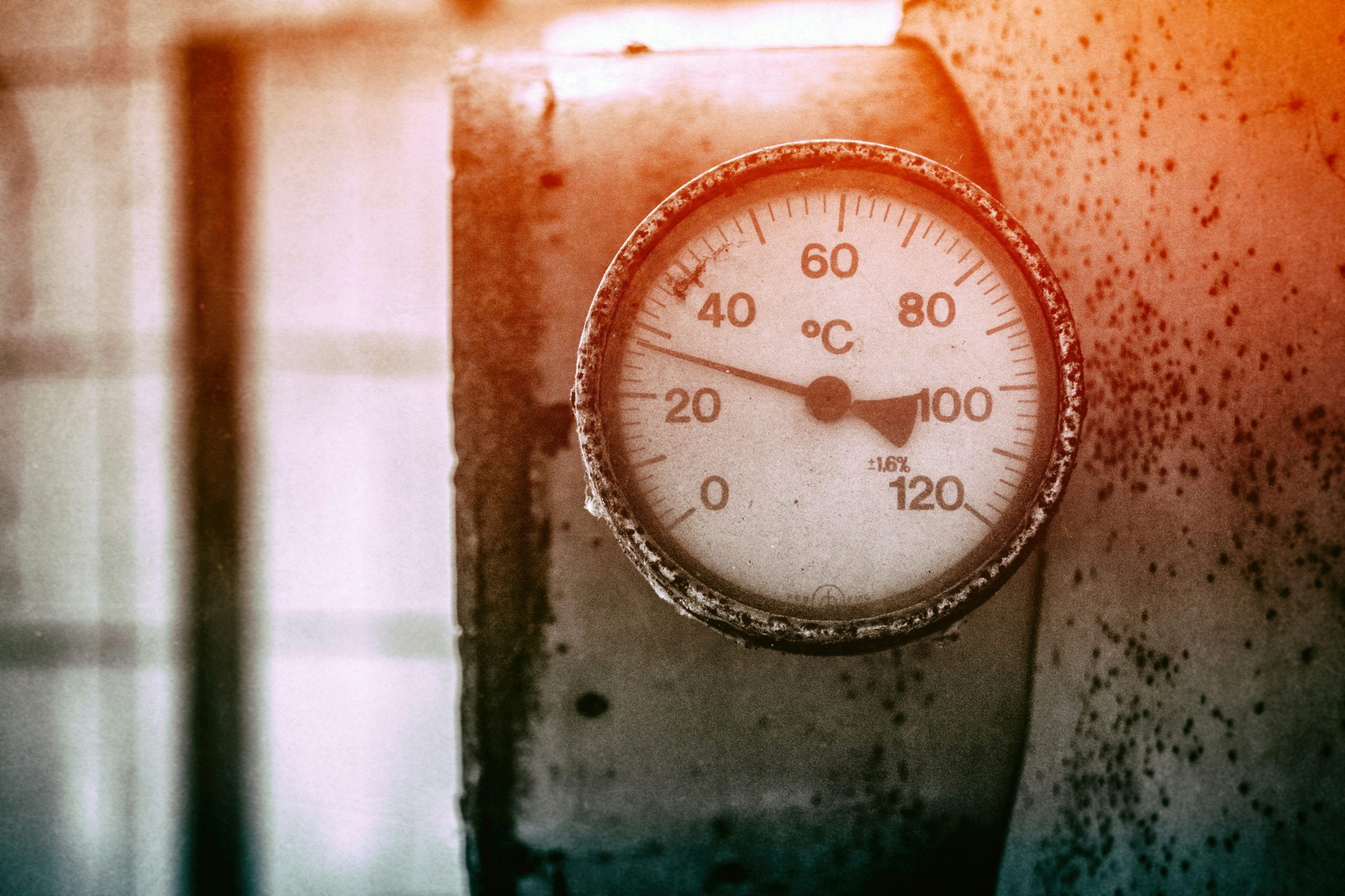
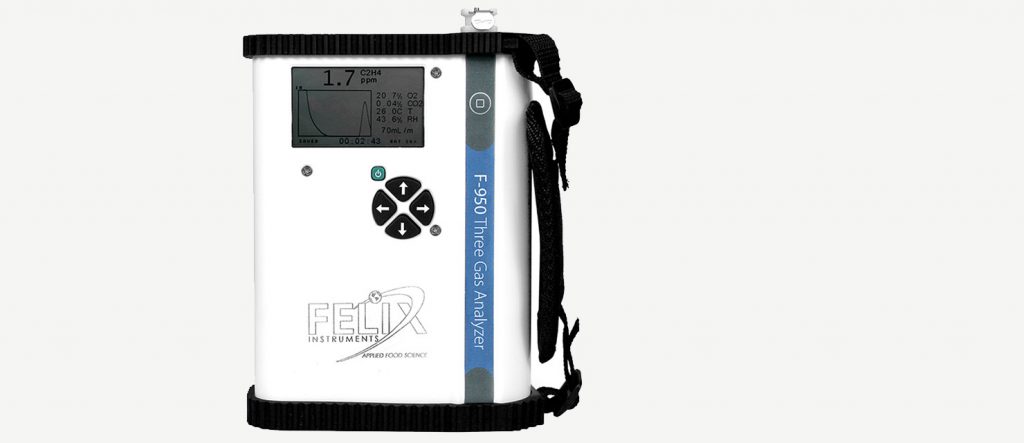
Most gas analyzers can tolerate humidity up to a specified limit, but condensation is different. Felix’s F-950 Three Gas Analyzer support specifications list an operating environment of 0 to 50°C and 0 to 90 percent humidity, non-condensing. The F-900 Portable Ethylene Analyzer support specifications list 0 to 45°C and 0 to 90 percent humidity, non-condensing.
That “non-condensing” part is important. Humid air in vapor form is expected. Liquid water inside the sampling path is the problem. Condensation can form when a sample crosses a temperature boundary, such as moving from a humid cold room into a warmer instrument, or pulling warm moist package headspace through cooler tubing.
For accurate gas readings in humid environments, operators should avoid sudden temperature transitions, keep sampling lines dry, and let the analyzer stabilize before collecting critical data.
What Accuracy Looks Like in Real Produce Work
Accuracy is not only a number on a spec sheet. In postharvest work, useful accuracy means the reading supports the decision you need to make.
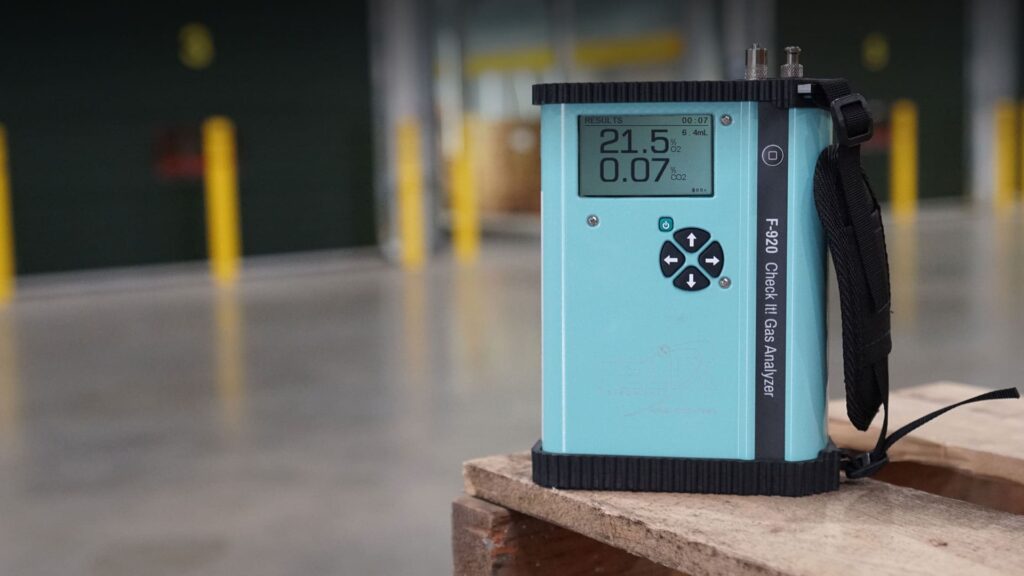
For modified atmosphere packaging, the main question is usually whether oxygen and carbon dioxide are inside the target range. The F-920 Check It! Gas Analyzer is designed for CO2 and O2 measurements in headspace gas, with readings in under 10 seconds according to Felix’s product information. That speed matters when operators need to test many packages without turning inspection into a bottleneck.
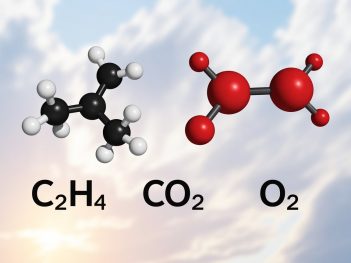
For controlled atmosphere rooms, ripening rooms, and storage operations, ethylene often becomes the extra variable. The F-950 measures ethylene, CO2, and O2 in one handheld unit, which helps teams verify the full atmosphere profile instead of switching between separate devices. The F-950 measures ethylene from 0 to 200 ppm, with Felix listing 0.1 ppm resolution and a lower detection limit of 0.15 ppm in trigger mode.
For applications where ethylene sensitivity is the main concern, the F-900 Portable Ethylene Analyzer is built around high sensitivity. Felix lists ethylene detection down to 0.025 ppm, or 25 ppb. That is useful when ethylene is present at low levels but still biologically meaningful.
Where Humidity Can Create Bad Data
Gas readings in humid environments usually go wrong for practical reasons, not because the sensor is inherently unreliable. Common problems include:
- Sampling immediately after moving the analyzer between temperature zones
- Pulling wet air through a line that has visible droplets
- Using blocked or saturated filters
- Forgetting routine zero or span calibration
- Comparing readings from different sampling points without allowing enough response time
- Measuring a package or room before gases have mixed evenly
The fix is usually procedural. Keep the instrument within its operating range. Use dry, clean sampling paths. Allow enough time for the reading to settle. Follow the calibration schedule. Replace consumables when needed.
Why Felix Instruments Performs Well in Humid Produce Environments
Felix Instruments has an advantage because its gas analyzers are designed around food science workflows. A general industrial gas meter may be accurate in a dry calibration setting, but produce work has different demands. Operators move between cold storage, loading docks, packaging areas, ripening rooms, and transport containers. They need fast readings, portable hardware, and gas combinations that match postharvest decisions.
The Felix gas analyzer lineup also lets teams choose the right instrument instead of forcing one device into every application:
- F-920 Check It! Gas Analyzer: Best for O2 and CO2 headspace checks in packaging and quality control.
- F-940 Store It! Gas Analyzer: Built for storage applications where atmosphere tracking supports shelf life and product quality.
- F-950 Three Gas Analyzer: A strong choice when ethylene, CO2, and O2 all matter in one handheld workflow.
- F-960 Ripen It! Gas Analyzer: Suited to ripening operations where ethylene monitoring is part of daily room management.
- F-900 Portable Ethylene Analyzer: Best when low-level ethylene measurement is the priority.
This matters in humid environments because accuracy depends on matching the tool to the measurement. A packaging QA team does not need the same setup as a banana ripening manager. A researcher measuring ethylene flux does not need the same workflow as a warehouse operator checking room atmosphere.
Practical Tips for More Reliable Readings
To improve gas readings in humid environments, use a consistent sampling routine:
- Keep the analyzer within its rated temperature and humidity range.
- Avoid condensing conditions whenever possible.
- Let the instrument acclimate when moving between cold and warm areas.
- Inspect tubing, filters, needles, and fittings before sampling.
- Sample from the same location and depth when comparing readings.
- Wait for the reading to stabilize before recording results.
- Follow the recommended calibration schedule.
- Log readings with time, location, commodity, room condition, and operator notes.
These steps sound basic, but they reduce most avoidable errors. In real facilities, consistency often improves data quality as much as the instrument itself.
So, How Accurate Are Gas Readings in Humid Environments?
They can be accurate enough for high-value commercial and research decisions when three things are true: the analyzer is designed for the gas and environment, the sample path stays free of condensation, and operators follow a repeatable method.
Humidity does not automatically make gas analysis unreliable. Condensation, poor sampling technique, and mismatched instruments are the bigger risks. Felix Instruments addresses this by offering purpose-built gas analyzers for the way produce teams actually work: fast headspace checks, handheld multi-gas analysis, low-level ethylene detection, and practical field use.
The Bottom Line
Gas readings in humid environments are only as reliable as the instrument and the workflow behind them. For postharvest teams, the goal is not just to collect numbers. It is to make better decisions about storage, packaging, ripening, transport, and quality.
Felix Instruments gives produce professionals a focused lineup of gas analyzers built for these exact conditions. To improve confidence in your O2, CO2, and ethylene data, explore the Felix Instruments gas analysis range and choose the model that fits your workflow.
Related Products
Most Popular Articles
- Spectrophotometry in 2023
- NIR Applications in Agriculture – Everything…
- The Importance of Food Quality Testing
- The 5 Most Important Parameters in Produce Quality Control
- Melon Fruit: Quality, Production & Physiology
- Fruit Respiration Impact on Fruit Quality
- Guide to Fresh Fruit Quality Control
- Liquid Spectrophotometry & Food Industry Applications
- Ethylene (C2H4) – Ripening, Crops & Agriculture
- Understanding Chemometrics for NIR Spectroscopy