Measuring Dry Matter Variability in Kiwifruit Using the F-751 Kiwi Meter

Scott Trimble

February 5, 2026 at 8:56 pm | Updated February 5, 2026 at 8:56 pm | 5 min read
Dry matter variability in kiwifruit is one of the most persistent challenges facing growers, packers, and postharvest managers. Even within a single orchard block, dry matter can vary widely from vine to vine and from fruit to fruit. That variability directly affects eating quality, storage behavior, and market consistency.
Measuring dry matter variability in kiwifruit early and often is the only reliable way to manage it, and that is where the F-751 Kiwi Meter from Felix Instruments has become a practical tool for the industry.
Dry matter is closely tied to sugar accumulation, consumer acceptance, and harvest timing. Yet traditional destructive sampling methods are slow, expensive, and limited in scale. They often miss spatial variability and make it difficult to respond quickly. The F-751 Kiwi Meter was designed to address those gaps by providing fast, nondestructive dry matter measurements directly in the field or packing facility.
Subscribe to the Felix instruments Weekly article series.
By submitting this form, you are consenting to receive marketing emails from: . You can revoke your consent to receive emails at any time by using the SafeUnsubscribe® link, found at the bottom of every email. Emails are serviced by Constant Contact
Why Dry Matter Matters More Than Averages
Most kiwifruit quality programs still rely heavily on block averages. While averages are useful, they hide variability. Two blocks with the same average dry matter can perform very differently if one has a narrow distribution and the other has wide variability.
Dry matter variability in kiwifruit influences several key outcomes:
-
Eating quality consistency for consumers
-
Storage performance and shelf life
-
Harvest sequencing decisions
-
Payment programs tied to maturity or quality thresholds
Fruit with low dry matter often struggles to reach acceptable sweetness, even after storage. Fruit with high dry matter may soften faster or behave differently during long-term storage. Without understanding variability, those risks are hard to manage.
Limitations of Traditional Dry Matter Testing
Conventional dry matter testing requires destructive sampling, oven drying, and lab time. This approach has several drawbacks:
-
Small sample sizes due to labor and cost
-
Delayed results that limit decision making
-
Inability to resample the same fruit over time
-
Increased waste from destroyed fruit
Because of these limitations, many operations test less frequently than they should. This makes it difficult to track dry matter development as harvest approaches or to understand how different zones within an orchard are performing.
How the F-751 Kiwi Meter Works
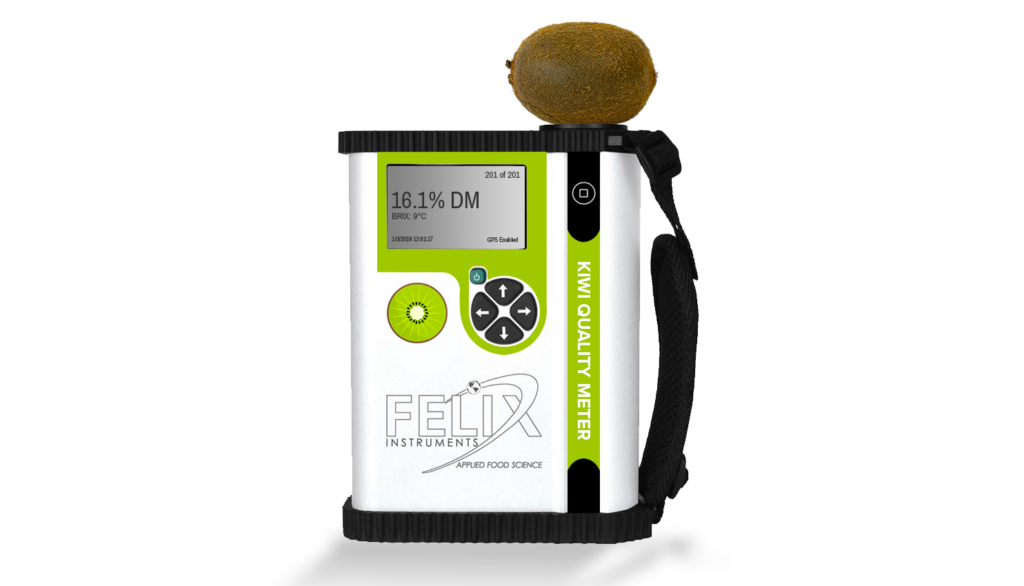
The F-751 Kiwi Meter uses near-infrared spectroscopy to estimate dry matter nondestructively. Measurements are taken directly through the skin of the fruit, with results available in seconds. This allows users to test more fruit, more often, without disrupting normal operations.
Key features that support dry matter variability analysis include:
-
Nondestructive measurements that preserve saleable fruit
-
Crop-specific calibrations developed for kiwifruit
-
Portable design for use in orchards, coolers, and packing lines
-
Immediate results for real-time decision making
Because the F-751 is handheld and battery powered, it fits naturally into routine sampling workflows. Users can quickly build large datasets that reveal variability patterns that would otherwise go unnoticed.
Measuring Dry Matter Variability in the Orchard
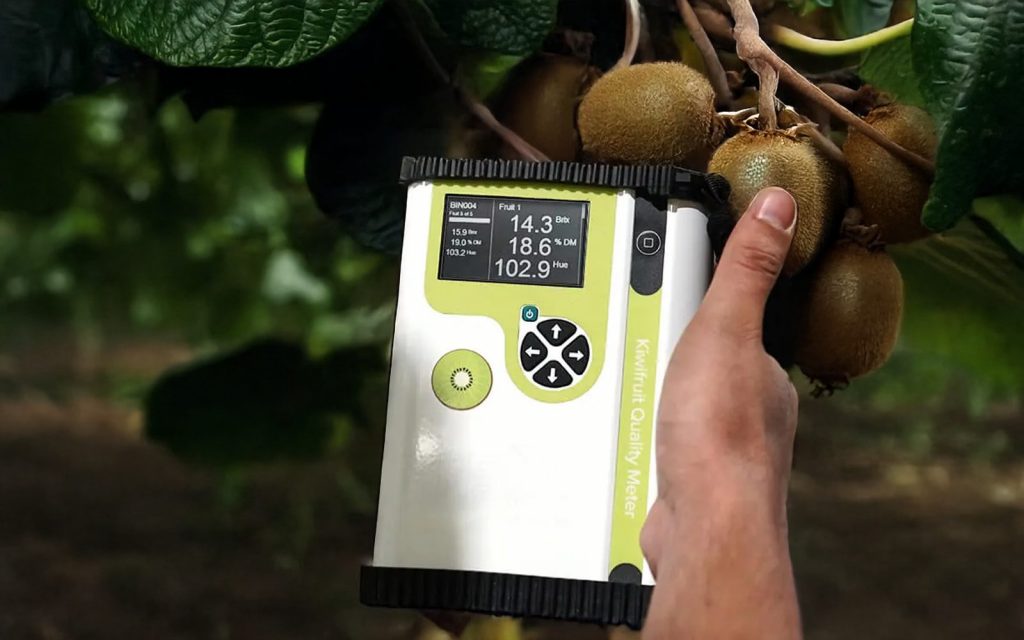
In the orchard, dry matter variability in kiwifruit is influenced by factors such as canopy structure, vine age, soil variability, and irrigation patterns. The F-751 Kiwi Meter allows growers to map these differences with minimal effort.
Common orchard applications include:
-
Comparing dry matter across different rows or zones
-
Identifying underperforming vines early in the season
-
Tracking dry matter accumulation over time on the same fruit
-
Refining harvest timing based on actual fruit maturity
Because measurements are nondestructive, fruit can be monitored repeatedly as harvest approaches. This provides a clearer picture of how dry matter is developing rather than relying on a single snapshot.
Managing Variability at Harvest
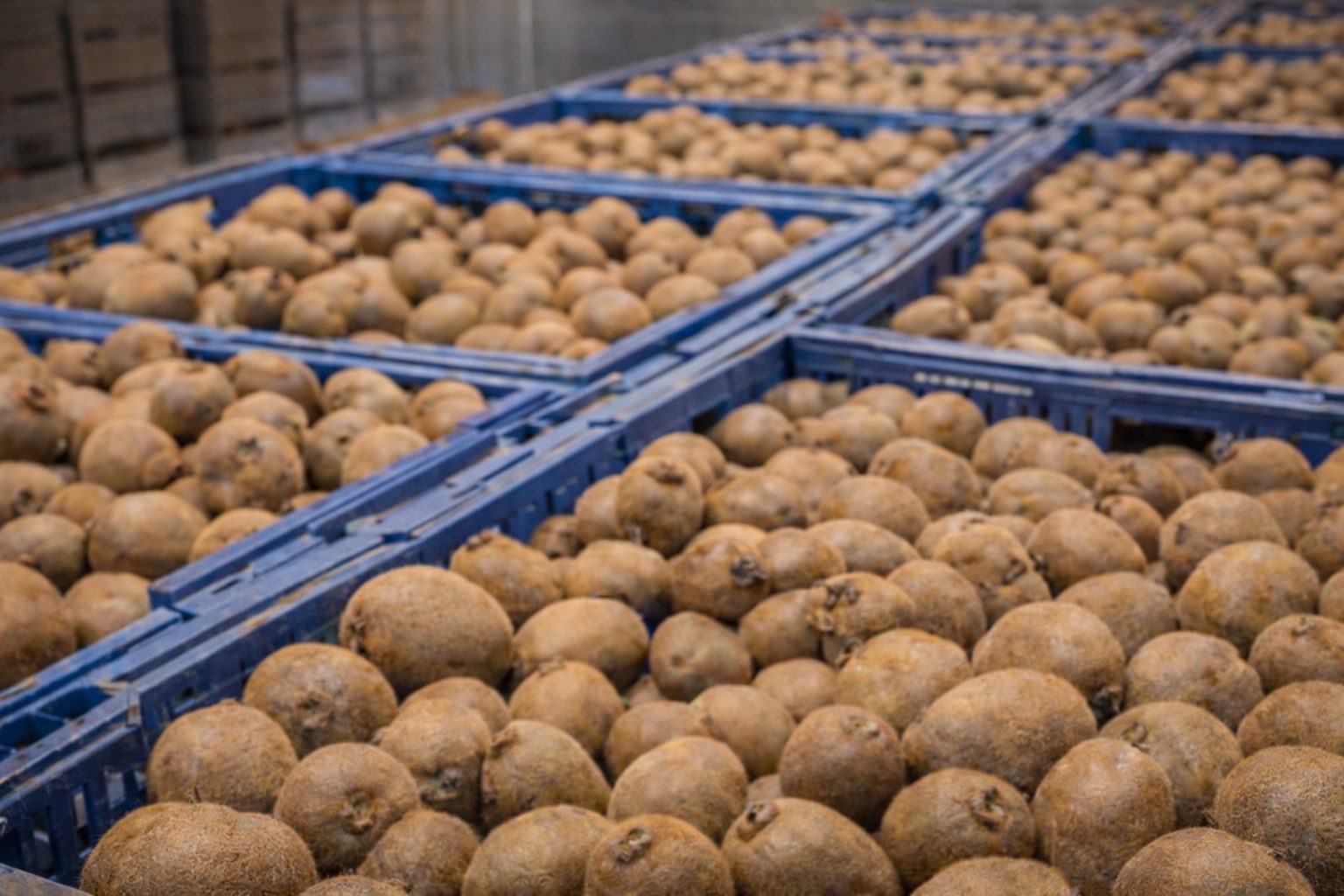
At harvest, dry matter variability in kiwifruit becomes a logistical and economic concern. Mixing fruit with different maturity levels can lead to uneven ripening and inconsistent quality in the market.
Using the F-751 Kiwi Meter at harvest helps teams:
-
Separate fruit based on dry matter thresholds
-
Adjust picking schedules for different orchard blocks
-
Reduce the risk of harvesting immature fruit
-
Support quality-based payment programs
Real-time measurements allow decisions to be made on the spot, rather than waiting for lab results that may arrive too late to influence harvest actions.
Postharvest and Storage Insights
Dry matter variability continues to matter after harvest. Storage behavior, softening rates, and flavor development are all linked to initial dry matter levels.
In postharvest environments, the F-751 Kiwi Meter can be used to:
-
Screen incoming fruit for storage suitability
-
Monitor changes during storage without destroying samples
-
Investigate variability between lots or suppliers
-
Support research into storage protocols and outcomes
This level of insight is difficult to achieve with destructive testing alone, especially when sample sizes are limited.
Advantages Over Competing Approaches
Many competing tools focus on either lab-based precision or limited field portability. The strength of the F-751 Kiwi Meter lies in its balance of accuracy, speed, and usability. It enables large-scale sampling without sacrificing operational efficiency.
Compared to destructive dry matter testing, the F-751 offers:
-
Higher sampling density for better variability analysis
-
Faster feedback for decision making
-
Lower long-term testing costs
-
Minimal training requirements for operators
These advantages make it easier to integrate dry matter variability monitoring into daily workflows rather than treating it as a special project.
Building Better Decisions With Better Data
Understanding dry matter variability in kiwifruit is ultimately about making better decisions. Whether the goal is improving consumer satisfaction, optimizing storage performance, or aligning harvest timing with market demands, better data leads to better outcomes.
By enabling frequent, nondestructive measurements, the F-751 Kiwi Meter helps teams move beyond averages and focus on distributions. This shift supports more nuanced management strategies and reduces surprises later in the supply chain.
Final Thoughts
Dry matter variability in kiwifruit is not a problem that can be solved with occasional testing or small sample sizes. It requires consistent measurement, good spatial coverage, and tools that fit real-world operations. The F-751 Kiwi Meter was built with those needs in mind, offering a practical way to capture meaningful dry matter data without slowing teams down.
For growers, packers, and researchers looking to better understand and manage dry matter variability in kiwifruit, working with Felix Instruments is a logical next step. Our experience in nondestructive quality measurement and crop-specific solutions makes them a trusted partner across the produce industry. Visit Felix Instruments to learn more about the F-751 Kiwi Meter and see how it can support more consistent kiwifruit quality from orchard to market.
Frequently Asked Questions
How Accurate Is the F-751 Kiwi Meter for Measuring Dry Matter Variability in Kiwifruit?
The F-751 uses crop-specific calibrations developed from extensive reference datasets. While it does not replace lab testing entirely, it provides reliable relative measurements that are well suited for assessing variability and trends across large fruit populations.
Can the F-751 Kiwi Meter Be Used Throughout the Season?
Yes. Because measurements are nondestructive, the same fruit can be measured multiple times from early maturity through harvest. This makes it useful for tracking dry matter development over time.
Is the F-751 Suitable for Both Field and Packinghouse Use?
The F-751 Kiwi Meter is designed for flexibility. It can be used in orchards, packing facilities, and storage environments, allowing teams to monitor dry matter variability at every stage of the supply chain.
Related Products
- F-751 Grape Quality Meter
- Custom Model Building
- F-910 AccuStore
- F-751 Melon Quality Meter
- F-751 Kiwifruit Quality Meter
- F-750 Produce Quality Meter
- F-751 Avocado Quality Meter
- F-751 Mango Quality Meter
- F-900 Portable Ethylene Analyzer
- F-950 Three Gas Analyzer
- F-920 Check It! Gas Analyzer
- F-960 Ripen It! Gas Analyzer
- F-940 Store It! Gas Analyzer
Most Popular Articles
- Spectrophotometry in 2023
- The Importance of Food Quality Testing
- NIR Applications in Agriculture – Everything…
- The 5 Most Important Parameters in Produce Quality Control
- Melon Fruit: Quality, Production & Physiology
- Fruit Respiration Impact on Fruit Quality
- Guide to Fresh Fruit Quality Control
- Liquid Spectrophotometry & Food Industry Applications
- Ethylene (C2H4) – Ripening, Crops & Agriculture
- Active Packaging: What it is and why it’s important