How Chilean Growers Use the F-750 to Predict Avocado Shelf Life

Scott Trimble

February 5, 2026 at 8:34 pm | Updated February 5, 2026 at 8:34 pm | 6 min read
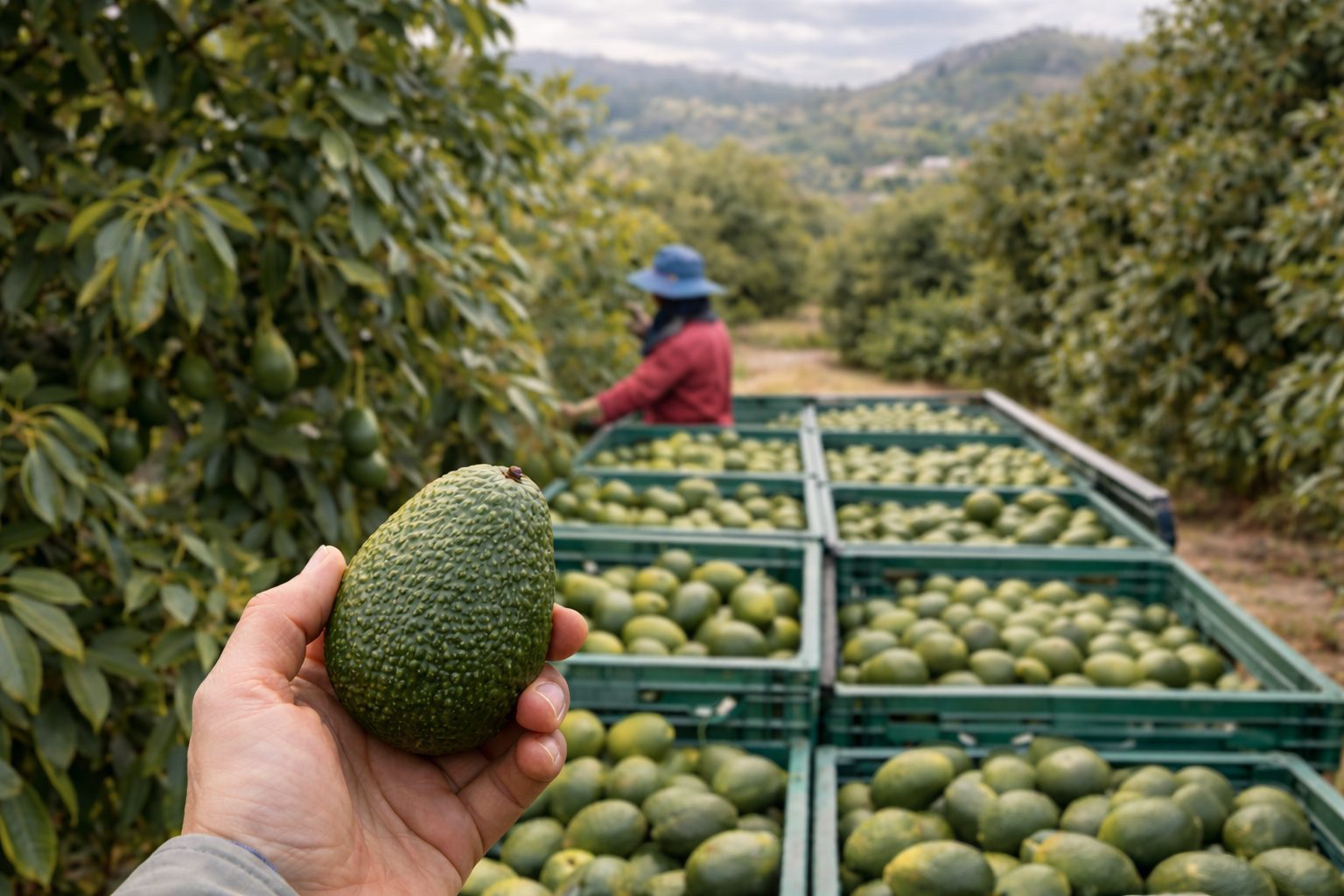
Chilean avocado exporters operate in one of the most demanding supply chains in fresh produce. Fruit often travels thousands of kilometers and may spend weeks in transit before reaching retail shelves.
In this context, avocado shelf life prediction is not a theoretical exercise. It is a daily operational requirement.
Many Chilean growers and exporters now rely on the F-750 Produce Quality Meter to make faster and more confident decisions about harvest timing, storage strategy, and market destination. By using non-destructive dry matter measurements, the F-750 has become a practical tool for predicting how avocados will perform long after they leave the orchard.
Subscribe to the Felix instruments Weekly article series.
By submitting this form, you are consenting to receive marketing emails from: . You can revoke your consent to receive emails at any time by using the SafeUnsubscribe® link, found at the bottom of every email. Emails are serviced by Constant Contact
Understanding why this matters requires a closer look at the challenges of exporting avocados and how Chilean growers integrate the F-750 into real-world workflows.
Why Shelf Life Prediction Matters in Chilean Avocado Exports?
Chile exports a significant portion of its avocado crop, primarily to North America, Europe, and increasingly to Asia. Each market has different transit times, ripening expectations, and penalties for inconsistency.
A load that performs well for a short regional shipment may fail under extended cold storage and long ocean transit.
Avocado shelf life prediction allows exporters to align fruit maturity with logistics. Fruit that is too immature may never ripen properly. Fruit that is too mature may arrive soft or develop internal defects before reaching the consumer. Traditional methods for assessing maturity often rely on destructive sampling, oil content tests, or historical averages.
These approaches are slow, limited in sample size, and poorly suited for managing variability within blocks or across harvest dates.
This is where the F-750 changes the equation.
What the F-750 Measures and Why It Works?
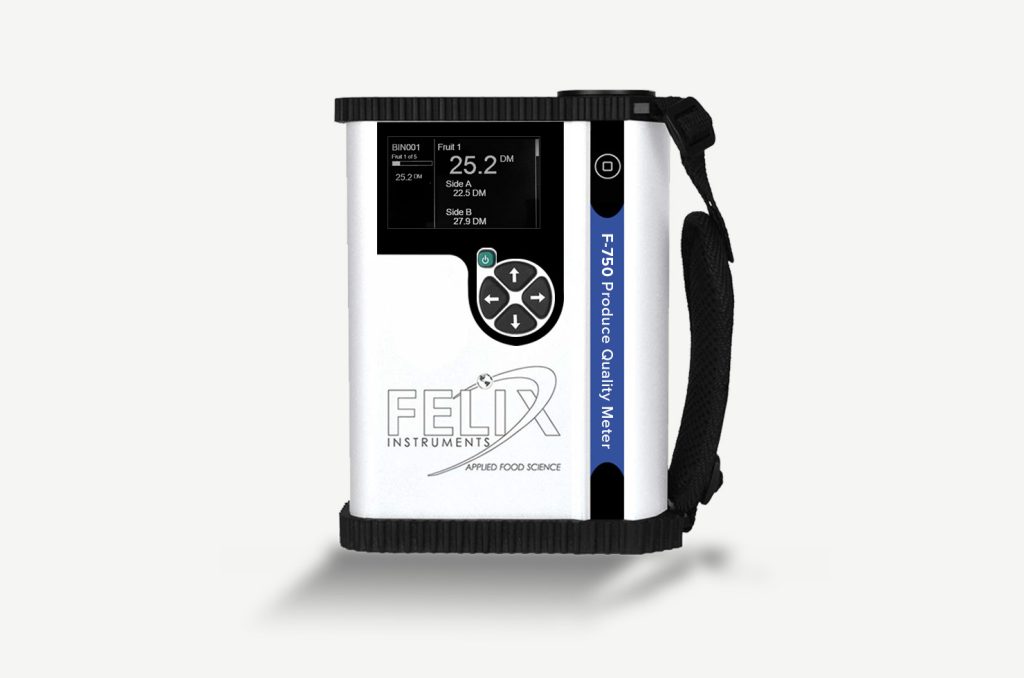
The F-750 Produce Quality Meter uses near-infrared spectroscopy to estimate dry matter content in whole avocados without cutting or damaging the fruit. Dry matter is closely correlated with oil content and is widely recognized as one of the most reliable indicators of avocado maturity and eating quality.
For Chilean growers, this matters because dry matter provides insight into both current readiness and future performance. Higher dry matter fruit typically ripens more predictably and delivers better texture and flavor. Lower dry matter fruit may require longer conditioning and carries a higher risk of uneven ripening.
Key characteristics of the F-750 that support avocado shelf life prediction include:
-
Non-destructive measurement that allows repeated testing of the same fruit
-
Immediate results in the field, packinghouse, or cold storage
-
Ability to sample large numbers of fruit to capture orchard variability
-
Crop-specific calibrations developed for avocados
Because measurements are fast and portable, teams can move beyond spot checks and start building a more complete maturity profile for each lot.
How Chilean Growers Use the F-750 Before Harvest?
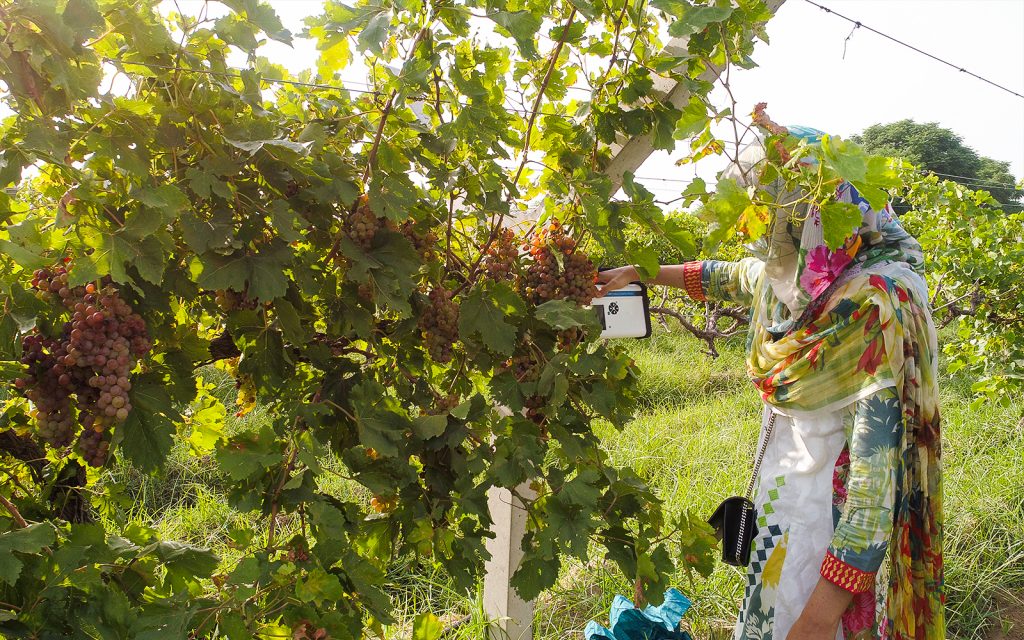
In Chile, harvest timing is one of the most critical decisions affecting shelf life. Many growers use the F-750 weeks before harvest to monitor dry matter accumulation across different orchards and blocks. Instead of relying on calendar dates or minimum legal thresholds alone, they track how quickly dry matter is increasing and how uniform the fruit is within a block.
Common pre-harvest applications include:
-
Identifying blocks that are ready for early export programs
-
Delaying harvest in blocks with uneven or marginal dry matter levels
-
Comparing orchard performance across seasons
-
Supporting harvest decisions with objective data rather than visual cues
This early use of the F-750 helps growers avoid harvesting fruit that looks mature on the tree but lacks the internal development needed for long storage and shipping.
Using Dry Matter Data to Segment Fruit for Different Markets
Once avocados are harvested, Chilean exporters often use the F-750 to segment fruit based on expected shelf life. Not all fruit needs to perform the same way. Some shipments are destined for nearby markets with shorter transit times.
Others are bound for long-distance routes that demand maximum storage potential.
By measuring dry matter at intake or during packing, operators can:
-
Assign higher dry matter lots to longer export routes
-
Reserve lower dry matter fruit for closer markets or faster programs
-
Reduce the risk of claims related to internal quality
-
Improve consistency within individual shipments
This targeted approach to avocado shelf life prediction allows exporters to use their fruit more efficiently instead of applying a one-size-fits-all strategy.
Monitoring Fruit Through Storage and Shipping
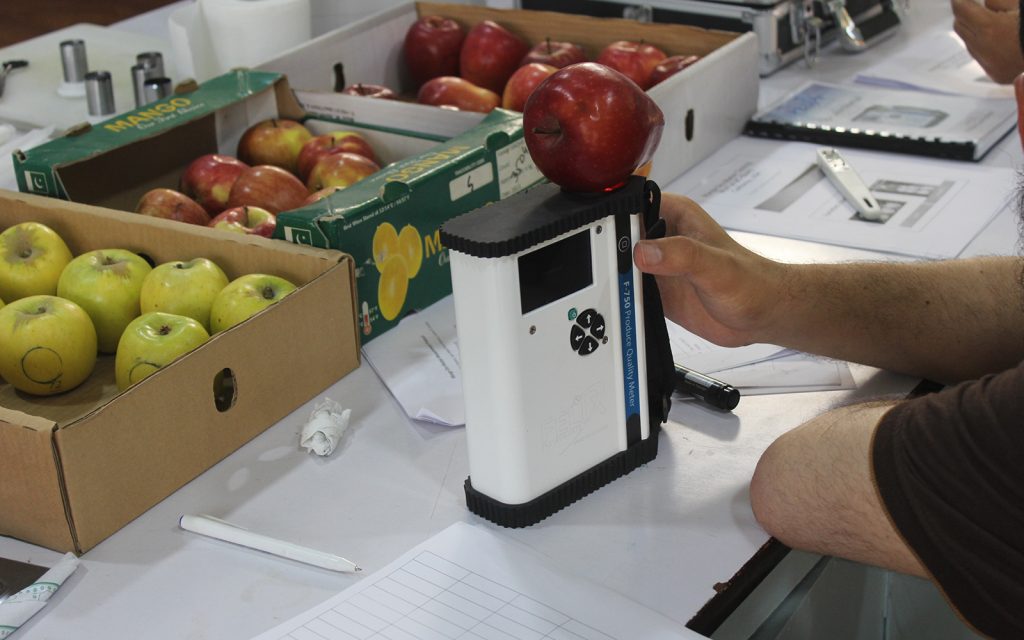
Shelf life does not stop being relevant once fruit enters cold storage. Many Chilean exporters continue using the F-750 during storage to monitor changes in dry matter and assess how different lots are responding to temperature and atmosphere conditions.
Because the F-750 is non-destructive, the same fruit can be tested multiple times throughout storage. This enables teams to:
-
Compare predicted shelf life with actual storage performance
-
Identify lots that may require earlier release
-
Adjust storage protocols based on real data
-
Build historical datasets that improve future predictions
Over time, these measurements help operations refine their handling practices and improve confidence in long-term shipments.
Why Growers Prefer the F-750 Over Traditional Methods?
Chilean growers and exporters often compare the F-750 to lab-based dry matter testing or oil extraction methods. While lab tests remain valuable for calibration and validation, they are not practical for daily decision-making.
The advantages of the F-750 in commercial settings include:
-
No need to destroy fruit or wait for lab results
-
Ability to test hundreds of fruit per day if needed
-
Portability that supports field and packinghouse use
-
Reduced labor and lower per-sample cost over time
Most importantly, the F-750 supports faster decisions. In export programs where timing is tight, speed and confidence matter.
Building Confidence With Buyers and Retailers
Avocado shelf life prediction is not only an internal tool. Many Chilean exporters use F-750 data to communicate more effectively with buyers. Sharing dry matter ranges and maturity profiles helps set realistic expectations about ripening behavior and storage life.
This transparency can:
-
Reduce disputes over quality claims
-
Strengthen long-term buyer relationships
-
Support premium programs that require tighter specifications
-
Differentiate suppliers in competitive markets
Over time, consistent quality backed by data becomes part of a grower’s reputation.
Long-Term Benefits for Chilean Avocado Operations
The value of the F-750 extends beyond a single season. By collecting dry matter data year after year, Chilean growers build a deeper understanding of how climate, orchard management, and harvest timing affect shelf life.
Long-term benefits include:
-
Improved harvest planning across variable seasons
-
Better alignment between production and logistics
-
Reduced waste from misallocated fruit
-
Stronger decision-making supported by historical trends
As markets become more demanding, this type of data-driven approach is becoming standard rather than optional.
Conclusion: Turning Avocado Shelf Life Prediction Into a Competitive Advantage
For Chilean growers and exporters, avocado shelf life prediction is no longer based on guesswork. The F-750 Produce Quality Meter provides a practical way to measure maturity, manage variability, and align fruit quality with market demands.
By using non-destructive dry matter measurements from the orchard through storage, teams gain visibility into how their fruit will perform weeks into the future.
This level of insight supports better harvest decisions, smarter market allocation, and stronger relationships with buyers. It also reduces risk in one of the most complex fresh produce supply chains in the world.
If you are looking to improve avocado shelf life prediction and bring more confidence into your quality decisions, Felix Instruments offers tools designed specifically for real-world agricultural workflows. Learn more about how the F-750 can support your operation by connecting with the Felix Instruments team.
Frequently Asked Questions
How Does Dry Matter Relate to Avocado Shelf Life Prediction?
Dry matter is closely linked to oil content and maturity. Higher dry matter fruit generally ripens more consistently and maintains quality longer during storage and transport.
Can the F-750 Replace Lab Testing Entirely?
The F-750 is designed for rapid, non-destructive measurements and daily decision-making. Many operations still use lab tests periodically for calibration and verification.
Is the F-750 Suitable for Use Outside the Field?
Yes. Chilean growers and exporters use the F-750 in orchards, packinghouses, and cold storage facilities to monitor fruit at multiple stages of the supply chain.
Related Products
- F-751 Grape Quality Meter
- Custom Model Building
- F-910 AccuStore
- F-751 Melon Quality Meter
- F-751 Kiwifruit Quality Meter
- F-750 Produce Quality Meter
- F-751 Avocado Quality Meter
- F-751 Mango Quality Meter
- F-900 Portable Ethylene Analyzer
- F-950 Three Gas Analyzer
- F-920 Check It! Gas Analyzer
- F-960 Ripen It! Gas Analyzer
- F-940 Store It! Gas Analyzer
Most Popular Articles
- Spectrophotometry in 2023
- The Importance of Food Quality Testing
- NIR Applications in Agriculture – Everything…
- The 5 Most Important Parameters in Produce Quality Control
- Melon Fruit: Quality, Production & Physiology
- Fruit Respiration Impact on Fruit Quality
- Guide to Fresh Fruit Quality Control
- Liquid Spectrophotometry & Food Industry Applications
- Ethylene (C2H4) – Ripening, Crops & Agriculture
- Active Packaging: What it is and why it’s important