Latest brix
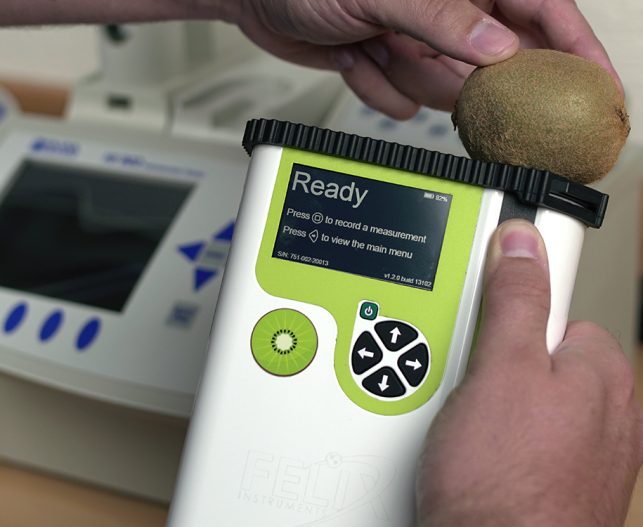
How Do the F-750 and F-751 Correlate with Refractometer Brix Measurements?
Refractometer Brix measurements are still one of the most familiar ways to check soluble solids in fruit. They are simple, accepted, and useful. But they are also destructive, slow when sample numbers get large, and limited to the fruit that gets cut or juiced. Felix Instruments’ F-750 Produce Quality Meter and F-751 Quality Meter series… Continue reading…

Additional reading

What Is The Best Apple Harvest Maturity Index?
Apple harvest maturity indices are mainly based on physical and chemical attributes. The most reliable method is the starch index. The harvest maturity index values differ based on cultivars and the storage time. Each fruit is distinctive, and the methods used to fix harvest time must be customized for each cultivar. Determining the optimum harvest… Continue reading…
What are Harvest Maturity Indices? Why are they Important?
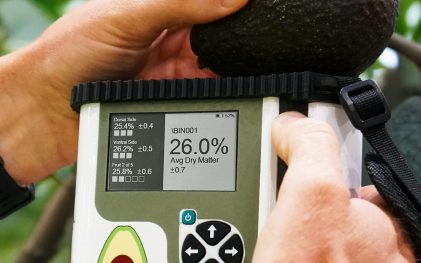
Harvest maturity indices can be fresh produce’s physical, chemical, physiological, or chronological attributes. The choice of harvest maturity indices will differ and must be based on species and economics. The optimum methods to measure harvest indices are objective, quantitative, non-destructive, and easy to use. Fresh produce suffers the maximum loss and waste. One reason is… Continue reading…
How to Use Mango Harvest Maturity Indices to Improve Fruit Quality and Yield
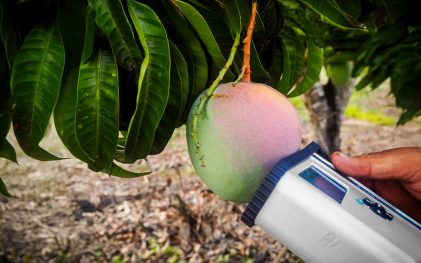
The mango harvest maturity indices can be physical, computational, physiological, and biochemical attributes. Physical indices are simple but subjective and unreliable. Biochemical harvest maturity indices are the most reliable, and standard NIR spectroscopy-based non-destructive estimation methods are the best. Mango fruits must be harvested at optimum maturity to continue developing internal and external quality attributes… Continue reading…

How Fruit Quality Monitoring Improves Sustainability and Reduces Food Loss
Fruit quality monitoring is an integral part of the fresh produce supply chain. Fruit quality monitoring improves productivity and reduces food loss on farm and postharvest stages to enhance food security and responsible production. The environmental impacts indirectly through quality monitoring are reduced carbon footprint, less water resource depletion and pollution, and better biodiversity protection… Continue reading…

How Degreening of Citrus Fruits Enhances Appearance and Quality
Artificial degreening changes only citrus peel color and does not affect other quality parameters. Several citrus factors, like maturity at harvest and cultivar-specific ethylene sensitivity, will influence degreening success. Postharvest degreening is the standard procedure and requires careful consideration of cultivars to determine atmosphere conditions, ethylene concentrations, and exposure duration to achieve the desired results.… Continue reading…
How to Improve Mango Quality: Latest Research Findings from 2023
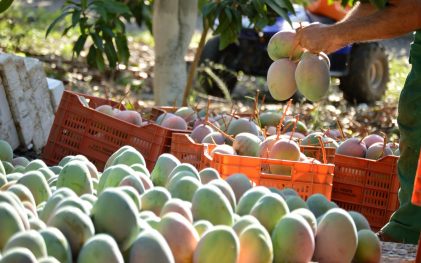
Research on mango in 2023 focuses on finetuning available information, whether postharvest treatment or optimizing chemometric models. Studies are increasingly focused on investigating underlying enzyme activity and gene expressions to find why and how observed quality changes occur. The emphasis is on optimizing quality not just for profits but also to make food production more… Continue reading…