Latest application

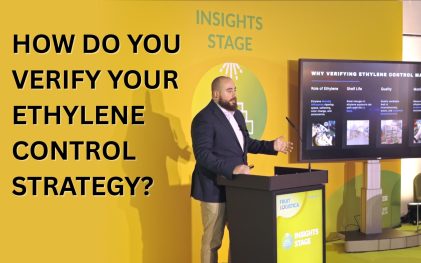
Fruit Logistica 2026 Tech Talk: How to Verify Ethylene Control in Cold Storage
At Fruit Logistica 2025, we shared practical guidance on how to verify ethylene control in cold storage and retail environments. While many facilities implement abatement systems, validation is often limited to spot checks or periodic manual testing. In this session, we demonstrated why single-point measurements can miss critical exposure patterns and how continuous, real-time monitoring… Continue reading…
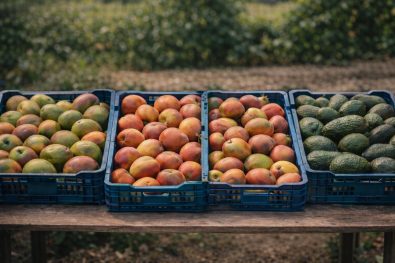
Data Repeatability Under Pressure: F-751 vs Sunforest vs Rubens Compared on Real Fruit Lots
Data repeatability under pressure is one of those topics that only becomes urgent when results start drifting. In real fruit lots, pressure comes from uneven maturity, temperature swings, operator fatigue, and the simple reality that fruit is never uniform. This is where handheld NIR tools are either trusted or sidelined. In this article, we compare… Continue reading…
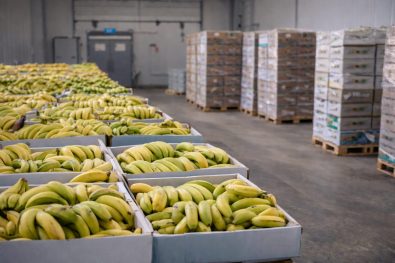
Buyer’s Checklist: Ethylene Monitors for Ripening Rooms and CA Storage
Choosing the right ethylene monitors for ripening rooms and CA storage is not just a purchasing decision. It directly affects fruit quality, shelf life, and operational consistency. Ethylene drives ripening, but unmanaged ethylene shortens storage windows and creates uneven results. A good ethylene monitor gives you visibility, confidence, and control. A poor one becomes another… Continue reading…
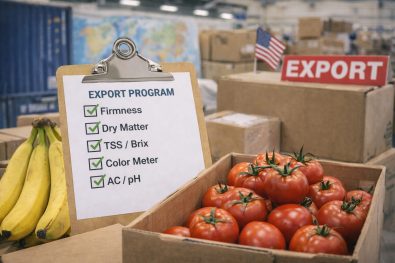
The Essential Features of a Produce Quality Meter for Export Programs
Export programs live and die by consistency. Once fruit leaves its country of origin, there are limited opportunities to intervene. A produce quality meter gives exporters a way to measure internal quality before that fruit ever reaches a container. For operations shipping to demanding markets, the quality meter has become a practical necessity rather than… Continue reading…
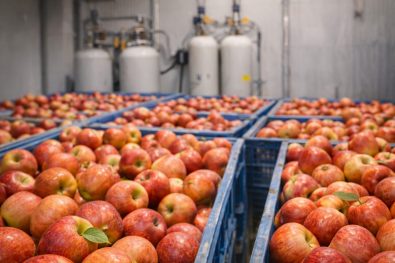
Using the F-960 to Monitor Controlled-Atmosphere Storage for Apples
Controlled atmosphere storage for apples is one of those topics where most professionals already know the theory. Lower oxygen, elevated carbon dioxide, low temperature, and careful ethylene management slow respiration and preserve quality. Where things get complicated is execution. Small deviations in gas composition can quietly shorten storage life or lead to disorders that only… Continue reading…
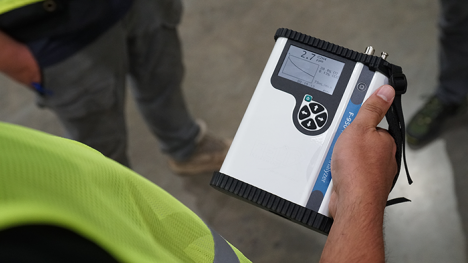
Real-Time Ethylene Tracking in Banana Ripening Rooms with the F-950
Real-time ethylene monitoring is a practical requirement in modern banana ripening rooms, not a luxury. Ethylene concentration directly controls ripening speed, color break, and uniformity across a room. Small deviations can lead to uneven batches, shortened shelf life, or fruit that misses retail specifications. This is where real-time ethylene monitoring becomes critical, and where the… Continue reading…
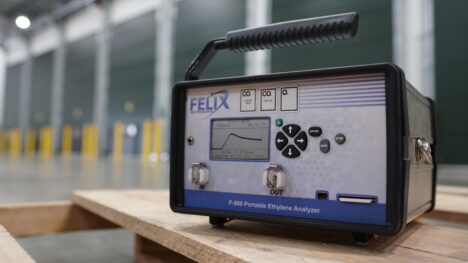
Continuous Ethylene and CO₂ Logging in Tomato Storage Facilities
Continuous ethylene and CO₂ logging has become a core practice in modern tomato storage facilities. Tomatoes are highly sensitive to their storage atmosphere, and small changes in ethylene or carbon dioxide levels can shift ripening speed, firmness, color development, and shelf life. For operators managing large volumes across multiple rooms, spot checks are no longer… Continue reading…
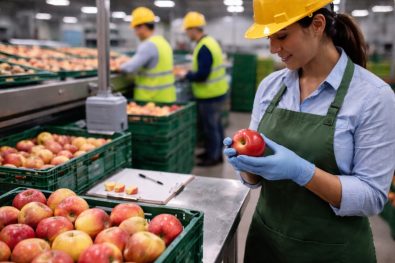
Quality-Control Protocols Using F-750 in Packinghouses
Quality control in modern packinghouses depends on fast, consistent decisions. Growers and packers are under pressure to verify internal quality without slowing down throughput or damaging fruit. The F-750 produce quality meter has become a practical tool for meeting that challenge. By combining nondestructive testing with repeatable measurements, the F-750 quality meter fits naturally into… Continue reading…
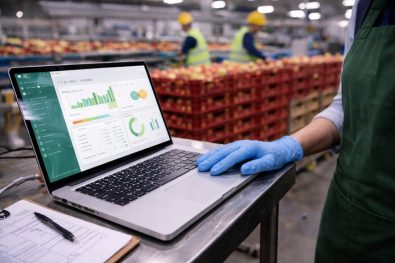
Integrating F-751 Readings into ERP Systems for Real-Time Decision Making
If you are already collecting maturity and internal quality data with a handheld NIR meter, the next step is getting it out of the instrument and into the systems that run the business. That is where F-751 ERP integration pays off. When F-751 readings flow into your ERP in near real time, quality stops being… Continue reading…

F-750 vs TR Turoni 532: Which Produce Quality Meter Gives You Better Dry Matter Accuracy?
When measuring fruit maturity and postharvest quality, dry matter is one of the most trusted indicators. It’s the foundation for understanding ripeness, flavor potential, and storage performance across crops like avocados, mangoes, kiwifruit, and apples. In the debate of F-750 vs TR Turoni 532, both instruments are popular choices for non-destructive dry matter estimation. The… Continue reading…