Articles
What Affects the Postharvest Quality of Blackberries?
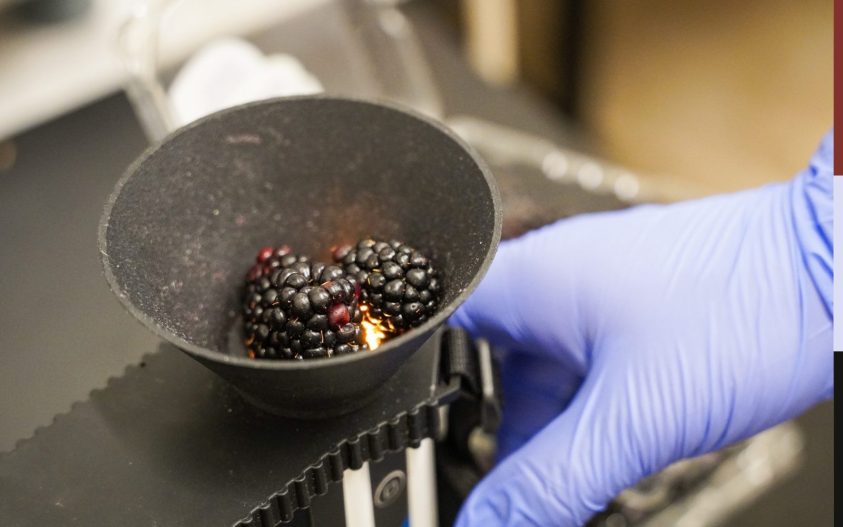
Major postharvest quality problems in blackberries include weight loss, reduced firmness, leakiness, fungal decay, and changes in appearance. White drupelet disorder and red drupelet reversion are two major color changes that can reduce marketability because consumers reject them. Step cooling and maintaining low temperatures, high relative humidity, and modified atmospheres in storage rooms and packaging… Continue reading…


Additional reading
What’s the Minimum Sample Size Needed for Reliable NIR Readings?
Reliable NIR readings start with a simple question: how many samples are enough? The honest answer is that there is no universal minimum that works for every crop, every lot, and every decision. A small, uniform lot may need fewer readings than a mixed lot coming from different orchards, harvest dates, sizes, or maturity stages.… Continue reading…

Can I Monitor Ethylene and CO₂ Simultaneously with One Device?
Yes. Ethylene and CO₂ monitoring can be handled with one device when the analyzer is built for multi-gas measurement rather than single-gas spot checks. For postharvest teams, that matters because ethylene rarely tells the whole story by itself. A room, package, bin, container, or ripening system can look acceptable from an ethylene reading alone, while… Continue reading…
How Do the F-750 and F-751 Correlate with Refractometer Brix Measurements?
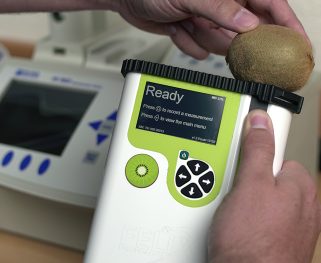
Refractometer Brix measurements are still one of the most familiar ways to check soluble solids in fruit. They are simple, accepted, and useful. But they are also destructive, slow when sample numbers get large, and limited to the fruit that gets cut or juiced. Felix Instruments’ F-750 Produce Quality Meter and F-751 Quality Meter series… Continue reading…
Why Are My Readings Drifting During Long Storage Studies?
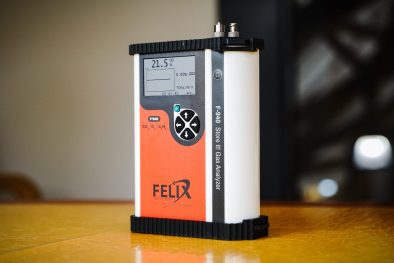
Gas analyzer drift is one of those problems that rarely shows up during a quick spot check, but it can become obvious during a long storage study. A reading that looked stable on day one may slowly move away from the expected trend after days or weeks of monitoring. In postharvest research, controlled atmosphere storage,… Continue reading…

Controlled Atmosphere Facilities: What Are the Different Types?
Different Types of Controlled Atmosphere Facilities for Fresh Produce Controlled atmosphere (CA) facilities alter temperature, relative humidity, and the concentrations of oxygen, carbon dioxide, and ethylene. CA works by slowing biological activity such as respiration, transpiration, ripening, and senescence, and by limiting physiological disorders, insect damage, and disease. Commercial CA types available are standard, static,… Continue reading…
What is Third-Party Certification for Fresh Produce Quality, and Who Are the Certifiers?
Third-party certification (TCP) is necessary to regulate compliance with fresh produce standards by suppliers, growers, packers, and retailers. Most TCP is conducted by private organizations that are fast, flexible, and use many standard frameworks- private and public. Objective and quantifiable data on quality parameters can make the certification process transparent, reliable, and actionable. Earlier, food… Continue reading…