7 Metrics Every Postharvest Facility Should Track Weekly


Scott Trimble

May 5, 2026 at 5:22 pm | Updated May 5, 2026 at 5:22 pm | 6 min read
Postharvest facility metrics should never be treated like background paperwork. They are one of the clearest ways to catch quality drift before it turns into shrink, claims, or rejected loads. A weekly review gives postharvest teams a repeatable way to connect room conditions, fruit physiology, and packout results. It also helps separate guesswork from actual process control.
When a facility tracks the right numbers each week, decisions around storage, ripening, intake, and release become faster and more consistent. Felix Instruments fits well into that workflow because its lineup covers both gas analysis and non-destructive produce quality measurement, which means teams can monitor the room and the fruit instead of relying on only one side of the picture.
1. Ethylene concentration
Ethylene is the metric that can quietly move an entire facility off target. In storage, too much ethylene can accelerate senescence and shorten marketable life. In ripening, the issue is not just whether ethylene is present, but whether it is reaching the right level for the commodity and stage of the program. Weekly tracking helps teams spot leaks, carryover, poor room turnover, or uneven ripening performance across rooms.
Subscribe to receive our monthly round-up of articles.

This is where instrument choice matters. Felix offers several ways to track ethylene depending on the application.
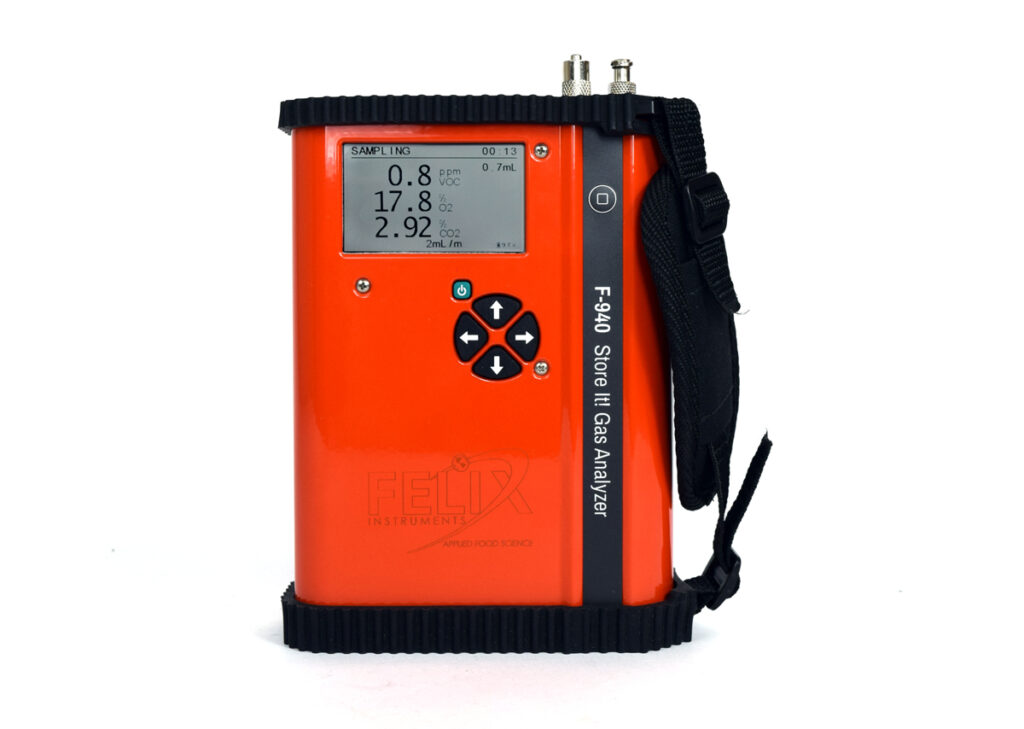
The F-940 Store It! Gas Analyzer is built for rapid measurement of ethylene, CO2, and O2, which makes it useful for routine storage checks.
The F-950 Three Gas Analyzer also captures all three gases and is positioned for maintaining produce quality across storage and handling workflows.
For high-ethylene commodities and ripening programs, the F-960 Ripen It! Gas Analyzer is designed to assess ethylene from 10 to 1000 ppm in ripening rooms and controlled atmosphere workflows.
2. Oxygen concentration
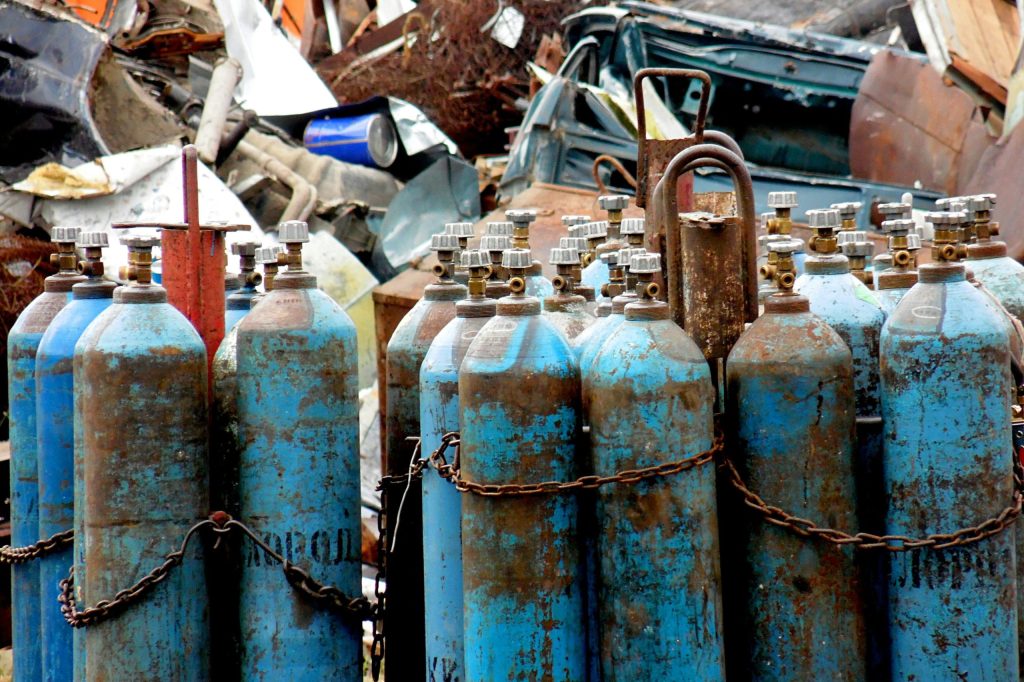
Oxygen deserves a place in every weekly review because it tells you whether the storage environment is actually matching the intended atmosphere. If O2 falls too low or fails to stay in range, respiration behavior changes, product stress can increase, and room consistency starts to slip. Even in facilities that are not running strict controlled atmosphere storage, oxygen checks are useful for validating packaging performance, room integrity, and ventilation practices.
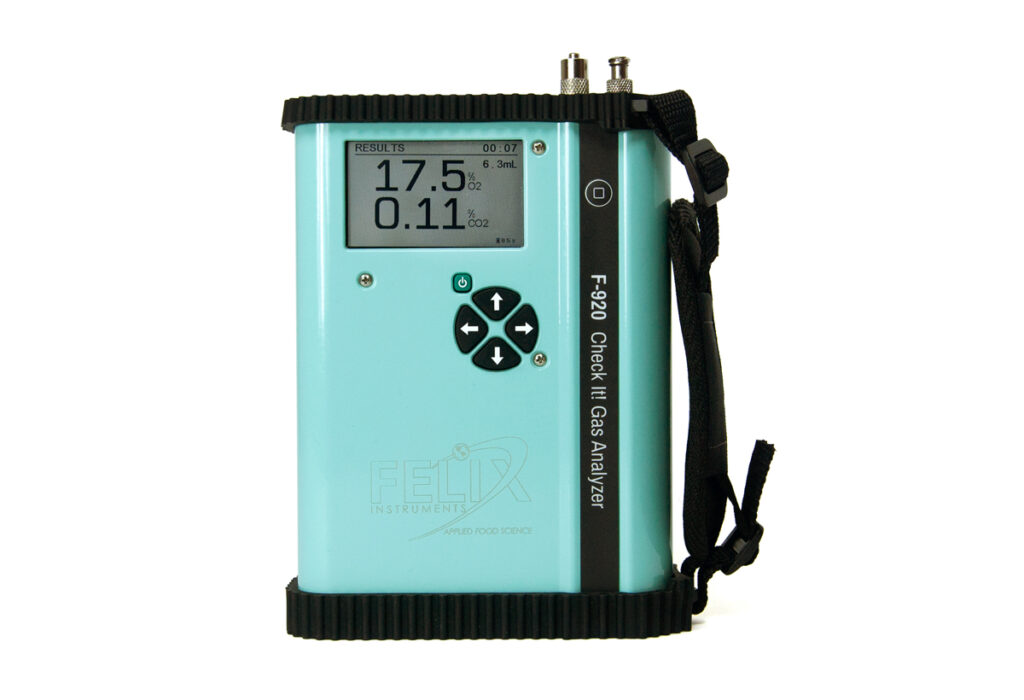
The F-920 Check It! Gas Analyzer is especially relevant here because it is designed for portable headspace and MAP analysis of CO2 and O2 in packing lines, laboratories, distribution centers, and storage settings.
For teams that need O2 alongside ethylene and CO2 in one routine, the F-940 and F-950 extend that workflow without forcing staff to switch between instruments.
3. Carbon dioxide concentration
CO2 is usually where facilities see the gap between intended settings and what is actually happening in the room. High CO2 can signal poor ventilation, product respiration spikes, or packaging issues. Low CO2 can also matter when a process depends on a target atmosphere for shelf life management.
Weekly CO2 trend lines are often more useful than one-off spot checks because they show whether the system is stable over time.

Felix instruments are useful here because CO2 measurement is built directly into the gas analyzer line rather than being treated as a side feature.
The F-920 focuses on CO2 and O2 for QA and MAP workflows, while the F-940, F-950, and F-960 support CO2 measurement alongside ethylene and oxygen, which is a better fit for facilities that want one weekly sampling routine across storage rooms, packages, and ripening spaces.
4. Dry matter
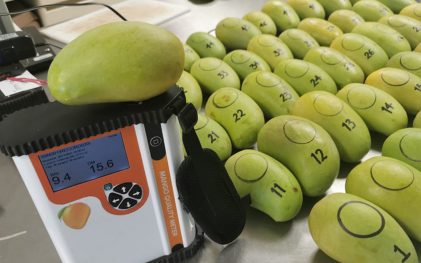
Dry matter is one of the most practical weekly postharvest facility metrics because it helps teams understand how incoming fruit is likely to behave later in storage, ripening, and retail.
It is not just a harvest metric. In a postharvest program, dry matter can support intake decisions, lot segregation, ripening strategy, and release timing. When facilities skip it, they often end up treating unlike lots as if they were interchangeable.

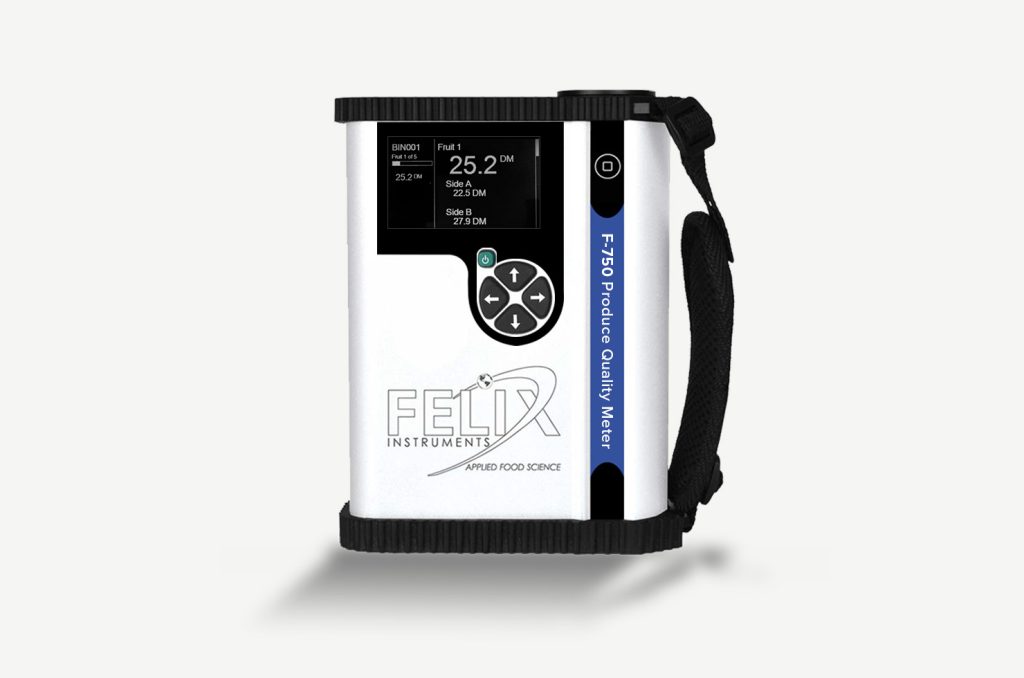
The advantage of Felix here is straightforward. The F-750 Produce Quality Meter is built for non-destructive maturity and quality assessment, including dry matter, and the platform is positioned for both harvest timing and post-harvest QA in cold storage and ripening rooms. That gives facilities a way to gather useful lot-level data without adding destructive lab work to every weekly review.
5. Soluble solids or °Brix
Weekly °Brix checks help facilities verify whether fruit is progressing toward the eating quality customers expect. This is especially useful when comparing incoming lots, checking fruit held in storage, or validating whether ripening programs are producing consistent flavor outcomes. Brix alone is not the whole story, but it is one of the fastest ways to add a consumer-quality lens to operational QA.
The F-750 Produce Quality Meter is again relevant because Felix positions it for estimating maturity and key quality parameters such as °Brix in both crop management and post-harvest quality assurance.
In practice, that means one device can support alignment between harvest decisions and postharvest handling, which is often where competitors force teams into separate workflows and more destructive testing.
6. Lot-to-lot variability
A surprising number of facilities track room averages but miss variability between lots, pallets, suppliers, or orchards. That is a mistake. Weekly postharvest facility metrics should not stop at one mean number.
What matters is how much spread exists within the product being handled. Wide variability usually shows up later as uneven ripening, mixed customer feedback, and hard-to-explain claims.
This is where Felix has a practical advantage. The company’s gas analyzers support automated data capture and internal data logging, while the F-920, F-940, F-950, and F-960 are built for portable use across multiple environments.
That makes it easier to sample more locations in less time instead of relying on a single reading per room. Better sampling usually leads to better decisions, and that is where a weekly metric program becomes genuinely operational instead of performative.
7. Data completeness and response time
This last metric is often ignored because it sounds administrative, but it affects everything else. How many scheduled readings were actually taken this week? How quickly did the team act when a room or lot moved out of spec? A facility can have good instruments and still lose control if the workflow is inconsistent.
Felix appears to have designed around that reality. The F-920 emphasizes autosave and internal data logging, with thousands of records stored on a removable SD card. The F-940 records gas concentrations along with date, time, relative humidity, and GPS location.
The F-950 also supports automated saving at one-second intervals and very large data capacity on its SD card. That kind of built-in capture matters because weekly review only works when the data is there, organized, and easy to compare across rooms and weeks.
How to use these metrics in a weekly review
A simple weekly rhythm works well:
- Review gas data by room, commodity, and lot
- Compare incoming quality metrics against in-storage and pre-ship results
- Flag lots with unusually high variability
- Check whether corrective actions were taken on out-of-range rooms
- Use the week’s data to adjust ripening plans, room settings, and release priorities
The point is not to create more reporting. The point is to make the facility easier to run. The best metric set is one that tells your team what to do next.
Takeaway
The strongest postharvest teams do not wait for defects to show up at the end of the chain. They track the right postharvest facility metrics weekly, look for patterns, and correct problems while there is still time to protect value.
Ethylene, O2, CO2, dry matter, °Brix, lot variability, and response time give facilities a balanced view of storage performance and fruit condition.
Felix Instruments stands out because its lineup supports that full picture with portable gas analyzers for room and package monitoring plus non-destructive quality tools for lot assessment.
If your facility wants tighter control, faster QA, and better visibility into what is happening each week, Felix Instruments is a smart place to start.
Related Products
- F-751 Grape Quality Meter
- Custom Model Building
- F-910 AccuStore
- F-751 Melon Quality Meter
- F-751 Kiwifruit Quality Meter
- F-750 Produce Quality Meter
- F-751 Avocado Quality Meter
- F-751 Mango Quality Meter
- F-9XXDK Dynamic Sampling Kit
- F-900 Portable Ethylene Analyzer
- F-950 Three Gas Analyzer
- F-920 Check It! Gas Analyzer
- F-960 Ripen It! Gas Analyzer
- F-940 Store It! Gas Analyzer
Most Popular Articles
- Spectrophotometry in 2023
- NIR Applications in Agriculture – Everything…
- The Importance of Food Quality Testing
- The 5 Most Important Parameters in Produce Quality Control
- Melon Fruit: Quality, Production & Physiology
- Fruit Respiration Impact on Fruit Quality
- Guide to Fresh Fruit Quality Control
- Liquid Spectrophotometry & Food Industry Applications
- Ethylene (C2H4) – Ripening, Crops & Agriculture
- Understanding Chemometrics for NIR Spectroscopy