How Often Should I Recalibrate My F-750 or F-751?

Scott Trimble

May 5, 2026 at 5:22 pm | Updated May 5, 2026 at 5:22 pm | 6 min read
If you rely on an F-750 or F-751 Quality Meter for harvest timing, intake checks, ripeness management, or quality control, F-750 recalibration should be treated as part of your measurement routine, not as an afterthought.
These Felix Instruments meters are designed for fast, non-destructive produce quality assessment, but like any NIR-based instrument, the quality of the result depends on how well the calibration matches the fruit you are testing.
The simple answer is this: you should check your calibration regularly, and you should recalibrate when your fruit, season, growing region, variety, or quality range changes enough to affect the readings.
Subscribe to receive our monthly round-up of articles.
That does not always mean rebuilding a calibration every week. In many operations, the better approach is routine validation, followed by recalibration only when the data shows it is needed.
Calibration vs. Validation: Know the Difference
Before setting a schedule, it helps to separate two terms that often get mixed together.
Calibration is the model that connects the meter’s NIR scan to a quality trait such as dry matter, soluble solids, or another produce-specific index. It is built from reference measurements.
Validation is the process of checking whether that model still performs well on your current fruit.
In practice, validation should happen more often than recalibration. A good calibration may remain useful across a season if the fruit population stays similar. But if your supply chain changes, you need to confirm that the model still represents what is in front of you.
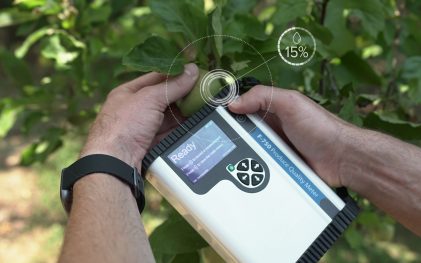
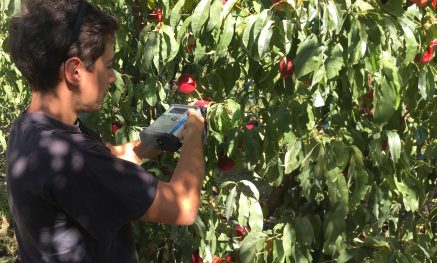
This is where Felix Instruments has an advantage over many traditional testing workflows. The F-750 and F-751 meters let teams collect fast, non-destructive readings directly in orchards, packinghouses, storage rooms, and quality labs. That makes frequent checks realistic. You are not cutting every sample, waiting on lab results, or slowing down receiving.
A Practical Recalibration Schedule
For most users, the best schedule looks like this:
#01 Validate at the start of every season
At the beginning of a new season, run a fresh validation set. Fruit physiology can shift from year to year because of weather, irrigation, crop load, nutrition, harvest timing, and regional conditions.
Even if you are using the same crop and same supplier, do not assume last year’s model is automatically perfect. It may be close. It may still perform well. But you should prove that with reference data.
For an F-750 recalibration plan, this is usually the first checkpoint of the year.
#02 Validate when you change variety or cultivar
Variety changes are one of the most common reasons to check calibration performance. A model developed on one cultivar may not transfer cleanly to another, especially if the fruit differs in skin thickness, flesh composition, shape, maturity behavior, or soluble solids range.
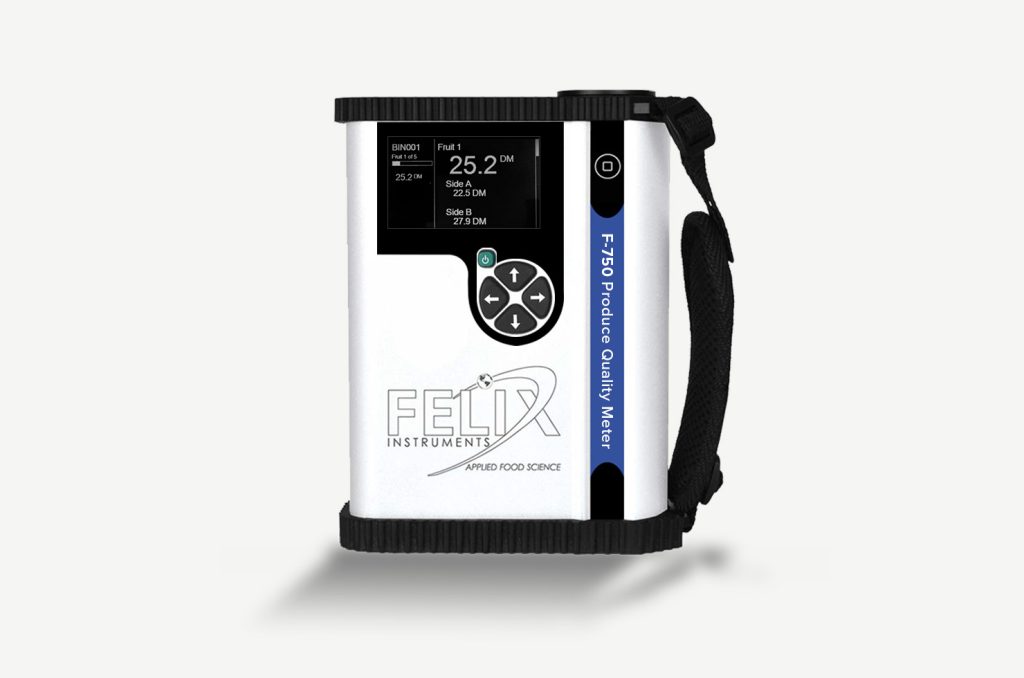
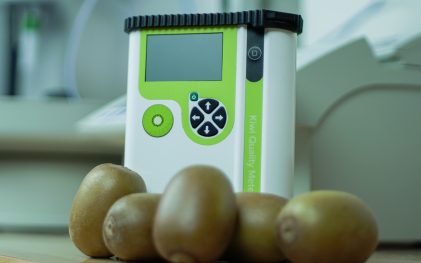
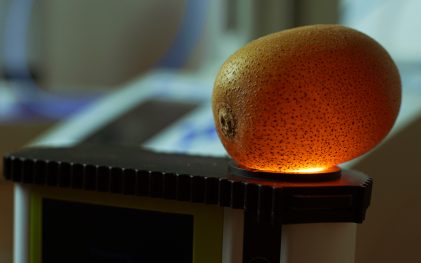
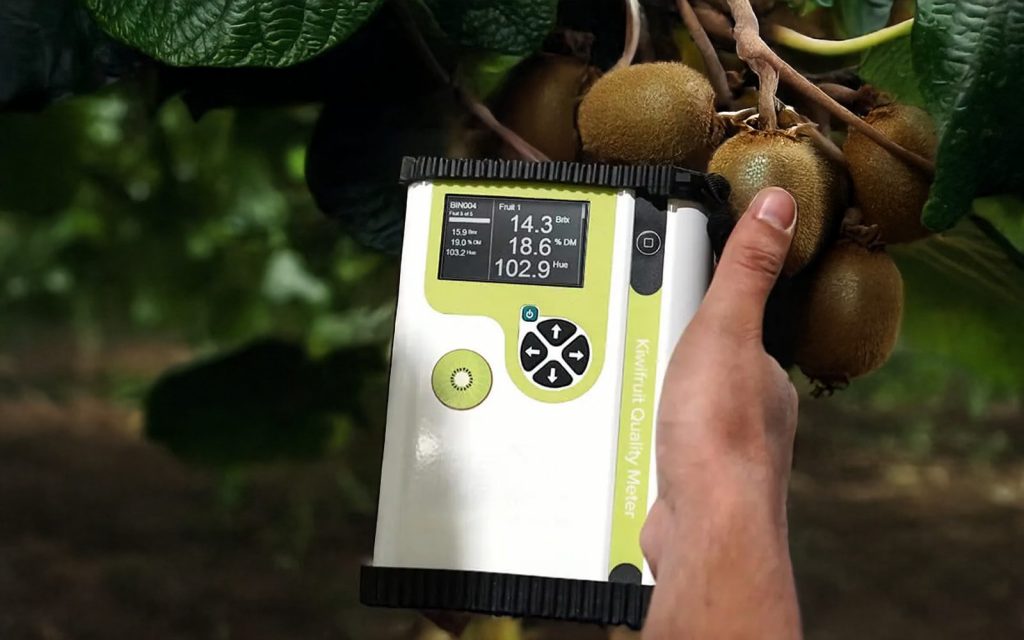
This matters for both the F-750 Produce Quality Meter and the crop-specific F-751 meters, including models for avocado, mango, kiwi, and grape. The F-751 line is built for specific produce categories, which simplifies use for teams focused on one crop. Still, you should validate when the fruit population changes.
#03 Validate when the growing region changes
Fruit from different regions can behave differently, even when it is the same crop and cultivar. Climate, soil, elevation, irrigation practices, and harvest windows all influence quality development.
If you source from multiple regions, build a habit of checking calibration accuracy when a new region enters the supply chain. This is especially important for packers, importers, exporters, and retailers who compare fruit from multiple origins.
#04 Validate after a major harvest window shift
Early-season fruit and late-season fruit often sit at different points in the maturity range. A calibration that performs well in the middle of the season may need review if you begin testing fruit that is much less mature or much more mature than the original calibration set.
The meter is not the problem in this case. The issue is the sample population. NIR models work best when the calibration includes the type of fruit you are asking the instrument to measure.
#05 Recalibrate when validation error becomes too high
Do not recalibrate just because the calendar says so. Recalibrate when validation data tells you the model has drifted outside your acceptable error range.
That acceptable range depends on how you use the data. A research team may need tighter agreement with reference methods. A packinghouse may care more about sorting fruit into decision categories. A harvest manager may need enough confidence to decide whether a block is ready.
The key is to set your tolerance before testing. Then compare the meter readings against your reference method.
What About Daily Calibration?
Users often ask whether they need to recalibrate the F-750 or F-751 every day. In most cases, no. You do not need to rebuild the produce calibration daily.
However, you should follow the instrument’s normal startup, reference, and measurement procedures. NIR instruments depend on consistent measurement conditions. A daily routine helps keep readings stable and reduces avoidable error.
A good daily routine includes:
- Inspecting the meter and lens area before use
- Keeping the measurement surface clean
- Allowing the instrument to operate under stable conditions
- Following the recommended reference scan or standardization process
- Scanning fruit consistently
- Avoiding extreme temperature changes when possible
- Recording notes about fruit source, variety, and maturity stage
This is not the same as F-750 recalibration. Think of it as instrument hygiene. It helps protect the quality of your data between larger validation checks.
When Recalibration Is Probably Needed
You should consider recalibrating your F-750 or F-751 when you see one or more of these patterns:
- Readings consistently run higher or lower than reference tests
- Accuracy drops after switching suppliers or regions
- The fruit is outside the original maturity range
- A new cultivar is introduced
- Growing conditions were unusual this season
- Your team changes the way samples are selected or scanned
- You need to measure a quality trait that was not part of the original model
- Validation results no longer meet your internal tolerance
One or two unusual samples do not automatically mean the calibration has failed. Produce is variable. Sampling error happens. Reference testing also has its own variation.
But if the trend is consistent, the calibration deserves attention.
How Many Samples Do You Need?
The right number of samples depends on your crop, quality trait, and decision risk. In general, more variation requires more samples.
A useful validation set should include fruit across the range you expect to measure. Do not only test perfect fruit from the middle of the pack. Include the low end, high end, different sizes, different lots, and different maturity stages.
For recalibration, the same logic applies. A stronger calibration set includes real-world variation. That gives the F-750 or F-751 a better foundation for predicting future samples.
This is one reason Felix Instruments meters fit well into commercial workflows. Because testing is non-destructive, teams can scan more fruit without sacrificing product. That makes it easier to build and maintain a useful dataset over time.
Why Not Use a Fixed Recalibration Interval?
A fixed interval sounds simple, but it can create problems.
If you recalibrate too often without good reference data, you may make the model worse instead of better. If you wait too long because the annual schedule has not arrived yet, you may rely on weak data for weeks or months.
A better approach is event-based recalibration. Validate frequently, then recalibrate when something meaningful changes.
For example:
- New season: validate
- New cultivar: validate
- New region: validate
- New maturity range: validate
- Validation failure: recalibrate
This gives you a defensible process. It also helps your team avoid unnecessary model changes.
F-750 vs. F-751: Does the Schedule Change?
The general approach is the same, but the use case differs.
The F-750 Produce Quality Meter is flexible and often used across different produce types and applications. Because of that flexibility, users should pay close attention to whether the active model matches the crop, variety, and quality trait being measured.
The F-751 meters are crop-specific, which makes them a strong choice for teams focused on one commodity. A mango operation, avocado handler, kiwifruit grower, or grape quality team can use a meter designed around that product category. Even then, validation remains important because fruit populations still change by season, supplier, cultivar, and region.
In both cases, F-750 recalibration and F-751 recalibration should be driven by data, not guesswork.
Best Practices for Reliable Readings
To get the most from your Felix Instruments meter, build a standard operating procedure around sampling and validation.
Use the same scan location whenever possible. Train operators to hold the instrument consistently. Track lot information. Compare readings with reference methods on a planned schedule. Keep notes when fruit source, cultivar, or maturity stage changes.
Also, avoid treating the meter as a black box. The F-750 and F-751 are practical field and QC tools, but they perform best when teams understand the relationship between NIR readings, reference data, and produce variability.
That is where Felix Instruments stands out. These meters are built for produce professionals who need fast data without destroying samples. They support better harvest decisions, better sorting conversations, and better quality management across the supply chain.
Conclusion
So, how often should you recalibrate your F-750 or F-751? Validate at the start of each season, whenever your fruit source changes, whenever you introduce a new cultivar or region, and whenever readings stop matching your reference checks. Recalibrate only when validation shows the current model no longer fits your fruit.
That approach keeps your data reliable without creating unnecessary work.
For growers, packers, distributors, and researchers, Felix Instruments offers a practical way to bring non-destructive quality measurement into daily produce decisions. To get the most from your F-750 or F-751, build a validation schedule, keep your sampling consistent, and work with Felix Instruments when you need support refining or updating your calibration.
Contact Felix Instruments to learn how the F-750 and F-751 Quality Meters can support your produce quality program.
Related Products
Most Popular Articles
- Spectrophotometry in 2023
- NIR Applications in Agriculture – Everything…
- The Importance of Food Quality Testing
- The 5 Most Important Parameters in Produce Quality Control
- Melon Fruit: Quality, Production & Physiology
- Fruit Respiration Impact on Fruit Quality
- Guide to Fresh Fruit Quality Control
- Liquid Spectrophotometry & Food Industry Applications
- Ethylene (C2H4) – Ripening, Crops & Agriculture
- Understanding Chemometrics for NIR Spectroscopy
Related Reading