Using the F-750 to Measure Dry Matter in Avocados Pre-Harvest

Scott Trimble

February 5, 2026 at 9:33 pm | Updated February 5, 2026 at 9:33 pm | 5 min read
Avocado dry matter measurement has become one of the most reliable ways to determine maturity before harvest. Growers, packers, and quality managers rely on dry matter data to decide when fruit is ready, how it will ripen, and how it will perform in storage and transit. The challenge has always been collecting that data quickly and without destroying fruit. This is where the F-750 Produce Quality Meter from Felix Instruments fits naturally into modern avocado production workflows.
This article walks through how the F-750 is used to measure dry matter in avocados pre-harvest, why dry matter matters, and how this approach compares to traditional testing methods. The focus is practical and field-oriented, reflecting how experienced teams actually use the instrument.
Why Dry Matter Matters in Avocado Production
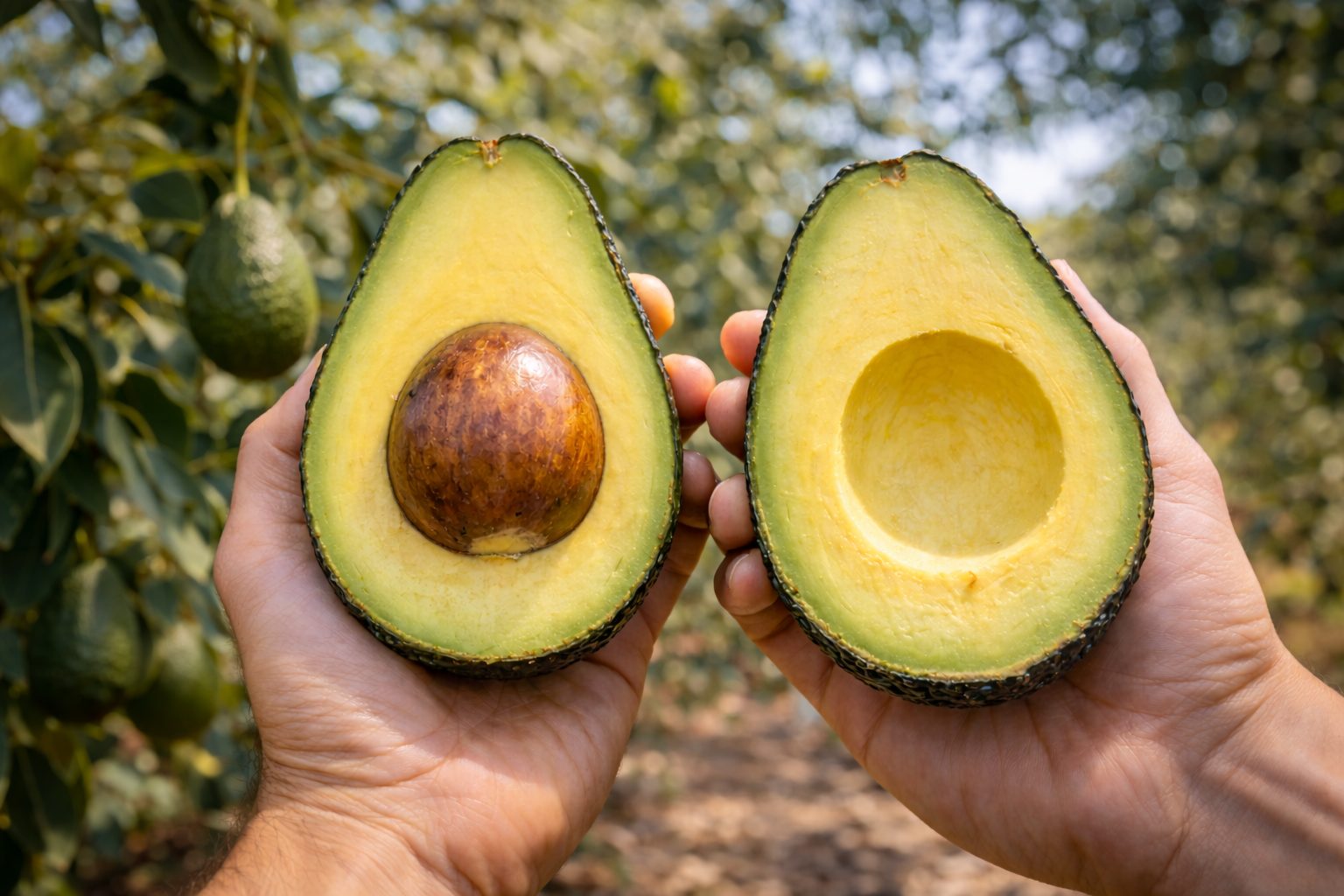
Dry matter is closely tied to oil content and eating quality in avocados. As fruit matures on the tree, dry matter increases. Once a cultivar reaches its minimum dry matter threshold, it generally has the potential to ripen properly and develop acceptable flavor and texture.
Subscribe to the Felix instruments Weekly article series.
By submitting this form, you are consenting to receive marketing emails from: . You can revoke your consent to receive emails at any time by using the SafeUnsubscribe® link, found at the bottom of every email. Emails are serviced by Constant Contact
Pre-harvest avocado dry matter measurement supports several key decisions:
-
Determining legal or contractual harvest maturity
-
Scheduling harvests across blocks and orchards
-
Predicting ripening behavior and shelf life
-
Reducing the risk of immature fruit entering the supply chain
Because dry matter changes gradually, regular monitoring gives growers a clear picture of how maturity is progressing over time rather than relying on guesswork or calendar dates.
Limitations of Traditional Dry Matter Testing
The standard laboratory method for avocado dry matter measurement is oven drying. While accurate, it has several drawbacks in a commercial setting:
-
It is destructive, meaning sampled fruit cannot be sold
-
Results are delayed, often by 24 to 48 hours
-
Sampling rates are limited due to labor and time constraints
-
Field-level decision making becomes difficult
For large orchards or operations managing multiple varieties and harvest windows, these limitations add up quickly. Decisions are often made with incomplete data simply because collecting more data is impractical.
How the F-750 Measures Dry Matter
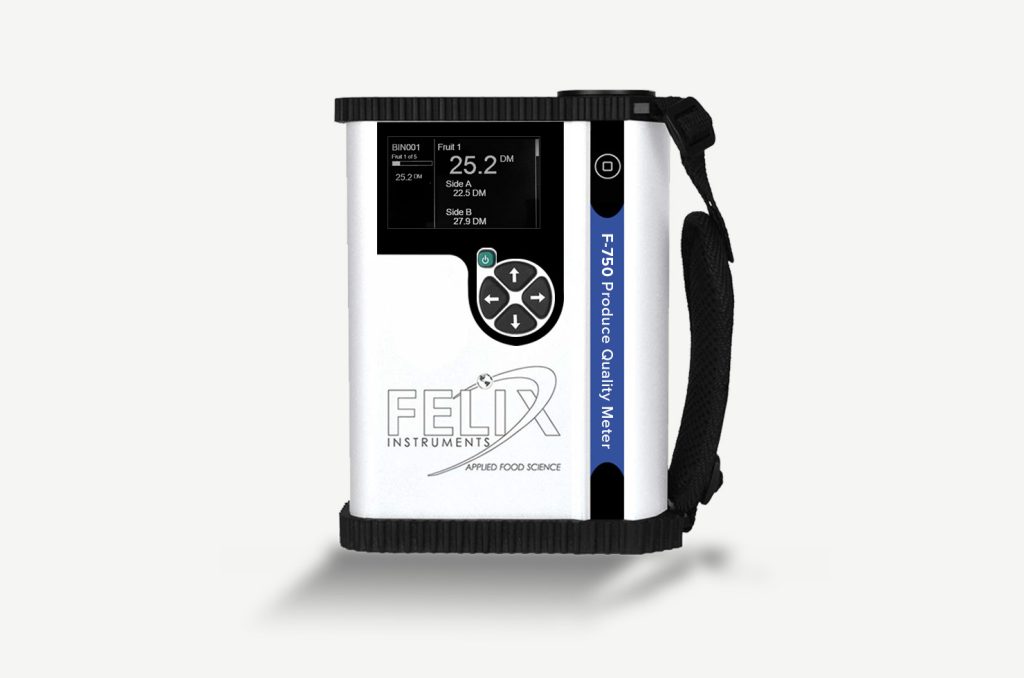
The F-750 uses near-infrared spectroscopy to estimate internal quality attributes without cutting the fruit. For avocado dry matter measurement, the instrument scans the fruit surface and analyzes how near-infrared light interacts with internal compounds related to dry matter.
The process is straightforward:
-
The fruit is placed against the sensor window
-
A scan is taken in seconds
-
The F-750 displays an estimated dry matter value based on calibrated models
Because the measurement is non-destructive, the same fruit can be scanned multiple times throughout the season. This allows users to track maturity trends rather than relying on isolated samples.
Pre-Harvest Use in the Orchard
In pre-harvest applications, the F-750 is typically used directly in the field. Crews can move block by block, scanning representative fruit from multiple trees. This supports a more detailed maturity map across the orchard.
Common pre-harvest workflows include:
-
Weekly or biweekly scanning leading up to harvest
-
Comparing dry matter across different blocks or rootstocks
-
Identifying early or late-maturing zones
-
Validating harvest readiness before picking crews are deployed
Because results are immediate, decisions can be made on the spot. This is especially valuable when weather, labor availability, or market conditions change quickly.
Calibration and Accuracy Considerations
As with any spectroscopic tool, calibration is critical. The F-750 is supported by avocado-specific calibration models developed from extensive reference data. Many users also validate the instrument against their own oven-dry samples at the start of the season.
Best practices for avocado dry matter measurement with the F-750 include:
-
Using cultivar-appropriate calibration models
-
Periodically checking readings against lab results
-
Scanning fruit at consistent locations and temperatures
-
Training operators to follow repeatable scanning techniques
When used correctly, the F-750 provides repeatable, actionable data that aligns well with traditional dry matter testing.
Advantages Over Destructive Methods
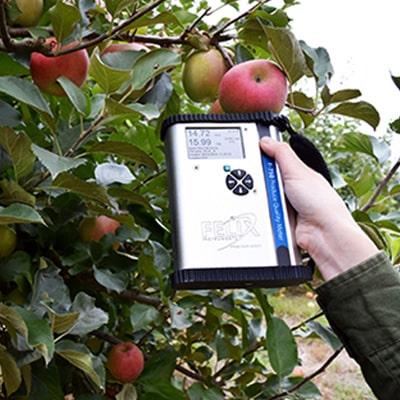
The practical advantages of using the F-750 for pre-harvest avocado dry matter measurement are significant:
-
Non-destructive testing preserves fruit value
-
High sampling rates improve statistical confidence
-
Immediate results support faster decisions
-
Portable design enables true field use
These benefits shift dry matter measurement from a lab-based task to a routine field activity. Over time, this leads to better harvest timing and more consistent fruit quality.
Supporting Quality and Supply Chain Outcomes
Accurate pre-harvest dry matter data does more than determine when to harvest. It also influences downstream performance. Fruit harvested at appropriate dry matter levels is more likely to ripen evenly, tolerate storage, and meet customer expectations.
By integrating the F-750 into pre-harvest monitoring programs, operations can:
-
Reduce claims related to poor ripening
-
Improve pack-out consistency
-
Align harvest decisions with market requirements
-
Strengthen communication between growers and packers
This is especially important for export-focused supply chains where fruit may spend weeks in transit.
Integrating the F-750 Into Existing Programs
Most teams already collect some form of maturity data. The F-750 does not replace good agronomic practices. Instead, it enhances them by making avocado dry matter measurement easier and more frequent.
The instrument is often used alongside:
-
Visual maturity assessments
-
Oil content benchmarks
-
Historical harvest records
-
Weather and growing degree data
By combining these inputs, users gain a more complete picture of fruit readiness and risk.
Long-Term Value for Growers
Over multiple seasons, consistent use of the F-750 builds a valuable dataset. Patterns emerge across varieties, blocks, and years. This helps refine harvest strategies and supports continuous improvement.
Growers often find that regular avocado dry matter measurement leads to:
-
More predictable harvest windows
-
Reduced variability between lots
-
Better alignment with buyer specifications
These gains compound over time, making the instrument a strategic investment rather than just a testing tool.
Final Thoughts
Pre-harvest avocado dry matter measurement is no longer limited to slow, destructive lab methods. The F-750 Produce Quality Meter makes it possible to collect accurate, non-destructive dry matter data directly in the orchard. This supports better harvest decisions, improved fruit quality, and stronger supply chain performance.
If you are looking to improve how you measure avocado maturity and want faster, more actionable data, Felix Instruments offers tools and support designed specifically for real-world production environments. Visit Felix Instruments to learn more about the F-750 and how it can fit into your pre-harvest quality program.
Frequently Asked Questions
How Early Before Harvest Can the F-750 Be Used for Avocado Dry Matter Measurement?
The F-750 can be used weeks or even months before harvest. Many users begin scanning early in the season to track dry matter trends and identify when fruit approaches maturity thresholds.
Does the F-750 Work Across Different Avocado Varieties?
Yes. The F-750 supports avocado-specific calibration models, and additional validation can be done for different cultivars to ensure reliable dry matter estimates.
Is Training Required to Use the F-750 Effectively?
Basic training is recommended. Proper scanning technique, calibration checks, and consistent sampling methods help ensure accurate and repeatable avocado dry matter measurement results.
Related Products
- F-751 Grape Quality Meter
- Custom Model Building
- F-910 AccuStore
- F-751 Melon Quality Meter
- F-751 Kiwifruit Quality Meter
- F-750 Produce Quality Meter
- F-751 Avocado Quality Meter
- F-751 Mango Quality Meter
- F-900 Portable Ethylene Analyzer
- F-950 Three Gas Analyzer
- F-920 Check It! Gas Analyzer
- F-960 Ripen It! Gas Analyzer
- F-940 Store It! Gas Analyzer
Most Popular Articles
- Spectrophotometry in 2023
- The Importance of Food Quality Testing
- NIR Applications in Agriculture – Everything…
- The 5 Most Important Parameters in Produce Quality Control
- Melon Fruit: Quality, Production & Physiology
- Fruit Respiration Impact on Fruit Quality
- Guide to Fresh Fruit Quality Control
- Liquid Spectrophotometry & Food Industry Applications
- Ethylene (C2H4) – Ripening, Crops & Agriculture
- Active Packaging: What it is and why it’s important