Postharvest Research on Citrus Off-Gassing Using F-900 Portable Analyzer

Scott Trimble

February 5, 2026 at 8:32 pm | Updated February 5, 2026 at 8:32 pm | 5 min read
Postharvest off-gassing analysis plays a central role in understanding citrus fruit quality, shelf life, and market readiness. In citrus supply chains, small changes in internal gas composition can signal the onset of ripening, senescence, or stress long before visual symptoms appear. Postharvest off-gassing research allows scientists and quality managers to measure these changes directly and respond with data-driven decisions.
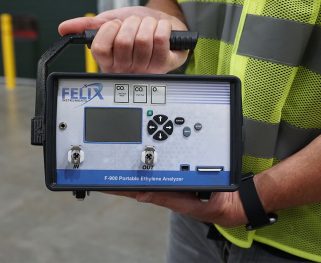
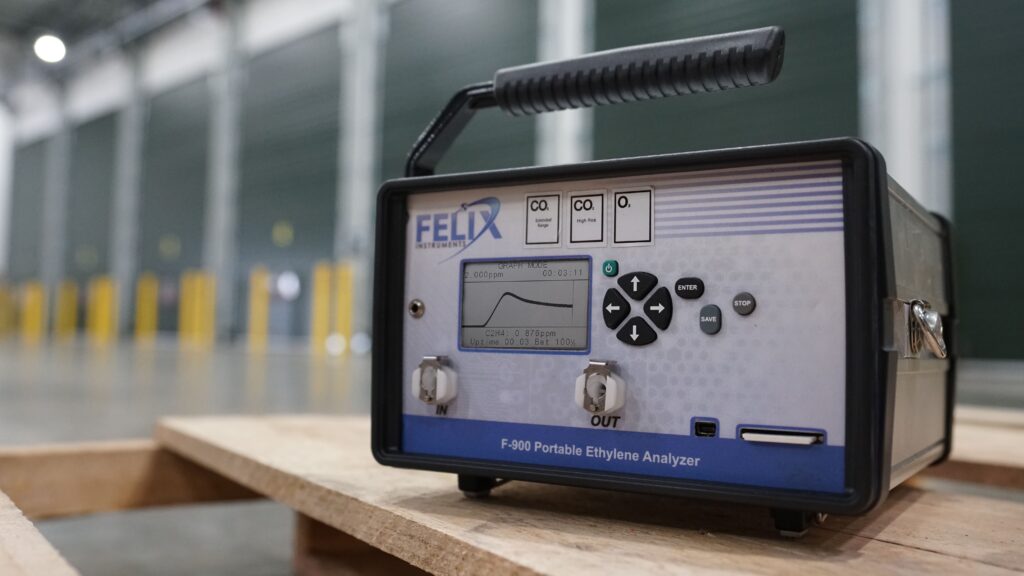
The F-900 Portable Analyzer has become a practical tool for this work because it enables fast, non-destructive measurement of gases like ethylene, carbon dioxide, and oxygen in real storage and handling environments.
This article explores how postharvest off-gassing research is applied to citrus, why gas monitoring matters after harvest, and how the F-900 supports accurate and repeatable analysis across research and commercial settings.
Subscribe to the Felix instruments Weekly article series.
By submitting this form, you are consenting to receive marketing emails from: . You can revoke your consent to receive emails at any time by using the SafeUnsubscribe® link, found at the bottom of every email. Emails are serviced by Constant Contact
Why Citrus Off-Gassing Matters After Harvest
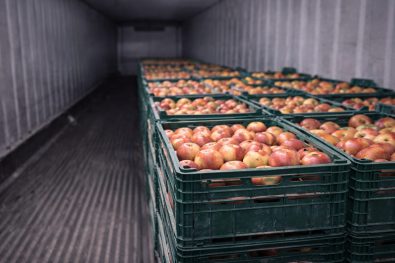
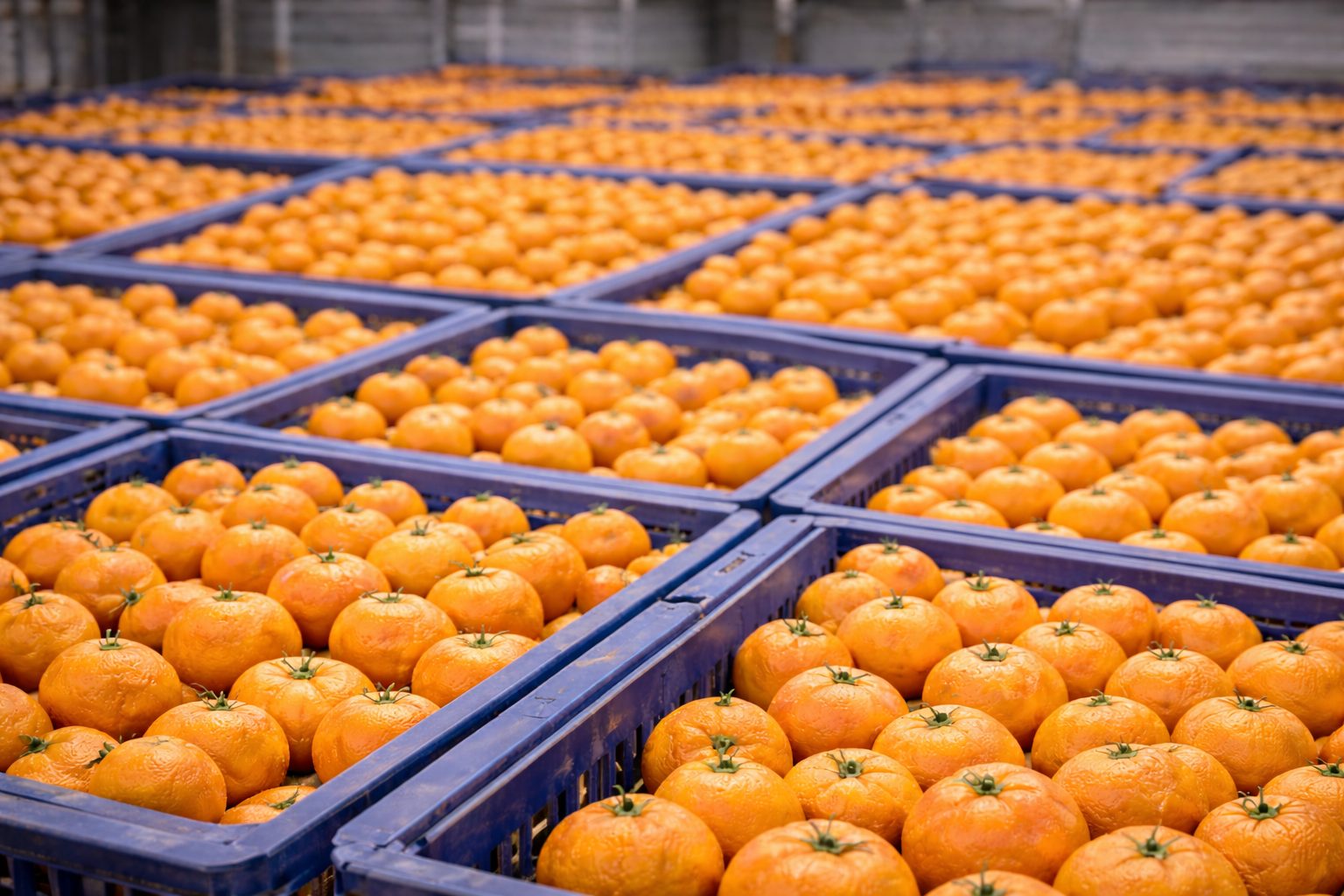
Citrus fruit remains biologically active after harvest. Respiration continues, metabolic pathways shift, and trace gases are released through the peel. These gases provide early insight into fruit condition.
Key gases measured during postharvest off-gassing research include:
-
Ethylene, even at very low concentrations
-
Carbon dioxide as a respiration indicator
-
Oxygen depletion in sealed or semi-sealed storage
-
Volatile compounds linked to decay or stress
Ethylene is often associated with climacteric fruits, but citrus also responds strongly to ethylene exposure during degreening, storage, and transport. Monitoring ethylene production and accumulation helps researchers evaluate degreening protocols, storage conditions, and the effectiveness of ethylene inhibitors.
Carbon dioxide measurements reflect respiration rate. Elevated CO2 levels can indicate high metabolic activity or restricted gas exchange, both of which can shorten storage life or cause physiological disorders.
Applications of Postharvest Off-Gassing Research in Citrus
Postharvest off-gassing research supports a wide range of citrus studies, from basic physiology to applied storage trials. Common use cases include:
-
Comparing respiration rates across cultivars
-
Evaluating the impact of cold storage and controlled atmosphere conditions
-
Measuring ethylene release during degreening treatments
-
Detecting early signs of decay or stress
-
Optimizing packaging and ventilation strategies
In research environments, repeated gas measurements over time allow scientists to track trends rather than rely on single time-point observations. This approach is especially valuable when comparing treatments or assessing long-term storage outcomes.
The Role of the F-900 Portable Analyzer in Citrus Research
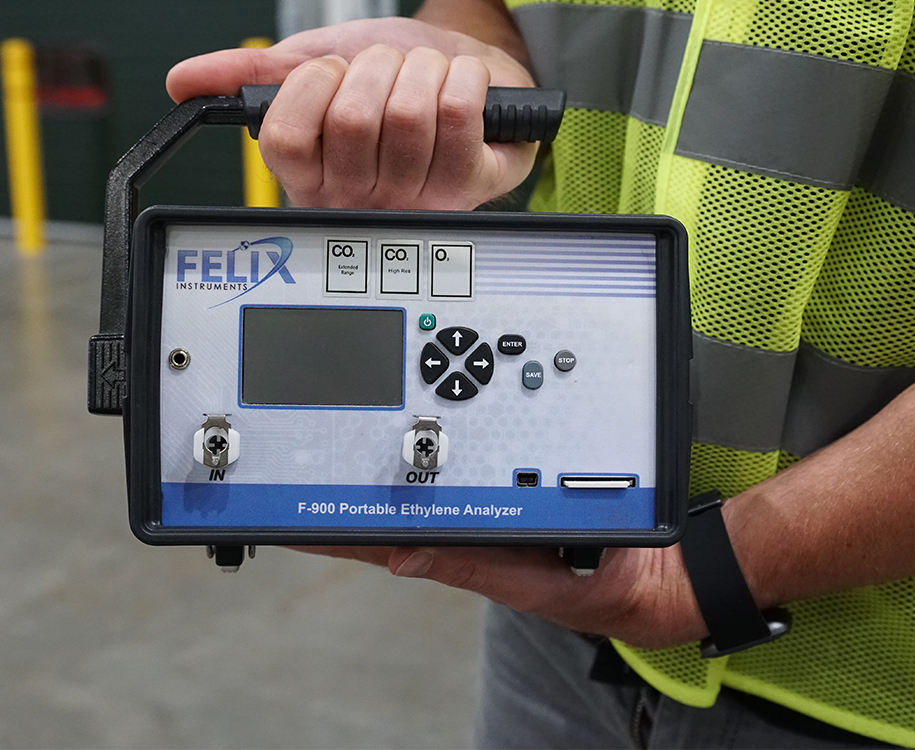
The F-900 Portable Analyzer is designed for rapid gas measurement directly at the point of need. Its portability makes it well suited for postharvest off-gassing research where samples may be located in cold rooms, packing facilities, or transport containers.
Key characteristics that support citrus research include:
-
Portable design for field and facility use
-
Fast sensor response for near real-time results
-
Ability to measure low ethylene concentrations
-
Non-destructive sampling methods
-
Data logging for trend analysis
Because citrus off-gassing often involves subtle changes in gas concentration, sensitivity and repeatability are critical. The F-900 allows researchers to collect consistent measurements across multiple fruit lots, treatments, or time points without removing fruit from their storage environment.
Measuring Ethylene in Citrus Off-Gassing Studies
Ethylene measurement is a central component of postharvest off-gassing research. In citrus, ethylene influences peel color, aging, and susceptibility to certain disorders. Even trace amounts introduced during storage or transport can affect fruit quality.
Using the F-900, researchers can:
-
Measure ethylene production from individual fruit or batches
-
Monitor ethylene buildup inside storage containers
-
Compare ethylene levels before and after degreening
-
Evaluate the effectiveness of ethylene scrubbing systems
Portable ethylene measurement simplifies experimental design. Instead of transporting samples to a laboratory, measurements can be taken directly in cold rooms or packing houses, reducing handling-related variability.
Carbon Dioxide and Respiration Rate Analysis
Carbon dioxide release is a direct indicator of respiration rate. In postharvest off-gassing research, CO2 measurements help researchers understand how citrus responds to temperature, atmosphere composition, and storage duration.
The F-900 enables:
-
Rapid assessment of respiration changes over time
-
Comparison of respiration rates between treatments
-
Detection of stress-related respiration spikes
-
Evaluation of controlled atmosphere storage performance
By pairing CO2 data with ethylene measurements, researchers gain a more complete picture of fruit physiology after harvest.
Advantages of Portable Off-Gassing Analysis
Traditional gas analysis often relies on fixed laboratory equipment. While accurate, these systems can limit flexibility and slow data collection. Portable tools like the F-900 offer several advantages for postharvest off-gassing research:
-
Measurements taken where fruit is stored or handled
-
Reduced sample disturbance
-
Faster data collection across large sample sets
-
Improved responsiveness during storage trials
These advantages are particularly important in commercial citrus operations, where storage conditions change dynamically and rapid feedback is essential.
Integrating Off-Gassing Data with Postharvest Decisions
Data from postharvest off-gassing research is most valuable when it informs decisions. Citrus researchers and quality managers use gas measurements to:
-
Adjust storage temperatures or ventilation
-
Modify degreening protocols
-
Identify lots at risk of shortened shelf life
-
Validate new packaging or storage technologies
Because the F-900 produces immediate results, it supports a more responsive approach to postharvest management. Instead of waiting for downstream quality issues to appear, teams can act earlier based on physiological indicators.
Supporting Research and Commercial Use
The F-900 Portable Analyzer is used in both academic research and commercial quality programs. Its ease of use allows trained technicians, researchers, and quality managers to collect reliable data without complex setup.
This versatility supports:
-
University postharvest research trials
-
Packing house quality control programs
-
Storage and transport evaluations
-
Extension and applied research projects
By bridging the gap between laboratory-grade analysis and real-world conditions, the F-900 strengthens the practical value of postharvest off-gassing research.
The Bottom Line
Postharvest off-gassing research provides critical insight into citrus fruit physiology, quality, and shelf life. Measuring ethylene, carbon dioxide, and related gases allows researchers and industry professionals to detect changes early and manage fruit more effectively. The F-900 Portable Analyzer supports this work by delivering fast, sensitive, and portable gas measurements directly in storage and handling environments.
For researchers and citrus professionals looking to improve postharvest monitoring and decision-making, Felix Instruments offers proven tools designed for real-world research challenges. To learn more about the F-900 Portable Analyzer and how it can support your postharvest off-gassing research, contact Felix Instruments to explore available solutions.
Related Products
Most Popular Articles
- Spectrophotometry in 2023
- The Importance of Food Quality Testing
- NIR Applications in Agriculture – Everything…
- The 5 Most Important Parameters in Produce Quality Control
- Melon Fruit: Quality, Production & Physiology
- Fruit Respiration Impact on Fruit Quality
- Guide to Fresh Fruit Quality Control
- Liquid Spectrophotometry & Food Industry Applications
- Ethylene (C2H4) – Ripening, Crops & Agriculture
- Active Packaging: What it is and why it’s important
Related Reading