Myth: Ripening Control Is Just About Ethylene


Scott Trimble

March 10, 2026 at 4:23 pm | Updated March 10, 2026 at 4:23 pm | 5 min read
Ripening control is often reduced to a single variable: ethylene. In reality, effective ripening control depends on a coordinated understanding of ethylene, oxygen, carbon dioxide, temperature, and commodity-specific physiology. Focusing on only one gas oversimplifies postharvest management and leaves room for quality loss, uneven ripening, and reduced shelf life.
For growers, packers, storage operators, and importers, ripening control is a system. Ethylene plays a central role, but it does not work alone. Accurate measurement and management of multiple gases, along with internal quality metrics, are what separate consistent programs from reactive ones.
Felix Instruments has built its product line around this broader view of ripening control, offering tools that measure not only ethylene but also CO2, O2, and internal fruit quality attributes in real time.
Subscribe to the Felix instruments Weekly article series.
By submitting this form, you are consenting to receive marketing emails from: . You can revoke your consent to receive emails at any time by using the SafeUnsubscribe® link, found at the bottom of every email. Emails are serviced by Constant Contact
Ethylene Is Critical, But It Is Not the Whole Story
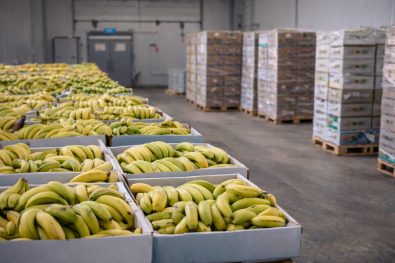
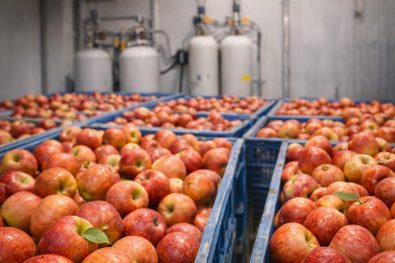
Ethylene is a plant hormone. It triggers and accelerates ripening in climacteric fruit such as apples, bananas, avocados, mangos, and kiwifruit. Managing ethylene concentration in storage rooms and ripening chambers is essential. Even trace levels can initiate ripening.
However, ethylene activity is influenced by surrounding conditions:
-
Oxygen levels regulate respiration and metabolic activity
-
Carbon dioxide can suppress or alter ethylene response
-
Temperature directly affects reaction rates
-
Commodity maturity determines sensitivity
If you only monitor ethylene, you miss the context. That context is what defines successful ripening control.
For example, fruit in controlled atmosphere storage may respond differently to the same ethylene concentration depending on O2 suppression levels. Elevated CO2 can delay certain ripening processes while still allowing others to proceed. Without measuring those gases, you are working blind.
Multi-Gas Monitoring Is the Foundation of Modern Ripening Control
A complete ripening control program measures:
-
Ethylene for hormone-driven ripening signals
-
Oxygen for respiration rate control
-
Carbon dioxide for stress and atmosphere balance
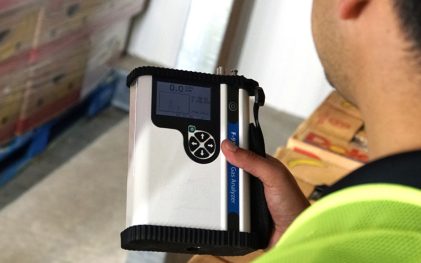
Felix Instruments offers several gas analyzers designed specifically for postharvest and food science environments.
The F-900 Portable Ethylene Analyzer provides highly sensitive ethylene detection for field and storage applications. It is widely used for tracking ethylene production and detecting contamination sources in storage facilities.
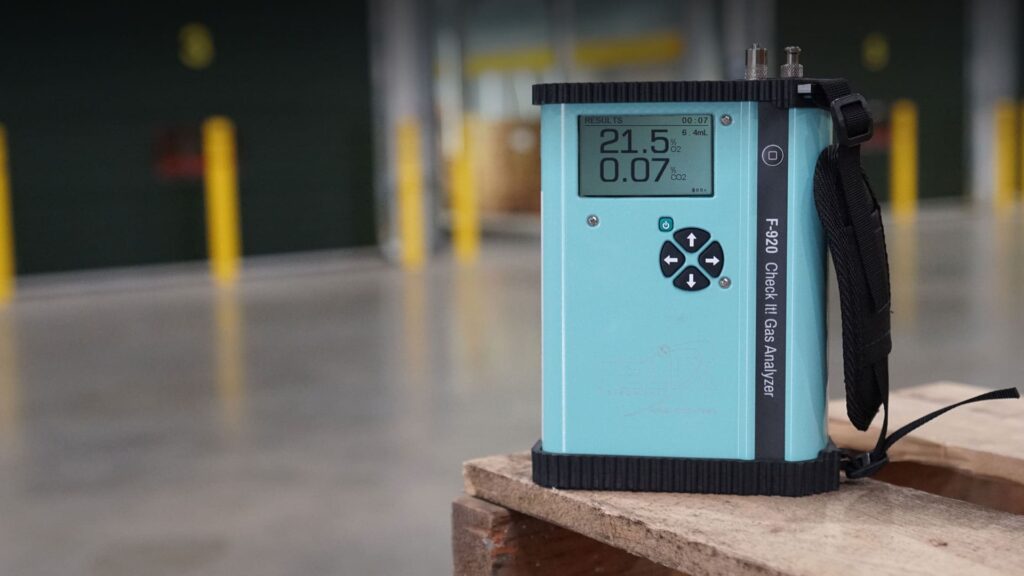
The F-920 Check It Gas Analyzer is built for fast, reliable O2 and CO2 measurements in packaging, storage rooms, and modified atmosphere systems.
For facilities that require multi-gas capability in a single unit, the F-950 Three Gas Analyzer measures ethylene, CO2, and O2 simultaneously. This integrated approach supports real-time decisions during ripening and storage.
In ripening rooms where ethylene application is intentional, the F-960 Ripen It Gas Analyzer provides accurate monitoring of applied ethylene alongside environmental gases. This allows operators to verify dosing and adjust ventilation or purge cycles accordingly.
The takeaway is straightforward. Ripening control improves when you measure the entire atmosphere, not just one component.
Storage Environments Demand Precision
Cold storage and controlled atmosphere systems are designed to slow respiration and delay senescence. But they can only function properly if gas concentrations are maintained within specific tolerances.
Even small drifts in O2 or CO2 can:
-
Accelerate softening
-
Increase physiological disorders
-
Cause off flavors
-
Reduce storage life
The F-940 Store It Gas Analyzer supports long-term storage monitoring with portable sampling flexibility. It allows operators to check individual rooms or bins quickly, making atmosphere verification routine rather than occasional.

For facilities using fixed systems, the F-910 AccuStore integrates continuous monitoring for ethylene, CO2, and O2. Automated systems like this reduce human error and ensure consistent ripening control across large operations.
This level of precision becomes especially important in export chains where fruit may spend weeks in transit. By the time quality issues are visible, the root cause is often weeks old.
Ripening Control Must Include Internal Fruit Quality
Atmospheric control is only half of the equation. Internal fruit quality determines how fruit responds to storage and ripening protocols.
Two lots exposed to identical ethylene concentrations may ripen differently if they vary in:
-
Dry matter
-
Brix
-
Internal maturity
-
Oil content
Non-destructive quality measurement is now a critical part of ripening control. Felix Instruments addresses this with its F-750 and F-751 Produce Quality Meter series.
The F-750 Produce Quality Meter uses near infrared spectroscopy to measure Brix and dry matter non-destructively. This allows operators to sort fruit by maturity before storage or ripening.

Commodity-specific models such as the F-751 Avocado Quality Meter, F-751 Mango Quality Meter, F-751 Kiwifruit Quality Meter, and F-751 Grape Quality Meter are calibrated for specific fruit types. They provide rapid internal measurements that guide storage decisions.
When you combine internal quality data with atmospheric gas measurements, ripening control becomes predictive rather than reactive.
Common Mistakes in Ripening Programs
The myth that ripening control is just about ethylene often leads to practical errors:
-
Ignoring background ethylene in storage rooms
-
Failing to verify O2 suppression levels
-
Overlooking CO2 buildup in sealed environments
-
Applying uniform ripening protocols to mixed maturity fruit
-
Relying on destructive sampling with limited sample size
Each of these mistakes introduces variability. Variability reduces packout consistency and increases claims. A data-driven approach that integrates gas monitoring and internal quality testing reduces that variability significantly.
Why Ethylene Alone Is Not Predictive
Ethylene concentration tells you about exposure, not outcome. Fruit response depends on:
-
Maturity stage
-
Storage history
-
Stress during harvest
-
Oxygen availability
-
Carbon dioxide concentration
For example, avocados harvested at low dry matter may soften unevenly under standard ethylene treatments. Without measuring dry matter beforehand, operators may blame ethylene application rather than initial maturity.
Similarly, elevated CO2 can suppress certain ripening responses even when ethylene is present. If CO2 is not monitored, fruit may appear unresponsive.
This is why modern ripening control requires instrumentation that reflects the biology of fruit, not just one signal molecule.
Integrated Monitoring Improves Operational Efficiency
When ripening control is treated as a system, facilities benefit in several ways:
-
Reduced shrink
-
More uniform softening
-
Better color development
-
Longer shelf life
-
Fewer customer complaints
Portable analyzers allow rapid spot checks across multiple rooms. Continuous systems provide oversight without manual sampling. Handheld NIR meters allow maturity sorting before storage begins.
Felix Instruments designs its tools specifically for postharvest environments. They are portable, durable, and built around practical workflows. Data can be logged, exported, and integrated into quality assurance programs.
This focus on usability matters. Instruments that are complicated or fragile tend to be underused. Underused tools do not improve ripening control.
Ripening Control Is About Managing a System
If you step back, ripening control is about managing:
-
Hormonal signaling
-
Respiration rate
-
Atmosphere composition
-
Internal maturity
-
Time and temperature
Ethylene is one part of that system. A critical part, but still only one variable.
Facilities that recognize this shift from single-gas thinking to system-level monitoring consistently outperform those that do not. They make better harvest decisions. They manage storage more precisely. They deliver more consistent fruit.
That consistency builds brand trust and reduces waste across the supply chain.
Take the Next Step with Felix Instruments
If your ripening control program relies primarily on ethylene measurement, it may be time to expand your toolkit.
Felix Instruments offers a complete portfolio of gas analyzers and produce quality meters designed specifically for postharvest professionals. From portable ethylene detection to multi-gas monitoring and non-destructive internal quality assessment, these tools support a data-driven approach to ripening control.
Visit Felix Instruments to explore the full product line and determine which configuration fits your operation. Better measurements lead to better decisions.
Related Products
- F-751 Grape Quality Meter
- Custom Model Building
- F-910 AccuStore
- F-751 Melon Quality Meter
- F-751 Kiwifruit Quality Meter
- F-750 Produce Quality Meter
- F-751 Avocado Quality Meter
- F-751 Mango Quality Meter
- F-900 Portable Ethylene Analyzer
- F-950 Three Gas Analyzer
- F-920 Check It! Gas Analyzer
- F-960 Ripen It! Gas Analyzer
- F-940 Store It! Gas Analyzer
Most Popular Articles
- Spectrophotometry in 2023
- The Importance of Food Quality Testing
- NIR Applications in Agriculture – Everything…
- The 5 Most Important Parameters in Produce Quality Control
- Melon Fruit: Quality, Production & Physiology
- Fruit Respiration Impact on Fruit Quality
- Guide to Fresh Fruit Quality Control
- Liquid Spectrophotometry & Food Industry Applications
- Ethylene (C2H4) – Ripening, Crops & Agriculture
- Active Packaging: What it is and why it’s important