Myth: Data Logging Is Optional—It’s Not if You Want Compliance

Scott Trimble

March 10, 2026 at 4:25 pm | Updated March 10, 2026 at 4:25 pm | 5 min read
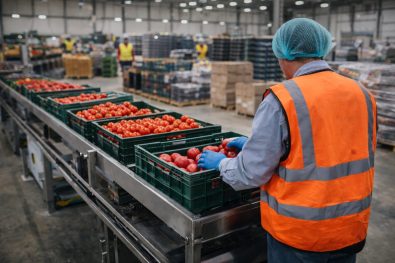
In food storage, ripening, and controlled atmosphere management, there is a persistent myth that data logging is optional. Teams often assume that if they can spot check gas levels with a handheld unit, that is enough. It is not. If you care about gas analyzer compliance, continuous and reliable data logging is part of the job.
Regulatory audits, third party certifications, export documentation, and internal quality programs all rely on verifiable records. A single reading taken once a day does not tell the full story of what happened inside a cold room, ripening room, or storage facility. Logged data does. That distinction is what separates facilities that pass audits confidently from those that scramble for explanations.
Felix Instruments has built its gas analysis line around this reality. From portable ethylene detection to multi gas monitoring and storage solutions, data logging is integrated as a core function, not an afterthought.
Subscribe to the Felix instruments Weekly article series.
By submitting this form, you are consenting to receive marketing emails from: . You can revoke your consent to receive emails at any time by using the SafeUnsubscribe® link, found at the bottom of every email. Emails are serviced by Constant Contact
Why Data Logging Matters for Compliance
Compliance is not about proving that conditions are correct right now. It is about proving that they were correct over time.
For operations handling fresh produce, this often means:
- Demonstrating that ethylene stayed below threshold levels in storage
- Verifying that oxygen and carbon dioxide concentrations remained within controlled atmosphere specifications
- Providing traceable records for customer claims
- Supporting third party audits such as GlobalG.A.P. or retailer specific programs
- Meeting export requirements for certain commodities
Without logged data, you are left with assumptions. With logged data, you have documented proof.
This is where gas analyzer compliance becomes practical rather than theoretical. A device that measures accurately but does not store or export data creates extra work. Teams end up manually recording readings, which introduces transcription errors and gaps. Automated logging reduces that risk and strengthens your compliance position.
Portable Ethylene Monitoring with Logged Data
Ethylene management is one of the most compliance sensitive areas in fresh produce storage. Even low concentrations can impact ripening and shelf life.
The F-900 Portable Ethylene Analyzer from Felix Instruments is designed for precise ethylene detection in the field and in storage environments. It is not just about detection limits. The instrument logs measurements, allowing operators to document ethylene levels over time rather than relying on isolated readings.
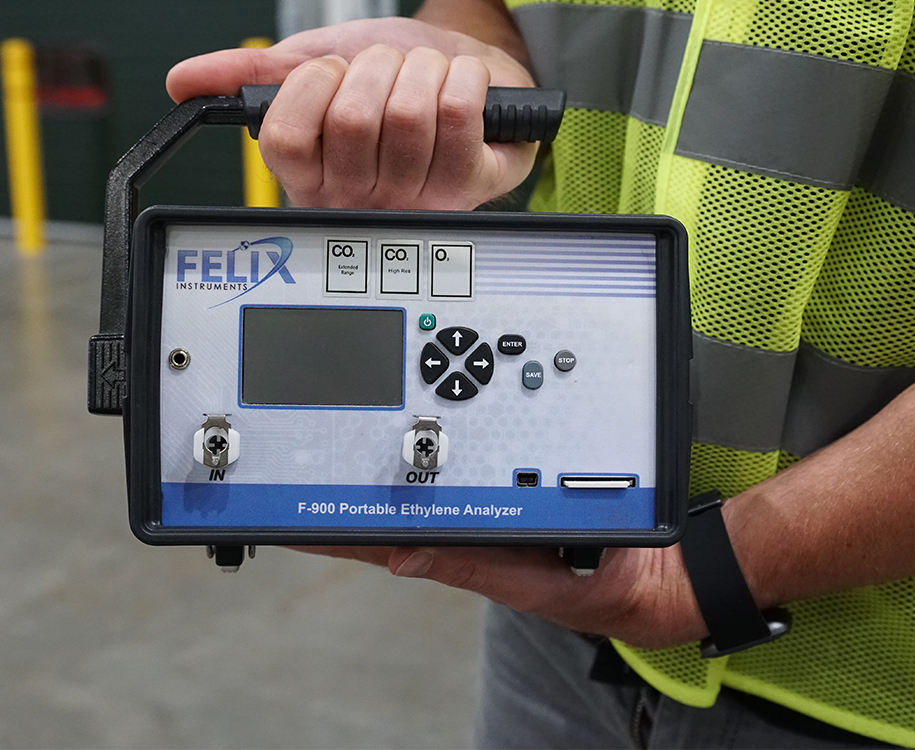
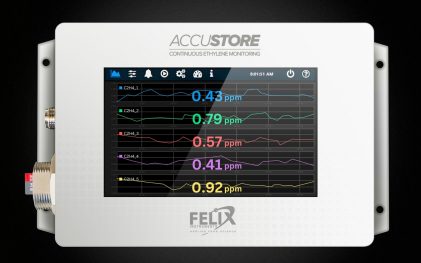
For longer term monitoring, the F-910 AccuStore takes this further by offering continuous ethylene monitoring in storage rooms. Instead of periodic checks, facilities can maintain a data record that shows trends, spikes, and stability. When auditors ask for historical ethylene levels, you can provide a clear dataset.
Competitor units may offer basic readings, but without robust internal logging and easy data export, compliance becomes a manual process. Felix Instruments builds logging into the workflow so gas analyzer compliance is easier to achieve.
Multi Gas Monitoring and Documentation
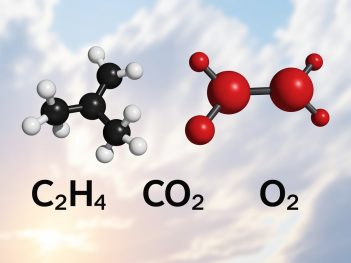
Controlled atmosphere storage depends on accurate measurement of oxygen, carbon dioxide, and sometimes ethylene. Each gas plays a role in respiration and ripening rates.
The F-920 Check It Gas Analyzer provides portable O2 and CO2 measurement with onboard data logging. This allows technicians to move between rooms and still maintain traceable records of each location tested.
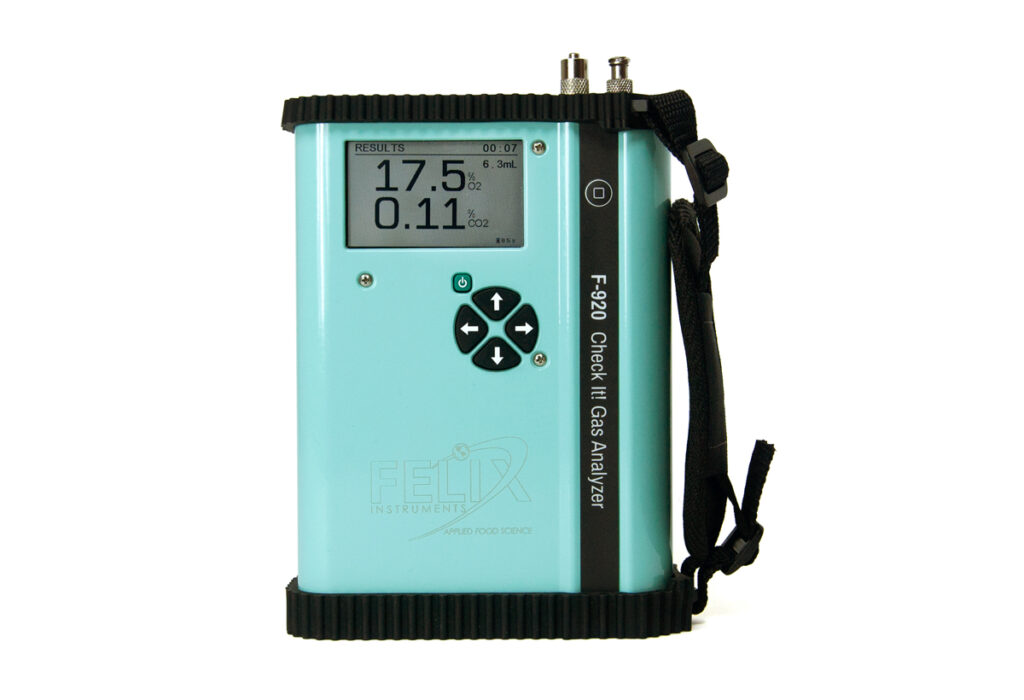
The F-940 Store It expands capabilities to include ethylene alongside O2 and CO2, supporting more comprehensive gas analyzer compliance for facilities that store sensitive commodities.
The F-950 Three Gas Analyzer integrates measurement of O2, CO2, and ethylene in a single handheld system. This simplifies documentation because all critical gases are recorded in one dataset.
For ripening operations, the F-960 Ripen It is purpose built to monitor ethylene, O2, and CO2 in ripening rooms. Ripening protocols are often tightly controlled. Logged data provides proof that target concentrations were achieved and maintained.
Across this lineup, the common theme is simple. Measurements are logged and exportable. That supports audits, internal reviews, and customer verification requests. Compliance is not dependent on handwritten notes or memory.
Data Logging and Produce Quality Documentation
Gas levels are only part of the compliance story. Many quality programs also require objective measurement of internal produce quality.
The F-750 Produce Quality Meter uses near infrared spectroscopy to assess parameters such as dry matter and Brix in a non destructive way. Measurements can be logged and exported, creating a digital record of quality assessments.
Commodity specific versions such as the F-751 Avocado Quality Meter, F-751 Mango Quality Meter, and F-751 Grape Quality Meter provide calibrated models tailored to each crop. For facilities supplying retail or export markets, these logged quality measurements complement gas analyzer compliance by documenting that storage and ripening practices resulted in the expected internal quality.

When gas data and quality data are both recorded and traceable, compliance discussions become fact based rather than subjective.
Common Misconceptions About Data Logging
Despite the benefits, some operations still treat logging as optional. Here are common arguments and why they fall short.
We only need spot checks
Spot checks do not capture fluctuations between readings. A compressor issue or door left open for several hours can shift gas levels significantly. Logged data reveals these events.
Manual logs are good enough
Handwritten logs are vulnerable to error, loss, and inconsistency. Automated logging tied directly to the instrument improves accuracy and credibility.
Auditors rarely ask for detailed data
That may be true until they do. When a claim arises or a shipment is rejected, detailed records become essential. Gas analyzer compliance should be proactive, not reactive.
We can add logging later
Retrofitting processes after a compliance issue is more expensive and stressful than building them correctly from the start.
What Auditors Actually Look For
In practical terms, auditors often focus on:
- Traceability of measurements to specific rooms or lots
- Time stamped records
- Calibration documentation
- Consistency between gas levels and documented storage protocols
Felix Instruments systems support these requirements by combining accurate sensors with onboard data storage and export capabilities. This makes it easier to organize records by date, room, and commodity.
Gas analyzer compliance is not just about owning a calibrated instrument. It is about demonstrating that the instrument was used consistently and that its readings were recorded reliably.
Building a Compliance Culture
Technology alone does not create compliance. Procedures and training matter. However, the right instruments make it much easier to maintain discipline.
When data logging is automatic:
- Technicians spend less time on paperwork
- Managers can review trends remotely
- Quality teams can correlate gas levels with product outcomes
- Compliance documentation is readily available
This shifts the mindset from minimum requirement to continuous improvement.
In competitive markets where margins are tight and claims are costly, having defensible records is a strategic advantage. Facilities that invest in proper gas analyzer compliance protect both product quality and brand reputation.
Final Thoughts
If your current process relies on spot checks and handwritten notes, it may be time to reassess. Compliance expectations are increasing, not decreasing.
Felix Instruments designs gas analyzers and produce quality meters with integrated data logging so you can document what matters. Whether you need portable ethylene detection, three gas analysis, or non destructive quality measurement, there is a solution built for traceable, exportable records.
Visit Felix Instruments to explore the F-900, F-920, F-940, F-950, F-960, F-750, and F-751 product lines and see how integrated logging can strengthen your gas analyzer compliance strategy.
Related Products
Most Popular Articles
- Spectrophotometry in 2023
- The Importance of Food Quality Testing
- NIR Applications in Agriculture – Everything…
- The 5 Most Important Parameters in Produce Quality Control
- Melon Fruit: Quality, Production & Physiology
- Fruit Respiration Impact on Fruit Quality
- Guide to Fresh Fruit Quality Control
- Liquid Spectrophotometry & Food Industry Applications
- Ethylene (C2H4) – Ripening, Crops & Agriculture
- Active Packaging: What it is and why it’s important
Related Reading