Fruit Logistica 2026 Tech Talk: How to Verify Ethylene Control in Cold Storage

Hunter Weber

February 17, 2026 at 7:27 pm | Updated February 24, 2026 at 11:19 pm | < 1 min read
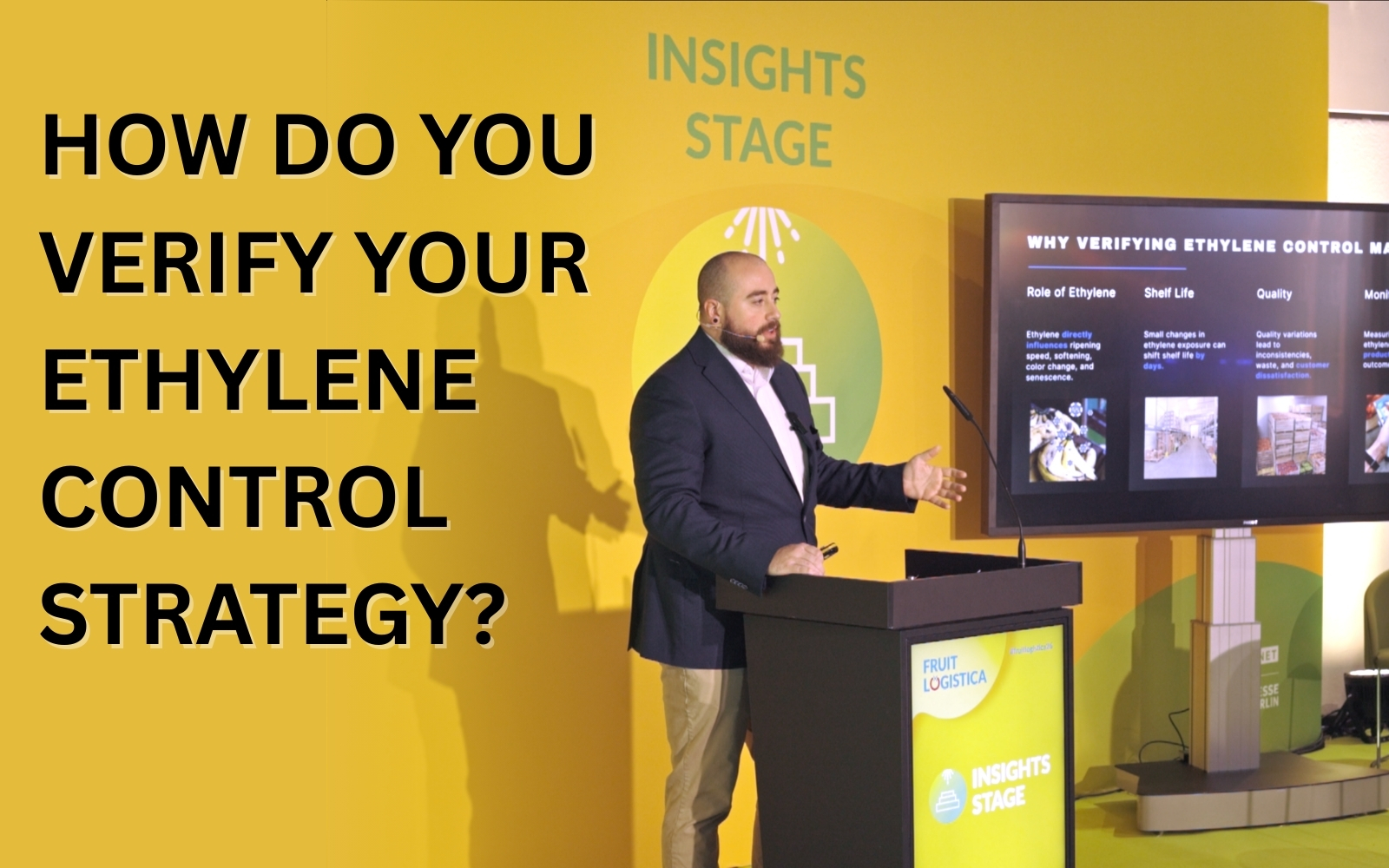
At Fruit Logistica 2025, we shared practical guidance on how to verify ethylene control in cold storage and retail environments. While many facilities implement abatement systems, validation is often limited to spot checks or periodic manual testing. In this session, we demonstrated why single-point measurements can miss critical exposure patterns and how continuous, real-time monitoring provides a clearer picture of total ethylene exposure, baseline levels, and daily spikes that directly impact shelf life.
Using an eight-week retail cooler case study, we showed how continuous monitoring revealed cyclical ethylene spikes tied to operational activity and airflow dynamics. By implementing and validating potassium permanganate-based abatement systems with real-time data, the facility achieved a 40% reduction in total ethylene exposure. The takeaway: effective ethylene management requires not just mitigation, but measurable proof that it’s working under real-world conditions.
For More information, or to recieve a quote, use the following links
More info on the Accustore System | Request a Quote | Request a consultation
Related Products
- F-751 Grape Quality Meter
- Custom Model Building
- F-910 AccuStore
- F-751 Melon Quality Meter
- F-751 Kiwifruit Quality Meter
- F-750 Produce Quality Meter
- F-751 Avocado Quality Meter
- F-751 Mango Quality Meter
- F-900 Portable Ethylene Analyzer
- F-950 Three Gas Analyzer
- F-920 Check It! Gas Analyzer
- F-960 Ripen It! Gas Analyzer
- F-940 Store It! Gas Analyzer
Most Popular Articles
- Spectrophotometry in 2023
- The Importance of Food Quality Testing
- NIR Applications in Agriculture – Everything…
- The 5 Most Important Parameters in Produce Quality Control
- Melon Fruit: Quality, Production & Physiology
- Fruit Respiration Impact on Fruit Quality
- Guide to Fresh Fruit Quality Control
- Liquid Spectrophotometry & Food Industry Applications
- Ethylene (C2H4) – Ripening, Crops & Agriculture
- Active Packaging: What it is and why it’s important