How Processors Use the F-900 for Catalytic Generator Verification


Scott Trimble

February 5, 2026 at 7:52 pm | Updated February 5, 2026 at 7:53 pm | 5 min read
Processors rely on controlled ethylene delivery to manage ripening, degreening, and conditioning programs. When catalytic generators are part of that system, verification matters. The focus for this discussion is on F-900 catalytic generator verification, because accurate ethylene measurement is the only practical way to confirm generator output in real operating conditions.
The F-900 gives processors a portable, repeatable way to verify that catalytic generators are producing the right amount of ethylene, at the right time, without disrupting operations.
This article explains how processors use the F-900 in day to day workflows, why verification is necessary, and how this approach compares to more indirect methods.
Subscribe to the Felix instruments Weekly article series.
By submitting this form, you are consenting to receive marketing emails from: . You can revoke your consent to receive emails at any time by using the SafeUnsubscribe® link, found at the bottom of every email. Emails are serviced by Constant Contact
Why Catalytic Generator Verification Matters?
Catalytic ethylene generators are popular because they avoid compressed gas cylinders and simplify safety protocols. They convert ethanol or another feedstock into ethylene through a catalytic reaction.
In theory, output should scale predictably with generator settings. In practice, several variables affect performance.
Common factors that change generator output include catalyst age, contamination, airflow, temperature, and maintenance intervals. Even small shifts can result in under dosing or over dosing. Under dosing slows ripening and increases room dwell time.
Over dosing can accelerate ripening too quickly, increase disorder risk, or reduce shelf life.
F-900 catalytic generator verification closes the gap between assumed output and actual ethylene concentration in the room or duct line. Instead of trusting a setpoint, processors can confirm real ppm values.
What the F-900 Measures and Why It Works?
The F-900 is a portable ethylene analyzer designed for low ppm and sub ppm measurements. It uses an electrochemical sensor optimized for ethylene in produce environments. The instrument pulls a small air sample and provides a direct ethylene reading on screen within seconds.
For catalytic generator verification, this matters for three reasons.
First, sensitivity. Catalytic generators often target concentrations between 0.1 and 10 ppm depending on application. The F-900 operates comfortably in this range.
Second, portability. Processors can move the instrument from room to room, sample ducts, plenums, or sealed rooms, and verify performance without installing permanent sensors.
Third, repeatability. When used consistently, the F-900 provides a reliable baseline for trending generator performance over time.
Typical Verification Workflows in Processing Facilities
Most processors integrate F-900 catalytic generator verification into existing quality or maintenance routines. The workflow is simple and does not require specialized training.
A common approach looks like this.
-
Establish a baseline
When a catalytic generator is new or freshly serviced, the processor runs the generator at a known setting and measures ethylene concentration using the F-900. This reading becomes the baseline for that room or generator. -
Sample at consistent locations
Processors typically sample at the same physical point each time. This may be a room return vent, a sampling port in a duct, or a representative point inside the room. Consistency matters more than location perfection. -
Verify after startup and during runs
Some teams verify ethylene levels shortly after generator startup to confirm ramp up. Others check during steady state operation. Both approaches provide useful data. -
Record and trend results
Readings are logged manually or digitally. Over time, trends reveal gradual declines in output that signal catalyst degradation or maintenance needs. -
Adjust or service as needed
If measured ethylene deviates from target ranges, operators adjust generator settings or schedule service. The F-900 provides immediate feedback after adjustments.
This process turns ethylene delivery into a measurable parameter instead of an assumption.
How Processors Use Verification Data Operationally
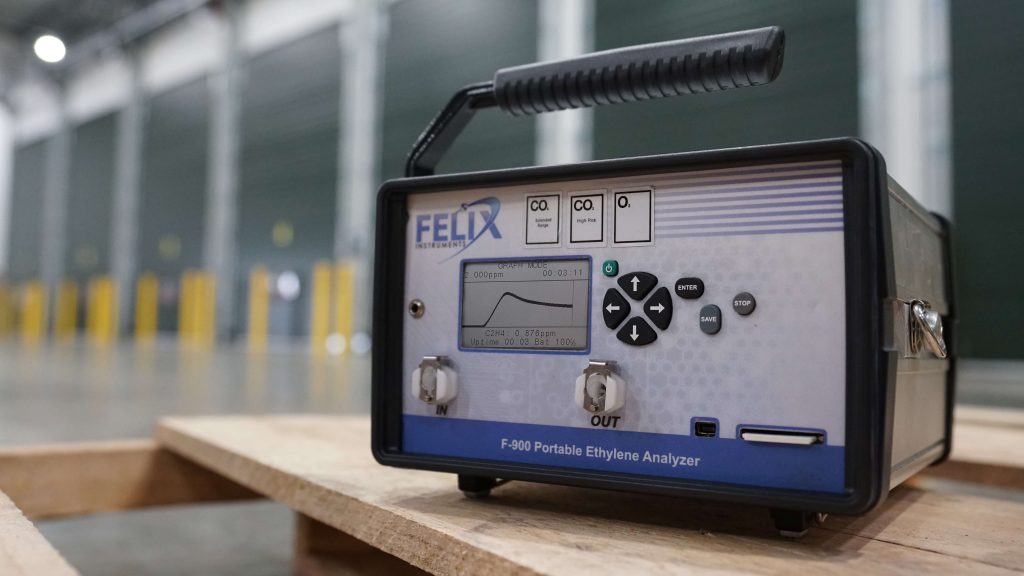
The real value of F-900 catalytic generator verification is how the data informs decisions.
In ripening rooms, processors use ethylene verification to fine tune programs for different commodities. Bananas, avocados, tomatoes, and mangos all respond differently to ethylene concentration and exposure time.
Confirming actual ppm allows operators to standardize outcomes across seasons and facilities.
In storage and conditioning rooms, verification helps avoid unintended exposure. Even low background ethylene from a generator can affect sensitive commodities. The F-900 makes it easy to confirm that levels return to near zero when generators are off.
For maintenance teams, trending data supports predictive maintenance. Instead of waiting for visible ripening problems, teams can identify declining output early and service generators proactively.
Advantages Over Indirect Verification Methods
Some processors rely on indirect indicators to judge generator performance. These include generator runtime, ethanol consumption, or visual ripening progress. While useful, these methods have limitations.
Runtime does not guarantee output. A generator can run continuously while producing less ethylene due to catalyst wear.
Fuel consumption provides only a rough estimate and does not account for conversion efficiency.
Visual ripening feedback arrives too late. By the time fruit response signals a problem, the window for correction may have passed.
F-900 catalytic generator verification provides direct measurement. It confirms what matters most, the ethylene concentration the produce actually experiences.
Integration With Broader Quality Systems
Many facilities already use handheld instruments for gas analysis or quality checks. The F-900 fits naturally into these systems. It does not require permanent installation, calibration gases on site, or complex software.
Processors often pair ethylene verification with other measurements such as temperature, humidity, CO2, and O2 to build a complete picture of room conditions. Ethylene becomes one more controllable variable rather than an unknown.
Because the instrument is portable, multi site operators can standardize verification procedures across facilities. This supports consistent ripening outcomes and easier training.
Best Practices for Reliable Verification
Processors who get the most value from F-900 catalytic generator verification follow a few best practices.
Allow the generator to stabilize before sampling. Initial readings during warm up may not represent steady state output.
Avoid sampling near open doors or strong airflow disruptions.
Keep sensor maintenance on schedule to ensure accurate readings.
Document sampling locations and timing so results are comparable over time.
These simple steps improve confidence in the data and make trends easier to interpret.
The Bottom Line
Ethylene is too influential to leave unmeasured. Catalytic generators simplify delivery, but they still require verification. F-900 catalytic generator verification gives processors a practical way to confirm performance, protect fruit quality, and reduce variability.
By measuring real ethylene concentrations where produce lives, teams move from assumption to control. The workflow is simple, portable, and proven in commercial environments.
If you want to improve confidence in your ethylene programs or standardize generator verification across facilities, connect with Felix Instruments to learn how the F-900 fits into your operation and request application guidance from our technical team.
Related Products
Most Popular Articles
- Spectrophotometry in 2023
- The Importance of Food Quality Testing
- NIR Applications in Agriculture – Everything…
- The 5 Most Important Parameters in Produce Quality Control
- Melon Fruit: Quality, Production & Physiology
- Fruit Respiration Impact on Fruit Quality
- Guide to Fresh Fruit Quality Control
- Liquid Spectrophotometry & Food Industry Applications
- Ethylene (C2H4) – Ripening, Crops & Agriculture
- Active Packaging: What it is and why it’s important
Related Reading