Signs Your Gas Sensor Needs Replacement

Scott Trimble

May 5, 2026 at 5:21 pm | Updated May 5, 2026 at 5:21 pm | 5 min read
If you rely on a handheld analyzer for postharvest work, packaging checks, storage rooms, or ripening control, gas sensor replacement is not something to push off until the instrument completely fails. In practice, sensor problems usually show up gradually. Readings get less stable, calibration gets harder to hold, response times slow down, and the numbers stop matching what the process should be telling you.
For teams using instruments like the Felix Instruments F-920, F-940, F-950, or F-960, catching those signs early matters because these devices are built for fast, field-ready measurements, data logging, and routine quality verification, so sensor health directly affects the value you get from the instrument.
Why sensor condition matters more than most teams think
A gas analyzer is only as useful as the sensor data it produces. That sounds obvious, but it is easy to overlook when the instrument still powers on, still pumps, and still shows a reading. The real question is whether that reading is trustworthy enough to support a storage decision, a packaging release, or a ripening adjustment.
Subscribe to receive our monthly round-up of articles.
This is where Felix Instruments has a practical advantage.
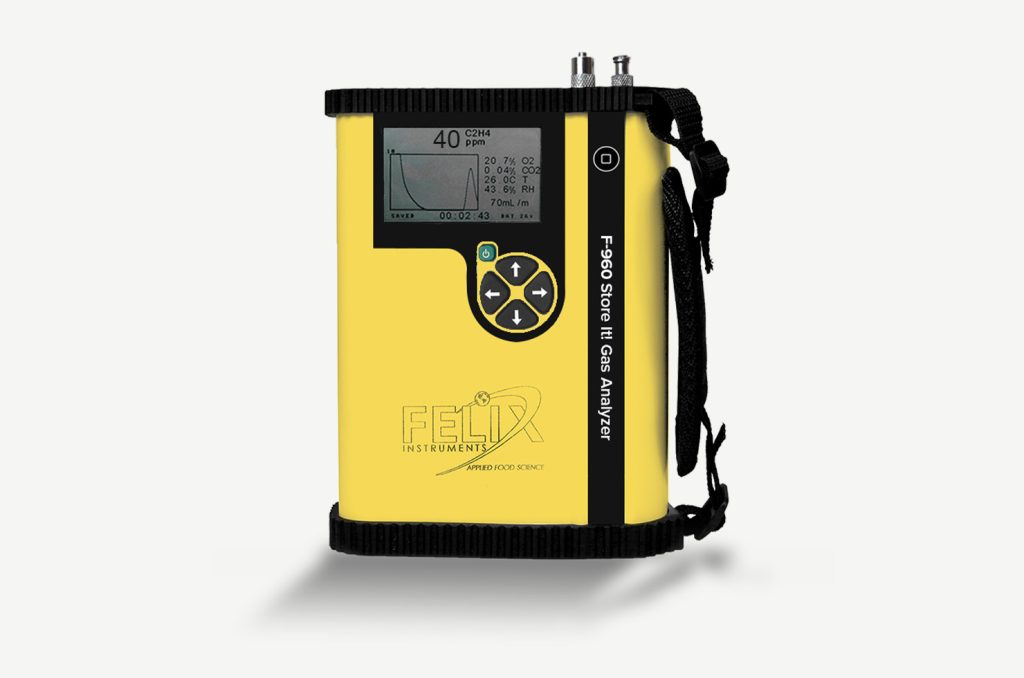
Our handheld gas analyzers are designed around quick measurements in real operating environments, not just bench use. The F-920 measures O2 and CO2 in under 10 seconds, the F-940 is built for rapid ethylene, CO2, and O2 checks in storage workflows, the F-950 gathers three-gas data in seconds, and the F-960 is aimed at ripening-room verification with ethylene coverage from 10 to 1000 ppm. When your instrument is meant to help you make decisions quickly, a worn sensor becomes a process problem, not just a maintenance item.
1. Your readings drift more than usual
One of the clearest signs you need gas sensor replacement is drift that keeps showing up even after standard checks. Maybe your analyzer reads slightly differently on the same package, room, or line every time you repeat a test. Maybe the numbers move around more than the process would reasonably explain.
Some drift is normal in any sensing system, but persistent drift is different. Felix manuals make it clear that calibration and zero checks are part of keeping performance at spec.
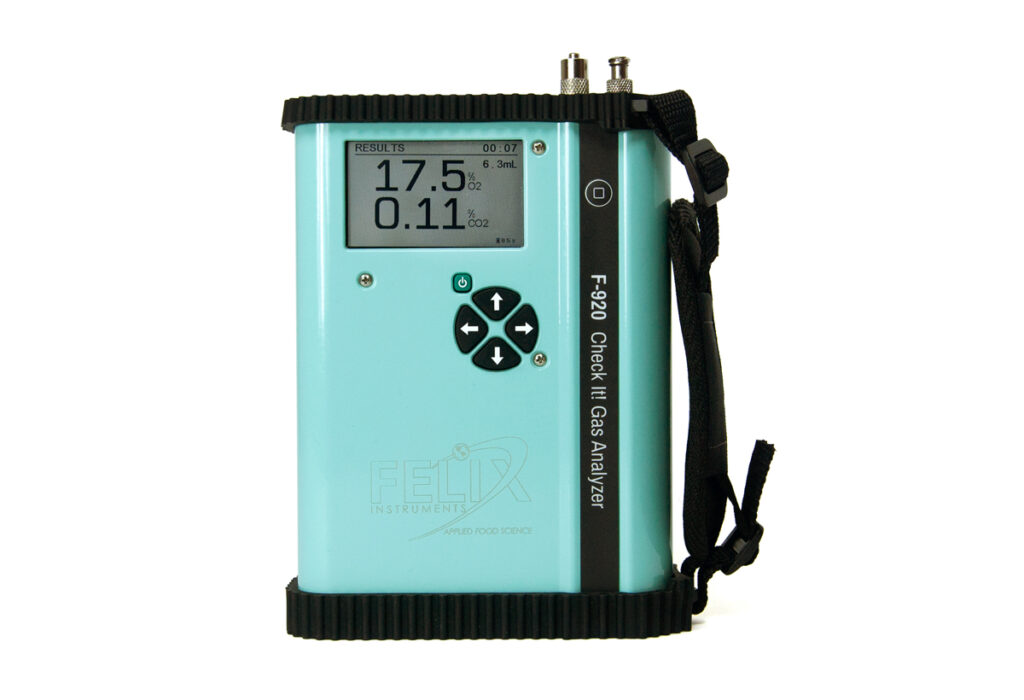
The F-920 manual recommends weekly O2 zeroing and CO2 zeroing every six months to maintain maximum performance, and the F-950 manual emphasizes verifying calibration after completion by checking a standard gas and confirming the concentration falls within the device accuracy range. If drift keeps returning despite proper calibration, that usually points to sensor aging rather than operator error.
2. Calibration is becoming too frequent or harder to pass
A second common warning sign is calibration trouble. If your analyzer used to calibrate smoothly and now needs repeated attempts, longer stabilization, or frequent rechecks, the sensor may be near the end of its useful life.
That is especially relevant for oxygen sensors. The F-920 manual states that the oxygen sensor has a life span of one year and suggests annual maintenance. It also notes that disconnecting the O2 sensor during storage longer than one month helps prolong sensor life.
In other words, Felix treats sensor wear as a predictable maintenance issue, not a mystery failure. That is a useful distinction because it helps operators diagnose the problem faster than with systems that leave you guessing whether the issue is the pump, software, or sensor itself.
3. Response times are getting slower
Another practical sign is slow response. When sensors are healthy, the analyzer should settle into a reliable reading within the timeframe the instrument is designed for. Felix positions its portable units around speed. The F-920 reports CO2 and O2 in under 10 seconds, the F-940 support page lists total sampling time at 10 seconds, and the F-950 support page lists 30 seconds. The F-960 manual says results display in under 30 seconds.
So if your workflow now feels noticeably slower, pay attention. A delayed reading can mean contamination, flow issues, or sensor wear. It does not automatically mean immediate gas sensor replacement, but it is one of the strongest clues that something in the sensing path is no longer performing the way it should.
4. Readings do not match known conditions
This one is easy to spot in real operations. You sample ambient air, a standard gas, or a controlled environment with known targets, and the analyzer consistently reports something that does not make sense. That mismatch matters even more in storage and ripening because small gas errors can lead to larger quality mistakes later.
Felix’s product line is set up to match use case with expected gas ranges. The F-940 focuses on high-resolution ethylene measurement from 0 to 10 ppm for shelf-life and spoilage prevention in storage settings. The F-950 covers ethylene from 0 to 200 ppm for broader three-gas monitoring. The F-960 is aimed at ripening applications with ethylene from 10 to 1000 ppm.
When a sensor starts reporting numbers outside what the instrument and application are designed to handle reliably, replacement should be on the table.
5. The instrument is hitting its expected maintenance window
Sometimes the sign is not dramatic at all. It is simply time.
That is actually one of the better arguments for a Felix Instruments workflow. The manuals and support materials are fairly direct about maintenance instead of pretending sensors last forever.
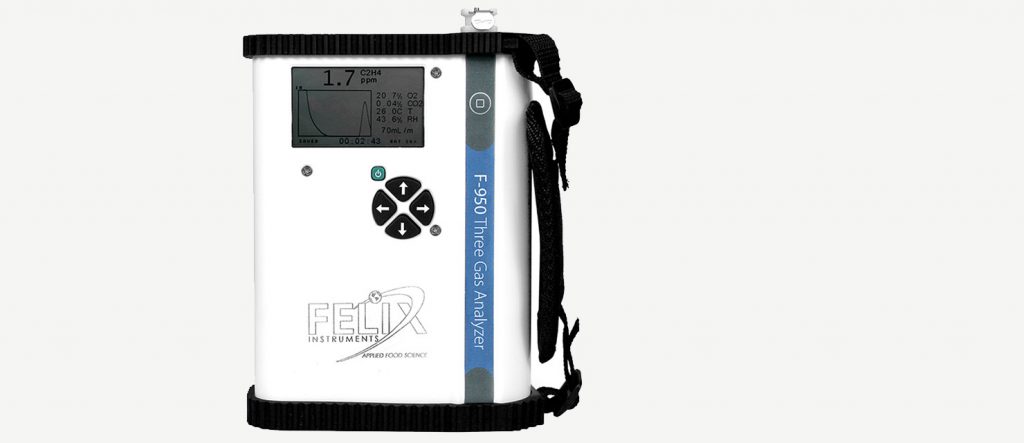
The F-920 manual explicitly mentions annual maintenance and a one-year O2 sensor lifespan. The F-950 and F-960 manuals both include dedicated maintenance sections and oxygen sensor replacement guidance, with the F-960 also including replacement guidance for the potassium permanganate filter. That kind of service structure is useful because it keeps downtime more predictable and makes gas sensor replacement part of routine upkeep rather than an emergency.
Why Felix Instruments is a strong fit when sensor performance matters
A lot of analyzers can produce a number. That is not the same as fitting into real postharvest work. Felix Instruments has built its gas-analysis line around practical conditions: handheld form factors, onboard data logging, quick sampling, and application-specific models that let teams choose the right measurement range instead of forcing one instrument into every job.
The F-920 is a straightforward fit for O2 and CO2 headspace work. The F-940 is tailored to low-level ethylene work in storage. The F-950 covers multi-gas measurement across storage and research environments. The F-960 is built for ripening verification. Across the line, the emphasis is on portability, usable interfaces, and documented maintenance.
Compared with many generic gas analyzers, that matters because the instrument is not just a sensor package. It is part of a workflow. When replacement time comes, teams benefit from a platform that already treats calibration, maintenance, and field use as normal parts of ownership.
Ending note
Need a gas analyzer that is easier to maintain and built for real postharvest decisions? Felix Instruments offers handheld options for O2, CO2, and ethylene monitoring across packaging, storage, and ripening applications. Explore the F-920, F-940, F-950, and F-960 line to find the right fit for your facility and keep your gas sensor replacement plan proactive instead of reactive.
Related Products
Most Popular Articles
- Spectrophotometry in 2023
- NIR Applications in Agriculture – Everything…
- The Importance of Food Quality Testing
- The 5 Most Important Parameters in Produce Quality Control
- Melon Fruit: Quality, Production & Physiology
- Fruit Respiration Impact on Fruit Quality
- Guide to Fresh Fruit Quality Control
- Liquid Spectrophotometry & Food Industry Applications
- Ethylene (C2H4) – Ripening, Crops & Agriculture
- Understanding Chemometrics for NIR Spectroscopy
Related Reading