Truth About ‘Zero Calibration’ Sensors: Why Manual Verification Still Matters


Scott Trimble

March 10, 2026 at 4:22 pm | Updated March 10, 2026 at 4:22 pm | 5 min read
Zero calibration sensors are often marketed as a way to simplify gas detection and eliminate routine calibration steps. On paper, the promise is attractive. A sensor that automatically maintains its baseline without manual intervention sounds like a clear operational win. In practice, though, zero calibration sensors do not remove the need for manual verification. For professionals working in postharvest storage, ripening rooms, and controlled atmosphere facilities, understanding the limits of zero calibration sensors is essential to protecting product quality and maintaining confidence in gas measurements.
In food storage and ripening, small inaccuracies in ethylene, oxygen, or carbon dioxide readings can translate into significant financial losses. That is why experienced operators continue to verify their instruments manually, even when using devices labeled as self-calibrating.
Understanding Zero Calibration Sensors
Zero calibration sensors are designed to automatically correct their baseline readings over time. They rely on algorithms or exposure to assumed “clean air” conditions to reset the zero point. In theory, this compensates for sensor drift and eliminates the need for frequent manual zeroing.
Subscribe to receive our monthly round-up of articles.
In controlled environments, however, truly clean reference air is not always guaranteed. Cold storage rooms, ripening facilities, and packinghouses may have trace ethylene or elevated CO2 levels in ambient air. If a zero calibration sensor resets its baseline using contaminated reference air, it builds error directly into future readings.
This is the core issue. Automation does not remove physics. Sensors still drift. Environmental conditions still vary. Reference assumptions can still be wrong.
Where Zero Calibration Falls Short
Professionals who rely on gas analysis for decision making already understand that instruments operate in dynamic environments. Zero calibration sensors can struggle in several common scenarios:
- Facilities with constant background ethylene
- High humidity storage areas
- Rapid temperature changes between rooms
- Long sampling lines or complex tubing setups
- Low concentration detection requirements
Ethylene monitoring is especially sensitive. When measuring concentrations in parts per billion, even minor baseline shifts matter. A small zero offset can lead to premature ripening decisions or delayed corrective actions.
Manual verification provides a controlled checkpoint. It confirms whether the sensor’s automatic baseline aligns with known reference standards.
The Cost of Drift in Real Operations
Gas measurement is not just about numbers on a screen. It directly affects:
- Shelf life
- Fruit firmness
- Sugar development
- Storage stability
- Regulatory compliance
Consider ethylene management in long term apple storage. If oxygen and carbon dioxide levels are misread, controlled atmosphere conditions can drift outside optimal ranges. If ethylene accumulates undetected, firmness loss accelerates. A zero calibration sensor that has quietly drifted by a few parts per billion may not trigger alarms until quality has already declined.
In ripening rooms, inaccurate ethylene measurement can lead to uneven ripening. Operators may compensate by extending exposure time or increasing gas levels, creating variability between lots.
Manual verification reduces this uncertainty. It reestablishes confidence in the data that drives operational decisions.
Why Manual Verification Still Matters
Manual verification is not about distrusting modern sensors. It is about understanding that all measurement systems require validation.
Verification provides three key benefits:
-
Confirmation of baseline accuracy
-
Early detection of sensor degradation
-
Documentation for quality assurance programs
Most food safety and quality management systems require documented verification of measurement devices. Even when a sensor claims automatic zero calibration, auditors often expect evidence of independent validation.
Manual calibration or verification against certified gas standards ensures traceability. It connects the measurement to known reference concentrations rather than internal assumptions.
Felix Instruments and Practical Gas Analysis
Felix Instruments has built its gas analysis systems with real world conditions in mind. Rather than relying solely on automated baseline correction, their instruments are designed for stability, repeatability, and user controlled verification.
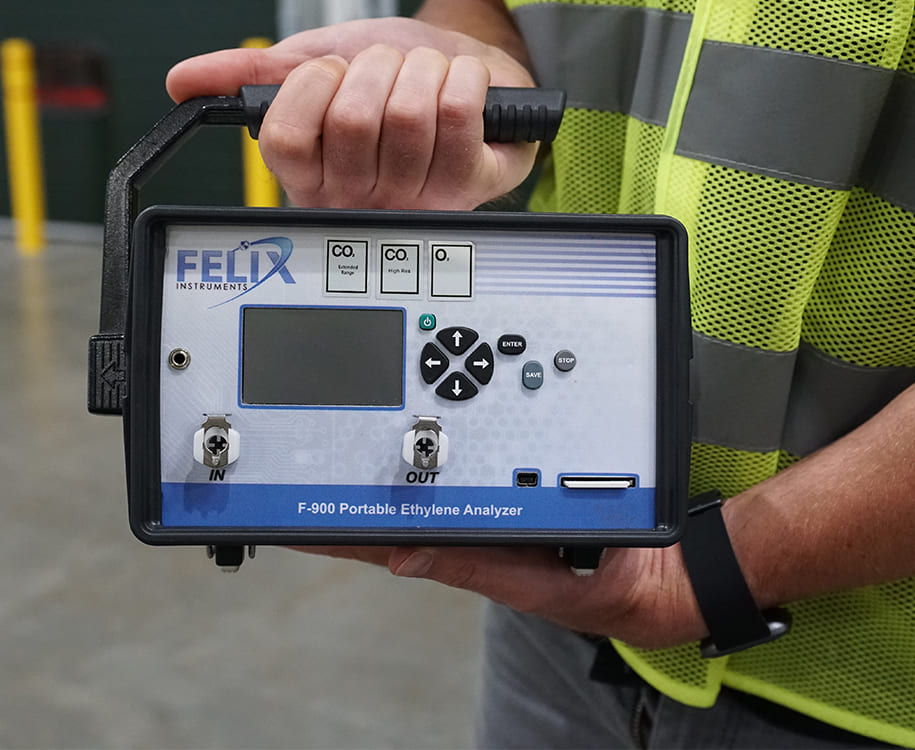
The F-900 Portable Ethylene Analyzer is widely used in storage facilities and research applications because it delivers laboratory level ethylene detection in a portable format. It allows users to verify readings with calibration gases, ensuring accuracy even in environments where zero calibration sensors might struggle.
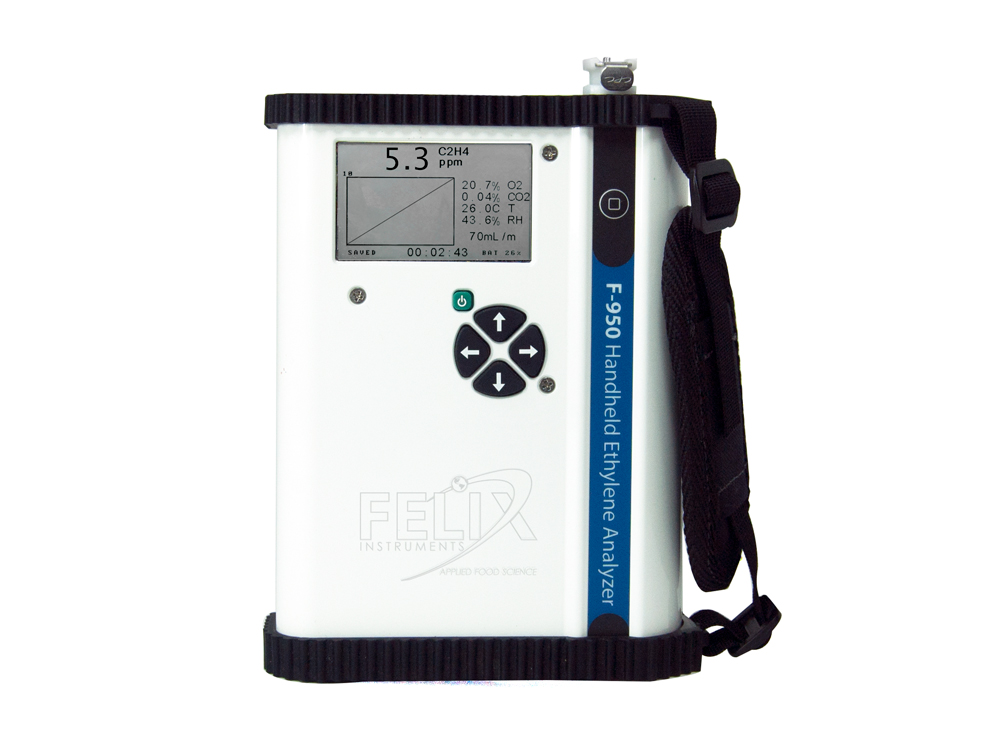
For multi gas environments, the F-950 Three Gas Analyzer measures ethylene, CO2, and O2 simultaneously. This is critical in controlled atmosphere storage where gas interactions influence product physiology. Manual verification ensures each channel remains within specification.
In storage applications where oxygen and carbon dioxide management are central, the F-920 Check It Gas Analyzer provides fast, reliable measurements without overreliance on automated assumptions.
For ripening operations, the F-960 Ripen It Gas Analyzer supports ethylene monitoring with the flexibility to validate readings against known standards.
These systems recognize an important reality. Automation is useful, but user control is essential.
Comparing Philosophies: Automation vs Accountability
Many competitors emphasize minimal user involvement. Zero calibration sensors are often positioned as maintenance free solutions. This appeals to operations looking to reduce labor or simplify training.
However, experienced operators tend to prioritize accountability over convenience. A sensor that hides drift behind automatic baseline adjustments can create a false sense of security.
Felix Instruments takes a different approach:
- Transparent calibration procedures
- User accessible verification steps
- Compatibility with certified gas standards
- Stable sensor technology designed for long term accuracy
This approach respects the expertise of the user. It does not assume that automation replaces oversight.
When Zero Calibration Can Be Helpful
It is important to acknowledge that zero calibration sensors are not inherently flawed. In relatively clean, stable environments, automatic baseline correction can reduce maintenance frequency.
They may be appropriate for:
- Preliminary screening
- Non critical monitoring
- Applications with wide tolerance ranges
But in high value produce storage or research settings, relying exclusively on zero calibration sensors without manual verification introduces risk.
Best Practices for Reliable Gas Measurement
Professionals who want both efficiency and accuracy can combine automation with verification. Recommended practices include:
- Schedule routine manual verification using certified gas standards
- Document calibration results for traceability
- Monitor environmental conditions that affect baseline stability
- Train staff to recognize signs of sensor drift
- Maintain clean sampling lines and filters
These steps are straightforward. They reinforce data reliability without significantly increasing workload.
The goal is not to reject zero calibration sensors outright. It is to integrate them into a broader quality control framework.
Looking Beyond Marketing Claims
Marketing language around zero calibration sensors often suggests that calibration is obsolete. In reality, no sensor technology eliminates the fundamental need for validation.
Gas detection operates at the intersection of chemistry, electronics, and environmental variability. Drift is inevitable over time. Verification is the safeguard.
Professionals managing high value crops understand that small measurement errors can scale into large financial consequences. The cost of manual verification is minimal compared to the cost of compromised product quality.
Final Thoughts
If your operation depends on accurate ethylene, oxygen, or carbon dioxide measurement, do not rely solely on zero calibration sensors. Build verification into your process.
Felix Instruments designs gas analyzers that prioritize accuracy, transparency, and user control. Whether you need portable ethylene detection or comprehensive multi gas analysis, our systems support reliable manual verification alongside advanced sensor technology.
Visit Felix Instruments to explore the F-900, F-920, F-950, and F-960 gas analyzers and learn how to strengthen your gas measurement program with tools built for real world conditions.
Related Products
Most Popular Articles
- Spectrophotometry in 2023
- NIR Applications in Agriculture – Everything…
- The Importance of Food Quality Testing
- The 5 Most Important Parameters in Produce Quality Control
- Melon Fruit: Quality, Production & Physiology
- Fruit Respiration Impact on Fruit Quality
- Guide to Fresh Fruit Quality Control
- Liquid Spectrophotometry & Food Industry Applications
- Ethylene (C2H4) – Ripening, Crops & Agriculture
- Understanding Chemometrics for NIR Spectroscopy
Related Reading