Truth About Multi-Gas Monitors: When Extra Sensors Add Noise

Scott Trimble

March 10, 2026 at 4:25 pm | Updated March 10, 2026 at 4:25 pm | 5 min read
The conversation around multi-gas monitors often centers on one assumption: more sensors equal better data. In controlled atmosphere storage, ripening rooms, and produce research, that sounds reasonable. But in practice, multi-gas monitors can introduce complexity, cross-interference, and calibration drift that compromise accuracy. When extra sensors add noise instead of clarity, the result is slower decisions and less reliable quality control.
For produce managers and postharvest researchers who depend on precise ethylene, CO2, and O2 measurements, signal quality matters more than sensor count. This is where instrument design, detection limits, and calibration stability separate purpose-built analyzers from generic multi-gas monitors.
The Hidden Cost of Extra Sensors
Multi-gas monitors are often marketed as comprehensive solutions. They promise flexibility and wide detection ranges. However, adding sensors does not automatically improve performance. It increases the potential for signal interference, longer response times, and higher maintenance demands.
Subscribe to receive our monthly round-up of articles.
In fresh produce applications, especially where ethylene levels are measured in parts per billion, even minor noise can distort results. Many industrial multi-gas monitors are optimized for safety compliance rather than postharvest precision. That difference matters.
Key challenges include:
-
Cross-sensitivity between gases
-
Slower stabilization after sampling
-
More frequent calibration requirements
-
Increased sensor drift over time
-
Larger internal pumps and tubing that retain residual gas
When you are tracking ripening thresholds or verifying controlled atmosphere storage conditions, these factors can influence operational decisions.
Why Ethylene Accuracy Is Non-Negotiable
Ethylene drives ripening. Measuring it accurately determines harvest timing, storage strategy, and shipping windows. If a multi-gas monitor introduces background noise or cross-sensitivity, subtle ethylene fluctuations can go undetected.
Felix Instruments approaches ethylene monitoring with dedicated sensor technology optimized for low-level detection. The F-900 Portable Ethylene Analyzer is designed specifically for accurate ethylene measurements in the field and lab. Instead of loading the system with unnecessary sensors, it focuses on delivering stable, repeatable ethylene data.
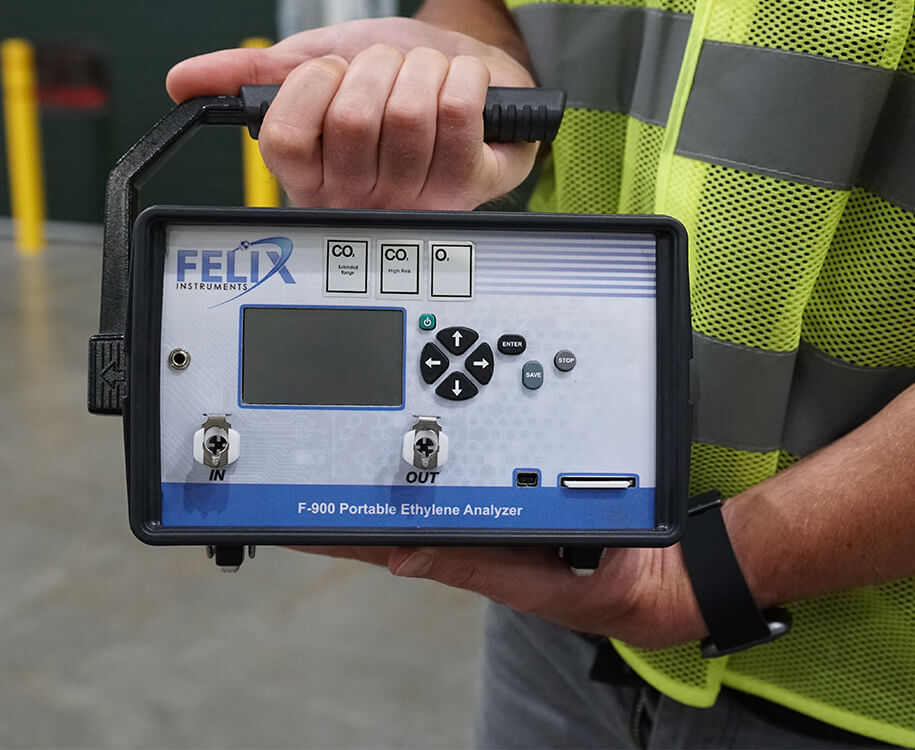
This design philosophy reduces interference and improves signal clarity. For researchers who need parts-per-billion sensitivity, that focus makes a measurable difference.
When Multi-Gas Monitors Make Sense
There are scenarios where measuring multiple gases simultaneously is necessary. Controlled atmosphere storage often requires monitoring oxygen and carbon dioxide alongside ethylene. The issue is not the number of gases. It is whether the analyzer is engineered for produce environments.
Felix Instruments offers integrated solutions built specifically for postharvest applications rather than industrial safety markets.
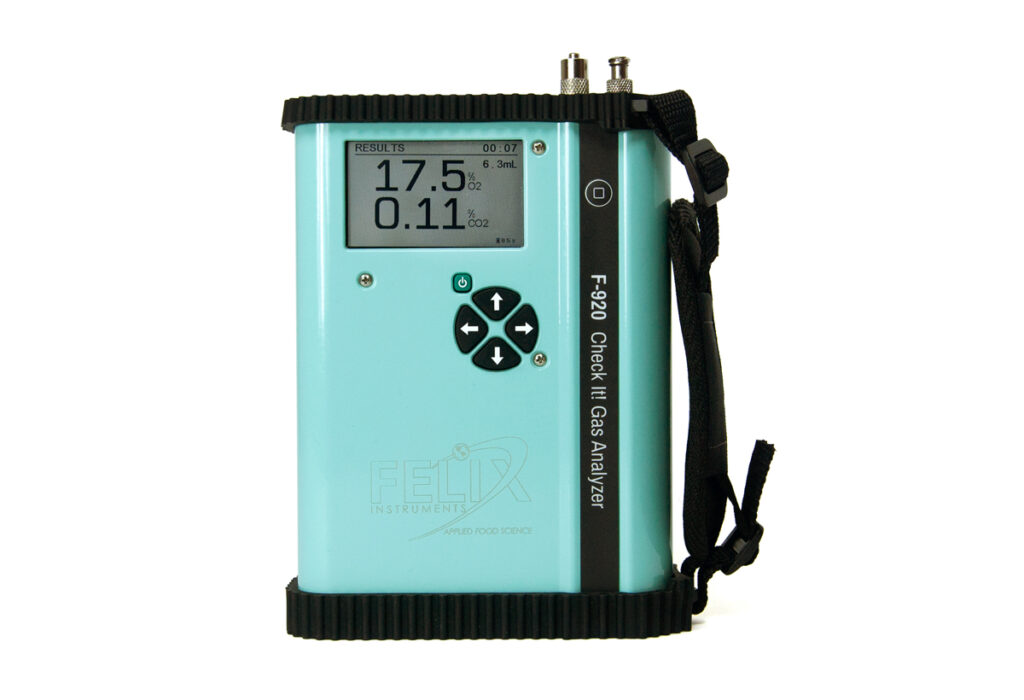
For example:
-
The F-920 Check-It Gas Analyzer provides reliable O2 and CO2 monitoring for storage environments.
-
The F-950 Three Gas Analyzer measures ethylene, CO2, and O2 in a single portable system without sacrificing ethylene sensitivity.
-
The F-960 Ripen-It Gas Analyzer is optimized for ripening rooms where precise ethylene control is essential.
The distinction lies in calibration design, gas pathway engineering, and software integration tailored for fruit and vegetable monitoring.
Signal Versus Noise in Real-World Conditions
Multi-gas monitors used in warehouses and storage rooms face environmental fluctuations. Temperature changes, humidity shifts, and varying gas loads all impact sensor performance. Each additional sensor introduces another variable that must stabilize before accurate readings appear.
In high-turnover facilities, speed matters. Delayed stabilization can slow down workflow. More importantly, if a monitor requires frequent recalibration due to sensor interactions, operators may skip calibration cycles, reducing long-term reliability.
Felix Instruments systems are built around produce industry workflows. Sampling lines are optimized to reduce residual gas carryover. Software interfaces allow users to log data quickly without complex configuration.
The result is less noise, faster readings, and more confidence in the data.
Beyond Gas Monitoring: Integrated Quality Measurement
Another overlooked issue with generic multi-gas monitors is fragmentation. Gas analysis is often separated from internal quality testing. This forces operators to rely on multiple devices from different manufacturers, increasing variability.
Felix Instruments bridges this gap with near-infrared solutions like the F-750 Produce Quality Meter and crop-specific models such as the F-751 Avocado Quality Meter, F-751 Mango Quality Meter, F-751 Kiwifruit Quality Meter, and F-751 Grape Quality Meter.
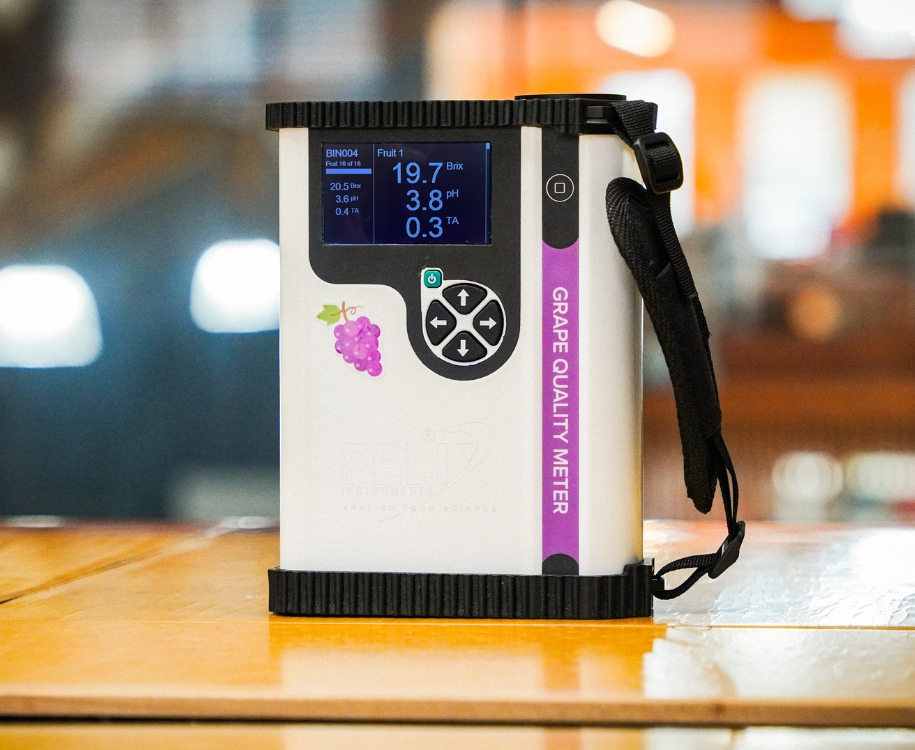
Instead of adding more gas sensors to compensate for uncertainty, users can correlate ethylene data with non-destructive quality metrics such as dry matter and Brix. This integrated approach reduces guesswork and strengthens decision-making.
Maintenance and Long-Term Stability
Multi-gas monitors with multiple electrochemical or infrared sensors require periodic replacement. Each sensor ages differently. Calibration gases must be maintained for each channel. Downtime increases as systems grow more complex.
Purpose-built analyzers streamline this process. When an instrument is optimized for specific gases in produce applications, maintenance becomes predictable. Felix Instruments designs its systems with accessible calibration routines and stable detection technology suited to long storage cycles.
Over time, this translates to:
-
Lower total cost of ownership
-
Reduced downtime
-
More consistent longitudinal data
-
Fewer operator errors
In large storage facilities or research institutions, those factors compound quickly.
Choosing the Right Tool for the Job
The key question is not how many gases you can measure. It is how well you measure the gases that matter.
When evaluating multi-gas monitors, consider:
-
Detection limits for ethylene
-
Response time after sampling
-
Cross-sensitivity data
-
Calibration frequency
-
Produce-specific design features
Many industrial multi-gas monitors are built for worker safety thresholds measured in parts per million. Postharvest applications often require parts per billion sensitivity. That is a significant technical difference.
Felix Instruments has focused on this niche from the beginning. The company’s gas analyzers are engineered for fruit storage rooms, ripening chambers, and research trials, not confined industrial spaces. That focus reduces unnecessary sensor complexity and ensures performance aligns with agricultural realities.
The Practical Takeaway
Multi-gas monitors are not inherently flawed. The issue arises when extra sensors add noise without improving relevant accuracy. In produce applications, clarity matters more than sensor count.
If ethylene precision drives your operation, start with a dedicated ethylene analyzer. If you need integrated gas measurement, choose systems designed for produce rather than retrofitted industrial monitors.
Signal quality determines decisions. Decisions determine quality outcomes.
Work with Felix Instruments
If you are evaluating multi-gas monitors and questioning whether added sensors truly improve performance, it may be time to look at instruments built specifically for postharvest science.
Felix Instruments designs gas analyzers and quality meters that prioritize accuracy, stability, and ease of use in real storage and ripening environments. Whether you need portable ethylene detection, controlled atmosphere monitoring, or integrated quality assessment, our systems are engineered with produce professionals in mind.
Visit Felix Instruments to explore the full line of gas analyzers and produce quality meters and speak with a specialist about optimizing your monitoring strategy.
Related Products
Most Popular Articles
- Spectrophotometry in 2023
- NIR Applications in Agriculture – Everything…
- The Importance of Food Quality Testing
- The 5 Most Important Parameters in Produce Quality Control
- Melon Fruit: Quality, Production & Physiology
- Fruit Respiration Impact on Fruit Quality
- Guide to Fresh Fruit Quality Control
- Liquid Spectrophotometry & Food Industry Applications
- Ethylene (C2H4) – Ripening, Crops & Agriculture
- Understanding Chemometrics for NIR Spectroscopy