Myth: You Can Tell Ripeness by Color Alone

Scott Trimble

March 10, 2026 at 4:26 pm | Updated March 10, 2026 at 4:26 pm | 6 min read
In produce operations, the idea that you can determine fruit ripeness by color alone is persistent. It sounds practical. Walk a field or a packing line, look for the right shade, and make a decision. But when fruit ripeness testing becomes critical to quality control, color quickly shows its limits. If you rely on visual cues alone, you are guessing. And in commercial production, guessing is expensive.
The reality is simple. Ripeness is a physiological state, not a surface trait. Internal chemistry changes as fruit matures. Sugars rise, dry matter shifts, chlorophyll breaks down, and ethylene production increases. Color may correlate with those changes in some varieties, but it is not a reliable proxy across cultivars, growing regions, or storage conditions.
Let’s unpack why color falls short and what professionals use instead.
Subscribe to receive our monthly round-up of articles.
Why Color Fails as a Ripeness Indicator
Color is often the first thing buyers and inspectors look at. It is fast and visible. But it is also influenced by many factors that have nothing to do with internal maturity.
1. Varietal Differences
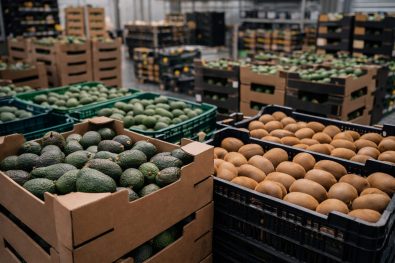
Different cultivars express color differently. Some mango varieties remain green when fully ripe. Some avocados darken early but still lack dry matter. Grapes can achieve full color before sugars reach target Brix.
This creates a false sense of readiness. A uniform color does not guarantee uniform internal quality.
2. Environmental Conditions
Temperature swings, sun exposure, and nutrient levels affect pigmentation. Fruit exposed to more sunlight may color faster on one side. That does not mean the entire fruit is physiologically mature.
In grapes, for example, anthocyanin development can outpace sugar accumulation in cooler climates. In mango, blush formation can occur even when internal firmness remains high.
3. Postharvest Changes
In storage, color can shift while internal parameters lag behind or decline unevenly. Controlled atmosphere conditions influence respiration and chlorophyll breakdown, but the external look may not reflect internal eating quality.
This is where visual grading becomes especially risky.
What Actually Defines Ripeness
If color is not enough, what should you measure?
Ripeness is defined by internal chemical and structural changes:
-
Soluble solids content, often measured as Brix
-
Dry matter percentage
-
Firmness
-
Starch conversion
-
Ethylene production
-
Respiration rate
These metrics tell you how the fruit will taste, how it will handle transport, and how long it will last on retail shelves.
Professional fruit ripeness testing depends on objective measurement, not visual assumption.
Non Destructive Measurement Is the Standard
Traditionally, measuring Brix or dry matter required destructive sampling. You cut the fruit, extract juice, and test it with a refractometer or oven dry method. That works, but it wastes product and limits sampling size.
Modern operations need better tools. Non destructive NIR technology allows you to scan fruit and measure internal attributes without cutting it open. This means larger sample sizes, better data, and more consistent shipments.
Felix Instruments has built a strong reputation in this space with its Produce Quality Meter line.
F 750 Produce Quality Meter
The F 750 Produce Quality Meter is a handheld NIR device designed for rapid, non destructive fruit ripeness testing. It measures Brix and dry matter in seconds. Because it does not require slicing the fruit, you can test more samples in the field, in storage, or on the packing line.
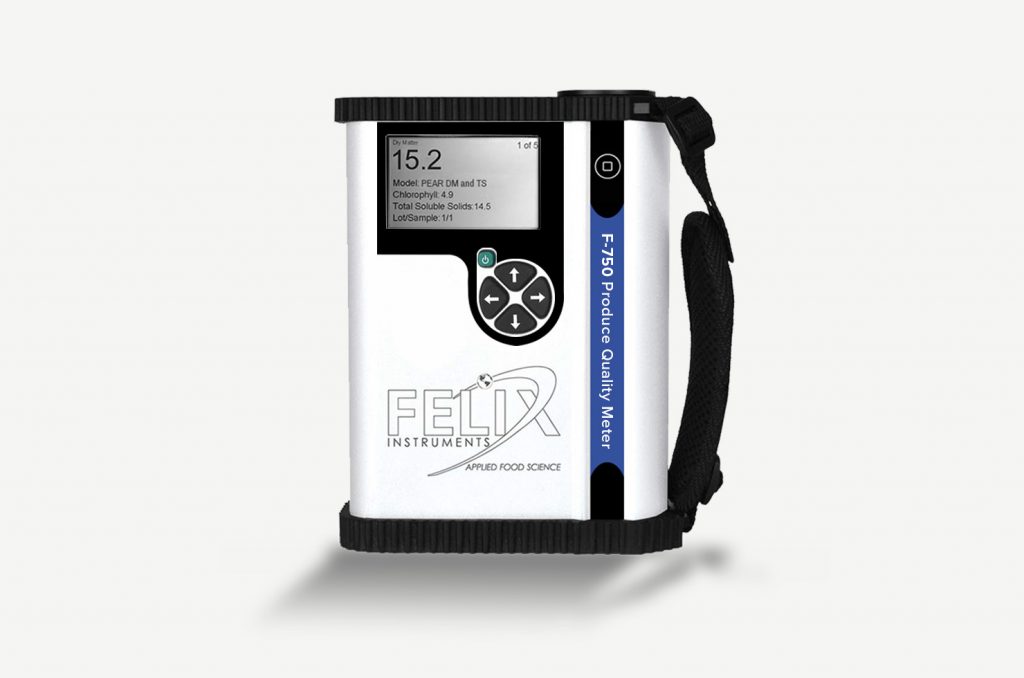
Compared to traditional refractometers, the F 750 provides:
-
Immediate readings without juice extraction
-
Calibration models specific to crop types
-
Large scale sampling capability
-
Data storage and export for quality tracking
This matters when you are managing harvest timing. A color shift might look promising, but dry matter thresholds determine eating quality. With NIR measurement, you can confirm that the fruit meets specification before picking.
Crop Specific Solutions with the F 751 Series
Felix Instruments also offers crop specific models tailored to individual commodities.
F 751 Avocado Quality Meter
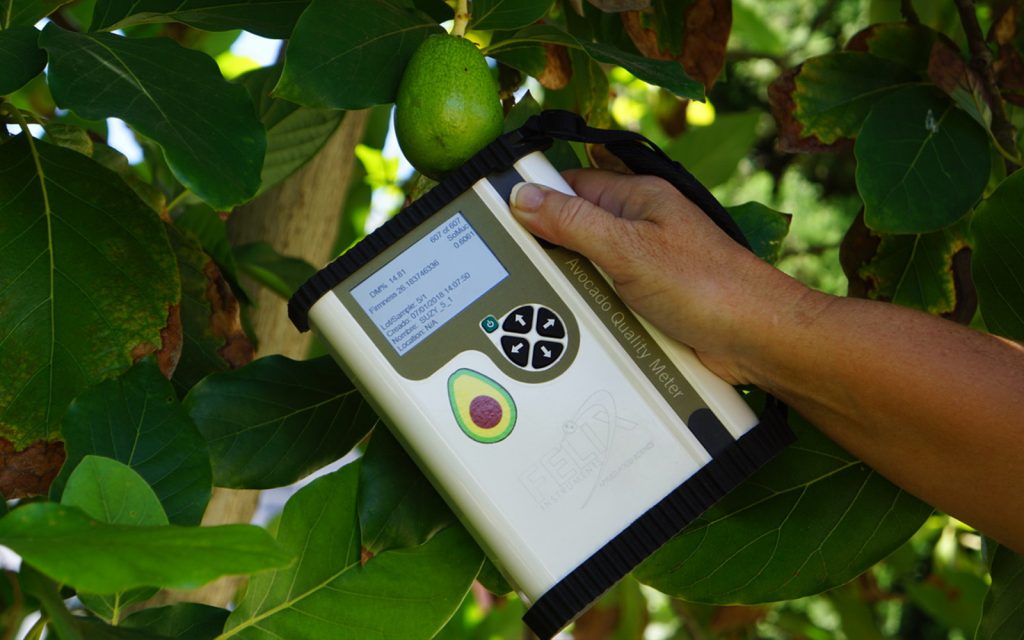
Avocado maturity is strongly linked to dry matter, not skin color. The F 751 Avocado Quality Meter allows growers to measure dry matter non destructively. Instead of cutting multiple samples and performing oven tests, teams can scan fruit directly in the orchard.
This reduces labor and improves harvest decisions.
F 751 Mango Quality Meter
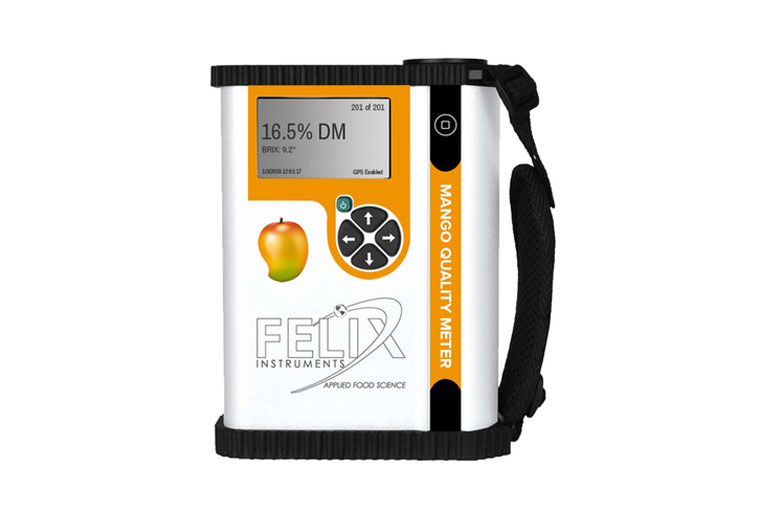
Mango color development is highly variable across varieties. The F 751 Mango Quality Meter measures dry matter and Brix to determine readiness. This is critical for export markets where internal quality defines consumer satisfaction.
F 751 Kiwifruit and Grape Models
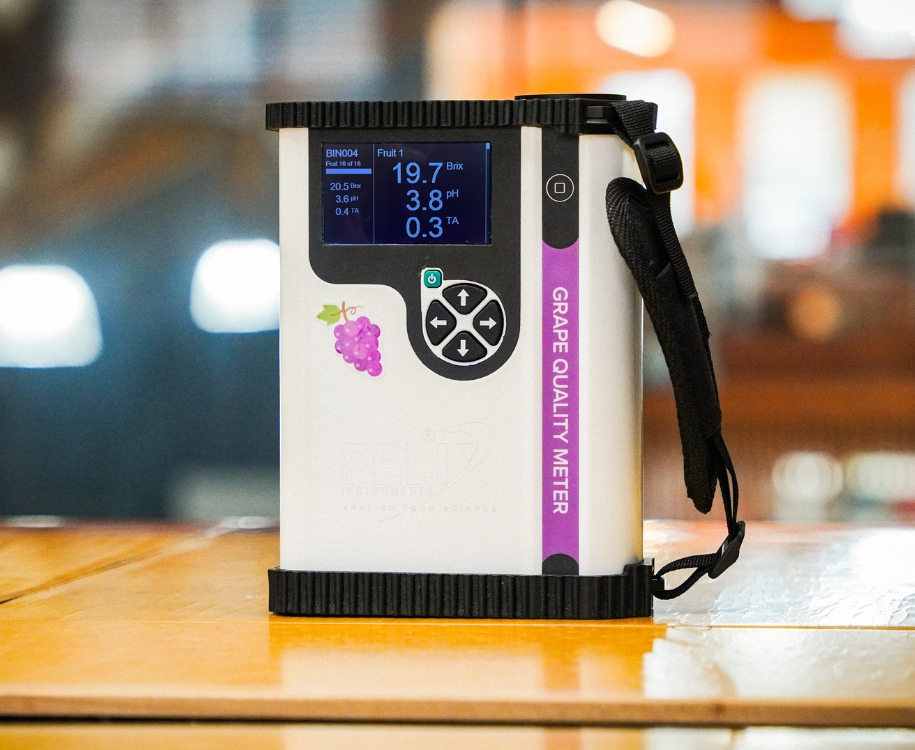
Kiwifruit and grape ripeness are often judged by color and firmness. But soluble solids drive flavor perception. The crop specific F 751 models provide reliable fruit ripeness testing for these commodities, reducing reliance on guesswork.
Ripening Facilities and Ethylene Monitoring
Color also fails when managing ripening rooms. Bananas, avocados, and mangoes may appear ready, yet internal ethylene exposure and respiration patterns determine uniformity.
Felix Instruments addresses this with portable gas analyzers that measure ethylene, CO2, and O2 levels.
F 960 Ripen It Gas Analyzer
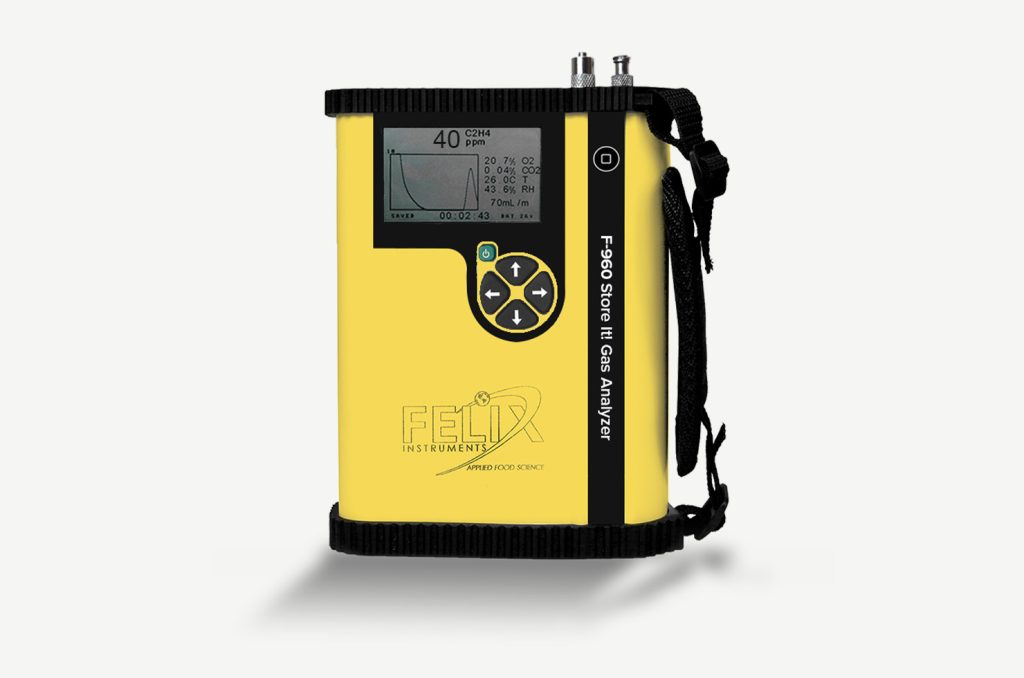
The F 960 Ripen It Gas Analyzer is designed for ripening operations. It measures ethylene concentrations along with carbon dioxide and oxygen. Instead of assuming that fruit is progressing based on peel color, managers can confirm atmospheric conditions and adjust accordingly.
This improves uniformity and reduces over ripening.
F 950 Three Gas Analyzer and F 940 Store It
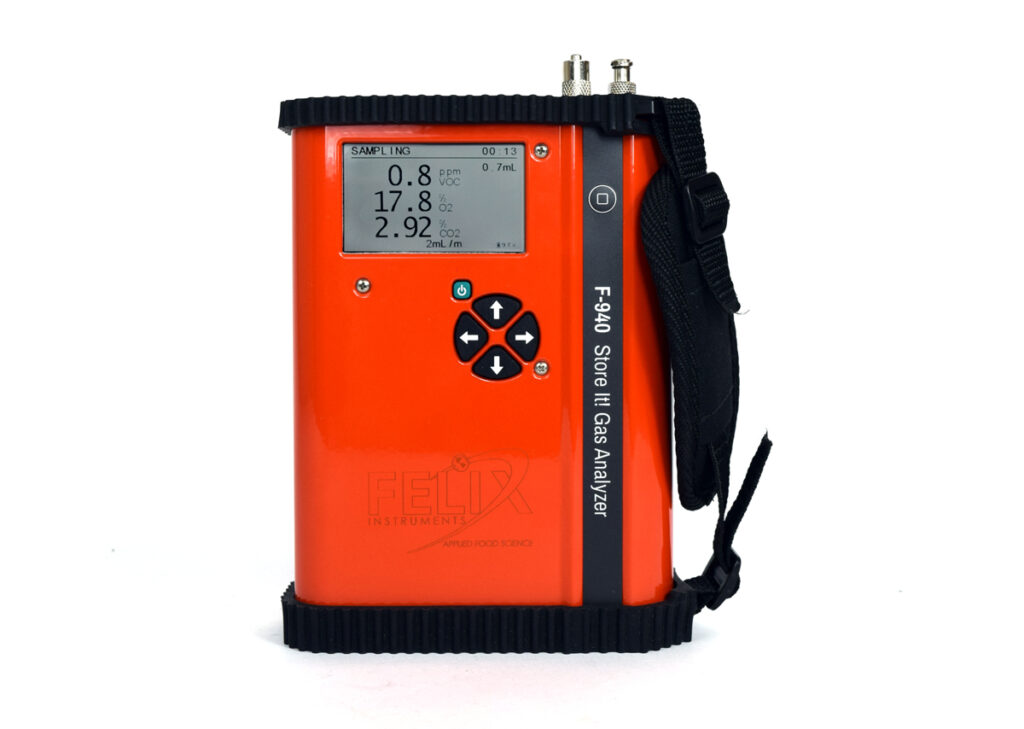
The F 950 Three Gas Analyzer supports field and storage monitoring, while the F 940 Store It focuses on storage environments. Both provide accurate gas readings that influence respiration and maturity progression.
When fruit ripeness testing includes both internal quality measurement and atmospheric monitoring, decision making becomes data driven.
The Cost of Relying on Color
Let’s be practical. What happens when you rely on color alone?
-
Harvest too early and Brix is low
-
Harvest too late and shelf life shrinks
-
Ship fruit that looks ready but eats poorly
-
Increase claims and retailer dissatisfaction
Inconsistent ripeness damages brand reputation. Consumers do not forgive bland fruit.
By contrast, objective fruit ripeness testing improves:
-
Harvest timing accuracy
-
Shipment consistency
-
Inventory management
-
Customer satisfaction
Color remains a useful visual cue. But it should be the starting point, not the final decision.
Why Felix Instruments Stands Out
Many quality tools exist, but Felix Instruments focuses specifically on practical, field ready solutions. The devices are handheld, durable, and designed for real production environments.
Key advantages include:
-
Non destructive NIR technology
-
Crop specific calibration models
-
Portable gas analysis solutions
-
Data logging for traceability
-
Easy integration into existing workflows
Rather than offering generic lab equipment, Felix Instruments builds tools for growers, packers, and ripening managers who need reliable data on site.
A Smarter Approach to Ripeness
The myth that you can tell ripeness by color alone persists because it is convenient. But convenience is not accuracy.
Fruit ripeness testing should measure what matters internally. Brix, dry matter, and ethylene exposure define eating quality and shelf life. Surface color does not.
If you are serious about consistent quality, move beyond visual inspection.
Takeaway
If your operation still relies heavily on color to determine harvest timing or ripening progress, it may be time to upgrade your approach. Felix Instruments offers non destructive fruit ripeness testing solutions and portable gas analyzers that provide real data in the field, in storage, and in ripening rooms.
Visit Felix Instruments to explore the F 750 Produce Quality Meter, the F 751 crop specific models, and the F 960 Ripen It Gas Analyzer. Equip your team with tools that replace guesswork with measurable results.
Related Products
- F-751 Grape Quality Meter
- Custom Model Building
- F-910 AccuStore
- F-751 Melon Quality Meter
- F-751 Kiwifruit Quality Meter
- F-750 Produce Quality Meter
- F-751 Avocado Quality Meter
- F-751 Mango Quality Meter
- F-9XXDK Dynamic Sampling Kit
- F-900 Portable Ethylene Analyzer
- F-950 Three Gas Analyzer
- F-920 Check It! Gas Analyzer
- F-960 Ripen It! Gas Analyzer
- F-940 Store It! Gas Analyzer
Most Popular Articles
- Spectrophotometry in 2023
- NIR Applications in Agriculture – Everything…
- The Importance of Food Quality Testing
- The 5 Most Important Parameters in Produce Quality Control
- Melon Fruit: Quality, Production & Physiology
- Fruit Respiration Impact on Fruit Quality
- Guide to Fresh Fruit Quality Control
- Liquid Spectrophotometry & Food Industry Applications
- Ethylene (C2H4) – Ripening, Crops & Agriculture
- Understanding Chemometrics for NIR Spectroscopy