Quality-Control Protocols Using F-750 in Packinghouses


Scott Trimble

February 5, 2026 at 7:51 pm | Updated February 5, 2026 at 7:51 pm | 5 min read
Quality control in modern packinghouses depends on fast, consistent decisions. Growers and packers are under pressure to verify internal quality without slowing down throughput or damaging fruit. The F-750 produce quality meter has become a practical tool for meeting that challenge. By combining nondestructive testing with repeatable measurements, the F-750 quality meter fits naturally into quality-control protocols across receiving, grading, and shipping.
This article looks at how packinghouses use the F-750 quality meter in daily operations, why it supports better decision making, and how it compares to traditional sampling methods.
Why Nondestructive Testing Matters in Packinghouses?
Traditional quality checks rely heavily on destructive sampling. Fruit is cut, juiced, or punctured to measure dry matter, Brix, or firmness. While these methods are familiar, they come with tradeoffs.
Subscribe to receive our monthly round-up of articles.
- Destructive testing reduces saleable inventory
- Sample sizes are often small and may not represent the full lot
- Results are delayed when samples move to labs
- Data collection can interrupt workflow on the line
Nondestructive tools address these limitations. The F-750 quality meter uses near infrared spectroscopy to estimate internal quality attributes without cutting fruit. That allows operators to test more fruit, collect more data, and make decisions in real time.
In a packinghouse environment where speed and consistency matter, this shift changes how quality control is structured.
Overview of the F-750 Produce Quality Meter
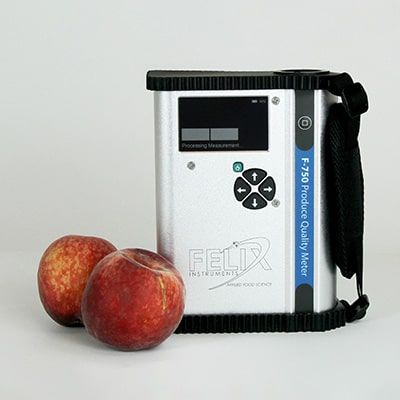
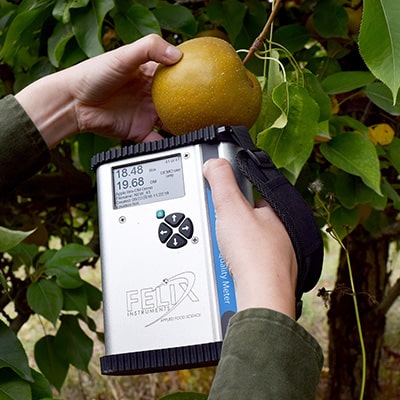
The F-750 produce quality meter is a handheld NIR instrument designed for field and packinghouse use. It measures internal attributes such as dry matter, Brix, and other quality indicators depending on the calibration used.
Key characteristics that matter in packinghouses include:
- Handheld and battery powered operation
- Rapid measurement with results in seconds
- Non-contact, nondestructive testing
- Ability to store and export data
- Crop-specific calibrations available for multiple commodities
Because the same device can be used across receiving, storage checks, and outbound verification, it supports standardized protocols instead of isolated spot checks.
Incoming Quality Assessment at Receiving
One of the most common uses of the F-750 produce quality meter is at receiving. Incoming fruit often arrives from multiple orchards or suppliers, sometimes harvested under different conditions. Visual inspection alone does not reveal internal maturity or eating quality.
A typical receiving protocol using the F-750 quality meter looks like this:
- Select representative cartons or bins from each lot
- Scan a defined number of fruit per lot using the same measurement position
- Record dry matter or Brix values automatically
- Compare results against internal acceptance thresholds
Because the testing is nondestructive, operators can increase sample sizes without creating waste. This improves confidence in acceptance or segregation decisions.
Many packinghouses use these measurements to:
- Confirm harvest maturity claims
- Separate lots for different market destinations
- Identify fruit suitable for longer storage versus immediate shipment
The result is better alignment between incoming quality and downstream handling plans.
In-Line and Offline Quality Verification
While the F-750 quality meter is handheld, it still plays a role alongside automated grading systems. Packinghouses often combine optical sorters with spot verification using handheld instruments.
Common quality-control steps include:
- Pulling fruit off the line at regular intervals
- Scanning fruit with the F-750 produce quality meter
- Comparing internal quality data to sorter settings
- Adjusting grading parameters if needed
This approach helps validate that automated systems are sorting fruit as intended. It also provides documentation to support quality claims, especially for premium programs where internal quality matters as much as external appearance.
Because measurements are fast, these checks do not disrupt line flow.
Storage Monitoring and Lot Management
Quality control does not stop once fruit enters cold storage. Internal quality can change during storage, and decisions about shipping order often depend on maturity and ripening status.
Packinghouses use the F-750 produce quality meter to monitor stored lots by:
- Scanning fruit from storage rooms at scheduled intervals
- Tracking changes in dry matter or related indicators
- Identifying lots that should ship sooner
- Reducing the risk of shipping fruit past optimal quality
This data-driven approach replaces guesswork with measurable trends. Instead of relying only on storage duration or temperature history, operators can reference actual internal quality measurements.
For commodities where eating quality is closely tied to dry matter or sugar development, this information directly affects customer satisfaction.
Standardizing Quality-Control Protocols
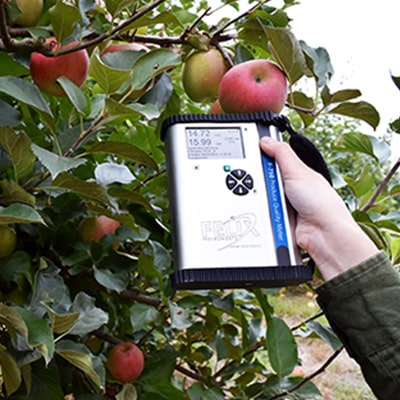
One of the advantages of using the F-750 quality meter is consistency. When protocols are clearly defined, different operators can collect comparable data across shifts and facilities.
Effective protocols usually define:
- Number of fruit per sample
- Measurement location on the fruit
- Calibration used for each commodity
- Acceptance or action thresholds
- Data logging and review procedures
Because the instrument is designed for routine use, training time is short. Operators focus on following the protocol rather than learning complex lab techniques.
Over time, this consistency builds a valuable dataset that supports continuous improvement.
Comparing F-750 Produce Quality Meter Use to Traditional Methods
Packinghouses that transition to nondestructive testing often notice several differences compared to traditional destructive methods.
With destructive testing:
- Sample sizes are limited
- Fruit is removed from saleable inventory
- Results may lag behind operations
- Repeat testing is impractical
With the F-750 quality meter:
- Larger sample sizes are practical
- Fruit remains marketable
- Results are available immediately
- Repeat measurements are possible
This does not mean destructive testing disappears entirely. Many operations still use it for calibration verification or audits. However, the F-750 produce quality meter becomes the primary tool for day-to-day quality control.
The Bottom Line
Quality-control protocols using the F-750 quality meter help packinghouses move from reactive inspection to proactive management. By measuring internal quality nondestructively, operations gain speed, consistency, and confidence in their decisions.
From receiving through storage and shipment, the F-750 produce quality meter supports practical protocols that fit real-world workflows. It allows teams to test more fruit, reduce waste, and align quality targets with market expectations.
If you are evaluating tools to strengthen your quality-control program, it is worth speaking directly with Felix Instruments. Our team can help determine how the F-750 produce quality meter fits into your packinghouse protocols and commodity mix.
Related Products
- F-751 Grape Quality Meter
- Custom Model Building
- F-910 AccuStore
- F-751 Melon Quality Meter
- F-751 Kiwifruit Quality Meter
- F-750 Produce Quality Meter
- F-751 Avocado Quality Meter
- F-751 Mango Quality Meter
- F-9XXDK Dynamic Sampling Kit
- F-900 Portable Ethylene Analyzer
- F-950 Three Gas Analyzer
- F-920 Check It! Gas Analyzer
- F-960 Ripen It! Gas Analyzer
- F-940 Store It! Gas Analyzer
Most Popular Articles
- Spectrophotometry in 2023
- NIR Applications in Agriculture – Everything…
- The Importance of Food Quality Testing
- The 5 Most Important Parameters in Produce Quality Control
- Melon Fruit: Quality, Production & Physiology
- Fruit Respiration Impact on Fruit Quality
- Guide to Fresh Fruit Quality Control
- Liquid Spectrophotometry & Food Industry Applications
- Ethylene (C2H4) – Ripening, Crops & Agriculture
- Understanding Chemometrics for NIR Spectroscopy
Related Reading