F-950 in Dual-Purpose Mode: Ripening Gas Control and QC Spot Testing


Scott Trimble

February 5, 2026 at 8:56 pm | Updated February 5, 2026 at 8:56 pm | 5 min read
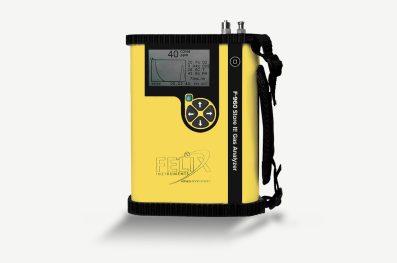
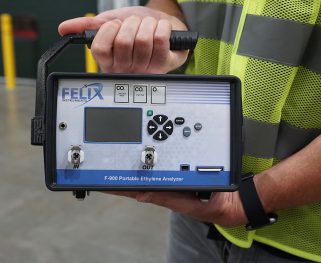
The F-950 gas analyzer is often described as a dual-purpose gas analyzer, and that description fits how it is used in real facilities. In ripening rooms, cold storage, and packing environments, teams need one tool that can manage ripening gas control while also supporting fast QC spot testing. The F-950 was designed for exactly that overlap.
Instead of separating control monitoring from quality verification, it brings both into a single handheld platform.
This article looks at how the F-950 functions in dual-purpose mode, why that matters for daily operations, and how it compares favorably to single-use or fixed-location alternatives.
Subscribe to receive our monthly round-up of articles.
Why Dual-Purpose Gas Analysis Matters
In produce operations, gas measurement is rarely confined to one task. Ripening managers need to verify ethylene levels, confirm oxygen and carbon dioxide ranges, and document conditions across multiple rooms. At the same time, QC teams need to spot check cartons, bins, or individual pallets to make sure product exposure matches expectations.
Using separate tools for these tasks introduces friction.
-
Fixed sensors give continuous data but lack flexibility
-
Portable single-gas analyzers require multiple instruments
-
Outsourced sampling slows down decision-making
A dual-purpose gas analyzer reduces those tradeoffs. One instrument supports both process control and verification, without locking teams into fixed infrastructure.
Overview of the F-950 Gas Analyzer
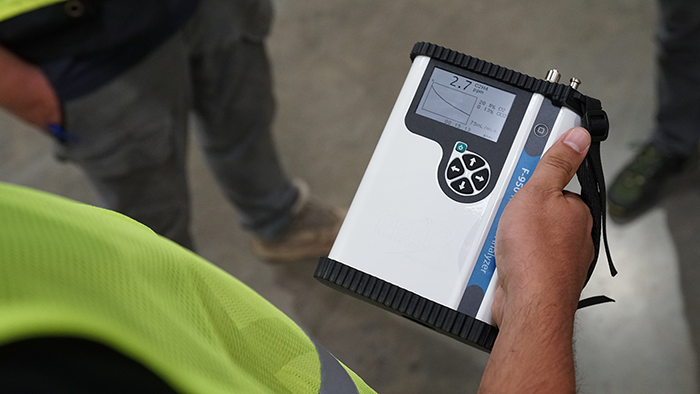
The F-950 is a handheld three-gas analyzer designed to measure ethylene, oxygen, and carbon dioxide. It is used across ripening, storage, and transportation environments where gas composition directly affects produce quality.
Key design priorities include portability, speed, and consistency. The instrument is battery-powered, rugged enough for daily facility use, and fast enough to support routine checks without interrupting workflows.
What makes the F-950 stand out is not just the sensor suite, but how those sensors are integrated into real-world use cases.
Core Gases Measured by the F-950
The F-950 measures the three gases most critical to ripening and storage environments.
Ethylene
Ethylene drives ripening in climacteric fruits. The F-950 measures ethylene at levels relevant to both active ripening and background exposure. This allows users to confirm injection rates, detect leaks, and verify room clearance after ripening cycles.
Oxygen
Oxygen monitoring is essential for controlled and modified atmosphere environments. The F-950 provides quick oxygen readings that help teams confirm safe and effective storage conditions without installing permanent probes.
Carbon Dioxide
Carbon dioxide levels influence respiration and shelf life. With the F-950, CO2 can be measured during ripening, storage, or transit checks, helping identify buildup or ventilation issues early.
Together, these measurements define the F-950 as a true dual-purpose gas analyzer rather than a niche instrument.
Ripening Gas Control in Practice
In ripening operations, gas control is about verification rather than automation. Even facilities with automated systems still rely on handheld tools to confirm conditions.
The F-950 supports ripening gas control in several ways:
-
Verifying ethylene concentration after injection
-
Checking oxygen depletion or recovery in sealed rooms
-
Monitoring CO2 accumulation during ripening cycles
-
Documenting conditions for compliance or internal records
Because the F-950 is portable, operators can move between rooms quickly, confirming conditions without waiting for system readouts or remote data access.
This flexibility is especially valuable in facilities running mixed commodities or staggered ripening schedules.
QC Spot Testing Without Workflow Disruption
Quality control teams often need answers immediately. Waiting for lab analysis or external sampling is rarely practical when product is moving.
The F-950 enables QC spot testing directly on the floor.
Common QC use cases include:
-
Checking gas levels inside cartons or liners
-
Verifying modified atmosphere packaging conditions
-
Spot testing pallets before shipment
-
Investigating quality issues linked to storage exposure
Because the same dual-purpose gas analyzer used in ripening can also support QC, teams avoid duplication of tools and training.
One Instrument Across Departments
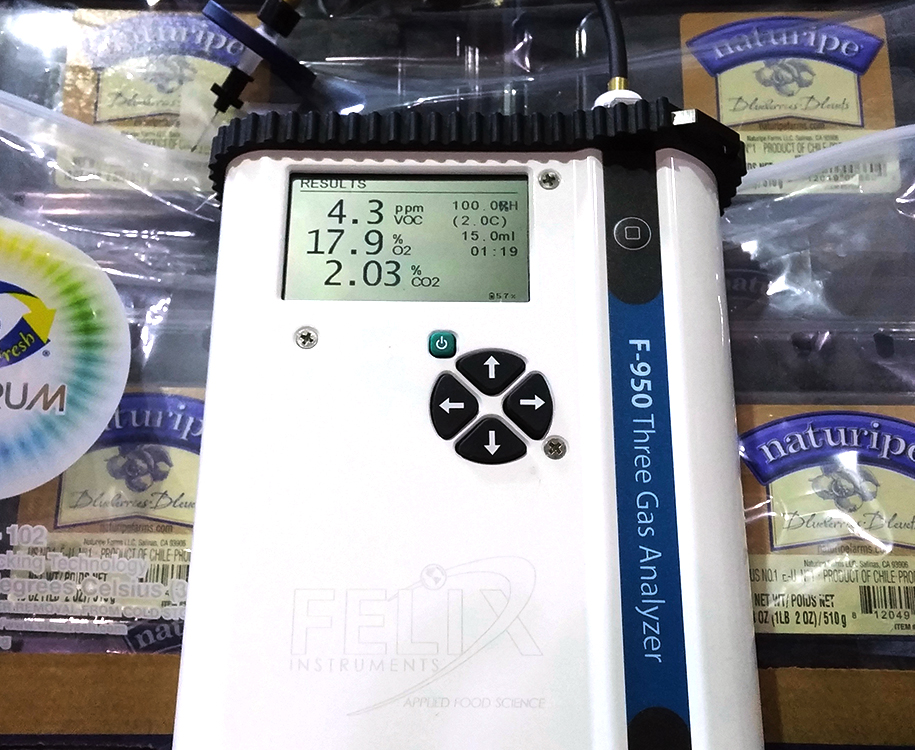
One of the less discussed advantages of the F-950 is how it bridges departments. Ripening, storage, QA, and logistics often operate with separate tools and priorities. A shared analyzer creates common ground.
Benefits of cross-department use include:
-
Standardized measurements and procedures
-
Fewer instruments to maintain and calibrate
-
Easier data comparison across processes
-
Faster communication when issues arise
This shared approach is harder to achieve with fixed sensors or single-gas handhelds.
Portability Compared to Fixed Systems
Fixed gas monitoring systems have a role, especially for continuous tracking. However, they are not always practical or cost-effective for every room or facility.
The F-950 offers an alternative that complements fixed systems rather than replacing them.
Compared to fixed sensors, the F-950 provides:
-
Mobility across rooms and sites
-
Immediate deployment without installation
-
Lower upfront infrastructure cost
-
Targeted measurements where needed
For operations that expand, reconfigure rooms, or handle seasonal volume, portability matters.
Accuracy and Confidence in Measurements
Consistency is critical when using a dual-purpose gas analyzer. Ripening decisions and QC judgments both rely on trustworthy data.
The F-950 is designed for repeatable measurements across environments. Users can rely on the same instrument to validate ripening conditions in the morning and investigate a quality concern in the afternoon.
This consistency reduces uncertainty and supports better decision-making throughout the supply chain.
How the F-950 Fits Within the Felix Instruments Line
Within the Felix Instruments portfolio, the F-950 sits between simpler single-gas tools and more specialized ripening analyzers. It is often chosen by operations that need flexibility rather than specialization.
As part of the broader ecosystem from Felix Instruments, the F-950 integrates well with other handheld tools used for produce quality assessment. This makes it easier for teams already familiar with Felix workflows to adopt the instrument quickly.
Practical Advantages Over Competitive Alternatives
Many competing analyzers focus on one task. They either excel at ethylene detection or provide limited multi-gas support with slower response times.
The F-950’s advantage lies in balance.
-
Three gases in one handheld unit
-
Designed for field use, not lab-only environments
-
Supports both operational control and quality checks
-
Scales from small facilities to global operations
For teams that value adaptability, this balance often outweighs narrow specialization.
Takeaway
Using the F-950 as a dual-purpose gas analyzer simplifies ripening gas control and QC spot testing. It allows teams to move faster, reduce tool redundancy, and make informed decisions based on real-time measurements. Instead of choosing between control and verification, the F-950 supports both in one portable instrument.
If you are evaluating gas analysis tools for ripening rooms, storage facilities, or quality assurance workflows, consider how a dual-purpose gas analyzer can streamline operations. To learn more about the F-950 and how it fits into your operation, contact Felix Instruments or visit our website to speak with a product specialist.
Frequently Asked Questions
Can the F-950 Replace Fixed Gas Monitoring Systems?
The F-950 is best used as a complement to fixed systems. It provides flexible verification and spot testing rather than continuous monitoring.
Is the F-950 Suitable for Multiple Fruit Types?
Yes. The F-950 measures gases that are relevant across a wide range of climacteric and non-climacteric produce.
How Often Is Calibration Required for Routine Use?
Calibration frequency depends on usage and internal protocols, but the F-950 is designed for regular field use with stable performance over time.
Related Products
Most Popular Articles
- Spectrophotometry in 2023
- NIR Applications in Agriculture – Everything…
- The Importance of Food Quality Testing
- The 5 Most Important Parameters in Produce Quality Control
- Melon Fruit: Quality, Production & Physiology
- Fruit Respiration Impact on Fruit Quality
- Guide to Fresh Fruit Quality Control
- Liquid Spectrophotometry & Food Industry Applications
- Ethylene (C2H4) – Ripening, Crops & Agriculture
- Understanding Chemometrics for NIR Spectroscopy
Related Reading