Using the F-960 to Monitor Controlled-Atmosphere Storage for Apples

Scott Trimble

February 5, 2026 at 9:30 pm | Updated February 5, 2026 at 9:30 pm | 5 min read
Controlled atmosphere storage for apples is one of those topics where most professionals already know the theory. Lower oxygen, elevated carbon dioxide, low temperature, and careful ethylene management slow respiration and preserve quality. Where things get complicated is execution.
Small deviations in gas composition can quietly shorten storage life or lead to disorders that only appear months later. This is where practical monitoring tools matter. The F-960 Ripen It Gas Analyzer from Felix Instruments is designed specifically for this real-world challenge.
In commercial apple operations, controlled atmosphere storage for apples is not just about hitting a target number once. It is about confirming conditions day after day across rooms, bins, and seasons.
Subscribe to receive our monthly round-up of articles.
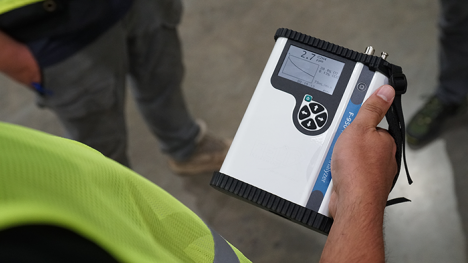
The F-960 gives storage managers a portable way to measure oxygen, carbon dioxide, and ethylene directly at the point of decision, without relying entirely on fixed systems or delayed lab results.
Why Controlled Atmosphere Storage for Apples Demands Active Monitoring?
Apples respond strongly to their storage environment. Lowering oxygen reduces respiration, while elevated carbon dioxide suppresses ethylene action.
The balance is narrow.
Too little oxygen increases the risk of anaerobic respiration and off flavors. Too much carbon dioxide can lead to internal browning or other physiological disorders. Ethylene, even at very low concentrations, accelerates ripening and senescence.
Controlled atmosphere storage for apples works best when gas levels are verified frequently. Fixed room sensors are useful, but they do not always tell the whole story. Leaks, door openings, bin variation, and sensor drift all introduce uncertainty.
Portable verification allows operators to confirm that conditions inside the room match what the system reports.
Overview of the F-960 Ripen It Gas Analyzer
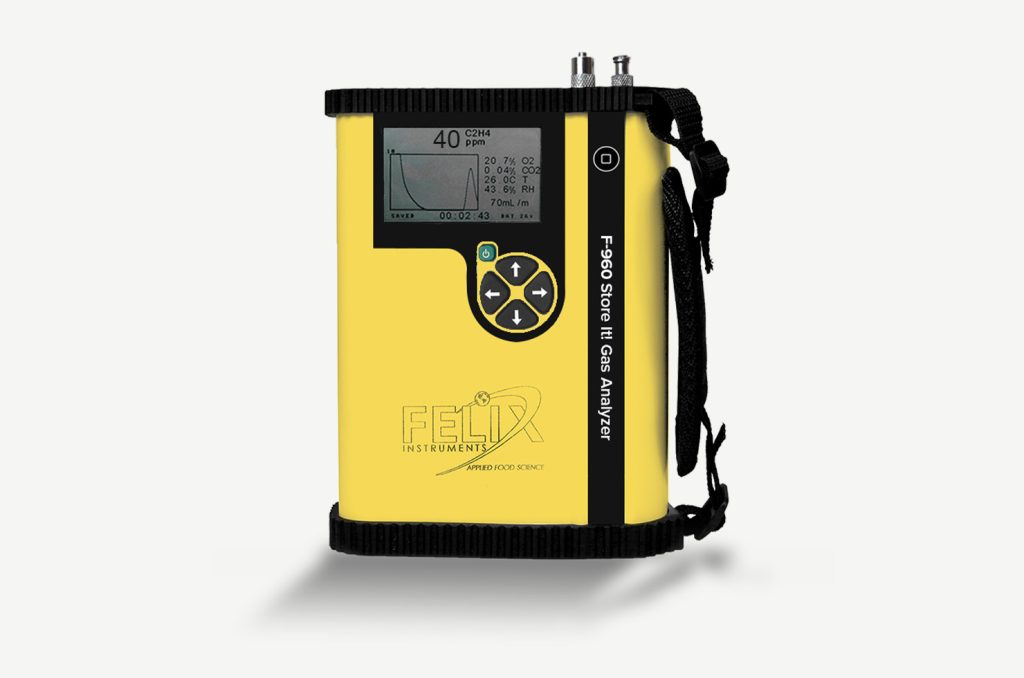
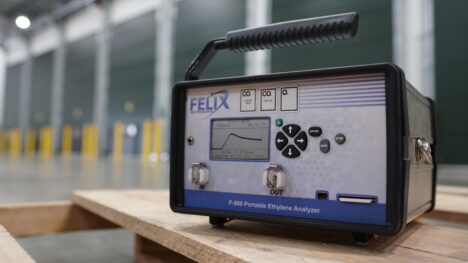
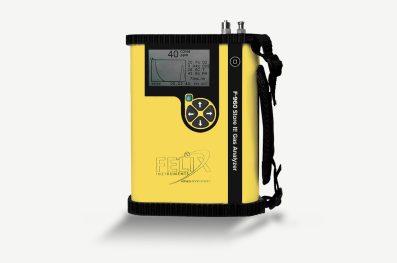
The F-960 is a handheld gas analyzer designed for postharvest environments. It measures oxygen and carbon dioxide using robust sensor technologies suited for storage rooms and controlled atmosphere facilities.
It also measures ethylene at low concentrations, which is critical for apples stored long term.
Key characteristics that matter in apple storage include portability, fast response, and the ability to sample directly from rooms or packages. The instrument is built for daily use by storage managers, quality teams, and researchers rather than lab-only operation.
Measuring Oxygen and Carbon Dioxide in Apple Storage Rooms

Oxygen and carbon dioxide form the foundation of controlled atmosphere storage for apples. Typical regimes vary by cultivar, maturity, and storage duration, but the principle remains the same.
The F-960 allows users to draw a gas sample directly from the room or from sampling ports installed in the wall.
This direct measurement supports several practical tasks:
-
Verifying oxygen setpoints after room pull-down
-
Checking for oxygen stratification in large rooms
-
Confirming carbon dioxide levels following scrubber maintenance
-
Spot-checking rooms after door openings or transfers
Because the F-960 is portable, it can be moved between rooms quickly. This makes it easier to compare conditions across a facility and identify rooms that may need adjustment before problems develop.
Ethylene Monitoring as a Decision Tool
Ethylene is often discussed but not always measured consistently. In controlled atmosphere storage for apples, ethylene concentrations influence firmness retention, greasiness, and the risk of disorders. Even trace levels can have cumulative effects over long storage periods.
The F-960 provides ethylene measurements at levels relevant to apple storage. This supports decisions such as:
-
Evaluating the effectiveness of ethylene scrubbers
-
Comparing ethylene accumulation between cultivars
-
Monitoring ethylene after room loading or disturbance
-
Supporting harvest and storage strategy adjustments
Having ethylene data alongside oxygen and carbon dioxide measurements gives a more complete picture of the storage environment.
Supporting Different Apple Cultivars and Storage Strategies

Apple storage programs vary widely. Some cultivars tolerate ultra-low oxygen regimes, while others require more conservative conditions. Long-term storage, short-term holding, and export programs all place different demands on monitoring.
The F-960 fits into these programs by offering flexibility.
Storage managers can adjust sampling frequency and locations based on risk level and storage duration. Researchers can use the same instrument to evaluate new controlled atmosphere protocols or compare treatments across seasons.
This versatility is one reason the F-960 is often chosen over fixed or single-gas solutions. It adapts as storage strategies evolve rather than locking operations into one approach.
Practical Advantages Over Alternative Monitoring Approaches
Many facilities rely heavily on installed sensors and centralized control systems. These systems are essential, but they benefit from independent verification. The F-960 acts as a ground-truth tool.
Compared to sending samples to a lab, portable measurement reduces delays and allows immediate response. Compared to less specialized handheld sensors, the F-960 combines multiple gases in one instrument designed for postharvest use.
From a workflow perspective, this means fewer tools to manage and more confidence in the data being collected during routine checks.
Integration Into Quality and Research Programs
Beyond daily storage management, controlled atmosphere storage for apples is often tied to quality evaluation and research. The F-960 is commonly used alongside firmness testing, starch assessments, and sensory evaluation.
Researchers use it to document actual storage conditions when evaluating outcomes. Quality managers use it to link gas profiles to post-storage performance. Over time, this builds a more reliable understanding of how specific storage conditions affect specific apple lots.
Best Practices for Using the F-960 in Apple Storage
To get the most value from the F-960, operations typically follow a few best practices:
-
Establish a regular sampling schedule for each room
-
Sample at consistent locations to track trends
-
Record data alongside temperature and humidity
-
Use results to confirm, not replace, control systems
When used this way, the instrument becomes part of a feedback loop rather than a one-time diagnostic tool.
Takeaway
Controlled atmosphere storage for apples succeeds when theory is supported by measurement. The F-960 Ripen It Gas Analyzer gives apple storage professionals a practical way to verify oxygen, carbon dioxide, and ethylene directly where it matters.
By combining portability with relevant gas measurements, it supports better decisions throughout the storage season.
If you are looking to strengthen your controlled atmosphere program or add independent verification to your existing system, Felix Instruments offers tools designed specifically for postharvest environments.
Visit Felix Instruments to learn more about the F-960 and how it fits into modern apple storage operations.
Frequently Asked Questions
What Gases Are Most Important to Monitor in Controlled Atmosphere Storage for Apples?
Oxygen and carbon dioxide are the primary control gases, while ethylene plays a key role in ripening and quality changes over time.
Can the F-960 Be Used Across Multiple Storage Rooms?
Yes. The portable design allows users to move between rooms and sample from different locations quickly.
Is the F-960 Suitable for Research as Well as Commercial Storage?
Yes. It is commonly used in both commercial facilities and research settings to document storage conditions and evaluate outcomes.
Related Products
- F-751 Grape Quality Meter
- Custom Model Building
- F-910 AccuStore
- F-751 Melon Quality Meter
- F-751 Kiwifruit Quality Meter
- F-750 Produce Quality Meter
- F-751 Avocado Quality Meter
- F-751 Mango Quality Meter
- F-9XXDK Dynamic Sampling Kit
- F-900 Portable Ethylene Analyzer
- F-950 Three Gas Analyzer
- F-920 Check It! Gas Analyzer
- F-960 Ripen It! Gas Analyzer
- F-940 Store It! Gas Analyzer
Most Popular Articles
- Spectrophotometry in 2023
- NIR Applications in Agriculture – Everything…
- The Importance of Food Quality Testing
- The 5 Most Important Parameters in Produce Quality Control
- Melon Fruit: Quality, Production & Physiology
- Fruit Respiration Impact on Fruit Quality
- Guide to Fresh Fruit Quality Control
- Liquid Spectrophotometry & Food Industry Applications
- Ethylene (C2H4) – Ripening, Crops & Agriculture
- Understanding Chemometrics for NIR Spectroscopy
Related Reading