Real-Time Ethylene Tracking in Banana Ripening Rooms with the F-950

Scott Trimble

February 5, 2026 at 9:29 pm | Updated February 5, 2026 at 9:29 pm | 5 min read
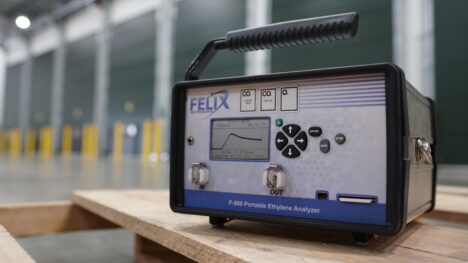
Real-time ethylene monitoring is a practical requirement in modern banana ripening rooms, not a luxury. Ethylene concentration directly controls ripening speed, color break, and uniformity across a room. Small deviations can lead to uneven batches, shortened shelf life, or fruit that misses retail specifications. This is where real-time ethylene monitoring becomes critical, and where the F-950 Three Gas Analyzer fits naturally into daily ripening operations.
Banana ripening managers already understand the biology. Ethylene triggers climacteric respiration, starch conversion, and peel color change. What is often harder to manage is visibility. Ethylene levels change quickly during injection, absorption by fruit, and ventilation cycles. The F-950 gives ripening teams a way to see those changes as they happen, instead of relying on fixed sensors or delayed lab results.
Why Ethylene Control Matters in Banana Ripening
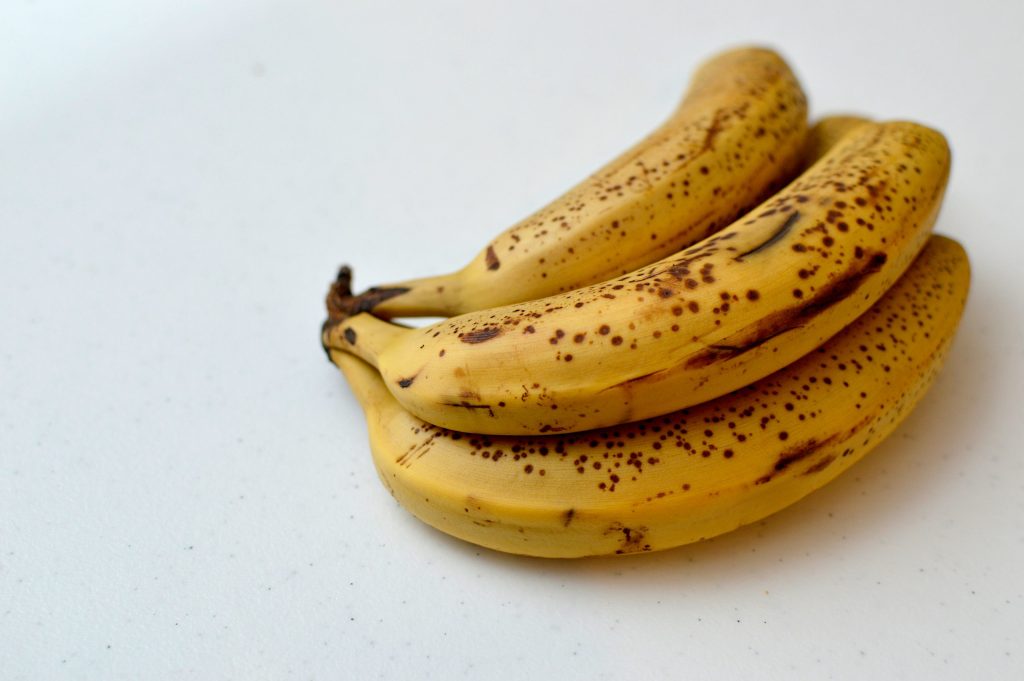
Bananas are typically exposed to ethylene concentrations between 100 and 150 ppm during the initiation phase, followed by controlled ventilation and temperature management. The challenge is not hitting a target once, but holding the process steady across time and across rooms.
Subscribe to receive our monthly round-up of articles.
Several factors complicate this:
-
Room loading density affects ethylene absorption
-
Temperature shifts change respiration rates
-
Ventilation cycles dilute gas unevenly
-
Door openings create rapid concentration drops
Without real-time ethylene monitoring, operators often rely on assumptions. Fixed sensors provide limited spatial data. External lab checks arrive too late to correct issues. The result is reactive decision making.
A handheld analyzer changes that workflow.
The Role of the F-950 in Ripening Rooms
The F-950 Three Gas Analyzer is designed for on-site gas analysis in storage and ripening environments. It measures ethylene, oxygen, and carbon dioxide in a single portable instrument. For banana ripening rooms, this combination matters.
Ethylene tells you how fast ripening is being driven. Oxygen and carbon dioxide reveal how the fruit and room are responding. Together, they provide context that single-gas tools cannot.
Key capabilities relevant to banana ripening include:
-
Real-time ethylene measurement in parts per million
-
Simultaneous O2 and CO2 tracking
-
Fast response time suitable for room-to-room checks
-
Portable form factor for spot sampling
This setup allows ripening managers to walk the room, sample multiple points, and immediately see how uniform the atmosphere really is.
Real-Time Ethylene Monitoring During Injection
Ethylene injection is one of the most critical phases of banana ripening. Over-injection wastes gas and increases risk of uneven ripening. Under-injection delays color development and disrupts schedules.
With the F-950, operators can:
-
Confirm target ethylene concentration is reached
-
Identify dead zones or stratification within the room
-
Adjust injection timing based on actual gas levels
Instead of trusting that an injection system performed as expected, teams can verify results in real time. This is especially useful in older rooms or facilities with mixed airflow performance.
Monitoring Ethylene Decay and Absorption
After injection, ethylene levels decline as fruit absorbs the gas and ventilation cycles begin. This phase is rarely measured directly, yet it strongly influences final quality.
Real-time ethylene monitoring allows teams to:
-
Track how quickly bananas are absorbing ethylene
-
Detect leaks or excessive ventilation
-
Compare room performance across loads
Patterns become visible over time. Some rooms may consistently lose ethylene faster than others. Some loads may absorb more quickly due to maturity differences. The F-950 makes these trends measurable rather than anecdotal.
Using O2 and CO2 Data to Support Ethylene Decisions
Ethylene alone does not tell the full story. Oxygen depletion and carbon dioxide accumulation are signals of respiration intensity and room balance.
By measuring all three gases, the F-950 helps operators:
-
Confirm that oxygen levels remain within safe ripening ranges
-
Detect excessive CO2 buildup that can slow ripening
-
Correlate ethylene response with respiration behavior
This multi-gas view supports better decision making, especially when troubleshooting uneven color or delayed ripening.
Practical Workflow in Banana Ripening Operations
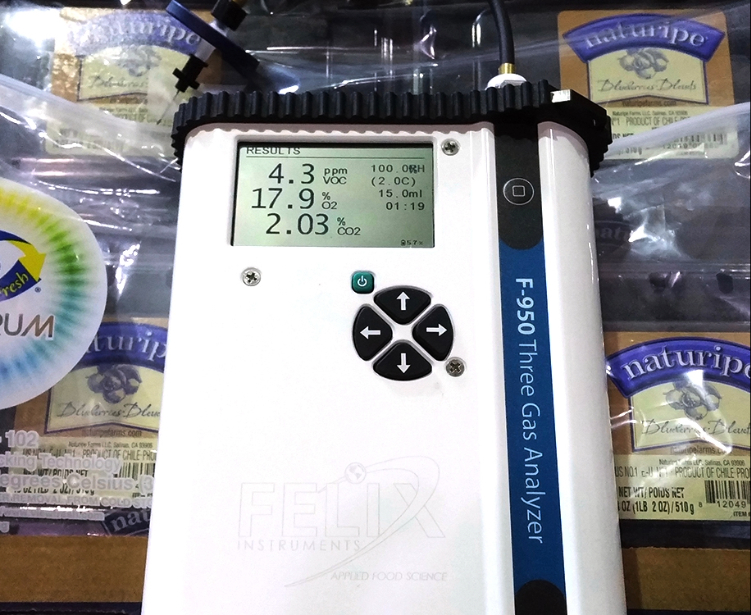
The F-950 fits naturally into daily ripening workflows without disrupting operations.
A typical use pattern looks like this:
-
Sample ethylene during and after injection
-
Walk the room to check spatial uniformity
-
Record gas levels during ventilation cycles
-
Compare data across rooms and days
Because the instrument is portable, it can be shared across multiple rooms and facilities. This flexibility is often more cost-effective than installing fixed sensors everywhere, especially in operations with changing room usage.
Advantages Over Fixed and Single-Gas Sensors
Fixed ethylene sensors have their place, but they come with limitations. They measure one location, often near a wall or duct. Calibration and maintenance can be difficult. Data may not reflect what fruit in the center of the room experiences.
Single-gas handheld devices also fall short by removing context. Ethylene numbers without O2 and CO2 can lead to incomplete conclusions.
The F-950 addresses these gaps by offering:
-
Mobility across the entire room
-
Immediate feedback without waiting for uploads
-
Multi-gas context in a single measurement
For banana ripening teams focused on consistency and throughput, these advantages translate directly into operational control.
Supporting Quality, Shelf Life, and Scheduling
Ultimately, real-time ethylene monitoring is not about technology. It is about predictability. When ethylene exposure is controlled, bananas ripen more uniformly. Color targets are easier to hit. Downstream handling becomes smoother.
The F-950 supports:
-
More consistent color break across pallets
-
Reduced risk of over-ripening
-
Better alignment with shipping and retail schedules
Over time, facilities that monitor ethylene actively tend to rely less on corrective actions and more on planned processes.
Built for Ripening Environments
Ripening rooms are not lab spaces. Instruments need to tolerate cold, humidity, and frequent handling. The F-950 is built for these conditions, with a design focused on field use rather than bench testing.
Its portability and durability make it suitable for:
-
Cold storage facilities
-
High-humidity ripening rooms
-
Frequent daily sampling
This practicality is one reason the instrument is widely adopted in commercial produce operations.
Conclusion: Turning Ethylene Data Into Control
Real-time ethylene monitoring gives banana ripening teams something they often lack: confidence. Confidence that injections are working. Confidence that rooms are performing as expected. Confidence that fruit quality is being guided, not guessed.
The F-950 Three Gas Analyzer turns ethylene from an invisible variable into a measurable parameter that can be managed day by day. By combining ethylene, oxygen, and carbon dioxide in one portable tool, it supports better ripening outcomes without adding complexity.
If your operation is focused on improving consistency, reducing waste, and gaining clearer insight into ripening performance, the F-950 is worth a closer look. To learn more about how this analyzer fits into commercial banana ripening workflows, contact Felix Instruments or visit our website to speak with a technical specialist.
Frequently Asked Questions
What Makes Real-Time Ethylene Monitoring Better Than Periodic Sampling?
Real-time measurements capture rapid changes during injection and ventilation that periodic checks often miss. This allows immediate adjustments instead of delayed corrections.
Can the F-950 Be Used Across Multiple Ripening Rooms?
Yes. Its portable design allows operators to move between rooms easily, making it suitable for facilities with many ripening chambers.
Does Measuring Oxygen and Carbon Dioxide Really Matter for Banana Ripening?
Yes. O2 and CO2 levels provide insight into respiration and room balance, helping interpret ethylene behavior and avoid conditions that slow or disrupt ripening.
Related Products
- F-751 Grape Quality Meter
- Custom Model Building
- F-910 AccuStore
- F-751 Melon Quality Meter
- F-751 Kiwifruit Quality Meter
- F-750 Produce Quality Meter
- F-751 Avocado Quality Meter
- F-751 Mango Quality Meter
- F-9XXDK Dynamic Sampling Kit
- F-900 Portable Ethylene Analyzer
- F-950 Three Gas Analyzer
- F-920 Check It! Gas Analyzer
- F-960 Ripen It! Gas Analyzer
- F-940 Store It! Gas Analyzer
Most Popular Articles
- Spectrophotometry in 2023
- NIR Applications in Agriculture – Everything…
- The Importance of Food Quality Testing
- The 5 Most Important Parameters in Produce Quality Control
- Melon Fruit: Quality, Production & Physiology
- Fruit Respiration Impact on Fruit Quality
- Guide to Fresh Fruit Quality Control
- Liquid Spectrophotometry & Food Industry Applications
- Ethylene (C2H4) – Ripening, Crops & Agriculture
- Understanding Chemometrics for NIR Spectroscopy