Data Repeatability Under Pressure: F-751 vs Sunforest vs Rubens Compared on Real Fruit Lots

Scott Trimble

February 5, 2026 at 11:32 pm | Updated February 5, 2026 at 11:32 pm | 4 min read
Data repeatability under pressure is one of those topics that only becomes urgent when results start drifting.
In real fruit lots, pressure comes from uneven maturity, temperature swings, operator fatigue, and the simple reality that fruit is never uniform. This is where handheld NIR tools are either trusted or sidelined.
In this article, we compare how the F-751 from Felix Instruments performs against systems from Sunforest and Rubens Technologies, with a specific focus on data repeatability under pressure in commercial fruit workflows.
Subscribe to receive our monthly round-up of articles.
Why Data Repeatability Under Pressure Matters?
Repeatability is not about hitting a single accurate number once. It is about getting the same result across operators, locations, and days. In real fruit lots, pressure shows up in several ways.
- Fruit heterogeneity across bins and pallets
- Rapid sampling where decisions are made in minutes
- Multiple users with varying levels of training
- Environmental variability including temperature and humidity
When repeatability fails, confidence in the system erodes quickly. Lots get re-tested, fruit is over-sorted, and the technology becomes a bottleneck instead of a solution. This is why data repeatability under pressure is a better metric than lab accuracy alone.
Understanding the F-751 Approach to Repeatability
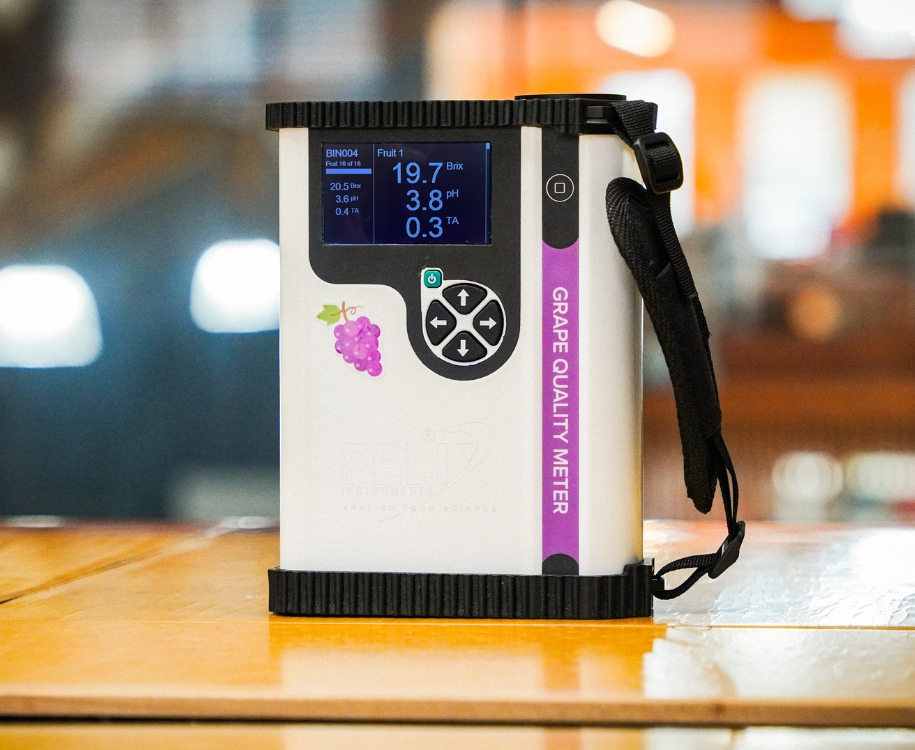
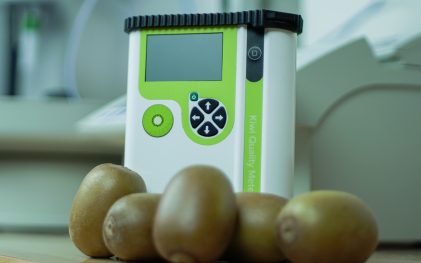
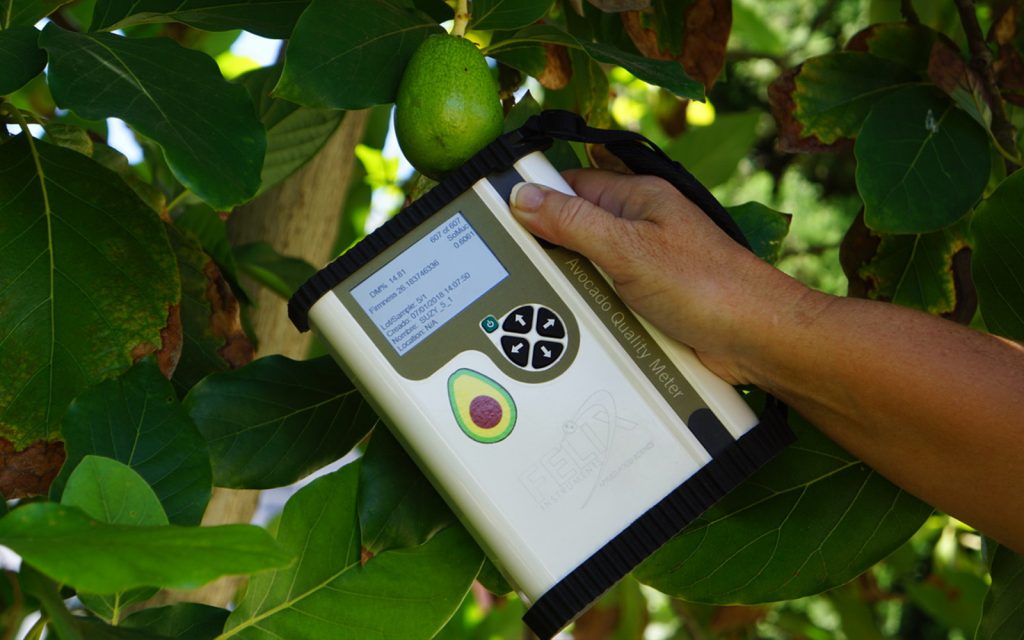
The F-751 Produce Quality Meter is built around consistency first. Its NIR engine is paired with crop specific calibrations that are designed for real fruit variability rather than ideal samples. In practice, this shows up in how the device behaves when measurements are repeated across the same lot.
Key design choices that support repeatability include stable optical geometry, controlled light paths, and calibration models trained on thousands of fruit across seasons.
The result is low measurement drift even when the fruit surface, temperature, or operator changes.
Another factor is workflow. The F-751 is designed for fast, repeatable sampling with minimal setup. Fewer steps reduce operator induced variability, which is one of the most common sources of inconsistency in handheld systems.
Sunforest Systems in Repeatability Focused Workflows
Sunforest offers NIR based fruit quality systems that are often positioned toward controlled environments and research driven users. Their instruments can deliver useful data when conditions are stable and sampling protocols are followed carefully.
However, under pressure, repeatability depends heavily on operator discipline.
Sunforest systems typically require more structured measurement routines and tighter environmental control to maintain consistent outputs. In real fruit lots, where speed matters, this can introduce variability.
Another consideration is calibration portability. When moving between orchards or storage facilities, recalibration or model adjustment may be needed to maintain repeatability. This adds friction in high throughput environments where fruit is constantly moving.
Rubens and Non Destructive Firmness Repeatability
Rubens Technologies is well known for non destructive firmness and ripeness sensing. Their approach focuses on mechanical response and signal interpretation rather than broad spectral analysis.
In controlled tests, Rubens systems can show good repeatability for firmness related metrics. The challenge appears when fruit lots vary widely in size, temperature, or internal structure.
Under pressure, repeatability can be affected by subtle changes in contact, orientation, or fruit condition.
Because Rubens tools often target a narrower set of attributes, they may require complementary systems to fully characterize fruit quality. This increases complexity when repeatable decisions must be made quickly across large lots.
Head to Head Comparison on Real Fruit Lots
When comparing F-751, Sunforest, and Rubens under real world pressure, several patterns emerge.
Sampling Speed
F-751 supports rapid sampling with minimal setup, which helps maintain repeatability when throughput is high. Sunforest systems tend to slow down under pressure due to stricter protocols. Rubens falls in between depending on application.
Operator Variability
The F-751 is less sensitive to operator technique, which is critical in packhouses with rotating staff. Sunforest systems reward trained users but show more variation across teams. Rubens performance depends on consistent handling and placement.
Environmental Robustness
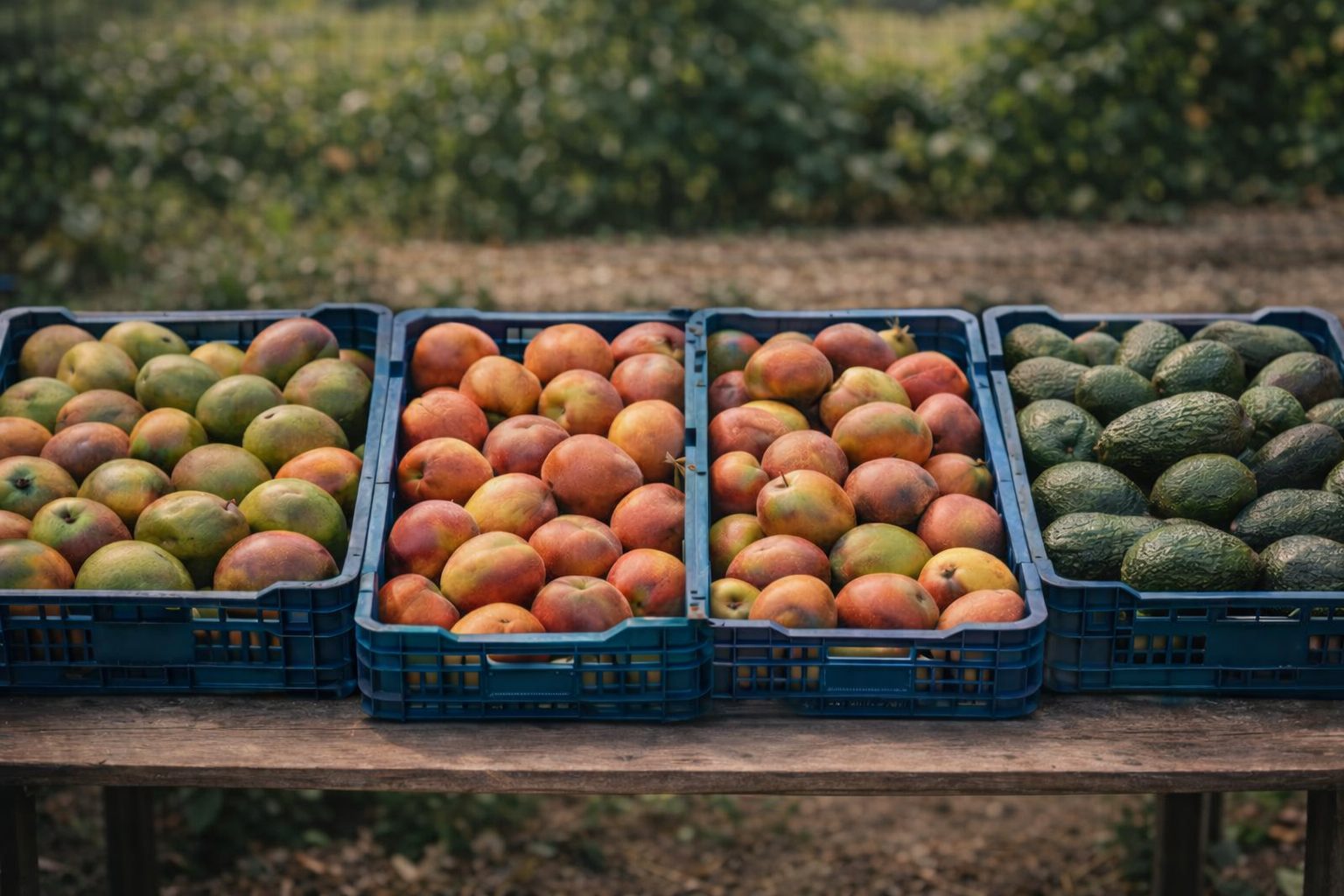
Temperature and humidity shifts affect all systems, but the F-751 shows lower drift across changing conditions. This is especially noticeable when measuring fruit coming straight from cold storage.
Data Consistency Across Days
Repeatability under pressure is not just about same day results. F-751 users often report stable trends across days and weeks without frequent recalibration. Sunforest and Rubens systems may require more frequent checks to maintain confidence.
Why Repeatability Favors the F-751 in Commercial Settings?
In commercial fruit operations, data repeatability under pressure is about trust. Managers need to know that today’s numbers mean the same thing as yesterday’s.
The F-751’s strength lies in its balance of robust hardware, field proven calibrations, and streamlined workflows.
Rather than chasing perfect lab conditions, the F-751 accepts the reality of fruit variability and designs around it. This philosophy aligns well with packhouses, exporters, and growers who cannot pause operations to fine tune instruments.
Sunforest and Rubens both offer valuable technologies, particularly in research or niche applications. However, when the pressure is on and decisions must be made fast, the F-751 tends to deliver more consistent outcomes across real fruit lots.
Ending Note
Data repeatability under pressure is the true test of fruit quality technology.
In side by side use on real fruit lots, the F-751 stands out for its ability to maintain consistent results despite variability in fruit, environment, and operators.
While Sunforest and Rubens systems have strengths, they often require tighter controls to achieve the same level of repeatability.
If your operation depends on confident decisions made at speed, it is worth evaluating how your current tools perform under pressure.
Felix Instruments continues to invest in practical, field ready solutions that prioritize repeatability where it matters most. Visit Felix Instruments to learn more about the F-751 and see how it can strengthen confidence in your fruit quality data.
Frequently Asked Questions
How Is Data Repeatability Under Pressure Different From Accuracy?
Accuracy measures how close a result is to a true value, while repeatability under pressure measures how consistent results remain across changing conditions, users, and time..
Is Repeatability More Important Than Absolute Precision in Commercial Settings?
In most commercial workflows, repeatability is more valuable because consistent trends drive better decisions than isolated precise measurements that cannot be reproduced.
Related Products
- F-751 Grape Quality Meter
- Custom Model Building
- F-910 AccuStore
- F-751 Melon Quality Meter
- F-751 Kiwifruit Quality Meter
- F-750 Produce Quality Meter
- F-751 Avocado Quality Meter
- F-751 Mango Quality Meter
- F-9XXDK Dynamic Sampling Kit
- F-900 Portable Ethylene Analyzer
- F-950 Three Gas Analyzer
- F-920 Check It! Gas Analyzer
- F-960 Ripen It! Gas Analyzer
- F-940 Store It! Gas Analyzer
Most Popular Articles
- Spectrophotometry in 2023
- NIR Applications in Agriculture – Everything…
- The Importance of Food Quality Testing
- The 5 Most Important Parameters in Produce Quality Control
- Melon Fruit: Quality, Production & Physiology
- Fruit Respiration Impact on Fruit Quality
- Guide to Fresh Fruit Quality Control
- Liquid Spectrophotometry & Food Industry Applications
- Ethylene (C2H4) – Ripening, Crops & Agriculture
- Understanding Chemometrics for NIR Spectroscopy
Related Reading