Truth About F-Series Devices and Reference Methods: What Correlation Really Means

Scott Trimble

March 10, 2026 at 4:25 pm | Updated March 10, 2026 at 4:25 pm | 5 min read
When people talk about correlation in the context of a produce quality meter, the conversation often gets simplified. A device is tested against a lab reference method. A number comes back. If it is high, the instrument is considered accurate. If it is lower, doubts start to creep in. But correlation is more nuanced than that. Understanding what correlation really means is essential when evaluating the Felix Instruments F-Series and comparing them to traditional reference methods.
Let’s break down what correlation actually tells you and why the F-Series stands up in real-world applications.
What Is a Reference Method?
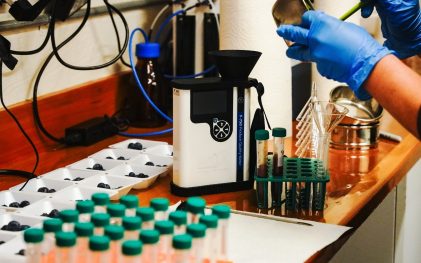
In food science and postharvest research, reference methods are typically destructive lab procedures. These include:
Subscribe to the Felix instruments Weekly article series.
By submitting this form, you are consenting to receive marketing emails from: . You can revoke your consent to receive emails at any time by using the SafeUnsubscribe® link, found at the bottom of every email. Emails are serviced by Constant Contact
-
Dry matter testing by oven drying
-
Brix measurement using refractometers
-
Firmness testing with penetrometers
-
Gas chromatography for ethylene analysis
These methods are well established. They are trusted because they have been used for decades. However, they are also slow, labor-intensive, and destructive. Once you test the fruit, it cannot go back into the supply chain.
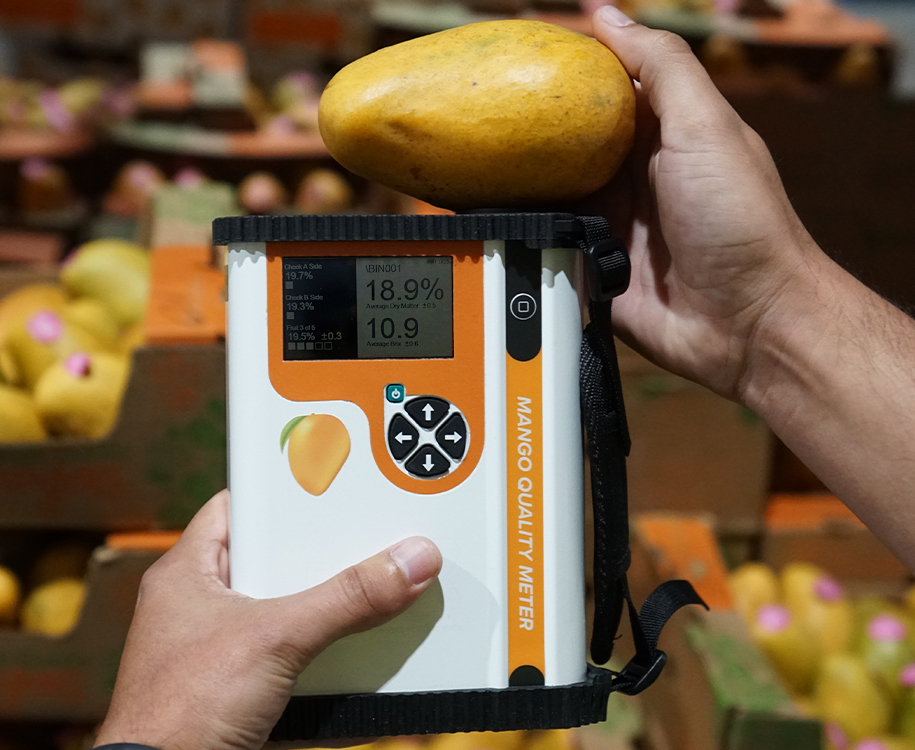
A produce quality meter like the F-750 or F-751 series from Felix Instruments approaches the problem differently. It uses near-infrared spectroscopy to estimate internal quality parameters without cutting the fruit. That shift from destructive chemistry to optical sensing is where correlation becomes important.
Understanding Correlation in Practical Terms
Correlation is usually expressed as an R or R squared value. It describes how closely the readings from a handheld instrument match the values obtained from a reference method.
Here is what correlation does and does not mean:
-
It measures how well two datasets move together
-
It does not mean the device is replacing chemistry with chemistry
-
It does not guarantee perfect agreement on every single sample
-
It does reflect how reliably trends and relative differences are captured
For example, the F-750 Produce Quality Meter and crop-specific devices like the F-751 Avocado, Mango, Grape, and Kiwi Quality Meters are calibrated against large datasets of lab-analyzed samples. The goal is to model dry matter, Brix, or other attributes as closely as possible to the lab values.
In practice, what matters most is consistency and decision-making power. If a produce quality meter reliably separates low dry matter fruit from high dry matter fruit in alignment with lab tests, it becomes a powerful operational tool.
The F-Series Approach to Calibration
Felix Instruments built the F-Series around strong calibration models. Instead of relying on a single dataset, models are developed from diverse fruit samples across growing regions, seasons, and maturity stages.

This approach improves robustness. It ensures that when you scan fruit in different environments, the predictions remain stable.
Key advantages of the F-Series calibration strategy include:
-
Large, diverse calibration datasets
-
Ongoing model refinement
-
Crop-specific optimization for targeted devices like F-751 Avocado or F-751 Mango
-
Field validation alongside lab testing
Competitors often promote a single high correlation number without context. The F-Series devices focus on usable performance in commercial settings. That distinction matters.
Non-Destructive Testing Changes the Game
Traditional reference methods require sample destruction. That limits sampling frequency. In contrast, a handheld produce quality meter allows repeated, non-destructive measurements.
This changes how quality programs operate:
-
More samples can be tested per lot
-
Maturity mapping can happen directly in orchards
-
Incoming fruit can be screened without loss
-
Storage performance can be monitored over time
Even if correlation is not perfect to the second decimal place, the increased sampling density often improves overall decision accuracy. You get more data points. That reduces risk.
Felix Instruments designed the F-750 and F-751 platforms to be portable, battery-powered, and easy to use in real production environments. This is where correlation meets practicality.
Gas Analysis and Reference Comparisons
The conversation about correlation also applies to ethylene and gas analysis devices in the Felix line.
Instruments like the F-900 Portable Ethylene Analyzer and the F-960 Ripen-It Gas Analyzer are often compared to gas chromatography systems. Gas chromatography is considered the reference standard. It is highly accurate but expensive and lab-bound.
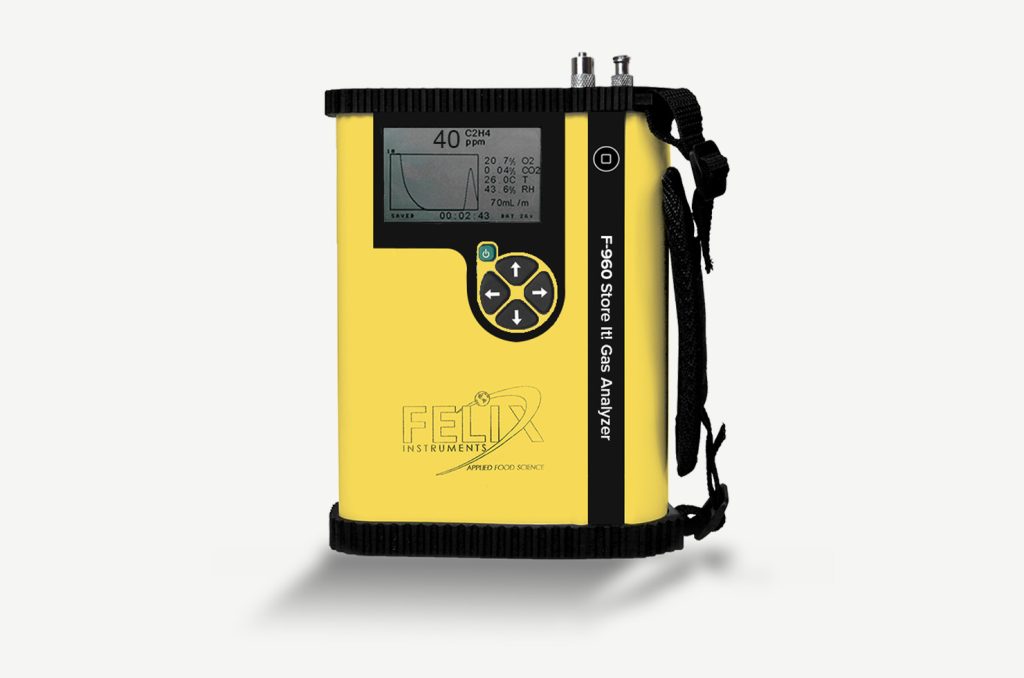
Felix gas analyzers are designed for field and storage use. They deliver:
-
Sensitive ethylene detection at low concentrations
-
Real-time data
-
Portability
-
Lower operating complexity
Correlation to gas chromatography is critical. But so is accessibility. A device that matches lab results closely while being usable in a storage room or ripening facility provides operational value that a lab instrument cannot.
Again, correlation supports trust, but usability drives adoption.
What High Correlation Really Means for Users
For a produce quality meter, high correlation means:
-
The instrument tracks lab results consistently
-
Sorting thresholds can be aligned with established standards
-
Growers and packers can make confident harvest decisions
-
Quality assurance programs can rely on objective metrics
It does not mean:
-
Every single fruit will match lab values perfectly
-
Environmental variability disappears
-
Calibration never needs updating
All predictive technologies depend on model quality and proper use. Felix Instruments addresses this through training, technical support, and ongoing calibration refinement.
Real-World Decision Making Versus Lab Precision
There is an important distinction between analytical precision and operational decision-making.
In a lab, you may measure dry matter to a fraction of a percent. In the field, you need to know whether fruit meets a commercial threshold.
For example:
-
Is avocado dry matter above the export minimum?
-
Is mango Brix high enough for premium classification?
-
Is ethylene concentration appropriate for ripening control?
A produce quality meter that consistently answers these questions in alignment with lab benchmarks delivers practical value. The F-Series devices are engineered with that outcome in mind.
Why the F-Series Stands Apart
Felix Instruments focuses on purpose-built devices rather than generic spectroscopy platforms. Each F-751 model is optimized for a specific commodity. That targeted approach improves model accuracy and user experience.
Key differentiators include:
-
Commodity-specific calibrations
-
Durable, field-ready design
-
Intuitive user interface
-
Data storage and export capabilities
-
Integration into existing quality workflows
While competitors may offer multi-crop claims with limited calibration depth, Felix prioritizes validated performance for defined use cases.
The result is a produce quality meter that is not just correlated in theory but trusted in commercial practice.
Interpreting Correlation Responsibly
When evaluating any instrument, ask the right questions:
-
How large was the calibration dataset?
-
Were samples collected across seasons and regions?
-
Was independent validation performed?
-
How does the device perform in real operational settings?
Correlation numbers without context can mislead. A slightly lower correlation from a robust, field-tested model may outperform a higher number from a narrow dataset. Felix Instruments emphasizes transparency and performance validation. That builds long-term confidence rather than short-term marketing claims.
The Bottom Line on Correlation
Correlation is a tool for validation, not the sole definition of performance. In the case of the F-Series, strong correlation to reference methods confirms that non-destructive optical measurement can reliably estimate key quality attributes.
More importantly, the produce quality meter concept shifts quality control from reactive lab testing to proactive, real-time decision-making.
That is the real advantage.
Ready to Improve Your Quality Program?
If you are relying solely on destructive lab testing, it may be time to expand your toolkit. Felix Instruments offers a full range of produce quality meter and gas analysis solutions designed for field, storage, and ripening applications.
Explore the F-Series devices and see how non-destructive measurement with strong correlation to reference methods can improve consistency, reduce waste, and increase confidence in your quality decisions.
Visit Felix Instruments to learn more or request a demo tailored to your commodity and workflow.
Related Products
Most Popular Articles
- Spectrophotometry in 2023
- The Importance of Food Quality Testing
- NIR Applications in Agriculture – Everything…
- The 5 Most Important Parameters in Produce Quality Control
- Melon Fruit: Quality, Production & Physiology
- Fruit Respiration Impact on Fruit Quality
- Guide to Fresh Fruit Quality Control
- Liquid Spectrophotometry & Food Industry Applications
- Ethylene (C2H4) – Ripening, Crops & Agriculture
- Active Packaging: What it is and why it’s important