Can I Build My Own NIR Model, or Should I Use Felix’s built in models?

Scott Trimble

May 5, 2026 at 5:22 pm | Updated May 5, 2026 at 5:22 pm | 5 min read
An NIR model is only as useful as the data behind it. That is the main point to keep in mind when deciding whether to build your own calibration or use Felix Instruments’ built-in models. In fresh produce, a good NIR model has to deal with cultivar variation, growing region, harvest timing, dry matter range, fruit temperature, skin differences, and postharvest handling. The instrument matters, but the model is where the prediction actually becomes practical.
For most commercial teams, Felix’s built-in models are the better starting point.
For research teams, breeders, and groups working with unusual commodities or new traits, building a custom NIR model can make sense. The best answer depends on what you need to measure, how much reference data you can collect, and how quickly you need reliable results.
Subscribe to receive our monthly round-up of articles.
What an NIR Model Actually Does
Near infrared spectroscopy does not directly “see” dry matter, Brix, acidity, or internal color in the same way a lab test does. The instrument collects spectral information from the fruit, then a calibration model links that spectral pattern to reference measurements. That relationship becomes the NIR model.
This is why model quality matters so much. A weak model can make a good instrument look inconsistent. A strong model, built from useful reference data, can turn a handheld device into a practical decision tool for harvest timing, maturity sorting, receiving inspections, and quality control.
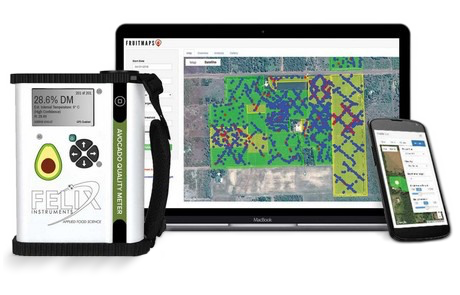
Felix’s F-750 Produce Quality Meter is positioned as a portable NIR platform for applying predictive models across produce commodities, while the F-751 line offers crop-specific meters for fruit such as avocado, mango, grape, and kiwifruit.
When Felix’s Built-In Models Make the Most Sense
Built-in models are the right choice when your crop and trait already match a Felix application. For example, Felix offers F-751 meters focused on specific produce categories, including avocado, mango, grape, and kiwifruit. These instruments are designed for users who want practical measurements without starting from scratch.
This matters in commercial settings. A packinghouse, exporter, importer, or ripening operation usually does not want to spend a season building a calibration before making decisions. They need a tool that can start producing useful readings quickly.
Built-in Felix models are especially useful when you need to:
- Measure common quality traits such as dry matter or Brix
- Standardize testing across field, packing, storage, and receiving teams
- Reduce destructive testing volume
- Train staff quickly
- Make repeated decisions across many fruit lots
- Avoid the cost and time of model development
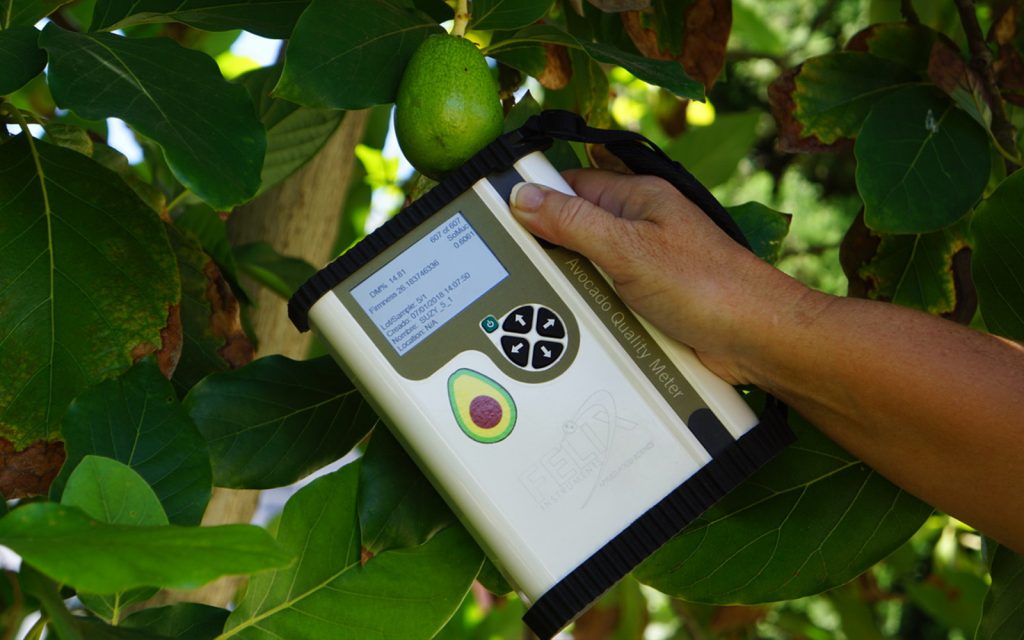
The F-751 Avocado Quality Meter, for instance, is designed to quickly and non-destructively estimate dry matter in Hass avocados, supporting harvest planning, incoming lot checks, cold storage monitoring, ripening rooms, and distribution centers.
Why Built-In Models Often Beat Starting From Zero
Building an NIR model sounds simple at first. Scan fruit, run lab tests, match the numbers, and create a calibration. In practice, it takes discipline.
You need a large enough sample set. You need fruit that covers the full expected range of maturity and quality. You need consistent destructive reference testing. You need to account for season, region, cultivar, instrument handling, and outliers. Then you need to validate the model against fruit that was not used to build it.
That is a lot of work before the model becomes trustworthy.
Felix’s advantage is that its built-in models are designed around real produce applications, not generic lab demonstrations. Crop-specific models reduce the burden on users who do not have the time, staff, or reference testing program to build a model themselves. Felix also highlights calibration libraries and crop-specific options as key strengths of its platform.
This is where Felix compares well against many competing handheld NIR options. Some systems rely heavily on the user to create or tune models. That can work for a research lab, but it is less attractive for a commercial operation trying to make daily quality decisions. A built-in model gives teams a more direct path from scanning fruit to using the result.
When You Should Build Your Own NIR Model
Custom model building is still valuable. In fact, it is one of the reasons the F-750 platform is useful for advanced users. If your team works with a new commodity, a niche cultivar, a local growing condition, or a trait not covered by an existing model, building your own NIR model may be the correct path.
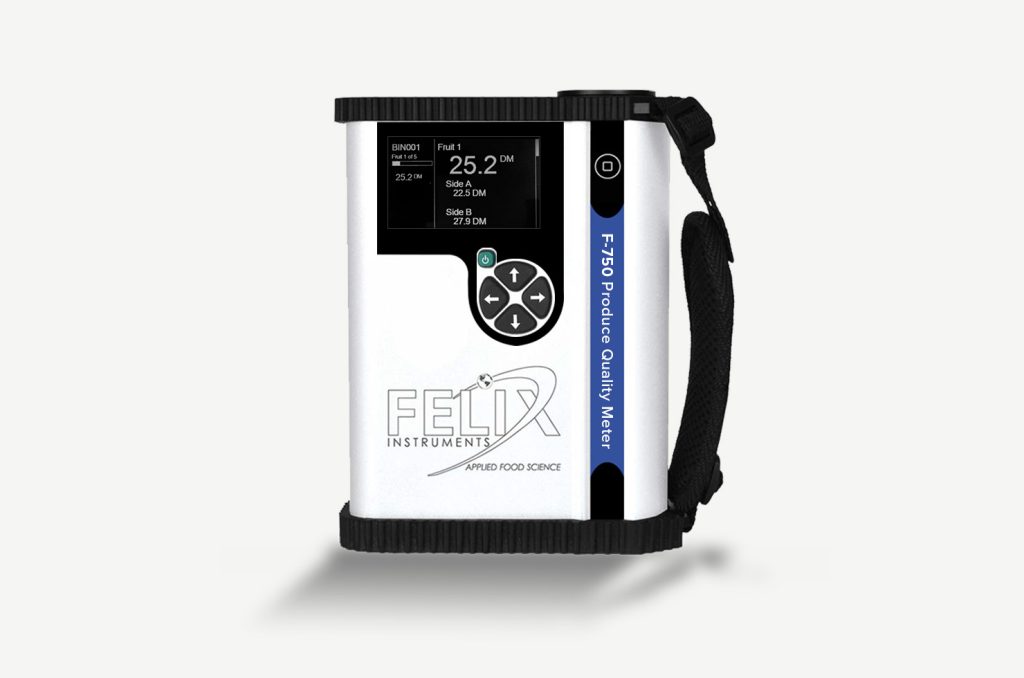
Custom models are also common in breeding and research. Breeders may want to screen large populations for internal traits without destroying every sample. Researchers may want to test whether NIR can estimate a new parameter. In these cases, the flexibility to create and deploy a custom model is important.
Felix describes the F-750 Produce Quality Meter and AppBuilder software as a solution for creating customizable predictive models, deploying them on a handheld device, and managing data with transparency.
A custom NIR model is worth considering when:
- Your crop is not covered by a current built-in model
- Your variety behaves differently from standard commercial fruit
- Your region has unusual growing conditions
- You need to predict a specialized internal trait
- You have access to high-quality lab reference data
- You have enough samples to build and validate the calibration properly
The key phrase is “properly.” A custom model should not be built from a handful of fruit collected on one day. That can create a model that looks good in a spreadsheet but fails in real use.
The Practical Decision: Built-In First, Custom When Needed
For most teams, the practical path is to start with Felix’s built-in models when they match the crop and quality trait. This gives you a working baseline and lets your team build confidence with the instrument.
From there, you can decide whether custom model building is necessary. Some users may find that the built-in model already fits their operation. Others may discover they need a local adjustment, a new calibration, or a separate model for a specific cultivar or supply chain.
This staged approach is often better than jumping straight into custom development. It lowers risk. It also helps your team learn how much variation exists in your fruit before investing time into a new NIR model.
Built-In Models Help Teams Standardize Decisions
One of the biggest benefits of Felix’s built-in models is operational consistency. In produce quality work, consistency matters as much as technical accuracy.
A destructive dry matter test may be accurate, but it is slow and limited by sample size. A handheld NIR meter lets users scan more fruit, more often, and at more points in the supply chain. The value is not just one reading. It is the ability to build a clearer picture of lot variability.
This is especially useful when teams are making decisions about harvest windows, storage programs, ripening schedules, and shipment quality. Instead of relying on a few cut tests or subjective firmness checks, teams can add non-destructive internal quality data to the conversation.
So, Which Option Is Better?
Use Felix’s built-in models when you want speed, repeatability, and a proven workflow for supported crops. Build your own NIR model when your application falls outside the existing model library or when your research requires a specialized calibration.
In many cases, the strongest answer is not either-or.
Felix gives users a practical way to do both. The F-751 crop-specific meters serve commercial users who want ready-to-use measurements. The F-750 gives researchers and advanced teams more flexibility for broader model development.
That flexibility is the real advantage. You can start with a supported Felix model, collect better data, learn your fruit, and move toward custom calibration only when there is a clear reason to do so.
Takeaway
A strong NIR model can save time, reduce destructive testing, and help produce teams make better decisions. But building one from scratch takes data, validation, and technical care. For most commercial users, Felix’s built-in models are the smarter first step. For researchers and specialized applications, custom model building with the F-750 can open the door to new measurements and new commodities.
To find the right Felix Instruments NIR solution for your crop, contact Felix Instruments and request guidance on whether a built-in model or custom model building workflow is the best fit for your operation.
Related Products
Most Popular Articles
- Spectrophotometry in 2023
- NIR Applications in Agriculture – Everything…
- The Importance of Food Quality Testing
- The 5 Most Important Parameters in Produce Quality Control
- Melon Fruit: Quality, Production & Physiology
- Fruit Respiration Impact on Fruit Quality
- Guide to Fresh Fruit Quality Control
- Liquid Spectrophotometry & Food Industry Applications
- Ethylene (C2H4) – Ripening, Crops & Agriculture
- Understanding Chemometrics for NIR Spectroscopy