How Did Tech Improve Postharvest Fresh Produce Quality in 2025?

Dr. Vijayalaxmi Kinhal

January 13, 2026 at 5:53 pm | Updated January 13, 2026 at 6:00 pm | 11 min read
- Novel technologies, such as air- or oxygen-micro-nano bubble water and ozone, are under focus as safe and environmentally friendly alternatives to chlorine for postharvest disinfection of fresh produce.
- Research on the application of peptide hormones to preserve postharvest horticultural quality, which began a few years ago, intensified in 2025.
- Another emerging field is the use of beneficial plant-microbe interactions to delay ripening and senescence, control diseases and spoilage pathogens, and improve produce quality.
- Scientists also investigate the advantages of using non-destructive technology in research.
Consumer demand for safe, healthy, and high-quality fresh produce has been driving research directions for many years. 2025 was no different. Practically all research on the preservation of postharvest fresh produce quality has focused on finding eco-friendly, chemical-free alternatives to existing technologies to extend shelf life. Several exciting new trends and technologies, while still in their formative stages, have come into focus in 2025. Read this article to find out some of the technologies that will hopefully see widespread applications.
-
Air and Oxygen Micro-nano Bubble Waters for Disease Control in Postharvest Guava Fruit
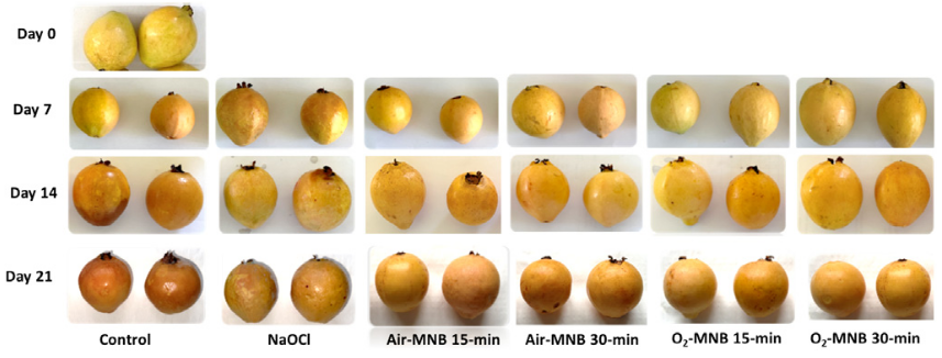
Figure 1.: “Pictures describing the visual appearance or color changes for ‘Fan Retief’ guavas treated with sodium hypochlorite and micro-nano bubble water and stored at 13 °C for 21 days,” Malahlela et al. (2025). (Image credits: https://doi.org/10.1016/j.jfp.2024.100437)
Subscribe to the Felix instruments Weekly article series.
By submitting this form, you are consenting to receive marketing emails from: . You can revoke your consent to receive emails at any time by using the SafeUnsubscribe® link, found at the bottom of every email. Emails are serviced by Constant Contact
Tropical fruit guava (Psidium guajava L.) is highly perishable with a shelf life of only 3 to 4 days in ambient conditions and 14 days in cool storage. The disease anthracnose, caused by Colletotrichum gloeosporioides, leads to considerable losses during storage. Chlorine is used as a disinfectant but leads to microbial resistance, and its residues and byproducts are harmful to people on contact and when consumed. Micro-nano bubbles (MNBs) water is emerging as a new technology for fruit preservation.
The micronano bubbles are tiny water bubbles (200 nm to 30 µm) containing oxygen (O2), air, or some other gas. These micronano water bubbles are very stable and can persist for days. They also do not float like normal big bubbles and have a large surface area. MNBs are being considered as alternatives to chlorine in various industries for disinfection and cleaning. Although the potential antimicrobial effects of MNB in combination with other agents have been reported, its efficacy against Colletotrichum gloeosporioides has not been tested.
Experiment
So Malahlela et al. (2025) tested MNB with air and O2 against C. gloeosporioides (in vitro) compared to commercial sodium hypochlorite (NaOCl) treatments. They treated a Colletotrichum gloeosporioides suspension with air- or O2-MNB water for 30- or 60-min, with NaOCl, and with untreated (as control).
They also checked the results of in vivo tests, treating freshly harvested guava with O2- and air-MNB water for 15- or 30-min, NaOCl (standard practice), and tap water (control). All three treatments were packed and stored for 21 days at 13 °C, and checked for microbiological population and fruit quality attributes-skin color, flesh tissue strength, total soluble solids (TSS), titrable acidity (TA), and pH.
Results from transmission electron microscopy and confocal laser microscopy show that air-MNB treatment for 60 min led to the most significant reduction in the cell count of C. gloeosporioides compared to O2-MNB and NaOCl. All MNBs damaged the cell structures and hyphal morphology of fungal pathogens and disrupted cell membrane integrity, indicating that both oxygen and air micro‐nano bubble water can be effective antifungal agents against C. gloeosporioides.
Washing guava with air- or O2-MNB for 15 or 30 minutes was as effective as NaOCl in controlling aerobic mesophilic bacteria, yeasts, and molds, as revealed by microbial analysis. The MNBs significantly reduced the microbial load on the fruit skin by> 2 Log.
All air- or O2-MNB helps in preserving guava fruit quality at the end of 21 days of storage. They reduce color change and maintain a brighter peel without darkening, compared with NaOCl (Figure 1). The flesh strength/firmness at the end of storage was better in MNB-treated samples than in NaOCl- and control-treated samples, with the best results from a 15-minute air-MNB wash. TSS and pH increased until day seven. At the end of storage, O2‐air‐MNB 15 min- and MNB 30 min-treated fruits had the highest TA and lowest TSS, respectively, compared to the control. The results show that guava fruits do not undergo ripening or senescence when treated with MNBs.
Takeaway: The study demonstrated, for the first time, that O2 and air‐MNB can be effective antifungal treatments for decontaminating fresh guava against C. gloeosporioides and maintaining fruit quality.
-
Ozone as a Postharvest Treatment for Herb Quality
Fresh-cut leafy portions of coriander, celery, and parsley are used as culinary herbs, teas, and in the cosmetics and pharmaceutical industries. They are a significant segment of the food market. The herbs are also highly perishable and prone to microbial contamination, which chlorine treatments have so far controlled. However, chlorine disinfection is banned in many European countries due to possible carcinogenic chlorine derivatives.
Consumer awareness for healthy, safe, and quality food is driving the search for alternatives. One of these alternatives is ozone, which has been declared as GRAS (Generally Recognized as Safe) and approved by the FDA for food preservation. Ozone has potent antimicrobial and antiseptic properties and is also suitable for removing mycotoxins and pesticides. It is safe and environmentally friendly as it decomposes to oxygen and water.
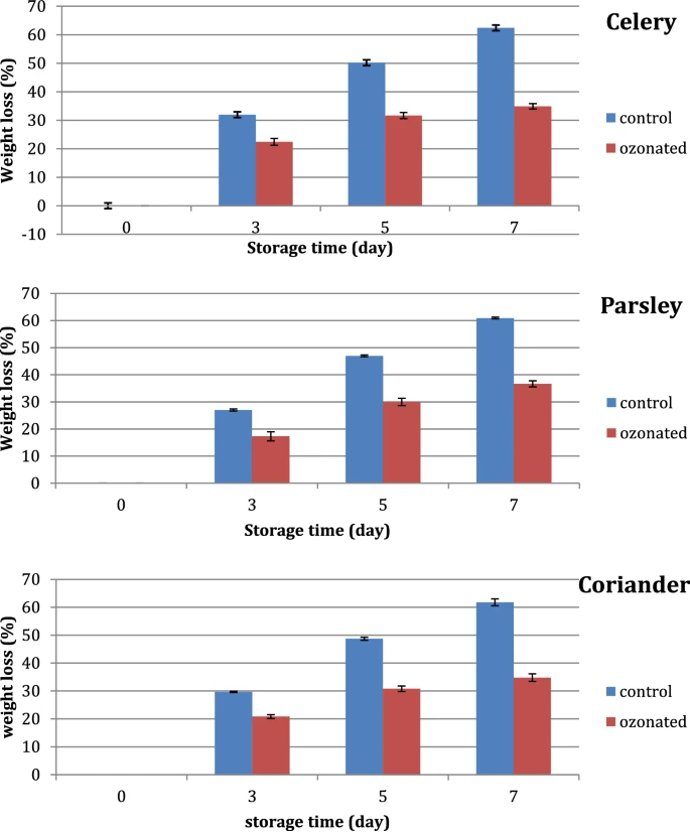
Figure 2. “Weight loss of celery, parsley, and coriander herbal plants as affected by ozone
Treatment,” Mohammad et al. (2025). (Image credits: https://link.springer.com/article/10.1007/s11694-025-03255-0)
Experiment
Since very few studies have examined the impact of ozone on the shelf life of fresh-cut herbs, Mohammad et al. (2025) investigated the effect of the gas on postharvest physicochemical parameters, including weight loss, color, pigments, phenolic content, volatile compounds, and antioxidant activity. They also tested the gas’s antimicrobial effects on fresh-cut herbs using microbiological indices.
The fresh-cut coriander, celery, and parsley were divided into two sets: a control and one treated with 25 ppm ozone for 20 min, then stored at ambient temperature for 7 days.
Weight loss was measured on the 0th, 3rd, 5th, and 7th days, while other evaluations were conducted at the end of storage.
Ozone treatment significantly reduced weight loss compared to the control throughout storage, as shown in Figure 2. However, ozone did not significantly improve color compared to the control.
Ozone treatment had a positive effect on phenolic contents and antioxidant activity in treated plants. Ozone treatment increased phenolic content and antioxidant activity of celery by 25.86% and 77.76%, coriander by 10.36% and 37.53%, and parsley by 4.71% and 16.21%, respectively.
Ozone altered the aromatic profiles of all three tested herbs because essential oils are olefinic compounds susceptible to oxidation.
- In celery, levels of 8 compounds were reduced, concentrations of 3 compounds increased, and there was a formation of five new compounds compared to the control.
- In coriander, concentrations of 7 compounds decreased, 10 were improved, and four were newly formed.
- In parsley, five new compounds were formed, six compound levels were reduced, and six other compounds were increased.
Microbiological indices showed ozone could reduce bacterial load by “2.5, 1.7, and 2.0 log cycles and fungal counts by 1.49, 1.54, and 1.1 log cycles for celery, coriander, and parsley,” respectively.
Takeaway: The study demonstrated that ozone can reduce microbial contamination and spoilage in celery, coriander, and parsley. The treatment prevented weight loss and improved phenolic levels and antioxidant activity. So, it is a viable alternative to chlorine treatment for fresh-cut herbs to prolong shelf life.
-
Peptide Hormones for Postharvest Horticultural Produce
Loss of horticultural produce is very high due to its perishable nature, posing a global challenge to food security. Seasonality and regionality also compound postharvest storage, transport, and shelf-life issues in meeting consumer satisfaction.
Several chemical, physical, and biological methods preserve the quality of postharvest fresh produce and extend its shelf life. However, chemicals are often unsafe and cause environmental pollution, and many physical methods are energy-intensive and GHG emitters. Efficient, safe, cost-effective, and environmentally friendly alternative technologies are needed.
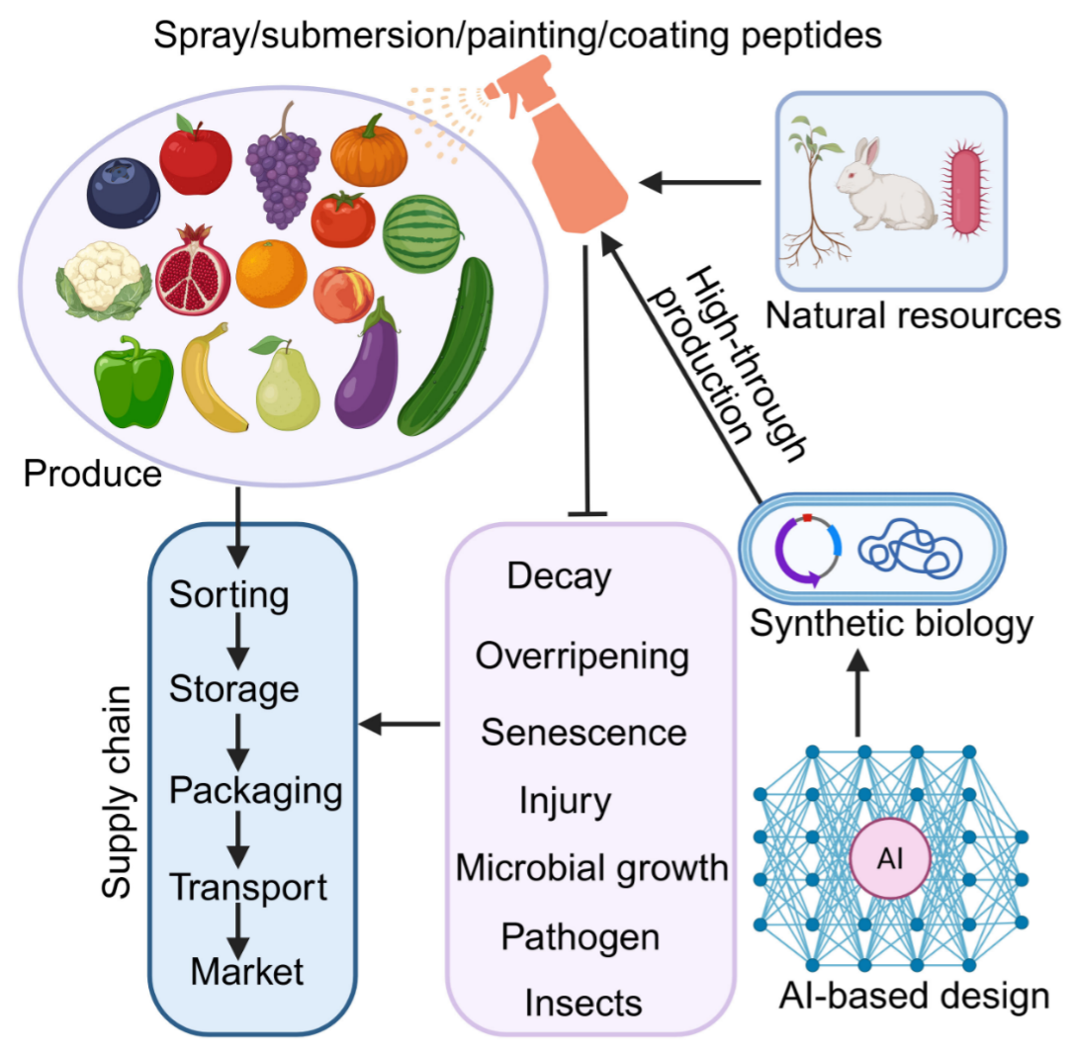
Figure 3: “A simplified model of the postharvest preservation and quality control of horticultural produce.by peptide hormones, either naturally sourced or chemically synthesized via artificial intelligence and synthetic biology,” Niu et al. (2025). (Image credits: doi: 10.3389/fpls.2025.1700360)
Review
The peptide hormones are being tested across diverse industries, including cosmetics, food preservation, medicine, healthcare, animal nutrition, and plant growth and defense.
Niu et al. (2025) summarize research, initiated around 2022, on the application of small peptides for post-harvest management to evaluate the efficacy of this novel technology. Small peptides are short chains of 2-100 amino acids and are classified as conventional and non-conventional peptides.
Currently, peptide hormones, which are non-conventional peptides, are used in postharvest management, including ripening, for their antimicrobial, antioxidant, and protein-protein interaction-regulating actions, as well as for their physical barrier properties.
- Peptide hormones regulate plant plasticity under abiotic and biotic stress and could be used to mitigate chilling injury and pathogen attacks.
- Peptide hormones play a role in ethylene production, so they can be used to delay ripening and postharvest senescence.
This will reduce postharvest deterioration of fresh produce and improve ROI.
Non-conventional peptides have versatile functionality, structural diversity, high specificity, complex receptor interactions, and membrane permeability. They are safe for people and the environment, as they are low-toxic and biodegradable.
The abundant plant sources of the peptide would make production cost-effective and ensure availability, making conventional peptides ideal candidates for extending the shelf life and quality of postharvest fresh produce in the supply chain (see Figure 3).
The current challenges in peptide hormone applications are poor stability, inefficient tissue delivery, and limited bioavailability. Moreover, the current production costs are high. So widespread applications require further research and development.
Takeaway: Plant peptide hormones can be innovative tools for inhibiting overripening, senescence, microbial growth, pathogen attacks, pest infestations, and physical damage to extend the shelf life and nutritional quality of postharvest fresh produce.
-
Interaction of Harvest Stage, Storage Time, and Shelf Life Influences Granny Smith Apple Quality
Apples (Malus domestica Borkh.) are the most-consumed and economically important fruit globally. Apples are stored in cold or controlled-atmosphere facilities to ensure consumer satisfaction with quality and year-round demand. Granny Smith is a late-maturing cultivar originating from Australia. It has a distinct green peel, taste, and juiciness. Granny Smiths are suitable for long-term storage due to their high acidity and firmness, low ethylene production, and thick, smooth skin. Premature harvesting makes it prone to superficial scalding because the optimal harvest date (OHD), which is physiological maturity for apples, is challenging to determine due to overlapping ripening stages.
Experiment
So, Sredojevic et al. (2025) aimed to evaluate the effects of harvest maturity, cold storage duration, and shelf life on Granny Smith quality to optimize postharvest management and meet consumer acceptability (see Figure 4).
The apples were harvested from a Serbian orchard that was given conventional fertilizers and drip irrigation. The fruit samples were harvested at three stages: unripe (10 days before OHD), ripe (optimal date), and overripe (10 days after OHD) as determined by the starch test or Streif Index. These apples were split into three further groups, and one set was stored at room temperature, while the other two were stored at +1 °C and 95% relative humidity for two and four months, respectively. The shelf life was 0, 5, 10, and 15 days after removal from storage.
Fruit parameters, firmness, soluble solids content (SSC), total acidity (TA), and pH, and starch pattern, were determined to estimate maturity indices, and peel color, browning index, and yellow index were used to check for superficial scalds, using instrumental methods. Raman spectroscopy was used to evaluate tissue structure.
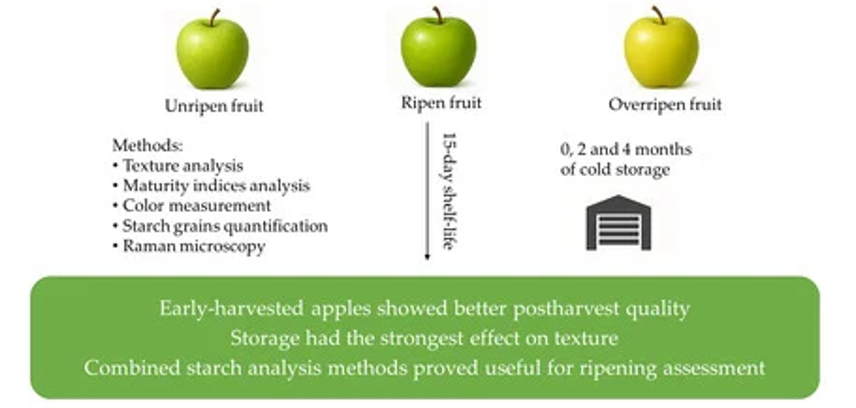
Figure 4: Graphical abstract of the experiment by Sredojevic et al. (2025). (Image credits: https://doi.org/10.3390/horticulturae11080868)
The fruit quality parameters were affected differently by the factors and their interactions.
All texture parameters, such as hardness cycle, deformation at hardness, deformation at target, adhesiveness, fracturability, springiness, gumminess, and chewiness, were influenced by at least one factor, but varied in magnitude. Storage duration had the most significant effect, followed by harvest maturity and shelf life, which had only a moderate influence on some parameters. The three-way interactions among factors had minimal impact on texture. Cohesiveness was the only texture parameter not affected by any of the tested factors.
Maturity indices of firmness, SSC, TA, pH, and starch content were affected more by the factors individually and in their interactions than by texture. SSC and pH were lowest in unripe fruits at 0 days of shelf life and increased gradually during storage and ripening. TA had the opposite trend, being highest in ripe fruit at the beginning of shelf life and decreasing as the fruit ripened during storage. Firmness was highest in fresh-harvested fruits (0 months) and was also high for unripe fruits at 0 days of shelf life, decreasing as fruit ripened and during storage.
The starch pattern index was affected by harvest stage, shelf life, and their interaction, with the lowest values in unripe fruits at day 0 of shelf life. The starch index increased over time, especially in late-harvested fruits. Raman spectral analysis confirmed a reduction in starch content during ripening and shelf life.
Harvest maturity and storage duration significantly affected color parameters (L*, a*, b*, browning index, yellow index, and total color difference). Shelf life and factor interactions influenced only a few color parameters.
Takeaway: The scientists concluded that harvest time and post-harvest handling critically influence apple quality. Apples harvested at early maturity demonstrate favorable postharvest quality. The study also shows that using non-destructive measurements provides real-time insights into fruit ripening and should be integrated into studies for developing postharvest management strategies for fruits.
-
Postharvest Beneficial Microbial Treatments
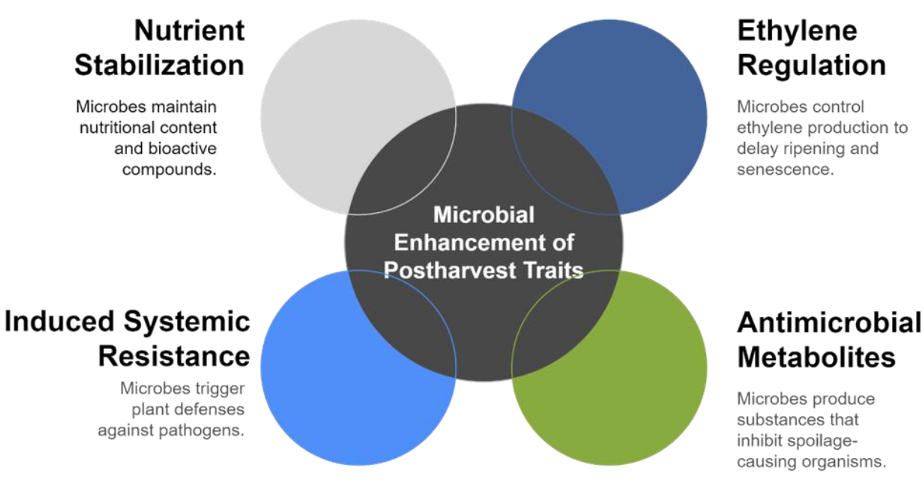
Figure 5. “Mechanisms of microbial action in postharvest enhancement,” Zaman et al. (2025). (Image credits: https://doi.org/10.3390/horticulturae11070732)
Postharvest losses of horticultural crops contribute to 30% of food loss due to spoilage, quality deterioration, and limited shelf life. This food loss also has an economic and environmental cost. Applications of beneficial microbes as postharvest treatments to improve fresh produce quality, first proposed in the 1970s and 1980s, are coming into focus now as a sustainable, chemical-free alternative.
Review
Zaman et al. (2025) reviewed the status quo of this new strategy, in which the plant microbiome can reduce spoilage, extend produce shelf life, and maintain nutritional quality.
The plant microbiome comprises various groups, such as endophytes, rhizobacteria, and epiphytes, that can suppress ethylene production, have antimicrobial action, reduce spoilage, modulate nutrient availability, and stabilize bioactive and nutritional compounds (see Figure 5). These microbes naturally live within plant tissues or on their surfaces.
Though beneficial microbes are known for their role as growth promoters, new applications envisage their use as postharvest treatments, including microbial coatings, biocontrol agents, sprays, fermentation, bacterial biofilms, and microbial washes. Some proposed uses of the beneficial microbes are as follows:
- Postharvest disease control by enhancing or introducing microbial antagonists to control pathogen numbers and by increasing systemic resistance.
- Leverage antimicrobial metabolites produced by beneficial organisms to inhibit spoilage-causing pathogens to improve quality.
- Suppress ethylene production to delay ripening and senescence.
Advanced technologies such as microbiomics, metabolomics, and transcriptomics can improve our understanding of plant-microbe interactions. Then, AI and machine learning technologies can be used to select optimal microbial strains for specific crops and to address supply chain issues, thereby developing innovative microbial interventions.
Takeaway: Microbial-based treatments offer exciting organic, sustainable postharvest solutions to satisfy rising consumer demand for organic, sustainable postharvest solutions while maintaining food safety, quality, and nutrition, without any environmental impact.
Non-Destructive Tools for Research
As pointed out by Sredojevic et al., non-destructive scientific tools can be a significant asset in research, as different technologies can identify and quantify physical, chemical, and biological changes in real time without destroying samples and enable tracking over long-term studies. Felix Instruments Applied Food Science has long been an industry standard trusted by the scientific community for its research needs. The firm offers near-infrared spectroscopy-based quality meters that can estimate external and internal color, SSC, TA, and dry matter, eliminating the need for various laboratory procedures and individual tools for each parameter. Its gas analyzers, which can measure ethylene, oxygen, and carbon dioxide, are helpful for storage, transport, and ripening facilities.
Contact us at Felix Instruments Applied Food Science to find out how we can help with your postharvest research needs.
Sources
- Malahlela, H. K., Belay, Z. A., Mphahlele, R. R., & Caleb, O. J. (2025). Efficacy of air and oxygen micro-nano bubble waters against Colletotrichum gloeosporioides and impacts on postharvest quality of ‘Fan Retief’ Guava fruit. Journal of Food Protection, 88(1), 100437.
- Mohammad, A. A., Salem, S. H., Amer, H. M., & Hussein, M. S. (2025). Ozone as a postharvest treatment to maintain the quality characteristics of fresh-cut plants. Journal of Food Measurement and Characterization, 1-12.
- Niu, J., Bao, H., Jiao, S., Han, H., and Wang, G. (2025). Harnessing peptide
hormones for postharvest preservation of horticultural produce. Front. Plant Sci. 16:1700360. doi: 10.3389/fpls.2025.1700360
- Sredojevic, A., Radivojevic, D., Levic, S. M., Fotiric Aksic, M., Milivojevic, J., Djordjevic, M., … & Djekic, I. (2025). Postharvest quality of Granny Smith apples: Interplay of harvest stage, storage duration, and shelf-life. Horticulturae, 11(8), 868.
- Zaman, W., Amin, A., Khalil, A. A. K., Akhtar, M. S., & Ali, S. (2025). Plant–Microbe Interactions for Improving Postharvest Shelf Life and Quality of Fresh Produce through Protective Mechanisms. Horticulturae, 11(7), 732. https://doi.org/10.3390/horticulturae11070732
Related Products
Most Popular Articles
- Spectrophotometry in 2023
- The Importance of Food Quality Testing
- NIR Applications in Agriculture – Everything…
- The 5 Most Important Parameters in Produce Quality Control
- Melon Fruit: Quality, Production & Physiology
- Fruit Respiration Impact on Fruit Quality
- Guide to Fresh Fruit Quality Control
- Liquid Spectrophotometry & Food Industry Applications
- Ethylene (C2H4) – Ripening, Crops & Agriculture
- Active Packaging: What it is and why it’s important