Latest technology
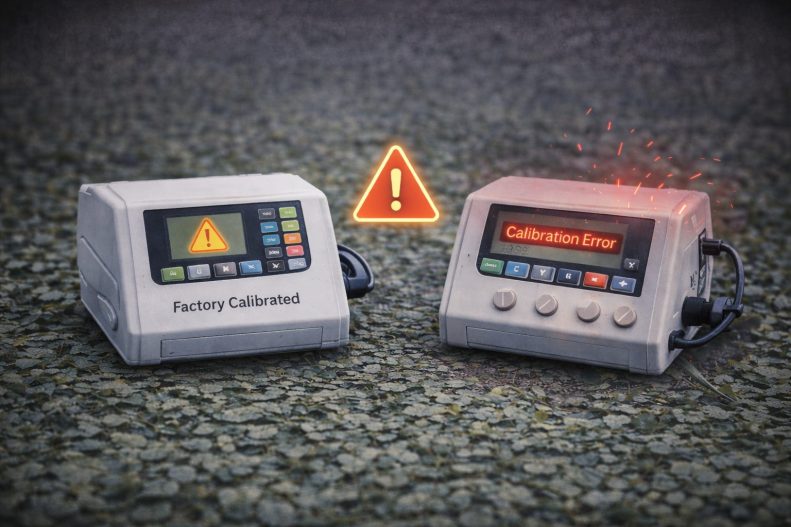
Truth About Calibration: Why Factory Settings Aren’t Forever
When you first power on a new instrument, it is easy to assume the factory settings will hold steady for years. In reality, gas analyzer calibration is not a one time event. It is an ongoing process that directly affects data integrity, storage decisions, and ultimately profitability. In postharvest environments where small shifts in oxygen,… Continue reading…




Additional reading

Truth About F-Series Devices and Reference Methods: What Correlation Really Means
When people talk about correlation in the context of a produce quality meter, the conversation often gets simplified. A device is tested against a lab reference method. A number comes back. If it is high, the instrument is considered accurate. If it is lower, doubts start to creep in. But correlation is more nuanced than… Continue reading…

Truth About NIR Light Penetration: Why Fruit Size Affects Accuracy
When people talk about NIR light penetration in produce testing, the conversation usually centers on calibration models and device performance. But fruit size often gets overlooked. In reality, NIR light penetration is directly influenced by fruit diameter, density, and internal structure. If you are using handheld NIR devices in the field or at intake, understanding… Continue reading…
Myth: Postharvest Gas Levels Don’t Change Overnight
Postharvest gas analysis is often treated as a routine checkpoint rather than a continuous priority. A common myth in storage and ripening operations is that gas levels remain stable overnight. Many teams assume that once a room is set and verified at the end of the day, oxygen, carbon dioxide, and ethylene concentrations will hold… Continue reading…

Truth About ‘Zero Calibration’ Sensors: Why Manual Verification Still Matters
Zero calibration sensors are often marketed as a way to simplify gas detection and eliminate routine calibration steps. On paper, the promise is attractive. A sensor that automatically maintains its baseline without manual intervention sounds like a clear operational win. In practice, though, zero calibration sensors do not remove the need for manual verification. For… Continue reading…

Truth About Fruit Firmness Predictions Using NIR
Fruit firmness predictions using NIR have become a widely discussed topic in postharvest research and commercial fruit handling. Growers, packers, and quality managers want reliable ways to estimate internal firmness without cutting fruit open. Near Infrared Spectroscopy (NIR) offers a practical approach to do exactly that. Instead of destructive testing, NIR allows operators to scan… Continue reading…
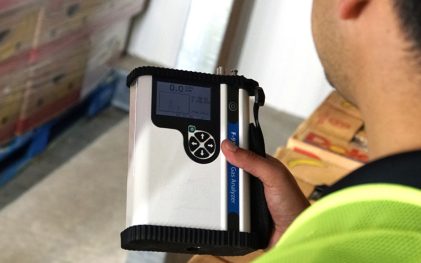
Myth: Only Big Growers Benefit from Gas Monitoring Systems
A common misconception in postharvest management is that gas monitoring systems are only useful for large commercial growers with massive storage facilities. In reality, gas monitoring systems are just as valuable for small and mid sized growers who want to protect product quality, reduce waste, and gain more control over storage and ripening conditions. Gas… Continue reading…