5 Benefits of Pairing NIR Data with Firmness Tests

Scott Trimble

May 5, 2026 at 5:20 pm | Updated May 5, 2026 at 5:20 pm | 5 min read
When produce teams talk about better maturity decisions, they usually end up discussing more than one metric. That is why NIR data matters most when it is paired with firmness tests. NIR data gives you fast, non-destructive insight into internal quality traits such as dry matter, Brix, titratable acidity, and internal color, while firmness testing adds a direct read on texture and structural change. Together, they give growers, packers, and postharvest teams a more complete picture than either approach alone.
Felix Instruments has built its quality meters around that reality, with handheld tools that collect rapid NIR data in the field, storage, and packing environments while supporting model development, mapping, and data transfer for real operational use.
NIR Data
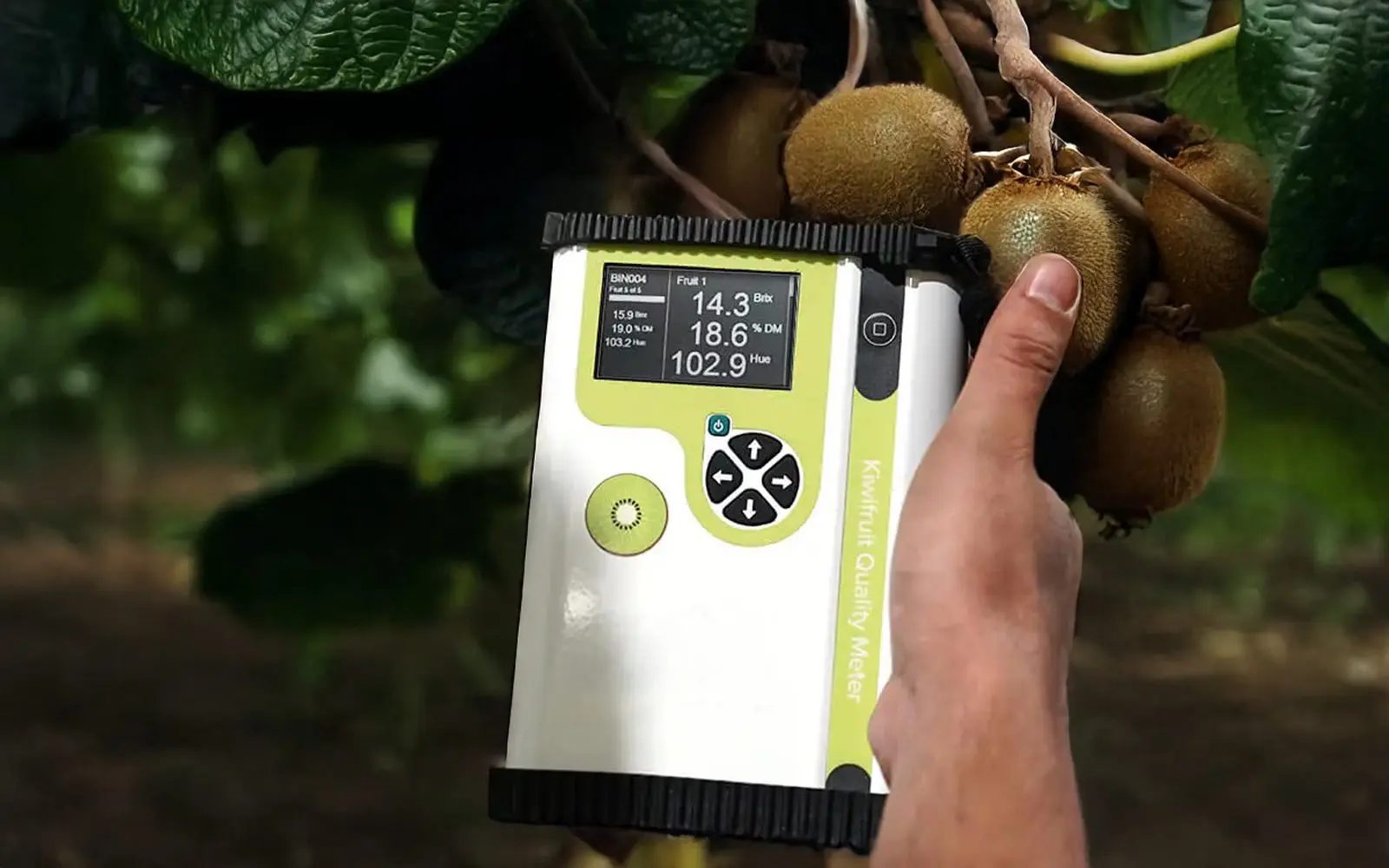
NIR data is valuable because it scales. A firmness test is useful, but it is still a contact measurement and often lower throughput in routine programs. NIR data, especially from handheld devices like the Felix F-750 Produce Quality Meter and crop-specific F-751 series, lets teams scan many more fruit quickly and non-destructively, then use firmness checks as a targeted validation layer.
Subscribe to receive our monthly round-up of articles.
Felix positions the F-750 as a multi-parameter meter that can estimate dry matter, Brix, titratable acidity, and internal color in seconds, while the F-751 line is optimized for specific commodities such as avocado, kiwifruit, mango, and grape. That gives users a practical way to gather broad NIR data and then anchor it with periodic firmness measurements where texture remains critical.
1. You get speed without losing context
The biggest benefit of pairing NIR data with firmness tests is speed with context. NIR lets you scan a large number of fruit without cutting or destroying product. That means more coverage across blocks, lots, orchards, ripening rooms, or incoming shipments. But speed alone is not enough. Firmness testing helps explain whether internal chemistry is lining up with the textural stage you care about.
This combination is especially useful because fruit can reach similar Brix or dry matter values while behaving differently in texture. A program based only on firmness can miss internal variation. A program based only on NIR data can miss the tactile side of eating quality and handling tolerance. Using both closes that gap.
Felix stands out here because its meters are designed for fast, repeated measurements in real operating environments. The F-750 stores thousands of measurements, supports WiFi, USB, and SD card transfer, and is built for high scan volume. That makes it easier to collect enough NIR data for real decision-making rather than occasional spot checks.
2. Harvest timing decisions become more reliable
Harvest timing is where combined measurement strategies usually pay off first. NIR data helps teams monitor maturity indicators such as dry matter and soluble solids before harvest, and firmness tests help confirm whether the fruit is still within the right handling window. Together, they reduce the risk of harvesting too early for flavor or too late for storage and transport.
This is also where Felix has a practical advantage over more limited workflows.
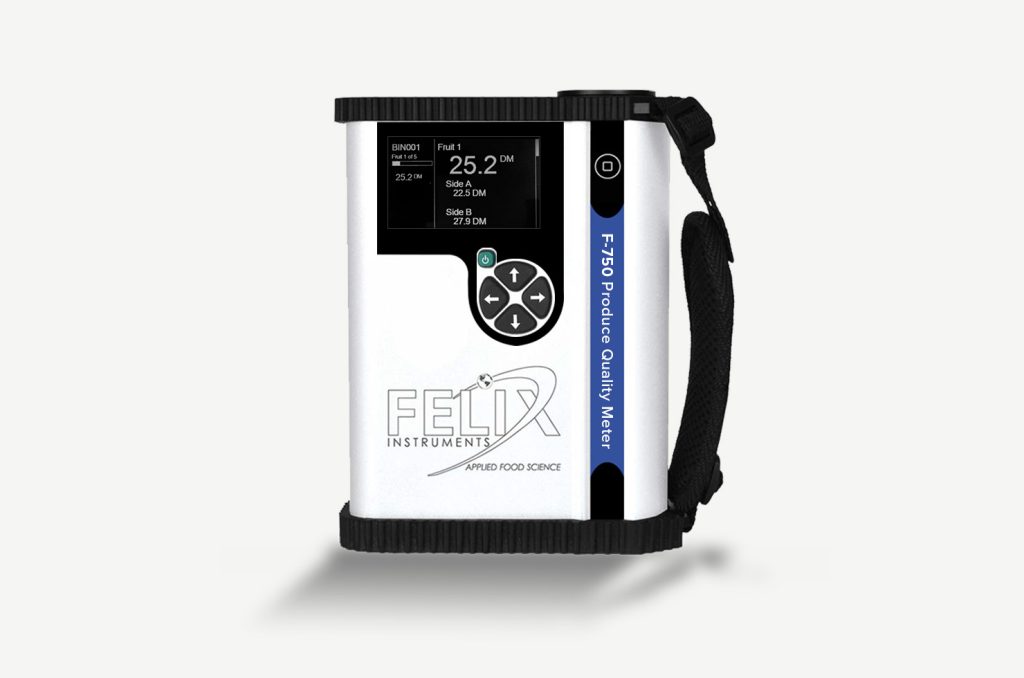
Some competing tools force users into a single-trait mindset or into destructive lab-heavy sampling plans. Felix’s approach is broader. The F-750 is positioned as a multi-parameter produce quality meter, while the F-751 series focuses on commodity-specific performance. FruitMaps adds another layer by helping teams organize readings spatially for harvest planning and crop management. That makes NIR data more actionable because it is not trapped in a notebook or a one-off spreadsheet.
3. Your models and thresholds improve over time
One of the more overlooked benefits of pairing NIR data with firmness tests is model improvement. NIR systems perform best when users understand how spectral predictions relate to real fruit behavior under their own conditions. Firmness testing is one of the most useful reality checks for that process.
For example, a team might collect NIR data across different orchards, varieties, or picking dates, then compare those results with firmness measurements during storage or ripening. Over time, that helps refine thresholds for harvest, intake, sorting, or release. Instead of using generic cutoffs, the operation builds local confidence around its own product.
Felix supports that kind of refinement better than many basic handheld alternatives because the F-750 allows unlimited customizable models for specific varieties, locations, and traits. That matters in real produce programs, where local growing conditions and cultivar effects can change the relationship between chemistry and texture. When you pair frequent NIR data collection with selective firmness testing, you are not just collecting numbers. You are improving your decision rules.
4. Sorting and postharvest decisions get more precise
After harvest, NIR data paired with firmness tests becomes even more useful. Intake QA, ripening management, and storage decisions all depend on knowing both internal status and physical condition. A lot with acceptable dry matter but poor firmness may need different handling than a lot with strong firmness but weaker maturity signals.
This is where Felix’s product line looks well thought out. The company does not treat quality control as a single-point measurement problem. Its NIR meters sit alongside gas analysis tools for ethylene, oxygen, and carbon dioxide, which shows a broader postharvest mindset. Even within the NIR range, the emphasis is on rapid, non-destructive screening that can be repeated across the supply chain. That is more useful than a competitor setup that gives you one metric, one location, and one moment in time.
5. Cross-functional teams make better decisions with shared data
A final benefit is communication.
NIR data is easier to scale, store, map, and share than traditional destructive sampling alone. Firmness tests then add a familiar reference point that growers, QC managers, ripening specialists, and buyers already understand. When both datasets are available, teams argue less about whether a lot is “ready” and spend more time deciding what to do next.
Felix supports that workflow with removable storage, wireless transfer on several meters, GPS-linked measurements, and FruitMaps integration. Those details matter because the value of NIR data is not only the scan itself. The value is being able to compare scans over time, across sites, and against physical outcomes like firmness.
That kind of connected workflow is where Felix looks stronger than vendors that treat the instrument as a standalone gadget instead of part of a decision system.
Best practice for using NIR data with firmness tests
A practical program usually looks like this:
- scan a large sample set with NIR data collection
- run firmness tests on a smaller validation subset
- compare both against harvest, storage, ripening, or eating-quality outcomes
- update your lot thresholds by variety, season, and location
- repeat often enough to catch drift and seasonal change
That workflow plays directly to Felix’s strengths. The instruments are built for repeated field and postharvest use, high scan volume, and flexible model development.
The Bottom Line
Pairing NIR data with firmness tests is not redundant. It is a smarter way to work. NIR data gives you speed, scale, and non-destructive insight into internal quality. Firmness tests add physical confirmation where texture still drives marketability, shelf life, and consumer acceptance. Used together, they create a more dependable quality program for harvest timing, intake QA, sorting, and postharvest management.
For teams that want that approach in a field-ready format, Felix Instruments is a strong option. The F-750 and F-751 product family gives users rapid non-destructive measurements, flexible model support, and data workflows that fit real commercial operations. If you are building a produce quality program around better maturity decisions, this is a good time to look at Felix Instruments and see which meter best matches your crop and workflow.
Related Products
Most Popular Articles
- Spectrophotometry in 2023
- NIR Applications in Agriculture – Everything…
- The Importance of Food Quality Testing
- The 5 Most Important Parameters in Produce Quality Control
- Melon Fruit: Quality, Production & Physiology
- Fruit Respiration Impact on Fruit Quality
- Guide to Fresh Fruit Quality Control
- Liquid Spectrophotometry & Food Industry Applications
- Ethylene (C2H4) – Ripening, Crops & Agriculture
- Understanding Chemometrics for NIR Spectroscopy
Related Reading