Myth: NIR Devices Work the Same on All Cultivars


Scott Trimble

March 10, 2026 at 4:26 pm | Updated March 10, 2026 at 4:26 pm | 5 min read
Near-infrared fruit analysis is widely used across the produce industry, but a persistent myth still circulates: that one NIR model works the same on every cultivar. The truth is that cultivar differences directly impact NIR calibration accuracy, and ignoring that reality leads to inconsistent data and poor decisions. If you rely on NIR devices for quality control, harvest timing, or payment programs, cultivar-specific performance matters more than most people realize.
This article breaks down why the myth exists, what actually happens at the spectral level, and how Felix Instruments addresses cultivar variability with purpose-built NIR devices.
Why the Myth Exists
At a glance, NIR spectroscopy seems universal. It measures absorbance of light in the near-infrared region, correlates spectral data to reference lab values, and outputs metrics like Brix, dry matter, or firmness. If the physics are consistent, shouldn’t the results be consistent too?
Subscribe to receive our monthly round-up of articles.
Not exactly.
Many early handheld NIR devices were sold as generalized solutions. A single calibration curve was marketed as suitable for multiple cultivars within a commodity. For example, one “avocado model” or one “mango model” was assumed to apply across all genetic variations.
In practice, growers quickly discovered inconsistencies. A model built primarily on one cultivar often underperformed on others. The issue was not the technology itself. It was the biological variation behind the samples.
What Actually Changes Between Cultivars
Even within the same fruit type, cultivars differ in measurable ways that directly affect NIR signals.
Here are the main factors:
- Dry matter distribution
- Sugar composition and concentration
- Oil content
- Cell structure
- Skin thickness
- Pigmentation
- Moisture distribution
NIR devices do not measure Brix or dry matter directly. They detect how light interacts with chemical bonds in the fruit. When cultivar chemistry changes, the spectral signature shifts.
That means the calibration model must account for those differences. If it does not, prediction accuracy declines.
A Real Example: Avocados
Take avocados as an example. Hass dominates many markets, but cultivars like Fuerte, Reed, and others differ in oil accumulation patterns and dry matter curves. The timing of maturity development is not identical.
A single calibration trained heavily on Hass fruit will not necessarily predict dry matter accurately on Fuerte without additional model refinement.
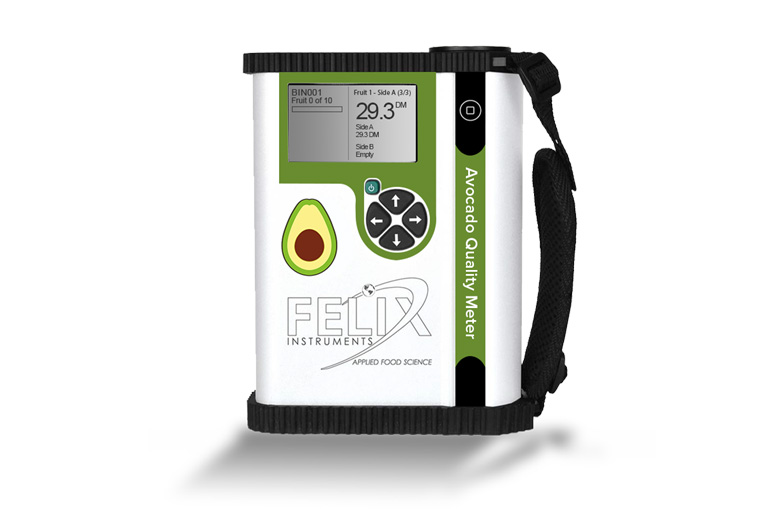
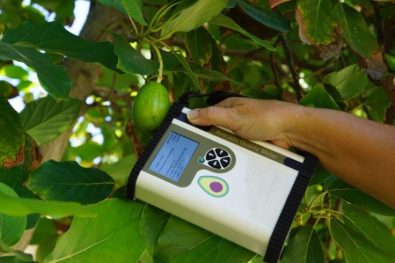
This is where purpose-built systems such as the F-751 Avocado Quality Meter from Felix Instruments stand apart. Instead of assuming all avocados behave the same, Felix builds and refines calibrations with cultivar variation in mind.
That approach improves consistency in harvest decisions and reduces costly picking errors.
The Spectral Science Behind It
NIR spectroscopy works by measuring absorbance in specific wavelength regions associated with C-H, O-H, and N-H bonds. These bonds relate to water, sugars, oils, and other organic compounds.
When cultivar chemistry shifts even slightly, the relative intensity at certain wavelengths changes.
For example:
- Higher oil cultivars shift absorbance patterns in regions tied to lipid bonds
- Differences in soluble solids alter O-H bond absorbance
- Variations in water structure influence baseline spectral behavior
Machine learning and chemometric modeling can correct for some variability, but only when the model has been trained with representative data.
This is the key point. NIR devices are only as reliable as their calibration datasets.
Why Generic Calibrations Fail in the Field
In controlled environments, generic calibrations may appear adequate. But commercial operations introduce variability:
- Geographic growing differences
- Seasonal climate changes
- Orchard management practices
- Maturity stage at sampling
Add cultivar variation to that list, and error margins widen.
When NIR devices are marketed as one-size-fits-all, the risk increases. Users may blame the hardware when in reality the calibration model lacks sufficient cultivar representation.
Felix Instruments addresses this by investing heavily in calibration development and validation across cultivars, growing regions, and harvest windows.
Case Study: Mango Variability
Mango cultivars show wide variation in fiber content, sugar accumulation rates, and dry matter behavior. A model optimized for one cultivar can misestimate another if not properly trained.
The F-751 Mango Quality Meter was developed with cultivar diversity in mind. Instead of relying on narrow datasets, Felix incorporates broad sample populations during calibration development.
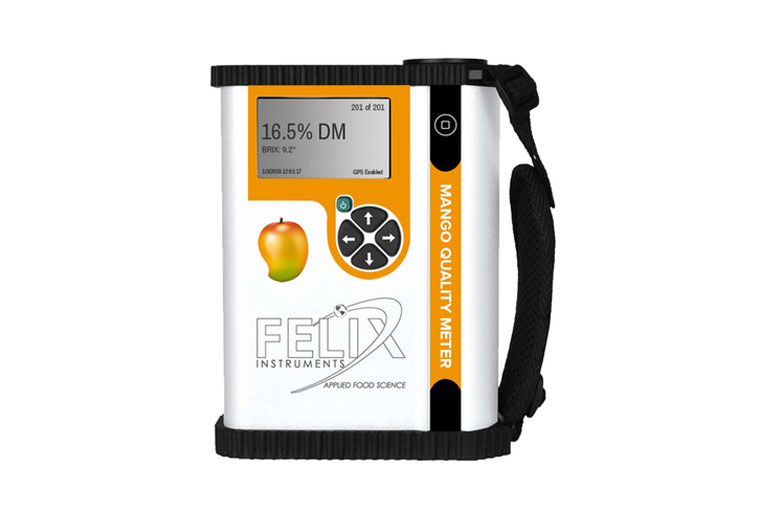
This results in stronger predictive stability across commercial mango varieties.
For packers and exporters, that stability translates to fewer shipment claims and more predictable eating quality.
How Felix Instruments Approaches NIR Calibration
Felix Instruments does not treat NIR devices as static products. Calibration development is ongoing. The process includes:
-
Large, diverse sample collection
-
Reference lab validation for ground truth
-
Multivariate statistical modeling
-
Cross-validation across cultivars
-
Field testing under real operating conditions
This method ensures that NIR devices perform reliably where they are actually used, not just in lab conditions.
The F-750 Produce Quality Meter, for example, supports multiple commodities while maintaining commodity-specific calibration integrity. It does not assume that grapes behave like kiwifruit or that mango chemistry mirrors avocado chemistry.
Each calibration is treated as a living model that can be refined as more data becomes available.
Why Cultivar-Specific Accuracy Matters Financially
Errors in maturity assessment directly affect revenue.
If dry matter is overestimated:
- Fruit may be harvested too early
- Eating quality suffers
- Brand reputation declines
If underestimated:
- Harvest may be delayed
- Fruit overripens
- Storage life shortens
In payment programs tied to Brix or dry matter, inaccurate NIR readings can shift grower compensation.
When cultivar variability is ignored, these risks increase.
Reliable NIR devices reduce that uncertainty. But reliability requires calibration depth.
Gas Analysis Has Similar Challenges
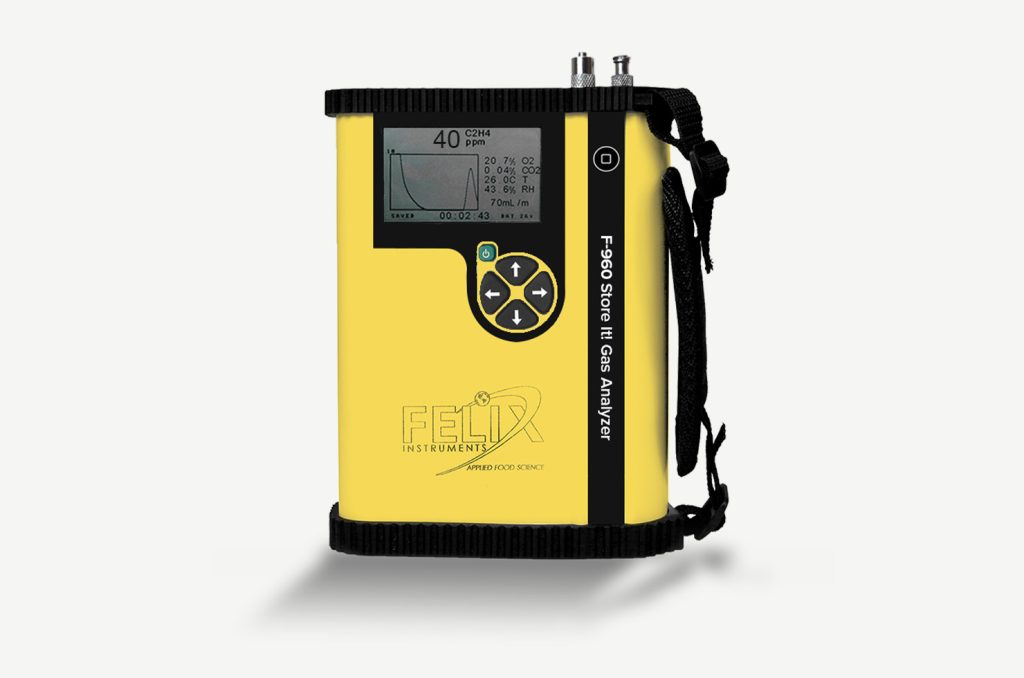
The same principle applies beyond NIR. Ethylene production rates differ by cultivar and maturity stage. Instruments such as the F-900 Portable Ethylene Analyzer and the F-960 Ripen-It Gas Analyzer from Felix Instruments are designed to measure actual gas concentrations rather than relying on assumptions.
By combining accurate gas analysis with calibrated NIR devices, operations gain a more complete picture of fruit physiology.
Cultivar variation is not a nuisance. It is biological reality. Instrumentation must adapt accordingly.
Addressing the Myth Directly
Let’s restate the myth clearly: NIR devices work the same on all cultivars.
The reality:
- Spectral responses vary by cultivar
- Chemical composition differs across genetic lines
- Calibration models must reflect those differences
- Field performance depends on representative training data
NIR devices are powerful tools. But they are not interchangeable across cultivars without proper calibration support.
Felix Instruments builds its product line with this understanding at the core. The focus is not just on hardware sensitivity, but on calibration robustness.
What to Look for When Choosing NIR Devices
If you are evaluating NIR devices, ask the following:
- Was the calibration developed using multiple cultivars?
- How many samples were included in model training?
- Were samples collected across seasons and regions?
- Is the model validated against independent datasets?
- Can the calibration be updated as new data becomes available?
These questions separate research-grade tools from marketing claims.
Felix Instruments is transparent about calibration methodology and continues to expand its spectral databases to improve accuracy.
Moving Beyond the Myth
As the produce industry becomes more data-driven, assumptions about universal performance no longer hold up. Precision matters. Cultivar differences matter. Calibration depth matters.
NIR devices remain one of the most efficient, non-destructive tools available for internal quality measurement. When properly calibrated, they deliver fast and repeatable data that laboratory testing cannot match in speed.
But success depends on acknowledging variability, not ignoring it.
Work With a Team That Understands Cultivar Complexity
If you rely on NIR devices for harvest timing, quality assurance, or payment verification, you need equipment built around real-world variability.
Felix Instruments develops handheld NIR and gas analysis tools designed specifically for produce applications. Their calibration-first approach improves reliability across cultivars and growing conditions.
Contact Felix Instruments to discuss your specific commodity and cultivar needs. Our team can help you determine which device and calibration model best fit your operation.
When it comes to near-infrared fruit analysis, accuracy is not about generalization. It is about precision.
Related Products
Most Popular Articles
- Spectrophotometry in 2023
- NIR Applications in Agriculture – Everything…
- The Importance of Food Quality Testing
- The 5 Most Important Parameters in Produce Quality Control
- Melon Fruit: Quality, Production & Physiology
- Fruit Respiration Impact on Fruit Quality
- Guide to Fresh Fruit Quality Control
- Liquid Spectrophotometry & Food Industry Applications
- Ethylene (C2H4) – Ripening, Crops & Agriculture
- Understanding Chemometrics for NIR Spectroscopy