Using Felix NIR Devices for Research on Fruit Maturity Index Correlations


Scott Trimble

February 5, 2026 at 7:55 pm | Updated February 5, 2026 at 7:56 pm | 5 min read
Research into fruit maturity index correlations has moved quickly over the last decade, largely because non-destructive tools now allow researchers to collect large datasets directly from intact fruit. The term fruit maturity index is no longer limited to lab-only measurements or destructive sampling protocols. With handheld near-infrared technology, researchers can link internal quality attributes to harvest timing, storage outcomes, and consumer acceptance with much greater efficiency.
Felix Instruments has positioned its NIR devices as practical research tools for this exact purpose, offering consistency, portability, and crop-specific calibration options that support serious scientific work.
Why Fruit Maturity Index Research Matters
The fruit maturity index is rarely a single measurement. In most research programs, it represents a relationship between parameters such as dry matter, soluble solids content, firmness, oil content, and sometimes starch or acidity. These parameters are strongly tied to harvest decisions and postharvest performance, yet they are traditionally measured using destructive, time-consuming methods.
Subscribe to the Felix instruments Weekly article series.
By submitting this form, you are consenting to receive marketing emails from: . You can revoke your consent to receive emails at any time by using the SafeUnsubscribe® link, found at the bottom of every email. Emails are serviced by Constant Contact
For researchers, this creates several problems:
-
Limited sample sizes due to labor and cost
-
Difficulty tracking the same fruit over time
-
Reduced ability to study spatial and temporal variability in orchards or packing lines
Non-destructive NIR spectroscopy addresses all of these constraints. It allows repeated measurements on the same fruit and supports high-throughput data collection, which is critical for building robust fruit maturity index correlations.
How NIR Spectroscopy Supports Maturity Index Correlations
Near-infrared spectroscopy works by measuring how fruit tissue absorbs and reflects specific wavelengths of light. These spectral patterns correlate with chemical and structural properties inside the fruit. When properly calibrated, NIR models can estimate attributes such as dry matter or Brix without cutting the fruit open.
For fruit maturity index research, this enables:
-
Longitudinal studies following fruit from early development through ripening
-
Large-scale sampling across varieties, blocks, or seasons
-
Improved statistical power when correlating internal quality with harvest timing or storage outcomes
Felix NIR devices are designed with this workflow in mind, focusing on repeatability and field-ready operation rather than lab-only precision that is difficult to scale.
Overview of Felix NIR Devices Used in Maturity Research
Felix Instruments offers several NIR platforms that are commonly used in fruit maturity index research. While each device targets slightly different applications, they share common strengths in portability, ease of use, and data consistency.
F-750 Produce Quality Meter
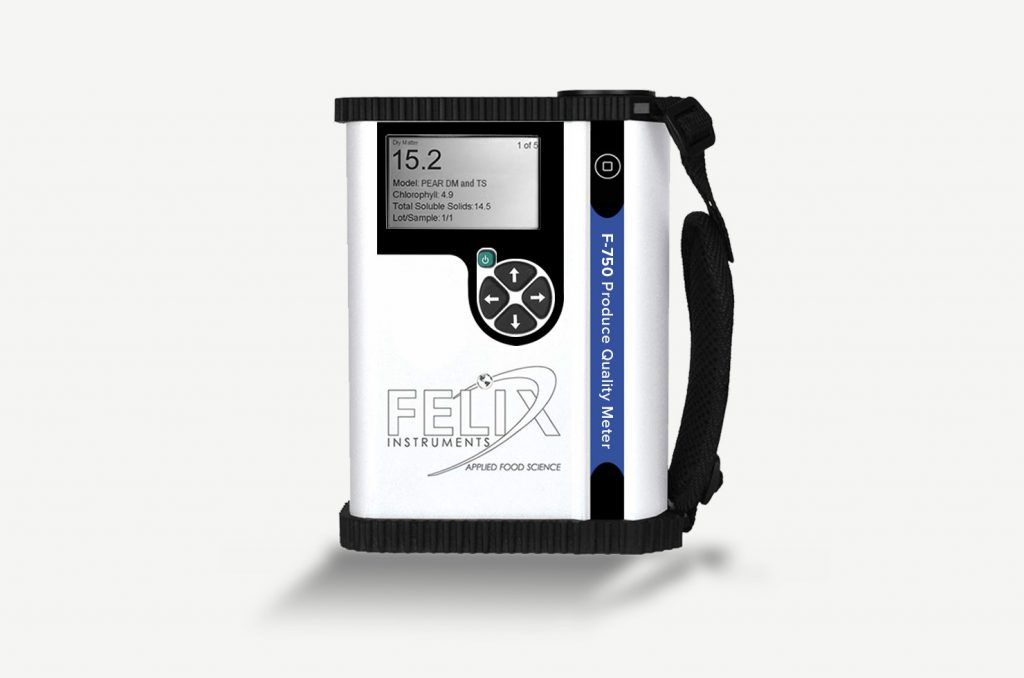
The F-750 Produce Quality Meter is widely used in research settings because it supports multiple fruit types and quality parameters. Researchers often rely on this device to measure Brix, dry matter, and other maturity-related indicators in apples, stone fruit, and tropical crops.
Key research advantages include:
-
Non-destructive measurements suitable for repeated sampling
-
Rapid data collection for large experimental designs
-
Exportable datasets compatible with statistical software
This makes the F-750 a practical tool for correlating maturity indices with harvest dates, storage conditions, or sensory outcomes.
F-751 Crop-Specific Quality Meters

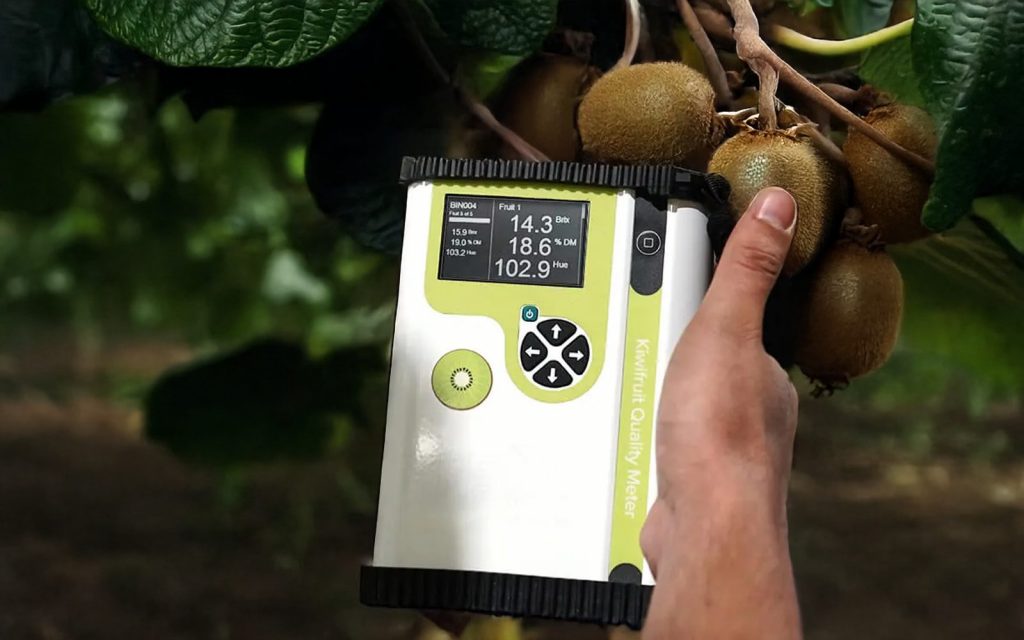
For research programs focused on a single commodity, the F-751 series offers crop-specific calibration models. Versions are available for avocado, mango, kiwi, and grape, each aligned with industry-relevant maturity metrics.
In fruit maturity index research, these crop-specific devices reduce the time needed to develop custom calibration models. Researchers can start collecting meaningful data immediately, then refine correlations based on local conditions or cultivar differences.
Common use cases include:
-
Avocado dry matter as a predictor of eating quality
-
Kiwi dry matter and soluble solids relationships
-
Grape maturity tracking for harvest optimization
Building Robust Maturity Index Correlations With Felix NIR Data
Collecting NIR data is only one part of maturity index research. The real value comes from pairing spectral measurements with reference data and sound experimental design.
Researchers using Felix NIR devices typically follow a structured approach:
-
Collect NIR readings from intact fruit in the field or lab
-
Perform destructive reference measurements on a subset of samples
-
Use statistical analysis to correlate NIR outputs with traditional maturity metrics
-
Validate models across seasons, locations, or cultivars
Because Felix devices are consistent and portable, they support this iterative process without introducing excessive variability from instrument handling or environmental conditions.
Advantages Over Traditional Destructive Methods
Compared to conventional maturity testing, Felix NIR devices offer several clear advantages for research.
First, sample throughput increases dramatically. Hundreds of fruit can be scanned in the time it takes to destructively analyze a few dozen. This allows researchers to explore variability that would otherwise remain hidden.
Second, repeated measurements become feasible. Tracking the same fruit over time provides insights into maturity progression that are impossible with destructive sampling.
Third, data collection can move closer to real-world conditions. Measurements can be taken in orchards, vineyards, packing houses, or storage facilities, improving the relevance of maturity index correlations.
These advantages explain why NIR-based fruit maturity index research is increasingly favored in academic and applied settings.
Integration With Postharvest and Ripening Studies
Fruit maturity index correlations do not stop at harvest. Many research programs extend into storage, transport, and ripening behavior. Felix NIR devices integrate well into these workflows, allowing researchers to link pre-harvest maturity indicators with postharvest outcomes such as shelf life or disorder development.
For example, dry matter measured at harvest can be correlated with ripening uniformity or flavor development after storage. Because the measurements are non-destructive, the same fruit can be followed through multiple stages of the supply chain.
Practical Considerations for Researchers
While NIR technology is powerful, it still requires thoughtful implementation. Researchers should consider:
-
Calibration relevance to local cultivars and growing conditions
-
Proper sampling protocols to avoid bias
-
Regular validation against reference methods
Felix Instruments supports these needs by offering technical documentation, application notes, and responsive support, which is especially valuable for long-term research projects.
Conclusion and Next Steps
Fruit maturity index research depends on accurate, scalable, and repeatable measurements. Felix NIR devices provide researchers with a practical way to move beyond destructive sampling and into data-rich, real-world studies of fruit quality and maturity. Whether working on avocados, grapes, or mixed fruit systems, these tools support stronger correlations and more confident conclusions.
If you are planning a new research project or upgrading your current methodology, consider how Felix Instruments can support your work. To learn more about available NIR devices and research applications, visit Felix Instruments and explore solutions designed specifically for fruit maturity research.
Frequently Asked Questions
What Fruit Maturity Index Parameters Can Felix NIR Devices Measure?
Felix NIR devices commonly estimate dry matter, soluble solids content, and other maturity-related attributes depending on the crop and calibration model.
Are Felix NIR Devices Suitable for Academic Research?
Yes, they are widely used in academic and applied research due to their repeatability, portability, and data export capabilities.
Can NIR Data Replace Destructive Testing Entirely?
In most research programs, NIR complements rather than fully replaces destructive testing. Reference measurements are still essential for calibration and validation of fruit maturity index correlations.
Related Products
Most Popular Articles
- Spectrophotometry in 2023
- The Importance of Food Quality Testing
- NIR Applications in Agriculture – Everything…
- The 5 Most Important Parameters in Produce Quality Control
- Melon Fruit: Quality, Production & Physiology
- Fruit Respiration Impact on Fruit Quality
- Guide to Fresh Fruit Quality Control
- Liquid Spectrophotometry & Food Industry Applications
- Ethylene (C2H4) – Ripening, Crops & Agriculture
- Active Packaging: What it is and why it’s important