Complete Buyer’s Guide to Portable NIR Produce Quality Meters


Scott Trimble

February 5, 2026 at 11:25 pm | Updated February 5, 2026 at 11:25 pm | 5 min read
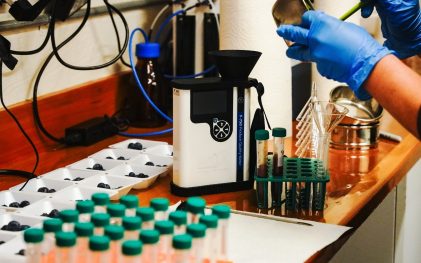
Portable NIR produce quality meters have become standard tools for growers, packers, and quality managers who need fast, non destructive insight into fruit maturity and internal quality. Instead of relying on destructive sampling or visual estimates, these instruments use near infrared spectroscopy to deliver real data in the field, packinghouse, or cold storage. If you are evaluating portable NIR produce quality meters for your operation, this guide walks through how they work, what features matter, and why instrument design makes a difference in day to day use.
What Are Portable NIR Produce Quality Meters
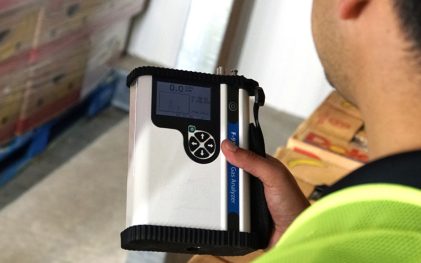
Portable NIR produce quality meters use near infrared light to measure how fruit interacts with specific wavelengths. Those interactions correlate to internal attributes like dry matter, Brix, acidity, and sometimes firmness.
The key advantage is speed. A scan takes seconds and does not damage the fruit.
Subscribe to the Felix instruments Weekly article series.
By submitting this form, you are consenting to receive marketing emails from: . You can revoke your consent to receive emails at any time by using the SafeUnsubscribe® link, found at the bottom of every email. Emails are serviced by Constant Contact
Because the meters are portable, they move with the fruit through harvest decisions, inbound inspections, ripening rooms, and outbound quality checks. This flexibility is why portable NIR produce quality meters are now widely used across avocados, kiwifruit, mangoes, grapes, and many other commodities.
How NIR Technology Works in Practice
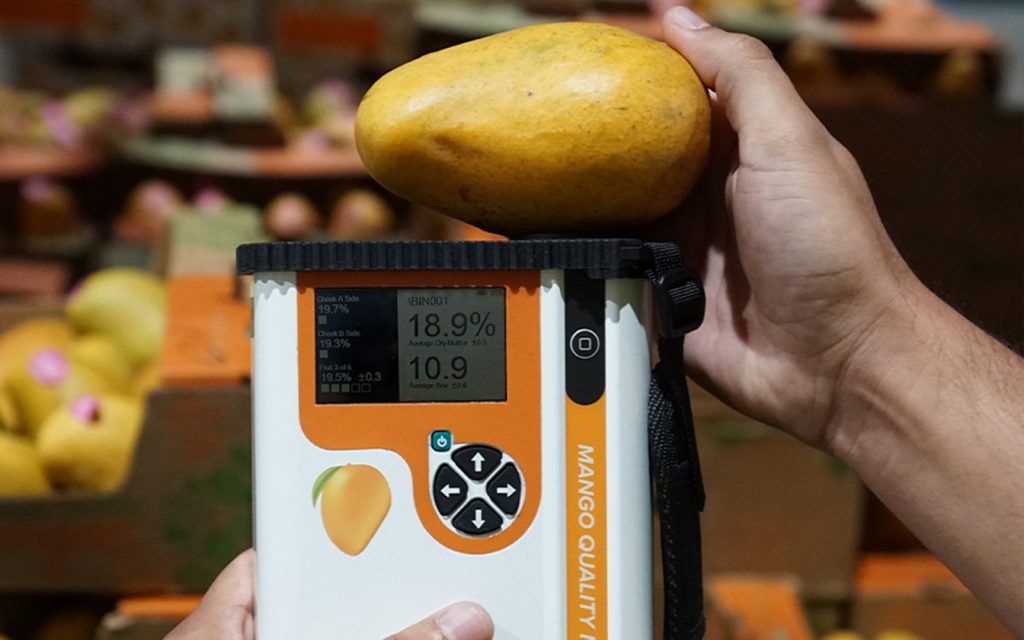
NIR spectroscopy works by emitting light into the produce and measuring the reflected signal. That signal is processed using calibration models developed from thousands of lab validated samples. The strength of a portable NIR produce quality meter depends on three things.
-
Optical design and signal stability
-
Quality of the calibration models
-
Software that turns data into usable decisions
Low quality systems often struggle with drift, inconsistent readings, or limited crop support. Well designed systems maintain accuracy over time and across growing regions.
Key Applications in Produce Supply Chains
Portable NIR produce quality meters are used at several critical control points.
-
Harvest timing based on dry matter or sugar levels
-
Sorting and lot segregation at receiving
-
Ripeness monitoring during storage
-
Quality verification before shipment
For example, avocado operations often rely on dry matter thresholds to decide when blocks are ready to harvest. Kiwifruit and mango programs use Brix and maturity indices to manage export quality. Without portable NIR produce quality meters, these decisions rely on slower lab testing or visual judgment.
What to Look for When Buying a Portable NIR Produce Quality Meter
Choosing the right instrument is less about the sensor alone and more about the complete system.
Calibration Coverage
Not all meters support the same crops. Some rely on generic calibrations that require frequent adjustment. Others offer commodity specific calibrations developed for real commercial conditions.
Look for:
-
Crop specific models rather than one size fits all
-
Regional calibration support
-
Ongoing model updates
Ease of Use
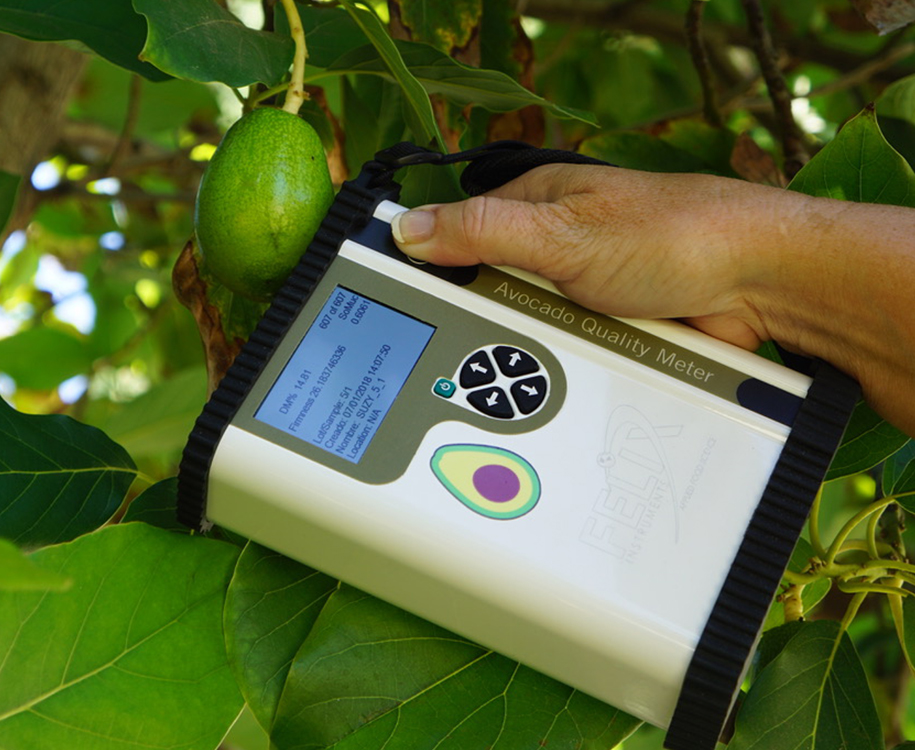
Field teams need tools that work without constant troubleshooting.
Consider:
-
Touchscreen interfaces
-
Clear pass fail outputs
-
Minimal warm up time
If the instrument requires a laptop or frequent recalibration, it slows down operations.
Data Management
Modern portable NIR produce quality meters should do more than display numbers.
Key features include:
-
Onboard data storage
-
Export to CSV or cloud systems
-
Lot and location tagging
This is especially important for operations managing multiple orchards or suppliers.
Durability and Support
These instruments are used in orchards, packing lines, and cold rooms. Build quality matters. So does manufacturer support, training, and service access.
Felix Instruments and Portable NIR Quality Measurement
Felix Instruments has built a strong reputation around portable NIR produce quality meters that are designed specifically for produce supply chains rather than laboratory environments.
F-750 Produce Quality Meter
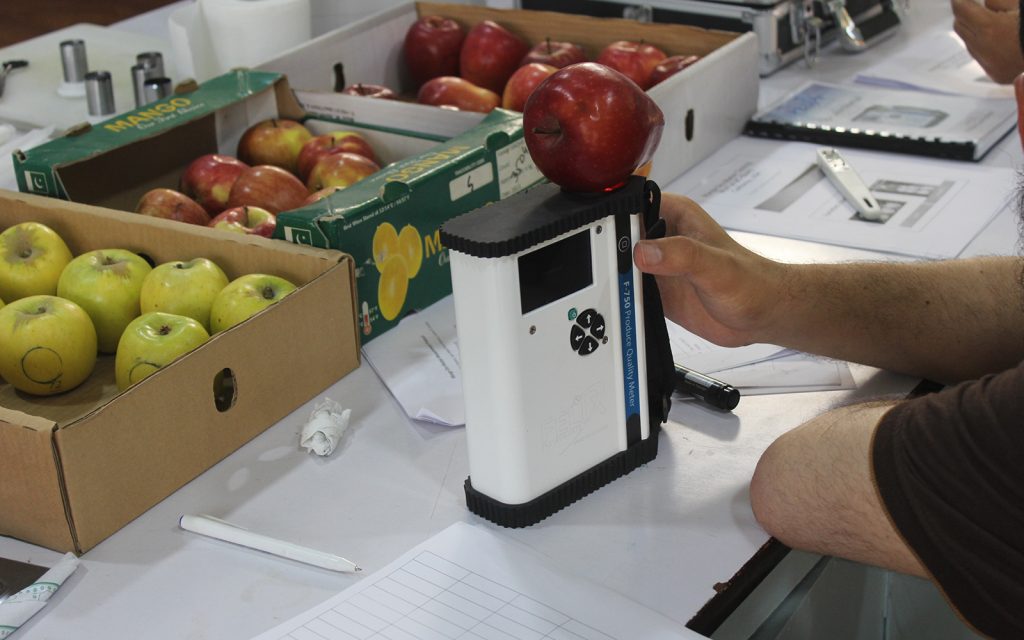
The F-750 is a versatile portable NIR produce quality meter designed for multiple crops. It measures parameters such as Brix, dry matter, and internal color depending on calibration. The strength of the F-750 lies in its flexibility. It is often used by research teams, breeding programs, and operations working with diverse commodities.
F-751 Commodity Specific Meters
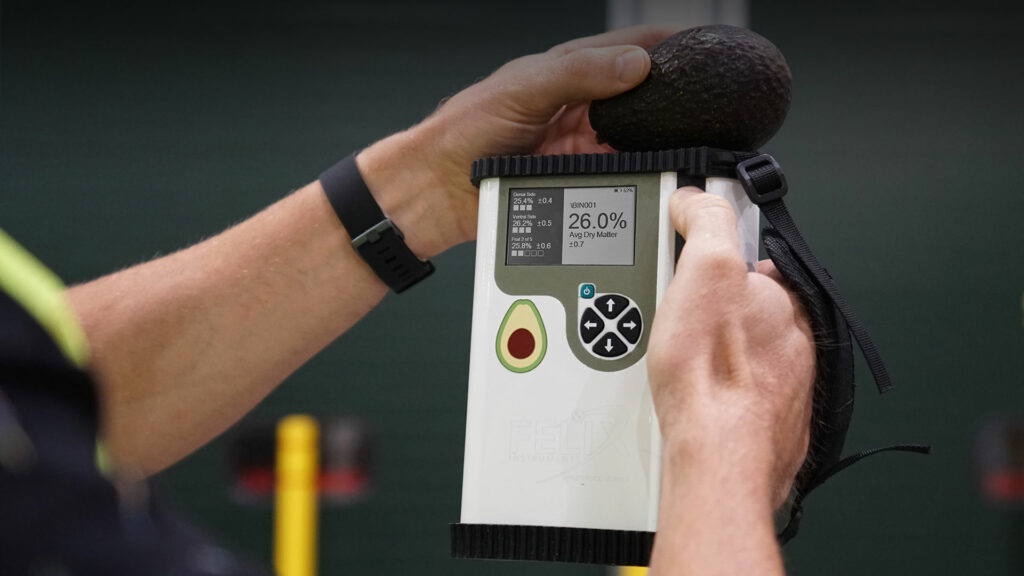
The F-751 series takes a different approach. Each unit is optimized for a specific crop, such as avocado, kiwifruit, mango, or grape. By focusing on one commodity, the F-751 delivers highly stable and reliable measurements with minimal user input.
Advantages of commodity focused portable NIR produce quality meters include:
-
Reduced calibration complexity
-
Faster training for field crews
-
Consistent results across users
This design is particularly valuable in high volume commercial environments.
How Portable NIR Meters Compare to Traditional Methods
Traditional quality testing relies on destructive sampling. Fruit is cut, juiced, weighed, or chemically analyzed. While accurate, these methods are slow and expensive at scale.
Portable NIR produce quality meters offer several advantages.
-
Non destructive testing preserves saleable fruit
-
High sampling rates improve decision confidence
-
Immediate results support real time actions
Instead of testing a handful of samples, teams can scan dozens or hundreds of fruit per lot.
Accuracy Considerations and Best Practices
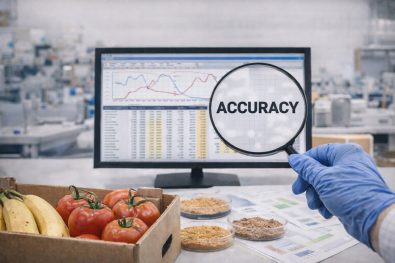
Accuracy depends on proper use. Even the best portable NIR produce quality meters require good sampling practices.
Tips for reliable results:
-
Scan representative fruit sizes
-
Avoid surface moisture or heavy dirt
-
Use consistent measurement locations
Felix Instruments provides training resources and documentation to help teams maintain confidence in their data over time.
Who Should Use Portable NIR Produce Quality Meters
These tools are used across the supply chain.
-
Growers managing harvest timing
-
Packers sorting inbound fruit
-
Ripening managers monitoring maturity
-
Exporters verifying specifications
As quality standards tighten and labor costs rise, portable NIR produce quality meters become less of a luxury and more of a necessity.
Future Trends in Portable NIR Quality Measurement
The market continues to move toward better integration and automation. Expect improvements in calibration portability, wireless data sharing, and tighter links between quality data and logistics systems. Portable NIR produce quality meters are increasingly becoming part of digital quality management platforms rather than standalone tools.
Conclusion and Next Steps
Portable NIR produce quality meters have reshaped how produce quality is measured and managed. They provide fast, non destructive insights that support better harvest decisions, more consistent quality, and reduced waste. When choosing an instrument, focus on calibration quality, ease of use, data handling, and manufacturer support.
If you are evaluating portable NIR produce quality meters for commercial use, Felix Instruments offers proven solutions backed by crop specific expertise and real world deployment. Our F-750 and F-751 platforms are designed to fit directly into modern produce operations. To learn more or request a demo, connect with the Felix Instruments team and see how portable NIR measurement can improve your quality program.
Frequently Asked Questions
How Accurate Are Portable NIR Produce Quality Meters Compared to Lab Testing?
When properly calibrated and used, portable NIR produce quality meters show strong correlation with lab measurements. While they may not replace labs for regulatory testing, they are highly effective for operational decision making.
Do Portable NIR Produce Quality Meters Require Frequent Recalibration?
High quality systems use stable optics and robust models that minimize recalibration. Commodity specific meters typically require less adjustment than generic systems.
Can One Portable NIR Meter Be Used for Multiple Crops?
Some meters support multiple crops through different calibrations. Others are optimized for a single commodity. The best choice depends on whether flexibility or maximum accuracy is the priority.
Related Products
Most Popular Articles
- Spectrophotometry in 2023
- The Importance of Food Quality Testing
- NIR Applications in Agriculture – Everything…
- The 5 Most Important Parameters in Produce Quality Control
- Melon Fruit: Quality, Production & Physiology
- Fruit Respiration Impact on Fruit Quality
- Guide to Fresh Fruit Quality Control
- Liquid Spectrophotometry & Food Industry Applications
- Ethylene (C2H4) – Ripening, Crops & Agriculture
- Active Packaging: What it is and why it’s important