Latest nir-spectroscopy
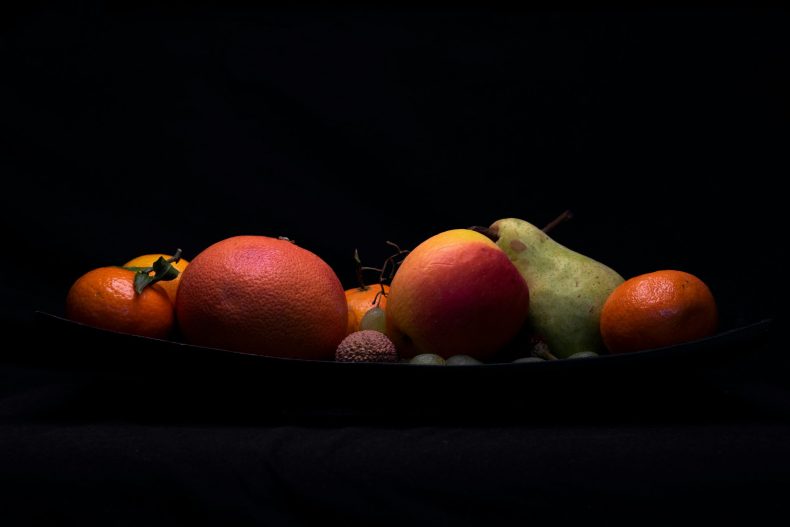
Myth: NIR Devices Work the Same on All Cultivars
Near-infrared fruit analysis is widely used across the produce industry, but a persistent myth still circulates: that one NIR model works the same on every cultivar. The truth is that cultivar differences directly impact NIR calibration accuracy, and ignoring that reality leads to inconsistent data and poor decisions. If you rely on NIR devices for… Continue reading…



Additional reading
What Are the Latest Innovations in Postharvest Preservation of Fresh Produce?
Innovations and emerging treatment technologies help preserve the postharvest quality of fresh produce by reducing microbial contamination and slowing ripening and senescence. Many innovations maintain and enhance sensory, internal, and nutritional quality and increase shelf life. Several innovations and emerging technologies require further research to assess performance, safety, operating parameters, and economic feasibility. Approximately 50%… Continue reading…
Kiwifruit Postharvest Quality Problems Across the Global Supply Chain
During the postharvest stages, kiwifruit quality deteriorates due to chilling injury, loss of firmness, microbial spoilage, bruising, and off-flavor development. Low temperatures used to store and transport kiwifruit cause chilling injury, which is one of the reasons for loss of firmness and the formation of off flavors. Physiological processes such as respiration rate and ripening,… Continue reading…
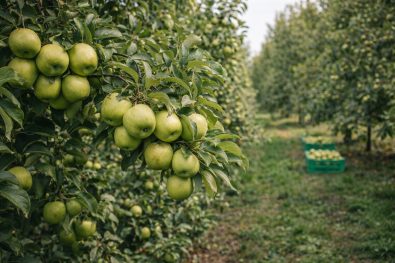
The NIR Showdown: Felix Instruments F-750 vs Rubens Technologies vs Sunforest for On-Farm Maturity Analysis
On-farm maturity analysis has moved well beyond destructive sampling and guesswork. Near-infrared spectroscopy is now a practical field tool, giving growers real data before harvest decisions are locked in. In this comparison, we look closely at three players in the handheld NIR space: the Felix Instruments F-750 Produce Quality Meter, systems from Rubens Technologies, and… Continue reading…
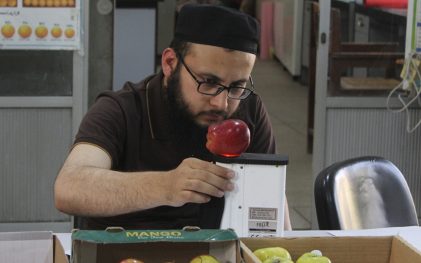
Which NIR Device Wins on ROI? Comparing Felix F-751, Rubens Technologies, and Sunforest for Packinghouses
For modern packinghouses, ROI on NIR devices is no longer a theoretical discussion. Near-infrared spectroscopy has become a practical tool for improving quality consistency, reducing waste, and making faster decisions across harvest, packing, and shipping. When managers evaluate ROI on NIR systems, they look beyond the initial purchase price and focus on accuracy, repeatability, calibration… Continue reading…
Calibration Battle: How Felix, Rubens, and Sunforest Handle Multi-Crop Predictive Models
In produce quality measurement, hardware differences are narrowing. Detectors, light sources, and form factors across NIR and gas analysis tools are increasingly similar. What separates instruments in day-to-day use is calibration. More specifically, it is how companies design, maintain, and communicate multi-crop predictive models. This article compares how Felix Instruments, Rubens, and Sunforest approach calibration,… Continue reading…
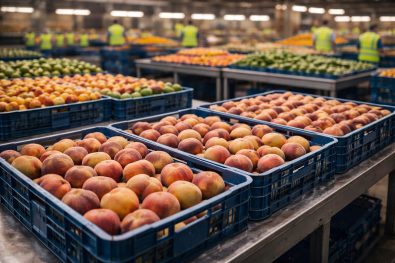
Spectral Science vs Shortcut Sensors: Why the F-751 Series Outperforms Rubens and Sunforest in Accuracy and Longevity
Produce quality measurement has become a central part of modern fruit handling, from orchard decisions to packhouse sorting and postharvest storage. As pressure increases to reduce waste while delivering consistent eating quality, handheld tools are no longer a nice-to-have. They are operational infrastructure. The challenge is choosing between instruments built on real spectral science and… Continue reading…