Three Portable NIR Systems Compared: Felix Instruments, Sunforest and Rubens Technologies: Accuracy, Maintenance, and the Cost of Bad Data

Scott Trimble

February 5, 2026 at 11:28 pm | Updated February 5, 2026 at 11:28 pm | 6 min read
When orchard managers and quality control teams evaluate handheld tools for fruit maturity and quality assessment, choosing the right portable NIR system is a critical decision. Portable NIR systems promise fast and non-destructive measurements, but the accuracy of those predictions, the ongoing maintenance requirements, and the real cost of bad data can vary dramatically between brands.
In this comparison, we look at three major options in the market today: Felix Instruments, Sunforest, and Rubens Technologies. Throughout, we explore how these brands approach data quality, usability, calibration requirements, and practical implementation in orchard, packing house, or supply chain contexts.
Understanding Portable NIR Systems
Portable NIR (Near-Infrared) systems use near-infrared spectroscopy to estimate internal quality metrics like dry matter, sugar content (Brix), moisture, firmness, and other fruit characteristics without destroying the fruit. These systems can dramatically speed up decision-making for harvest timing, postharvest handling, and planting decisions. However, the reliability of predictions hinges on system design, calibration models, and how each device handles external factors like temperature or fruit variation.
Subscribe to receive our monthly round-up of articles.
Felix Instruments: Accuracy and Calibration Depth
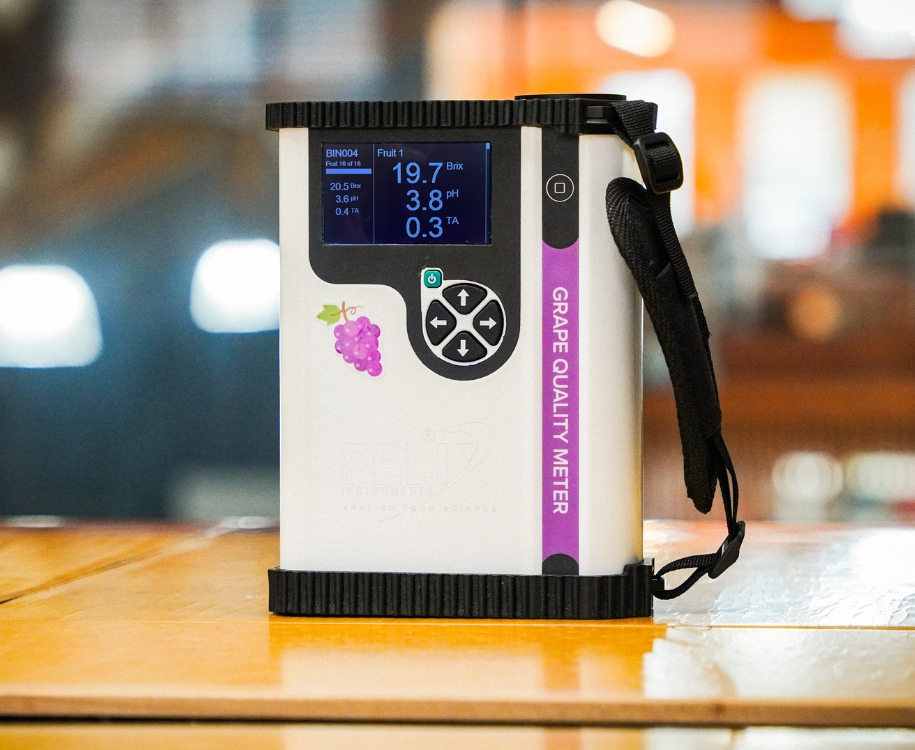
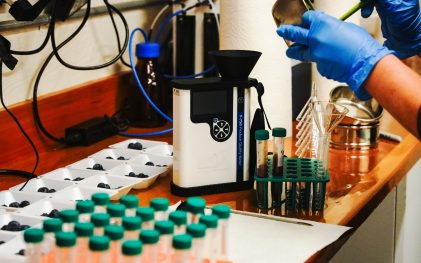
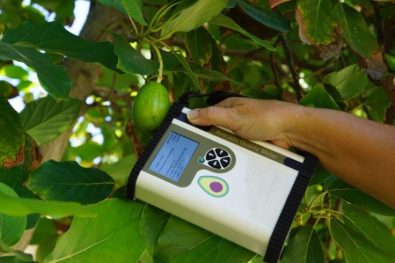
Felix Instruments has established a solid reputation in the agricultural and postharvest testing segments thanks to its portable NIR systems that are engineered with accuracy and ongoing calibration support in mind. Devices such as the F-751 produce quality meters are built around crop-specific predictive models that deliver reliable dry matter and internal quality estimates tailored to individual fruit types. These meters are designed to provide reproducible and stable results across growing regions, seasons, and varieties.
Predictive Power Through Specialized Calibration
One of the core strengths of Felix Instruments is its focus on deep calibration datasets and fruit-specific models.
Each device is intended for a particular crop, such as avocado, mango, grape, or kiwifruit, meaning the calibration model can focus narrowly on the spectral signatures relevant to that species. This structure reduces noise from cross-fruit variability and enhances the predictive power of the system in real-world conditions.
Reliable calibration models also mean that users do not have to guess whether the data they are collecting reflects true fruit quality or calibration drift.
Maintaining Data Integrity
Because fruit quality decisions often come down to small differences in dry matter or sugar content, Felix’s devices include structured calibration update workflows. Users can install updated calibration sets through firmware updates, keeping predictions aligned with new varieties and evolving orchard conditions. This focus on calibration integrity reduces the risk of “bad data” driving costly decisions such as premature harvest timing or unnecessary cold storage.
Use-Case Versatility
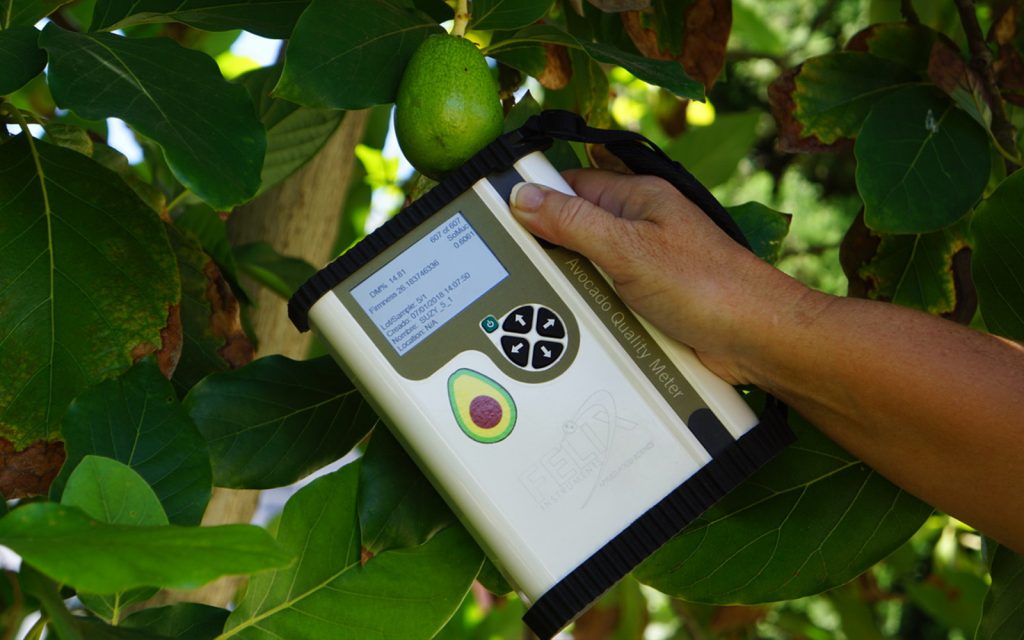
Felix Instruments’ products support both orchard and postharvest quality assessment. Whether in the field or at the packing line, users can expect consistent measurements and detailed guidance on what the data actually means. This makes these devices useful beyond just a quick check of Brix; they can be part of an ecosystem of decision support.
Sunforest: Broad Application and Quick Measurements
Sunforest has positioned itself as a leader in portable NIR spectroscopy technology with instruments that are easy to use and designed for non-destructive assessments across multiple fruit types. Originating in South Korea, Sunforest’s products are widely recognized for their simplicity and ability to deliver fast quality measurements on the spot.
Convenience and Multi-Fruit Options
Sunforest offers products such as the H-100 series, which are marketed as field portable NIR spectrometers capable of measuring internal quality attributes like Brix, dry matter, color, and moisture non-destructively. Versions of these devices are tailored to particular fruits, including kiwifruit, apples, pears, and avocados, yet the platform aims to be flexible enough to handle multiple fruit types within a single unit.
This approach gives growers and packhouses a tool that requires less switching between devices during a workday. For operations that regularly handle many fruit types in rapid succession, the convenience of a single portable NIR system can be a major operational advantage.
Simplicity Versus Calibration Depth
Sunforest’s strengths lie in measurement convenience and workflow efficiency. These tools provide rapid non-destructive assessments that support harvest timing and routine quality checks, with optional data export for downstream analysis. However, because the calibration models are more generalized compared to crop-specific systems, there can be trade-offs in predictive depth.
If a multi-fruit model must account for a broad range of spectral features, the calibration might not be as finely tuned as crop-specific models, potentially affecting long-term calibration stability and cross-environment consistency.
Precision for Harvest Decisions
Feedback from users indicates that Sunforest devices perform well in everyday applications like measuring dry matter in kiwifruit and tracking fruit maturity trends through a harvest season. As quick quality checks, these devices are intuitive and accessible to field teams without extensive training.
Rubens Technologies: Integrated Spectroscopy with Machine Learning
Rubens Technologies takes a slightly different angle on portable NIR systems by combining a handheld spectral scanner with cloud-connected machine learning analytics. Rather than a standalone, closed system, Rubens emphasizes predictive modelling and data integration across an entire supply chain.
Handheld Spectroscopy Plus Analytics
Rubens’ portable sensor operates in the visible and NIR range and pairs with a smartphone app for data collection and analysis. It gathers spectral data from fruit non-destructively and sends it to an analytic engine that interprets quality parameters such as sugar, firmness, dry matter, and maturity metrics in real time.
Predicting Harvest and Quality
Rubens emphasizes using its system for harvest timing decisions and comprehensive fruit quality predictions. Its analytics platform is calibrated against traditional measurements (like refractometer or firmness tests) to ensure alignment with industry standards. Users receive actionable insights that enable decisions not just about a single batch but across harvest schedules or postharvest handling windows.
Connectivity and Data Management
With Bluetooth connectivity and cloud support, Rubens’ approach leans into supply chain traceability and historical data management. This can be a major benefit for enterprises concerned with traceability and ensuring consistency in quality metrics across regions or years.
Calibration and Reliability
Rubens relies on machine learning models that are optimized for specific crops. As with any AI-driven system, the reliability of predictions depends on the quality of the training data. If models are well built, this can lead to excellent predictive performance. However, maintenance may involve updating models and ensuring that the analytics pipeline continues to reflect new harvest conditions.
Accuracy, Maintenance and the Cost of Bad Data
When comparing these three systems, the focus on calibration and predictive accuracy directly impacts the cost of bad data. Decisions about harvest timing, packing quality, and inventory management rely on accurate internal quality metrics.
-
Felix Instruments’ crop-specific calibration depth minimizes predictive errors and enhances consistency over seasons. This decreases the chances of bad data driving costly decisions.
-
Sunforest’s multi-fruit convenience speeds measurement and increases operational flexibility, but users must be mindful of potential calibration trade-offs when deep accuracy matters most.
-
Rubens’ machine learning analytics offer powerful insights and supply chain integration, yet the quality of predictions stems from historical training data and model maintenance, which requires robust data pipelines.
Conclusion and Recommendation
Each of these portable NIR systems offers compelling advantages. Felix Instruments excels in data integrity and predictive accuracy through specialized calibration and ongoing model support. Sunforest delivers convenience and ease of use across a wide range of fruit types, and Rubens Technologies brings analytics and supply chain connectivity into the field.
For teams where accurate, reliable portable NIR data is not just a convenience but a competitive necessity, Felix Instruments stands out as a solution that balances precision, calibration depth, and long-term reliability. Reliable data means better decisions, less waste, and improved quality outcomes across your entire operation.
To explore Felix Instruments’ range of handheld quality meters and see how we can elevate your quality assessment workflows, visit our product lineup and request a demo today.
Frequently Asked Questions
What Is the Biggest Difference Between Portable NIR Systems and Lab-Based Testing?
Portable NIR systems provide fast, non-destructive measurements directly in the field or packing house, while lab-based methods like wet chemistry or refractometers are slower and destructive. The tradeoff is that portable NIR accuracy depends heavily on calibration quality. Poor calibration can introduce systematic error, which is why not all portable NIR systems perform equally in real-world conditions.
How Often Do Portable NIR Systems Need Recalibration?
Recalibration frequency depends on the device and how it is used. Systems built around crop-specific models typically require fewer adjustments because their calibration is tightly constrained to known spectral patterns. Multi-fruit or generalized systems may require more frequent validation, especially when fruit varieties, growing regions, or seasons change.
Why Is Bad NIR Data More Expensive Than No Data at All?
Bad data creates false confidence. Inaccurate NIR readings can lead to harvesting too early or too late, misclassifying fruit quality, or applying the wrong postharvest treatment. These errors compound across storage, shipping, and sales, often costing far more than the price of the instrument itself. Reliable portable NIR systems reduce risk by improving decision quality, not just measurement speed.
Which Portable NIR System Is Best for Long-Term Quality Programs?
For long-term quality management programs, systems with strong calibration support, consistent predictive performance, and transparent validation workflows are typically the safest choice. Devices designed around specific crops tend to deliver more stable results over time, making them better suited for operations where data accuracy directly affects profitability.
Related Products
Most Popular Articles
- Spectrophotometry in 2023
- NIR Applications in Agriculture – Everything…
- The Importance of Food Quality Testing
- The 5 Most Important Parameters in Produce Quality Control
- Melon Fruit: Quality, Production & Physiology
- Fruit Respiration Impact on Fruit Quality
- Guide to Fresh Fruit Quality Control
- Liquid Spectrophotometry & Food Industry Applications
- Ethylene (C2H4) – Ripening, Crops & Agriculture
- Understanding Chemometrics for NIR Spectroscopy