F-750, Rubens, or Sunforest: Which NIR Tool Actually Matches Lab Results?

Scott Trimble

February 5, 2026 at 11:29 pm | Updated February 5, 2026 at 11:29 pm | 5 min read
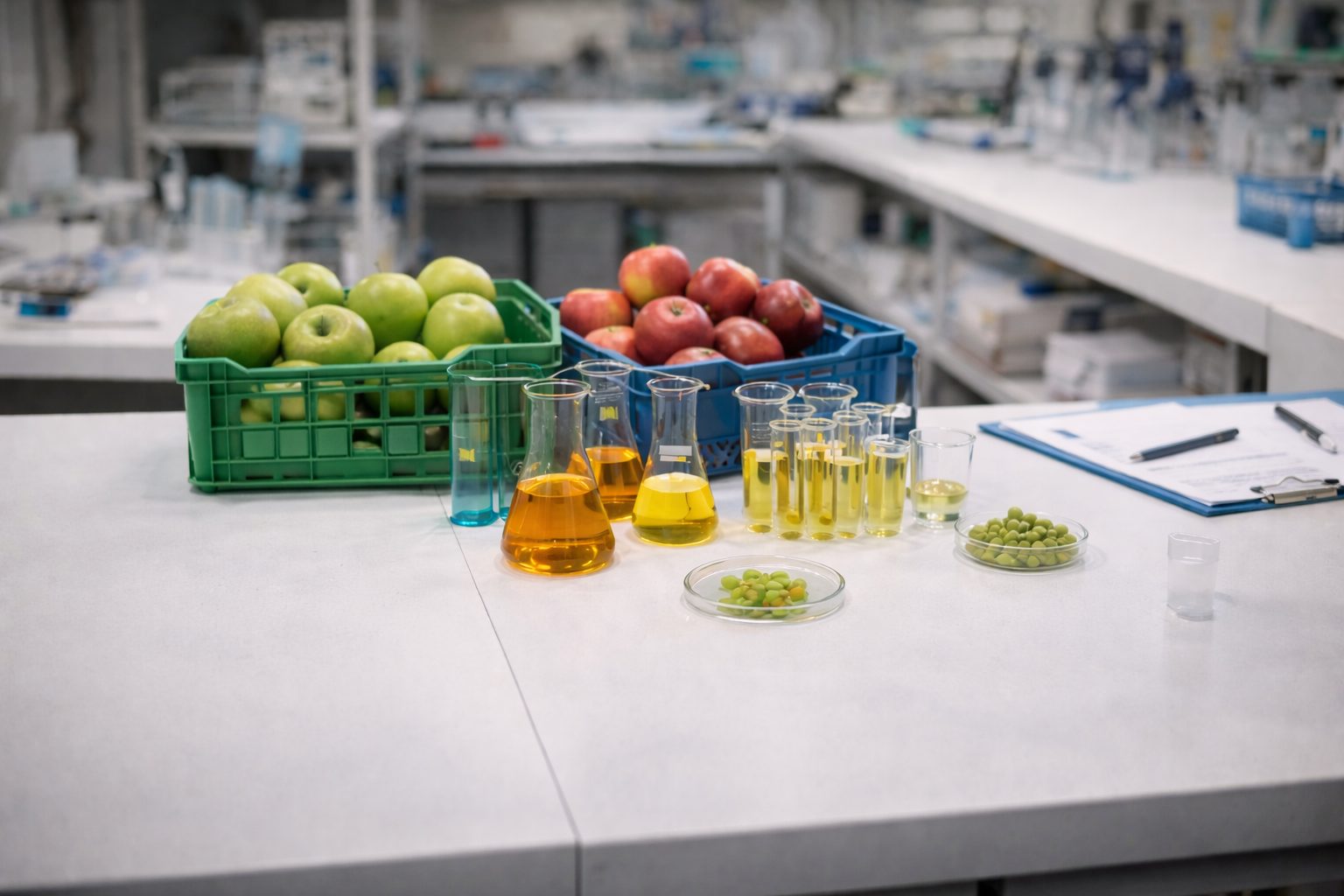
When growers, packers, and quality control teams assess fruit maturity and internal quality, many are turning to NIR tools as alternatives to time consuming destructive testing. In this article we compare three leading near infrared systems, the F-750 from Felix Instruments, the Rubens handheld sensor, and the Sunforest H-100 series, to help you understand how they perform in estimating laboratory level results.
Why Use an NIR Tool Instead of Classic Lab Tests?
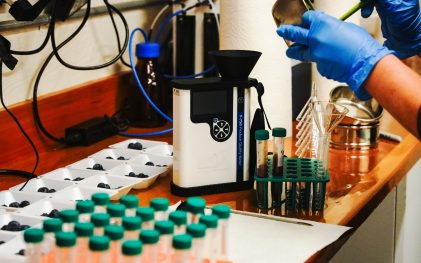
Traditional lab methods for quality analysis involve destructive sampling. That means taking fruit samples, crushing or slicing them, and measuring traits like Brix, dry matter, or acidity using chemical methods. These methods are accurate but slow, require skilled technicians, and reduce yield because samples are destroyed.
An NIR tool uses near infrared light to probe internal composition without damaging the fruit. Light interacts with water, sugars, and other molecules, generating spectra that predictive models translate into indicators like dry matter, sugar content, or ripeness. The promise of an NIR tool is accurate estimated traits in seconds without costly lab work.
Subscribe to receive our monthly round-up of articles.
F-750 Produce Quality Meter: Predictive Accuracy You Can Trust
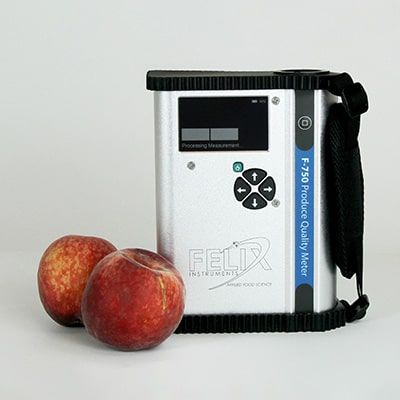
The F-750 Produce Quality Meter from Felix Instruments is a portable NIR device designed for robust internal quality assessment. It uses a visible and near infrared spectrometer spanning roughly from 310 to 1100 nm to measure internal traits non destructively. These traits can include dry matter, total soluble solids, titratable acidity, and internal color.
How It Works
The F-750 collects spectral data from the fruit and applies multivariate chemometric models to predict quality traits. Before it can be used for predictions, the instrument must be calibrated. Calibration involves scanning a wide range of fruit samples with known reference values measured through destructive lab methods. The model builder then correlates spectral patterns with lab results so the instrument can predict those traits later in the field.
This approach closely aligns predictions with what a lab would measure because the models are built directly on lab reference values. Industry testing on crops like grapes and avocados has shown that F-750 predictions can closely match lab measurements when the calibration model is properly developed.
Strengths of the F-750
-
Strong alignment with lab reference data when models are well built
-
Ability to estimate dry matter, Brix, acidity, and internal color
-
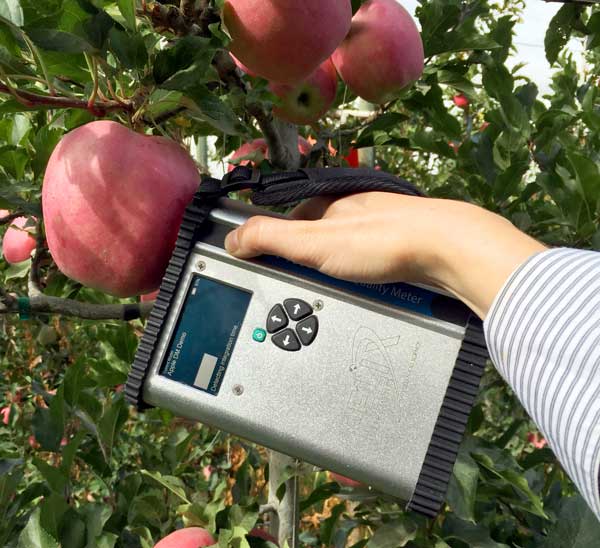
Portable and rugged design suitable for field and packing environments
-
Custom calibration models for specific crops and varieties
Considerations
The accuracy of the F-750 depends heavily on calibration quality. A representative training dataset is required to ensure predictions remain consistent across seasons, regions, and growing conditions. However, once calibrated correctly, the system is widely regarded as one of the most reliable NIR tools for matching lab results.
Rubens Handheld Sensor: Spectroscopy with Machine Learning
Rubens Technologies takes a different approach to near infrared analysis. The Rubens handheld sensor combines fluorescence, visible reflectance, and near infrared reflectance measurements across a spectral range of roughly 350 to 900 nm. Data is transmitted to a smartphone application where machine learning algorithms generate quality predictions.
Technology Overview
The Rubens system captures spectral signatures non destructively and uses proprietary machine learning models to predict internal quality traits. These models are developed for specific crops and applications, including sugar content, firmness, and maturity indices.
Strengths of Rubens
-
Machine learning based interpretation of spectral data
-
Smartphone integration for data visualization and reporting
-
Fast measurement cycle suitable for in field use
Considerations
Rubens shows strong potential, particularly for operations interested in advanced analytics and mobile data workflows. However, accuracy relative to lab results depends on the depth and diversity of the training data used to build each model. As with any machine learning based NIR tool, performance can vary when conditions differ from those used during model development.
Sunforest H-100 Series: Simplified Multi Fruit NIR Testing
Sunforest is a South Korean manufacturer specializing in portable NIR spectrometers, including the H-100 series. These instruments are designed for quick, non destructive assessment of internal fruit quality traits such as Brix, dry matter, moisture, and internal browning.
How Sunforest Instruments Work
The H-100 series uses near infrared spectroscopy combined with chemometric models to estimate quality parameters. Sunforest offers both crop specific models and multi fruit configurations intended for users handling diverse produce types.
Strengths of Sunforest
-
Simple and fast operation with minimal setup
-
Multi fruit capability for mixed crop environments
-
Non destructive measurements suitable for orchard and packing use
Considerations
Sunforest instruments are effective for screening and quality monitoring, especially when crop specific models are applied. However, multi fruit models may trade some precision for flexibility. When direct alignment with lab chemistry values is critical, additional calibration and validation may be required.
How Closely Do These Tools Match Lab Results?
When evaluating how well an NIR tool matches lab results, calibration strategy and model structure matter more than the sensor alone.
Calibration Depth
-
The F-750 allows users to build and refine models directly from lab reference data, which supports closer alignment with laboratory measurements.
-
Rubens relies on machine learning models that perform well when training data is comprehensive and representative.
-
Sunforest models provide reliable field estimates but may be less precise when using generalized multi crop calibrations.
Practical Accuracy
In practice, the F-750 tends to deliver the most consistent agreement with lab measured dry matter and Brix when calibration protocols are followed carefully. Rubens and Sunforest offer speed and convenience, with accuracy improving as models are refined and validated.
Final Takeaways
Choosing the right NIR tool depends on how closely your operation needs to mirror lab results.
-
The F-750 is often preferred when lab level alignment is a top priority and calibration resources are available.
-
Rubens appeals to users who value machine learning analytics and mobile integration.
-
Sunforest offers a practical solution for rapid quality screening across multiple fruit types.
Each system has a place, but for operations where internal quality metrics directly drive harvest timing or payment decisions, calibration depth and model transparency should guide the choice.
Frequently Asked Questions
How Important Is Calibration for NIR Accuracy?
Calibration is essential. The quality and representativeness of calibration data directly determine how closely an NIR tool matches lab results.
Can an NIR Tool Completely Replace Lab Testing?
Most operations still rely on lab testing for calibration and validation. NIR tools significantly reduce the need for destructive testing but do not fully eliminate it.
How Often Should NIR Models Be Updated?
Models should be reviewed at least once per season or whenever fruit varieties, growing conditions, or harvest targets change.
Related Products
Most Popular Articles
- Spectrophotometry in 2023
- NIR Applications in Agriculture – Everything…
- The Importance of Food Quality Testing
- The 5 Most Important Parameters in Produce Quality Control
- Melon Fruit: Quality, Production & Physiology
- Fruit Respiration Impact on Fruit Quality
- Guide to Fresh Fruit Quality Control
- Liquid Spectrophotometry & Food Industry Applications
- Ethylene (C2H4) – Ripening, Crops & Agriculture
- Understanding Chemometrics for NIR Spectroscopy