Spectral Science vs Shortcut Sensors: Why the F-751 Series Outperforms Rubens and Sunforest in Accuracy and Longevity


Scott Trimble

February 5, 2026 at 11:29 pm | Updated February 5, 2026 at 11:29 pm | 5 min read
Produce quality measurement has become a central part of modern fruit handling, from orchard decisions to packhouse sorting and postharvest storage.
As pressure increases to reduce waste while delivering consistent eating quality, handheld tools are no longer a nice-to-have. They are operational infrastructure. The challenge is choosing between instruments built on real spectral science and those relying on shortcut sensor approaches.
When you compare the F-751 Series from Felix Instruments with competing tools from Rubens and Sunforest, the differences in accuracy, adaptability, and long-term value become clear.
Subscribe to receive our monthly round-up of articles.
This article looks at why the F-751 platform continues to outperform simplified sensor devices, especially for professionals who depend on repeatable, defensible data for produce quality measurement.
The Core Difference: Full NIR Spectroscopy vs Proxy Sensors
At the heart of the comparison is the measurement approach itself.
The F-751 Series uses true near-infrared spectroscopy. Instead of measuring a single wavelength or indirect proxy, it captures a full spectral signature of the fruit. That spectrum is then analyzed using robust chemometric models developed from thousands of reference samples.
Many lower-cost tools from Rubens and Sunforest rely on shortcut sensors. These typically include limited-band LEDs, simple optical readings, or indirect firmness proxies. While these approaches can sometimes track general trends, they struggle when conditions change.
For produce quality measurement, that limitation matters. Sugar accumulation, dry matter development, and internal maturity are complex chemical and structural traits. They do not behave linearly across varieties, seasons, or growing regions.
Why Spectral Depth Matters in Real Orchards
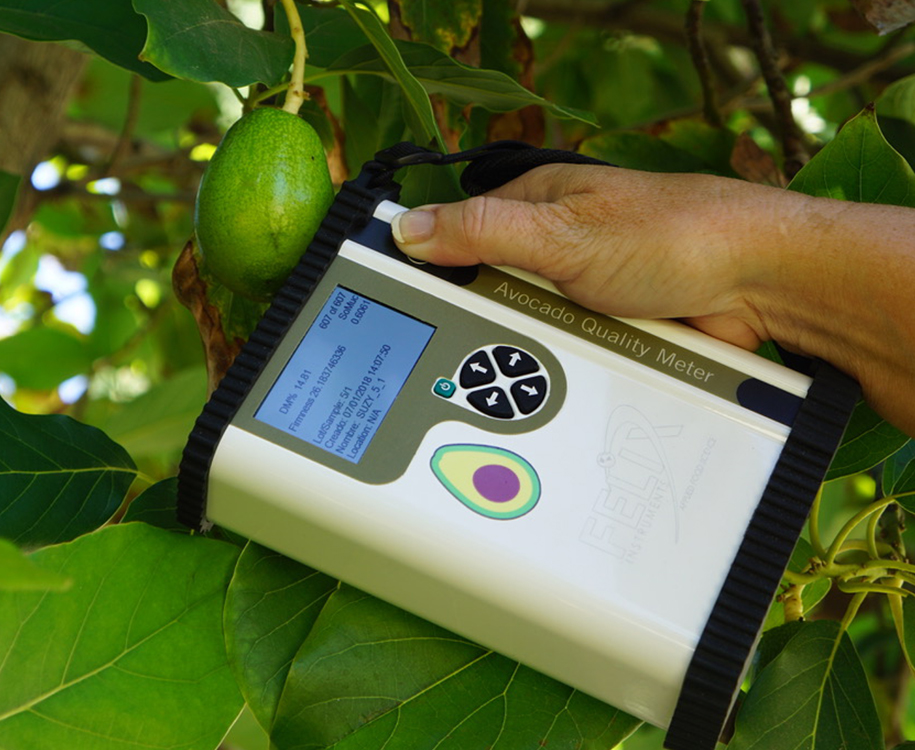
Field conditions are messy. Fruit temperature shifts throughout the day. Skin color varies by cultivar and sun exposure. Seasonal weather changes alter internal chemistry.
The F-751 Series is designed with this reality in mind. Because it measures across a wide NIR range, the instrument can distinguish meaningful chemical signals from surface noise. That is why the same device can be calibrated for multiple crops and continue performing across seasons.
Shortcut sensors tend to be far more sensitive to external variables. Users often see drift when fruit size changes or when a new variety is introduced. In practice, that means more manual correction and less confidence in the data.
For growers and QC teams, unreliable produce quality measurement leads to conservative decisions. Fruit is harvested too early, held too long, or rejected unnecessarily.
Calibration Flexibility and Crop-Specific Models
One of the defining strengths of the F-751 platform is its calibration ecosystem.
Felix Instruments offers crop- and cultivar-specific models for avocados, mangos, kiwifruit, grapes, and more. These models are not generic. They are built using destructive reference testing and refined over time.
Key advantages include:
-
Ability to measure dry matter, Brix, and other internal traits non-destructively
-
Support for multiple crops on a single device
-
Updatable models as new varieties are introduced
By contrast, many competing devices are locked into fixed algorithms. When conditions change, users are often told the tool is outside its intended use case. That limitation directly impacts long-term value.
In produce quality measurement, adaptability is not optional. It is essential.
Accuracy That Holds Up Over Time
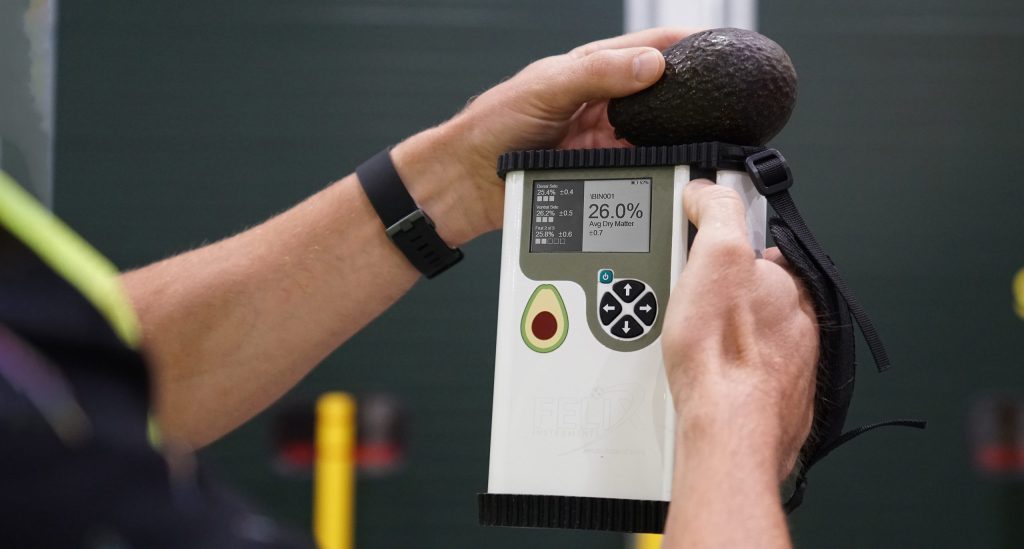
Accuracy is easy to claim and hard to maintain.
The F-751 Series has earned trust because its measurements correlate strongly with lab reference data. More importantly, that correlation remains stable over years of use. The optical design, internal temperature compensation, and calibration transfer protocols are engineered for longevity.
Shortcut sensor devices often perform well in controlled demonstrations but degrade in real-world use. Components age, light sources drift, and limited calibration frameworks struggle to compensate.
For packhouses and exporters, inconsistent produce quality measurement creates downstream risk. Customers lose confidence when internal quality does not match expectations.
Designed for Professionals, Not Just Demonstrations
Another point of separation is usability for professionals who collect thousands of measurements per season.
The F-751 Series is built for:
-
Rapid sampling without damaging fruit
-
On-device data review and storage
-
Integration into QC workflows and decision protocols
These details matter. Tools from Rubens and Sunforest often target simplicity, which can be appealing initially. Over time, that simplicity becomes a constraint when teams need traceability, repeatability, and defensible data.
With the F-751, measurements can be linked to harvest blocks, lots, and dates. That transforms produce quality measurement from spot checking into actionable intelligence.
Longevity and Total Cost of Ownership
Upfront price rarely tells the full story.
The F-751 Series is designed to remain relevant for many seasons. Firmware updates, calibration expansions, and ongoing technical support extend the usable life of the instrument. Many users deploy the same unit across multiple crops and markets.
Shortcut sensor devices often require replacement when models become obsolete or when performance drifts beyond acceptable limits. That leads to higher total cost of ownership, even if the initial investment is lower.
For organizations scaling their quality programs, stability matters more than novelty.
Why Data Confidence Drives Better Decisions
At its core, produce quality measurement is about confidence.
Confidence to harvest at the right time
Confidence to ship fruit to demanding markets
Confidence to defend quality claims with real data
The F-751 Series delivers that confidence because it is grounded in spectral science rather than assumptions. When teams trust their measurements, they move faster and waste less.
That is the difference between managing quality reactively and managing it strategically.
Conclusion: Choosing a Platform, Not a Gadget
When comparing the F-751 Series to Rubens and Sunforest devices, the question is not which tool is easier to use on day one. The real question is which platform supports accurate, scalable produce quality measurement over years of operation.
The F-751 stands out because it is built on real NIR spectroscopy, supported by rigorous calibrations, and designed for professionals who need dependable results. It does not trade accuracy for simplicity or longevity for convenience.
If your operation depends on consistent internal quality and data you can trust, it is time to look beyond shortcut sensors.
Explore how Felix Instruments can support your quality program with tools designed for real-world agriculture. Visit Felix Instruments to learn more about the F-751 Series and take the next step toward confident produce quality measurement.
Frequently Asked Questions
How Does the F-751 Differ From Low-Cost Optical Fruit Sensors?
The F-751 uses full near-infrared spectroscopy rather than limited-band or proxy sensors. This allows it to measure internal quality attributes with higher accuracy and stability across conditions.
Is the F-751 suitable for packhouse quality control?
Absolutely. Its speed, non-destructive testing, and data management features make it well suited for packhouse and export quality programs.
Related Products
Most Popular Articles
- Spectrophotometry in 2023
- NIR Applications in Agriculture – Everything…
- The Importance of Food Quality Testing
- The 5 Most Important Parameters in Produce Quality Control
- Melon Fruit: Quality, Production & Physiology
- Fruit Respiration Impact on Fruit Quality
- Guide to Fresh Fruit Quality Control
- Liquid Spectrophotometry & Food Industry Applications
- Ethylene (C2H4) – Ripening, Crops & Agriculture
- Understanding Chemometrics for NIR Spectroscopy